Reading Improvement Building Vocabulary Worksheets for Ages 3-9
5 filtered results
-
From - To
Enhance your child's reading skills with our Reading Improvement Building Vocabulary Worksheets for Ages 3-9. These printables are designed to make learning fun and engaging, fostering a love for reading in young learners. Our worksheets focus on expanding vocabulary, aiding comprehension, and boosting confidence through interactive and age-appropriate exercises. Ideal for use at home or in the classroom, each worksheet is crafted to cater to different learning stages and abilities, ensuring every child can progress at their own pace. Set the foundation for a brighter reading future with our expertly designed vocabulary-building activities.
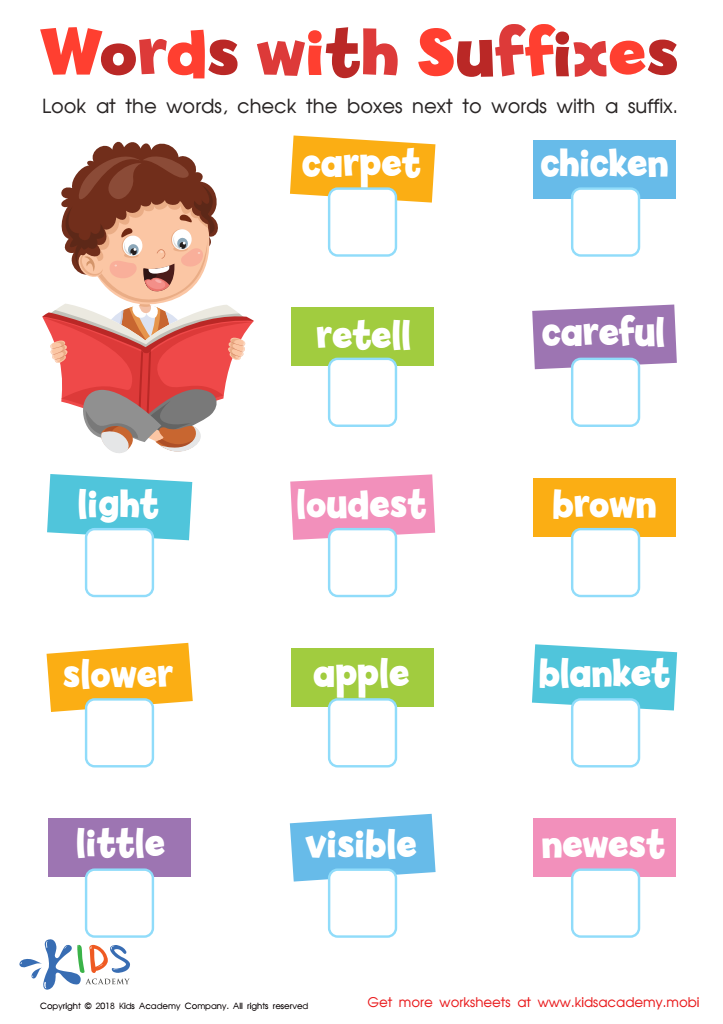
Reading: Words With Suffixes Worksheet
 Assign to My Students











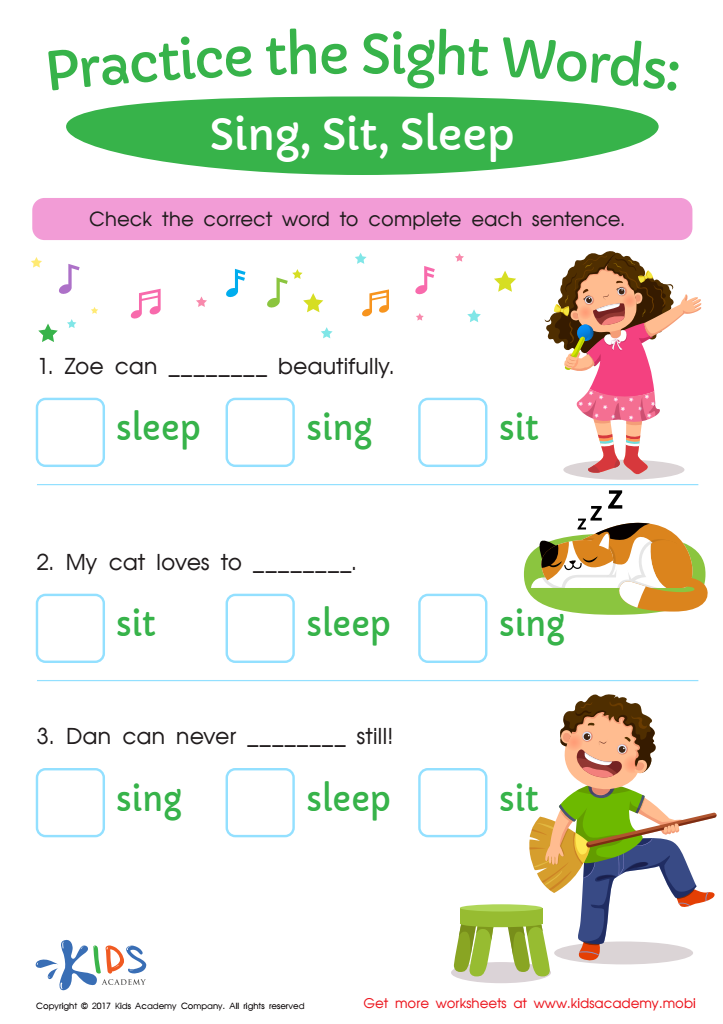
Sing, Sit, Sleep Sight Words Worksheet
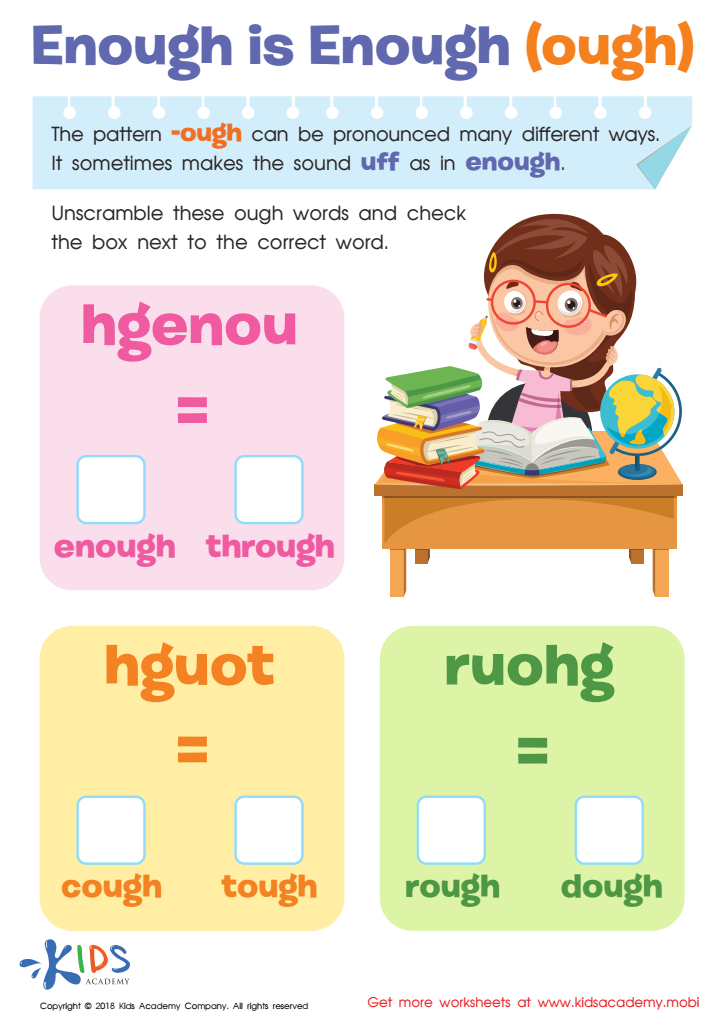
Enough Is Enough (ough) Worksheet
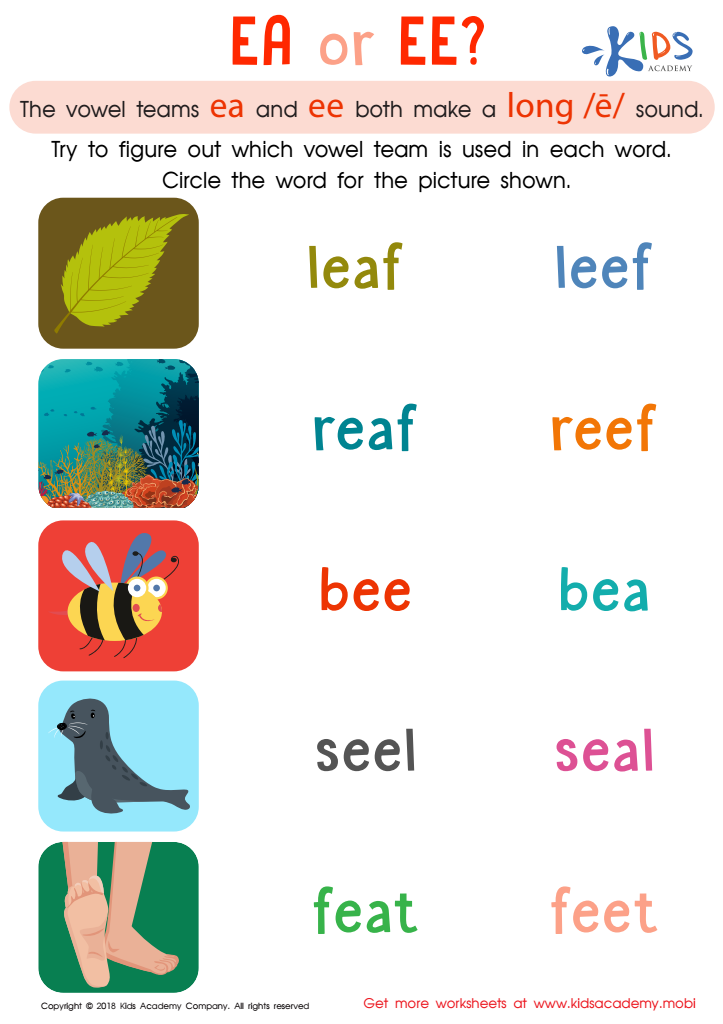
Reading: EA and EE Worksheet
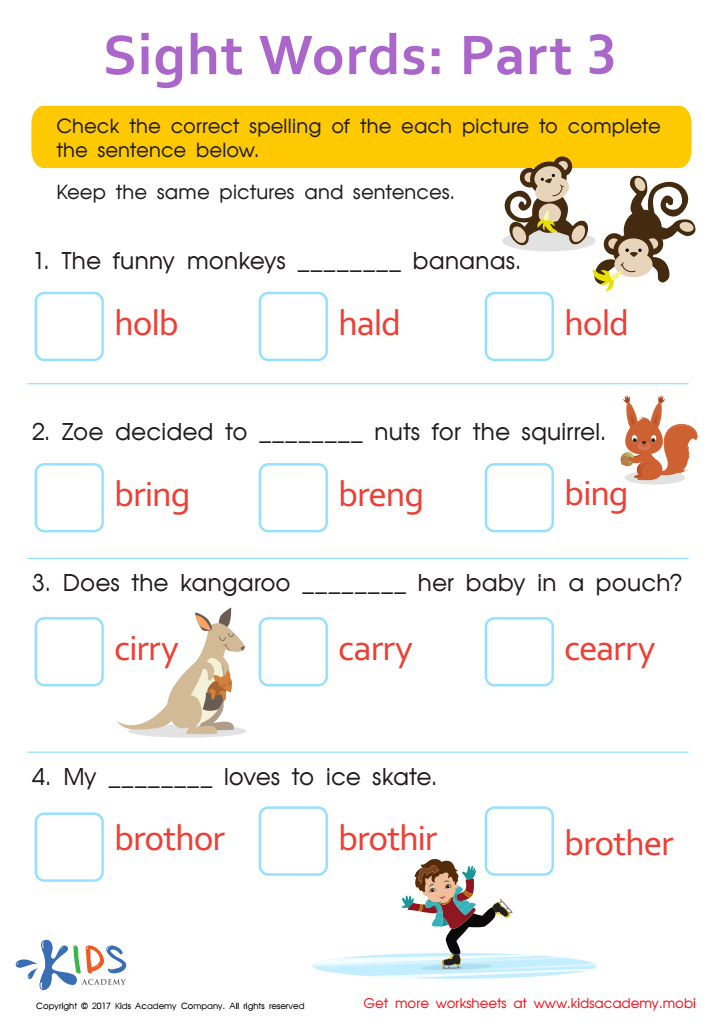
Hold, Bring, Carry, Brother Sight Words Worksheet


.jpg)





Parents or teachers should prioritize reading improvement and building vocabulary for children aged 3-9 because it lays the foundation for their future academic success and overall language development. During these crucial early years, children's brains are highly receptive and adaptable, allowing them to absorb new information rapidly. A rich vocabulary acquired during this period enhances their ability to understand and process complex ideas, directly impacting their reading comprehension skills.
Furthermore, a strong vocabulary supports expressive language skills, enabling children to communicate more clearly and effectively. This can boost their confidence socially and academically, as they are better equipped to participate in conversations, follow instructions, and articulate their thoughts and feelings.
Investing in vocabulary development through reading also encourages a lifelong love of books and learning. When children are exposed to diverse and engaging literature, it stimulates their imagination and curiosity, fostering a positive association with reading.
Moreover, children with a robust vocabulary are typically better readers and writers, making their transition to more advanced literacy skills smoother. They are likely to perform better in school, not just in language arts but across all subjects, as academic vocabulary is crucial for understanding and engaging with all areas of learning. Thus, dedicating time and resources to reading improvement and vocabulary building during these formative years is essential for helping children achieve their full potential.








