Answering questions Reading Fiction Worksheets for Ages 3-9
3 filtered results
-
From - To
Transform your child's reading experience with our "Answering Questions Reading Fiction Worksheets" designed for ages 3-9! These engaging worksheets encourage young readers to comprehend and analyze fiction, fostering critical thinking and discussion skills. Children will enjoy exploring stories and answering questions that enhance their understanding of characters, settings, and plots. Our worksheets are designed to be fun, age-appropriate, and aligned with educational standards, making them perfect for home or classroom use. Boost your child's confidence and reading abilities while nurturing a lifelong love for literature. Discover the joy of learning through reading with Kids Academy today!
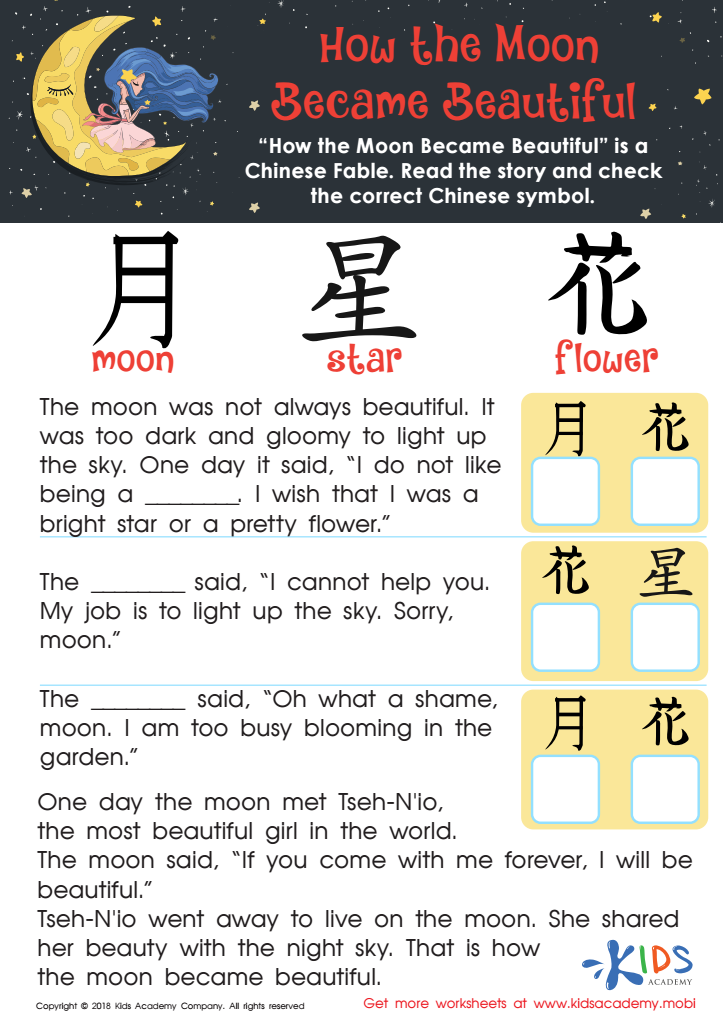
How the Moon Became Beautiful Worksheet
 Assign to My Students
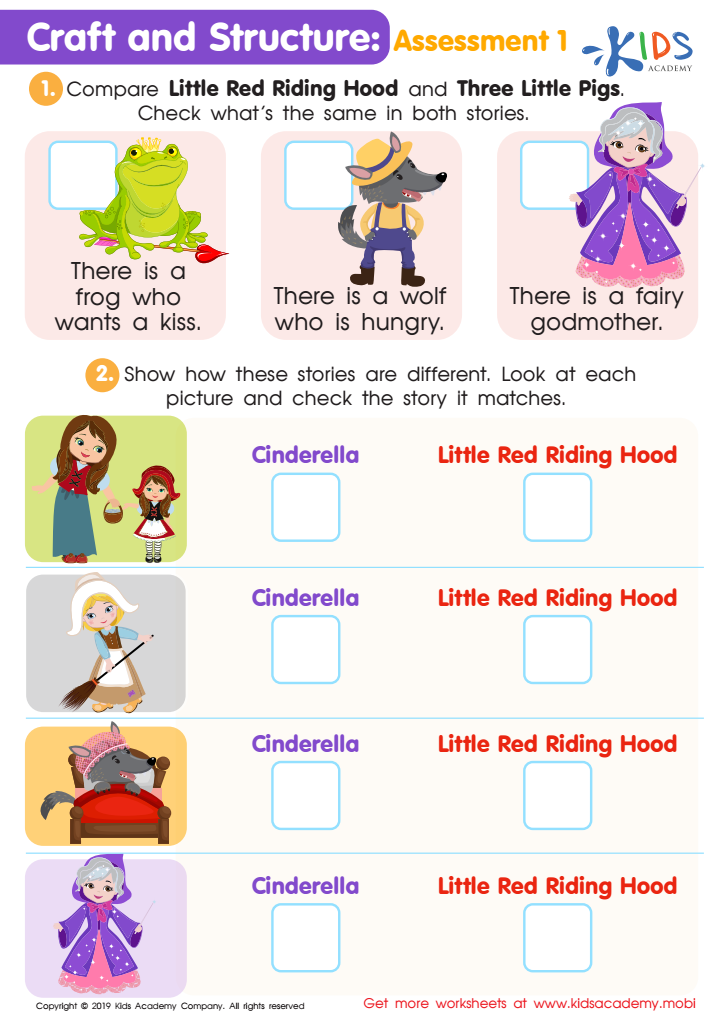
Craft and Structure: Assessment 1 Worksheet
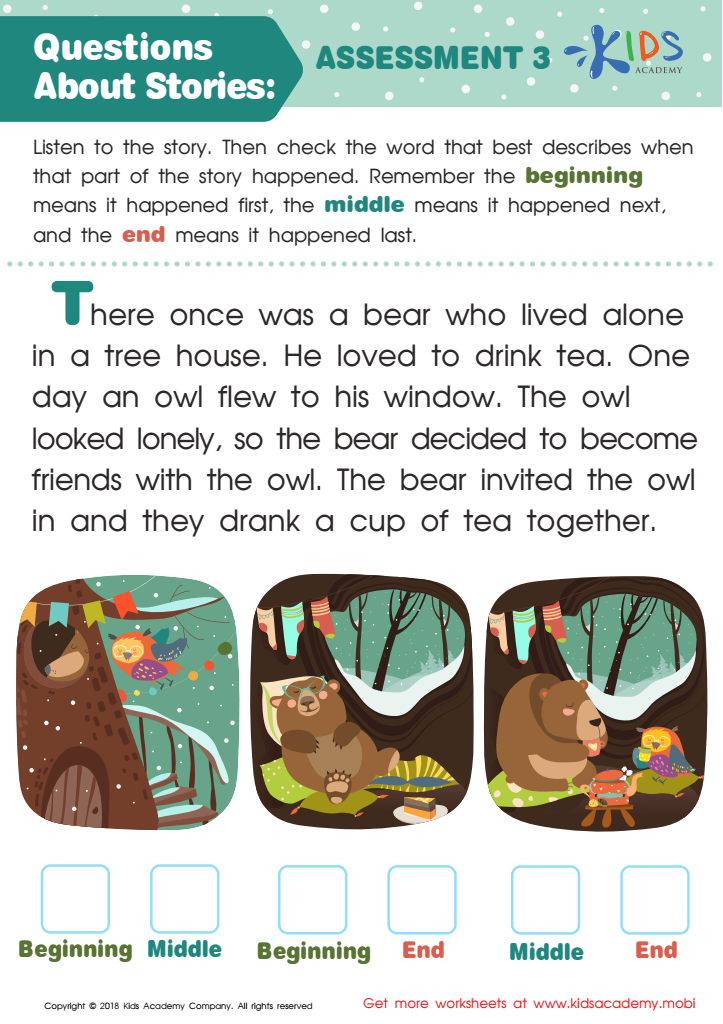
Questions About Stories: Assessment 3 Worksheet


.jpg)





Parents and teachers should care about answering questions while reading fiction to children aged 3-9 because it plays a vital role in fostering critical thinking and comprehension skills. As young readers engage with stories, they naturally develop curiosity and a desire to explore ideas beyond the text. By encouraging them to ask questions and actively responding, adults help nurture this inquisitiveness, guiding children toward deeper understanding and insightful discussions about the narrative, characters, and themes.
Moreover, discussing questions during reading strengthens vocabulary and language skills as children learn to articulate their thoughts. It helps them make connections between their experiences and the story, enhancing empathy and emotional intelligence. This interactive reading experience also instills a love for literature, making reading an engaging and enjoyable activity.
Facilitators of learning—whether parents or teachers—play a crucial role in creating a safe space where children feel comfortable expressing their thoughts and feelings. Ultimately, answering questions while reading fiction not only enriches the child’s educational journey but also builds confidence, curiosity, and a lifelong love for reading—qualities that will serve them as they grow and learn. Engaging in this way promotes an enriching literacy experience that is essential for young learners.








