
Creativity enhancement Reading Fiction Worksheets for Ages 3-9
3 filtered results
Difficulty Level
Grade
Age
-
From - To
Subject
Activity
Standards
Unlock the imaginative potential of young learners with our "Creativity Enhancement Reading Fiction Worksheets," designed for ages 3-9. These engaging resources blend storytelling with creativity to inspire children to think outside the box. Each worksheet encourages kids to explore narratives, characters, and settings while developing critical thinking and imaginative skills. Ideal for classroom use or home learning, our worksheets prompt children to illustrate stories, formulate their plots, and invent characters, enhancing their verbal and writing abilities. Foster a love for reading and creativity in your child today! Dive into a world where fiction meets imagination and watch them flourish!
Favorites
With answer key
Interactive
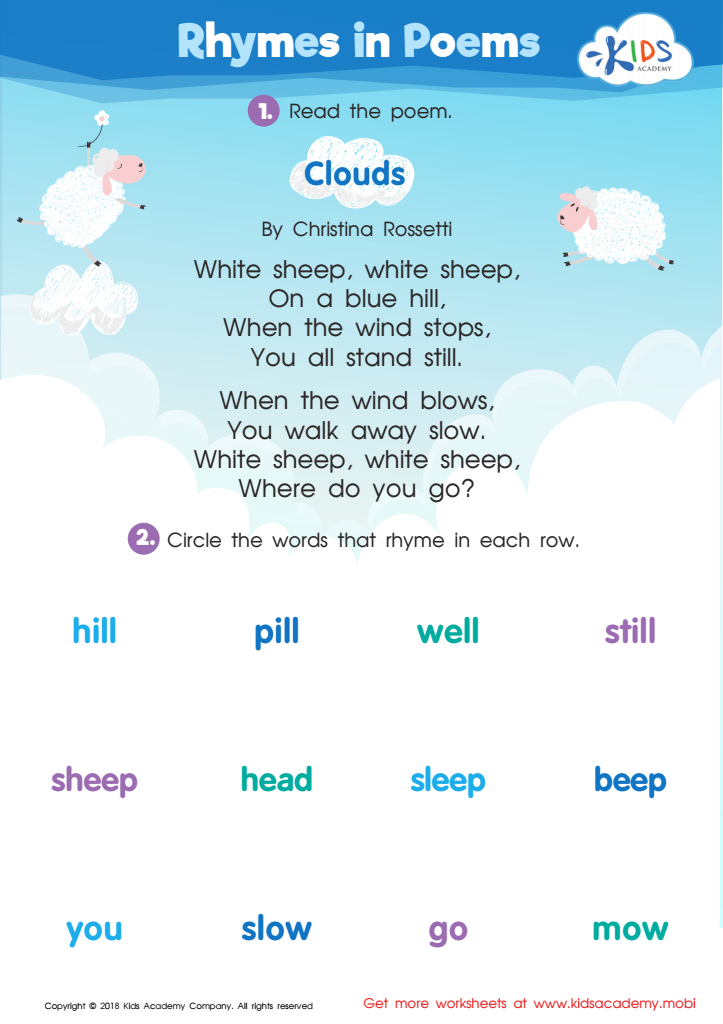
Rhymes in Poems Worksheet
Poems are lovely works of literature; some with rhymes, and some without. This poem for kids is full of rhymes and tells the tale of a sheep. Read it aloud to your kids, then help them circle the rhyming words.
Rhymes in Poems Worksheet
Worksheet
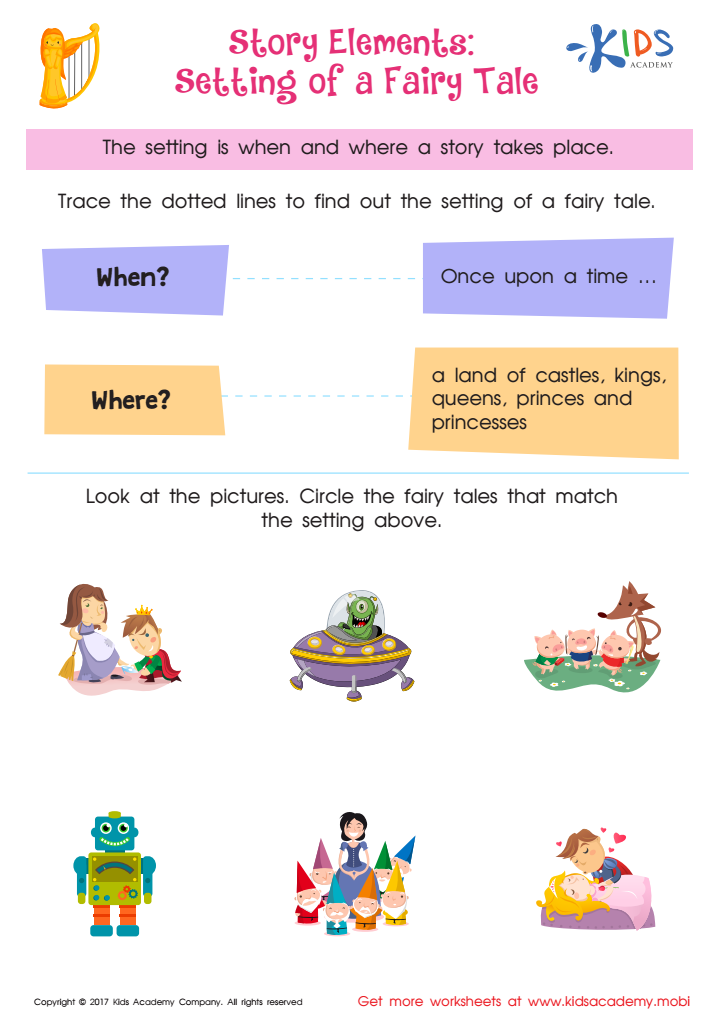
Story Elements: Setting of a Fairy Tale Printable
Help your child learn to analyze stories starting with setting. Use Story Elements worksheet to break down setting into two parts. This will help your child recognize setting quickly and understand its importance in the plot.
Story Elements: Setting of a Fairy Tale Printable
Worksheet
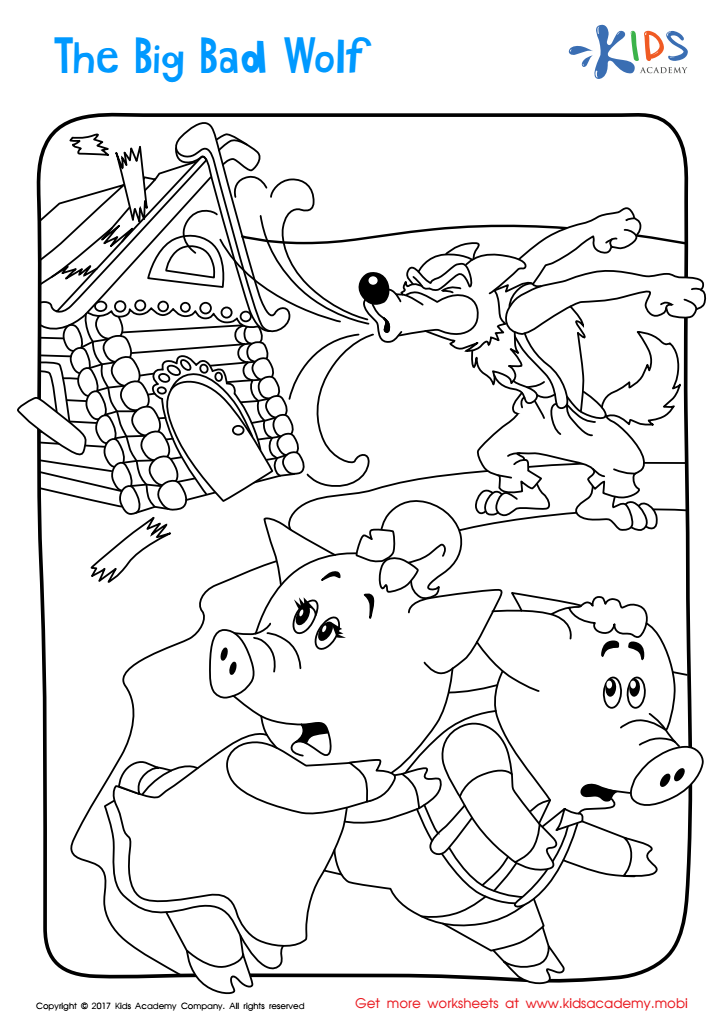
Big Bad Wolf Printable Coloring Page
Let your child have fun coloring the Big Bad Wolf blowing down the little pig's house! This printable coloring page introduces the classic tale, helping to develop reading comprehension skills.
Download (PDF)
 Assign to My Students
Assign to My Students
Big Bad Wolf Printable Coloring Page
Worksheet
Join Kids Academy for Free
Who is primarily going to use this learning content?







.jpg)
Parents and teachers should prioritize creativity enhancement through reading fiction for children aged 3-9 because it significantly impacts their cognitive and emotional development. Engaging with fictional stories nurtures imagination, allowing young minds to explore new ideas, perspectives, and scenarios. This imaginative play is crucial for problem-solving and critical thinking skills that form the foundation of future learning.
Reading fiction also improves language and vocabulary skills, enabling children to express their thoughts and feelings more effectively. As they encounter diverse characters and experiences, children learn empathy and understanding, essential for building positive social interactions. This emotional intelligence is critical for navigating relationships and fostering a sense of community.
Moreover, creative thinking sparked by fictional narratives encourages innovation—a vital skill in today’s rapidly changing world. When children create their own narratives or visualize story settings, they practice the art of storytelling and develop confidence in their creative abilities.
In summary, nurturing creativity through reading fiction in early childhood is not merely an enrichment activity; it is a fundamental aspect of holistic development, forming the intellectual and emotional foundations that will benefit children for years to come. Parents and teachers play a key role in fostering this invaluable skill set through encouragement and access to diverse literature.








