Critical thinking development Reading Fiction Worksheets for Ages 3-9
4 filtered results
-
From - To
Enhance your child’s critical thinking skills with our specially designed Reading Fiction Worksheets for ages 3-9. At Kids Academy, we're dedicated to providing engaging and educational resources that stimulate young minds. Our worksheets foster imagination, comprehension, and analytical thinking through captivating stories and thoughtful activities. Children will explore characters, settings, and plotlines, prompting them to ask questions, make predictions, and draw conclusions. Each worksheet has been crafted to align with your child's developmental stage, ensuring a gradual and continuous build-up of critical thinking abilities. Make learning fun and insightful with our exciting collection of reading fiction worksheets today!
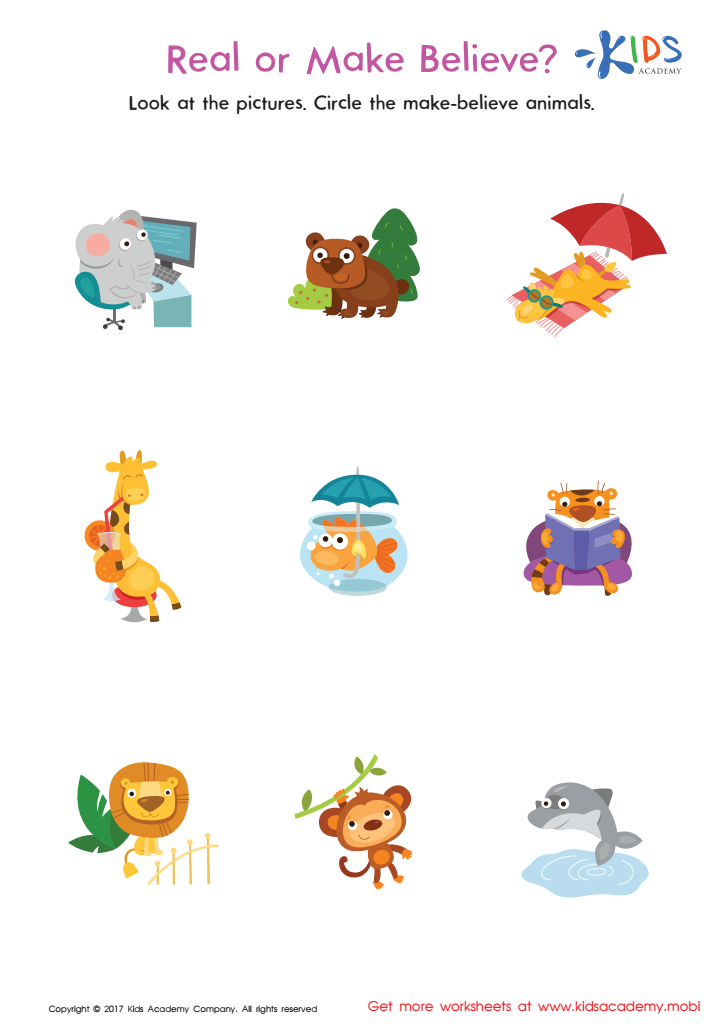
Fact or Make Believe Worksheet
 Assign to My Students
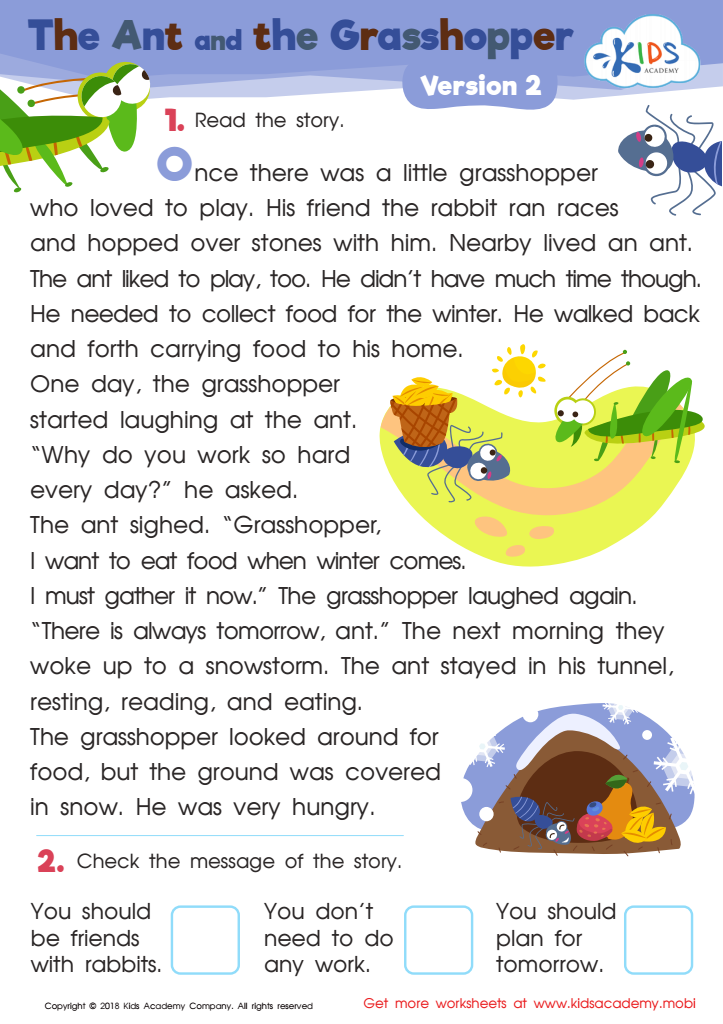
The Ant and The Grasshopper Version 2 Worksheet
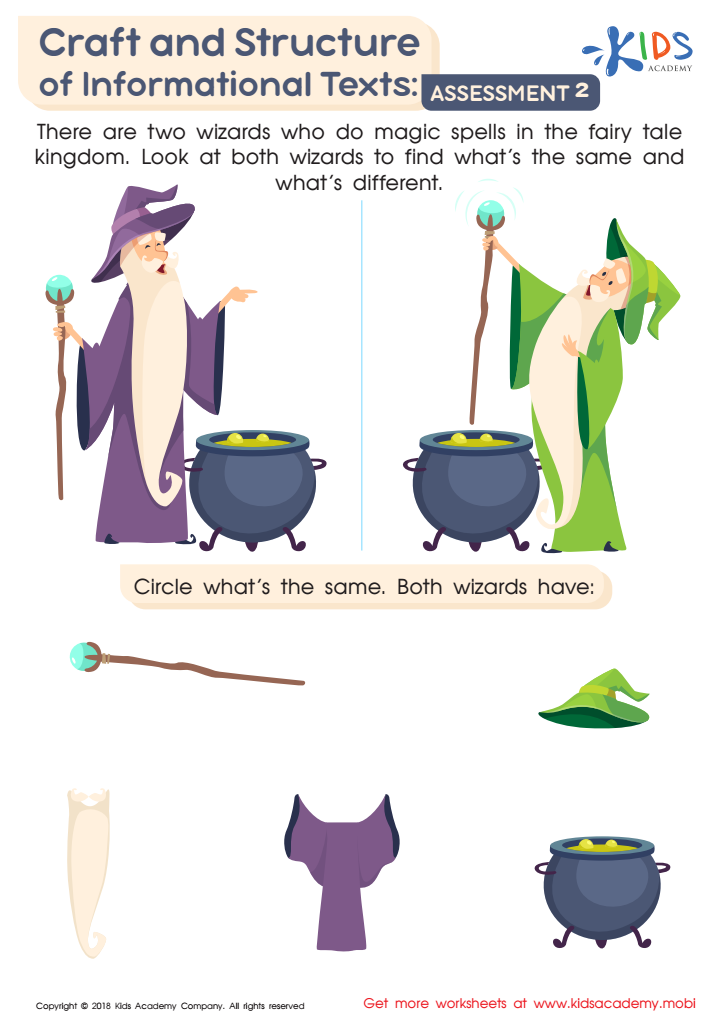
Craft and Structure of Informational Texts: Assessment 2 Worksheet
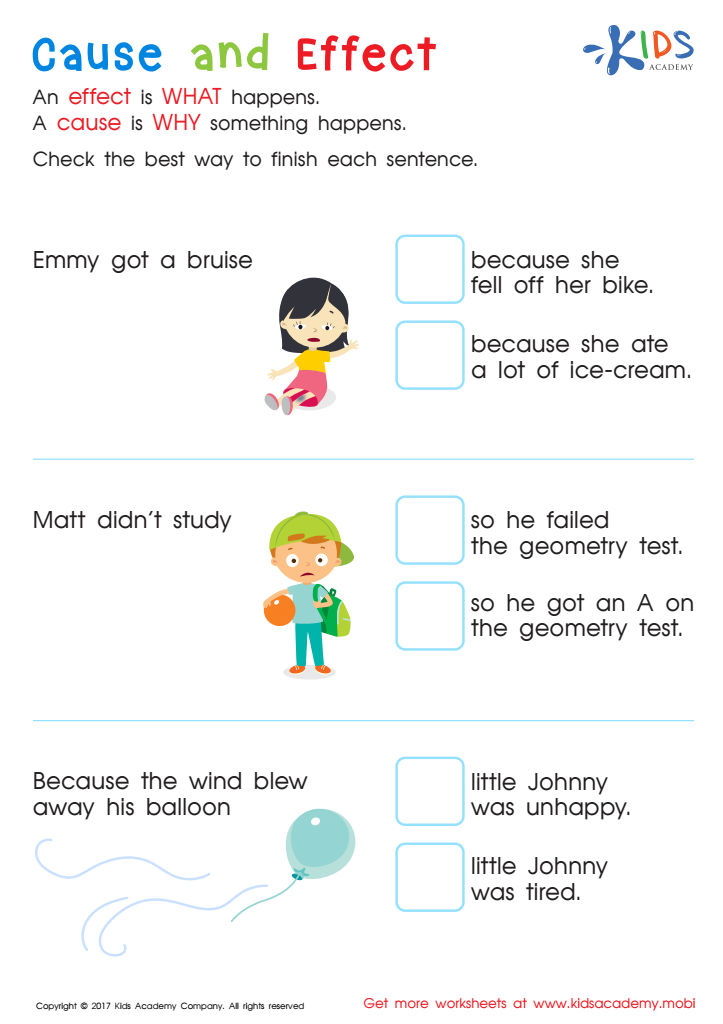
Cause and Effect Worksheet



.jpg)




Parents and teachers should prioritize critical thinking development through reading fiction for children ages 3-9 because it forms a foundation for essential cognitive and social skills. At this formative stage, children's brains are highly receptive to learning new concepts. Fiction exposes them to various scenarios that require interpretation and understanding, fostering their ability to infer, predict, and analyze. Encountering diverse characters and plotlines helps children develop empathy, understand different perspectives, and enhance their emotional intelligence.
Moreover, engaging with fictional narratives encourages kids to ask questions, make connections, and evaluate information—a key aspect of critical thinking. By discussing stories with them, adults can guide children to reflect on moral lessons, compare realities with narratives, and think independently. The interactive and imaginative aspects of fiction captivate young minds, making learning enjoyable and deeply impactful.
Additionally, strong critical thinking abilities are linked to academic success across subjects, as these skills enable children to tackle complex problems and approach learning with an inquisitive mindset. Ultimately, by fostering critical thinking through fiction, parents and teachers equip children with the tools they need to navigate an increasingly complex world with discernment, creativity, and confidence.








