Rhyme recognition Reading Fiction Worksheets for Ages 3-9
3 filtered results
-
From - To
Explore our engaging Rhyme Recognition Reading Fiction Worksheets, designed for children aged 3 to 9! These worksheets provide a fun and interactive way to develop essential literacy skills through playful rhymes and catchy narratives. With colorful illustrations and captivating stories, kids will enhance their phonemic awareness while decoding and reading familiar rhymes. Each worksheet encourages critical thinking and creativity, making learning enjoyable and effective. Perfect for parents and educators, our resources align with early learning standards, fostering a strong foundation in reading and language skills. Unlock your child's imagination and help them fall in love with reading from an early age!
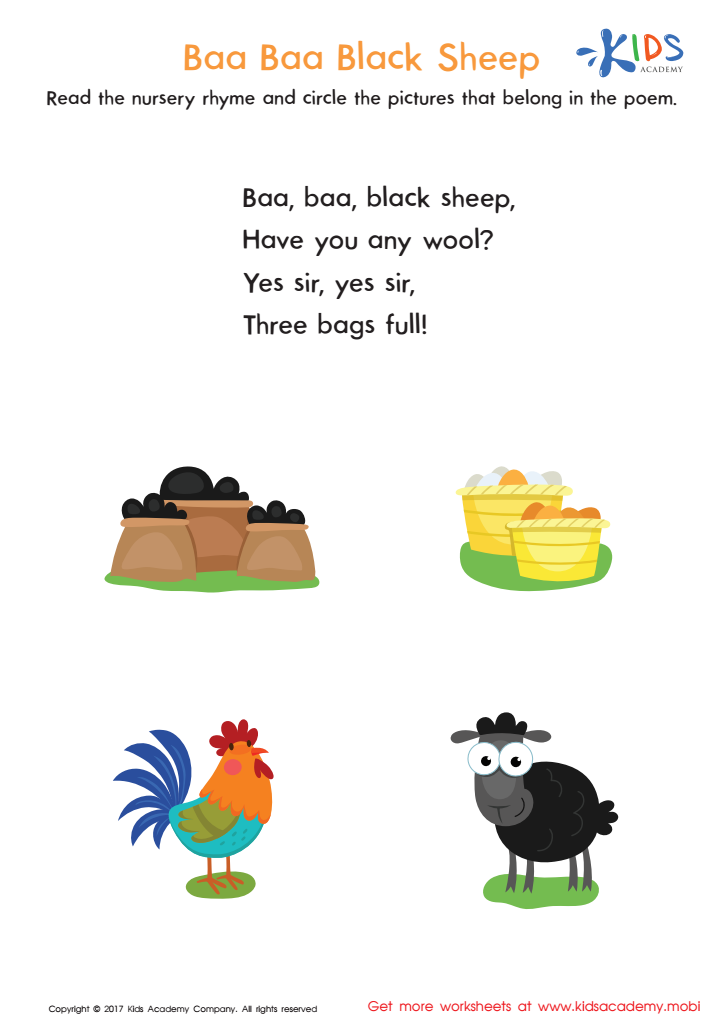
Baa Baa Black Sheep Printable
 Assign to My Students
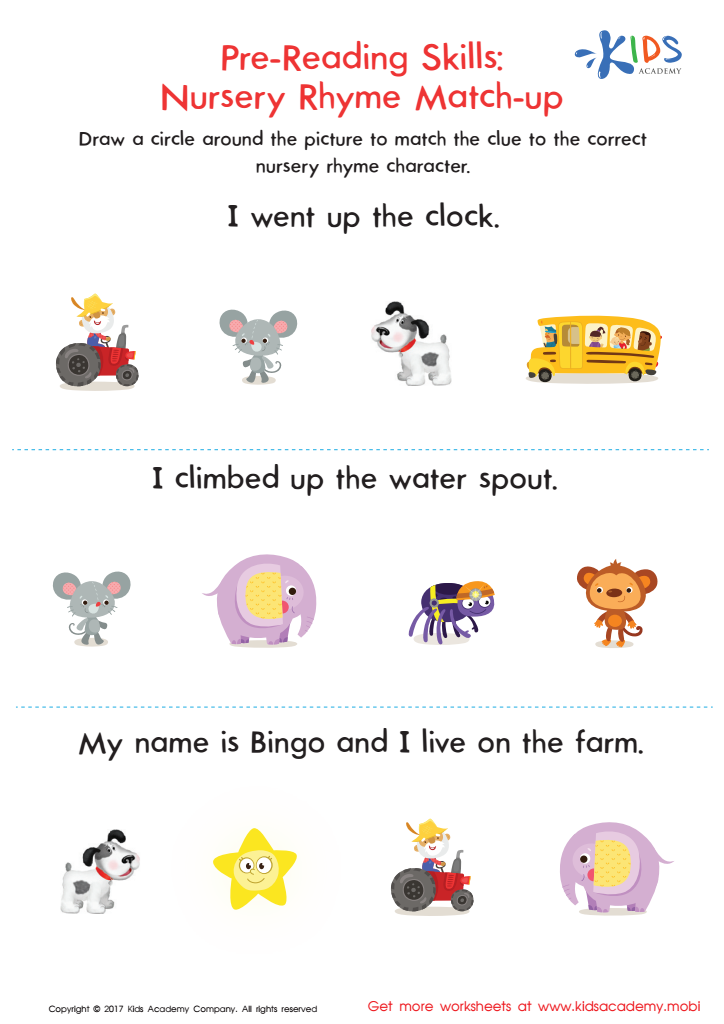
Nursery Rhyme Match–Up Worksheet
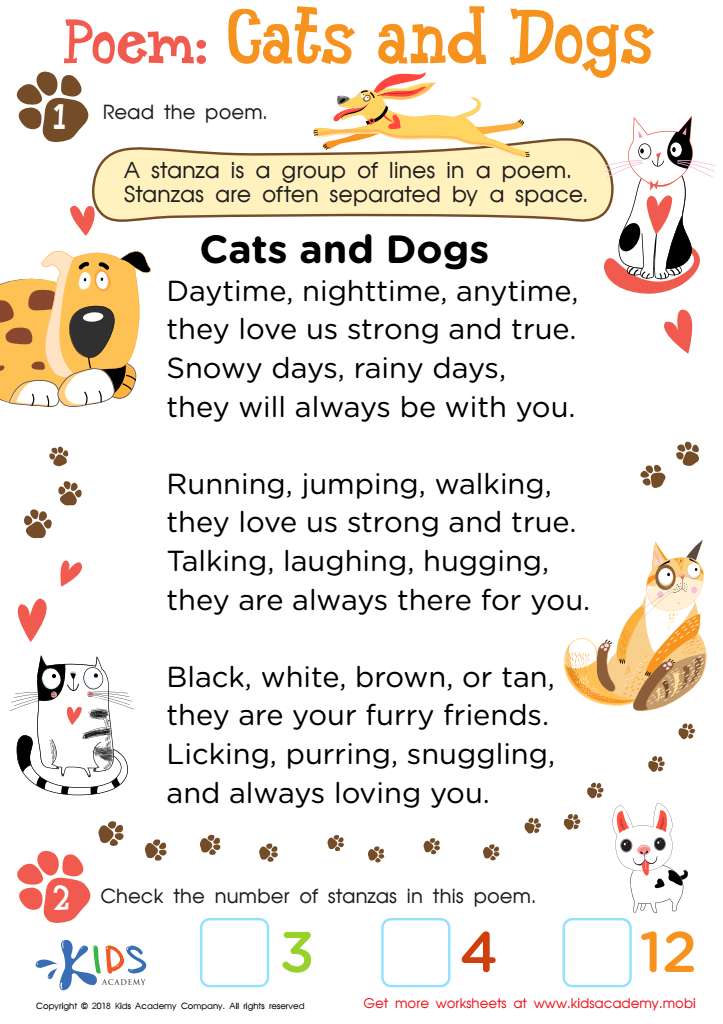
Poem: Cats and Dogs Worksheet



.jpg)



Rhyme recognition is a crucial component of literacy development for children aged 3 to 9. Educators and parents should prioritize this skill because it lays the foundation for reading success. When children can recognize and produce rhymes, they develop phonemic awareness—the ability to hear and manipulate sounds in words. This skill is essential for decoding words, which is a core part of reading fluency.
Engaging with rhyming fiction also enhances vocabulary and comprehension. Rhyming texts often use playful language, making them more memorable and enjoyable, which fosters a love for reading early on. The rhythmic patterns found in rhymes help children predict text, giving them confidence as they read, while also engaging critical thinking skills by prompting them to guess which words come next.
Additionally, rhyme recognition supports social-emotional development. Group activities involving rhymes, like songs or poetry, promote cooperation and bonding, aiding social skills. In essence, promoting rhyme recognition not only expands literacy skills but also creates a richer, more engaging learning environment. By prioritizing this skill, parents and teachers equip children with key tools to navigate their educational journeys successfully.








