Understanding perspectives Reading Fiction Worksheets for Ages 3-9
3 filtered results
-
From - To
Unlock your child's imagination and critical thinking with our "Understanding Perspectives Reading Fiction Worksheets" for ages 3-9. These engaging, age-appropriate activities help young readers grasp different viewpoints within stories, fostering empathy and comprehension. Each worksheet is designed to make reading fun and interactive, featuring captivating stories and characters that encourage children to step into others' shoes. Through guided questions and creative exercises, kids will enhance their ability to see diverse perspectives, essential for social and emotional development. Invest in your child’s reading journey today with our expertly crafted worksheets, and watch them become thoughtful, understanding readers.
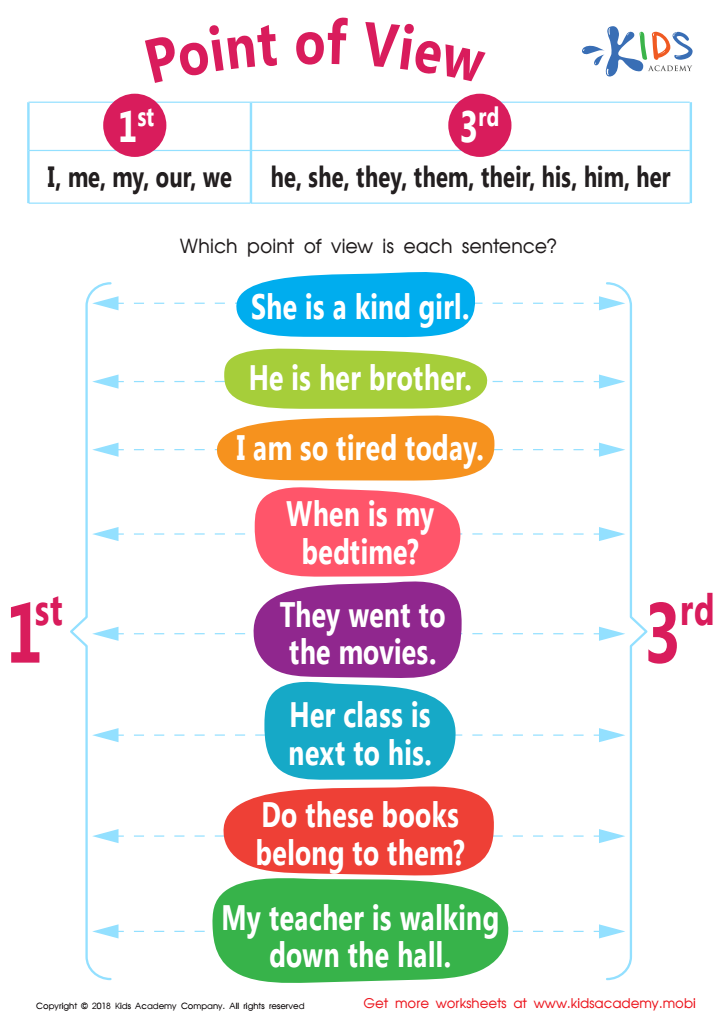
Point of View Worksheet
 Assign to My Students
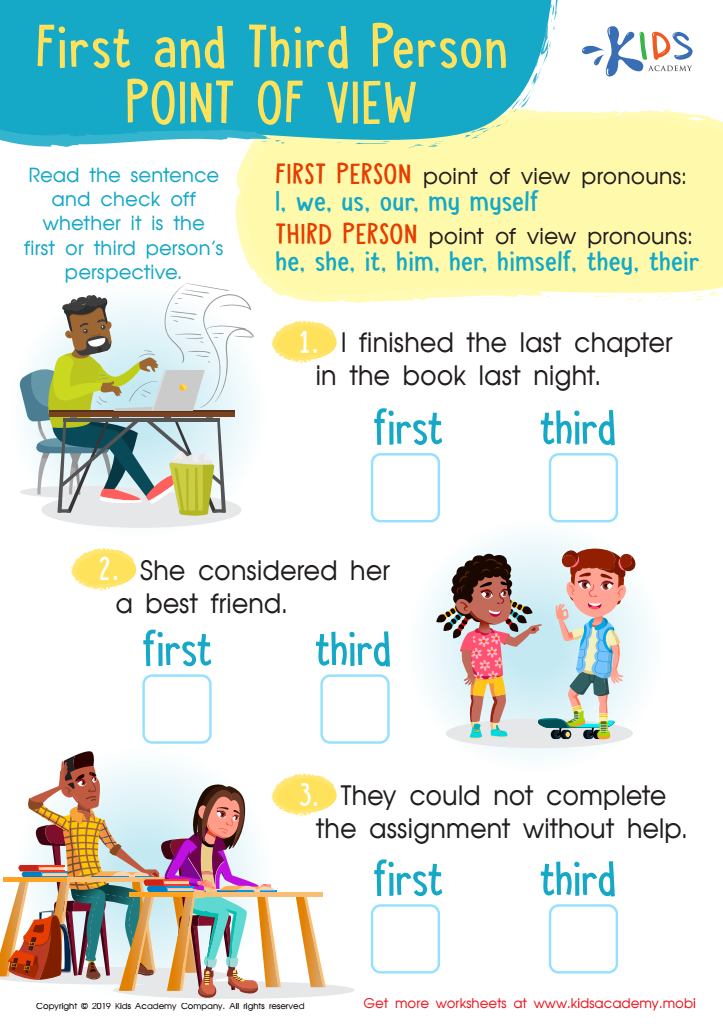
First and Third Person Point of View Worksheet
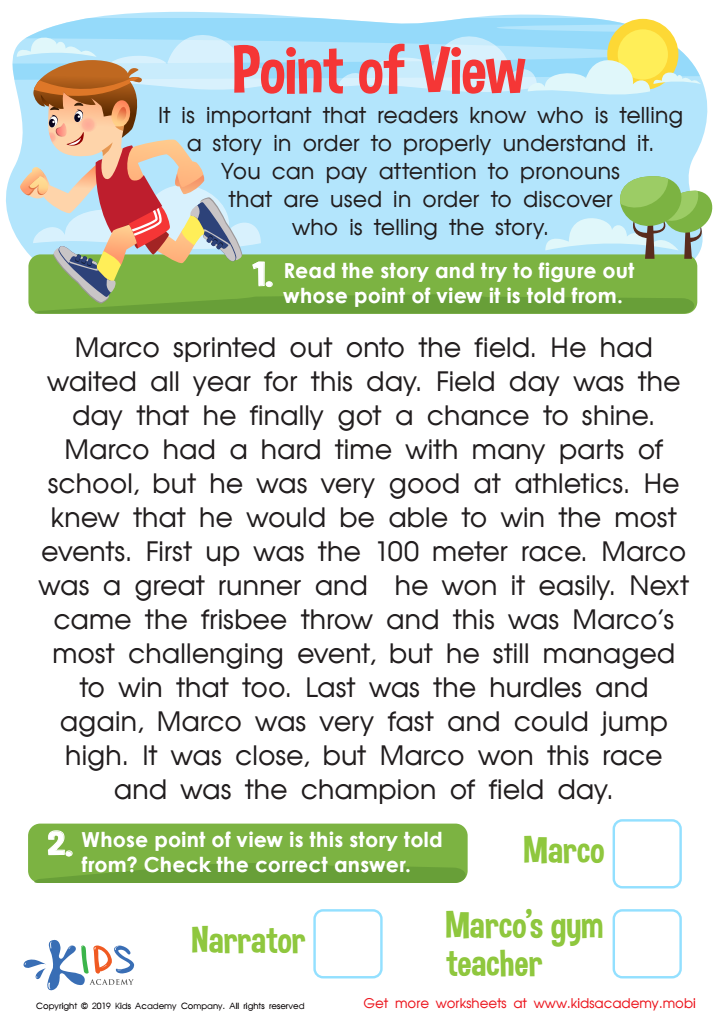
Point of View Worksheet



.jpg)


.jpg)

Understanding perspectives through reading fiction is crucial for the emotional and cognitive development of children aged 3-9. During these formative years, children's minds are highly receptive to new ideas and concepts. When parents or teachers expose kids to various perspectives through storytelling, it does more than entertain—it builds empathy, critical thinking, and socio-emotional skills.
Fiction introduces children to characters from diverse backgrounds, each with their own experiences and viewpoints. By engaging with these stories, children learn to identify and understand the emotions and motivations of others. This empathetic understanding fosters kindness, reduces ethnocentrism, and enhances their ability to work cooperatively with peers. It’s foundational for developing strong, respectful social relationships.
Additionally, understanding perspectives develops critical thinking and problem-solving skills. Children learn to think beyond their immediate experiences, analyzing why characters act the way they do, predicting outcomes, and considering alternative actions. These skills are indispensable for academic success and invaluable life skills.
Furthermore, early exposure to diverse perspectives enriches language development and boosts literacy. It expands their vocabulary, comprehension, and ability to express complex ideas.
By nurturing these attributes through fiction, parents and teachers equip children with the tools necessary for navigating a multicultural world, promoting a future generation that values and practices empathy, inclusion, and thoughtful analysis.








