Filters

29 filtered results

Clear all filters
Favorites
With answer key
Interactive

29 filtered results

Difficulty Level

Grade


Check out this FREE Trial Lesson on Reading Fiction for age 3-9!

Illustrations in a Text

Favorites
With answer key
Interactive
  • 3-9
  • Vocabulary enhancement
  • Reading Fiction
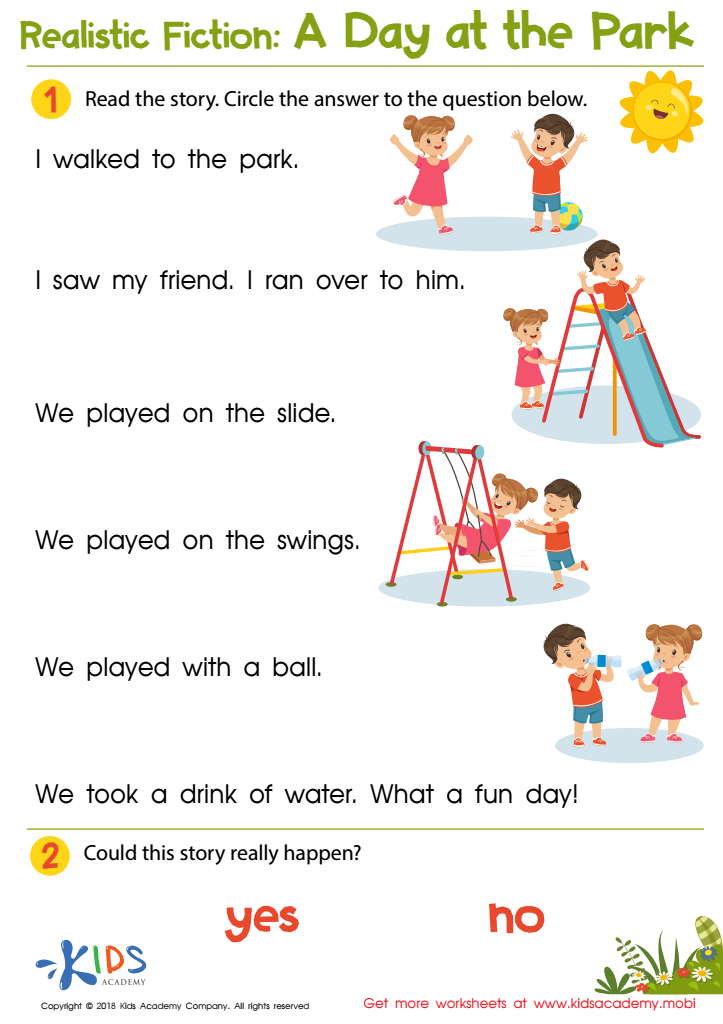
A Day at the Park Worksheet

A Day at the Park Worksheet

Kids as young as preschool-age can be taught to evaluate stories! Use this fun worksheet about a day at the park. Read each sentence aloud, looking at the pictures. Ask your child if the events in the story could happen in real life - if yes, circle yes, otherwise circle no. When finished, discuss with them the genre, realistic fiction.
A Day at the Park Worksheet
Worksheet
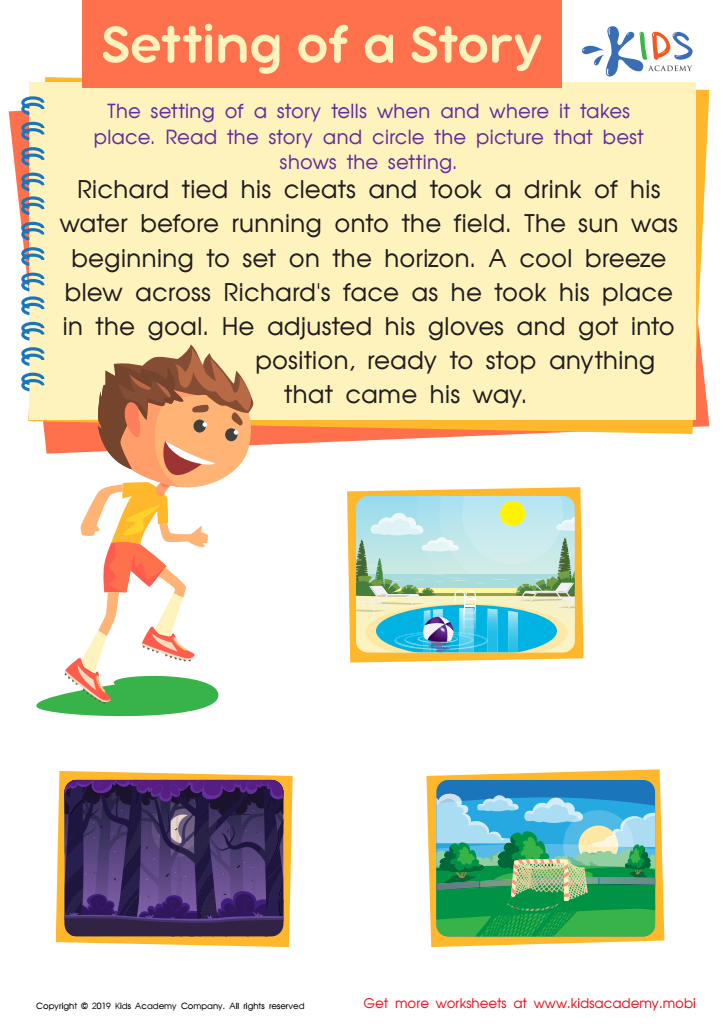
Setting of a Story Worksheet

Setting of a Story Worksheet

You need characters, theme, POV, plot and setting to tell a good story. Ask your kids to explain them and use this worksheet with a story to teach them about setting. Read the story with your kids, then have them circle the picture that best shows the setting.
Setting of a Story Worksheet
Worksheet
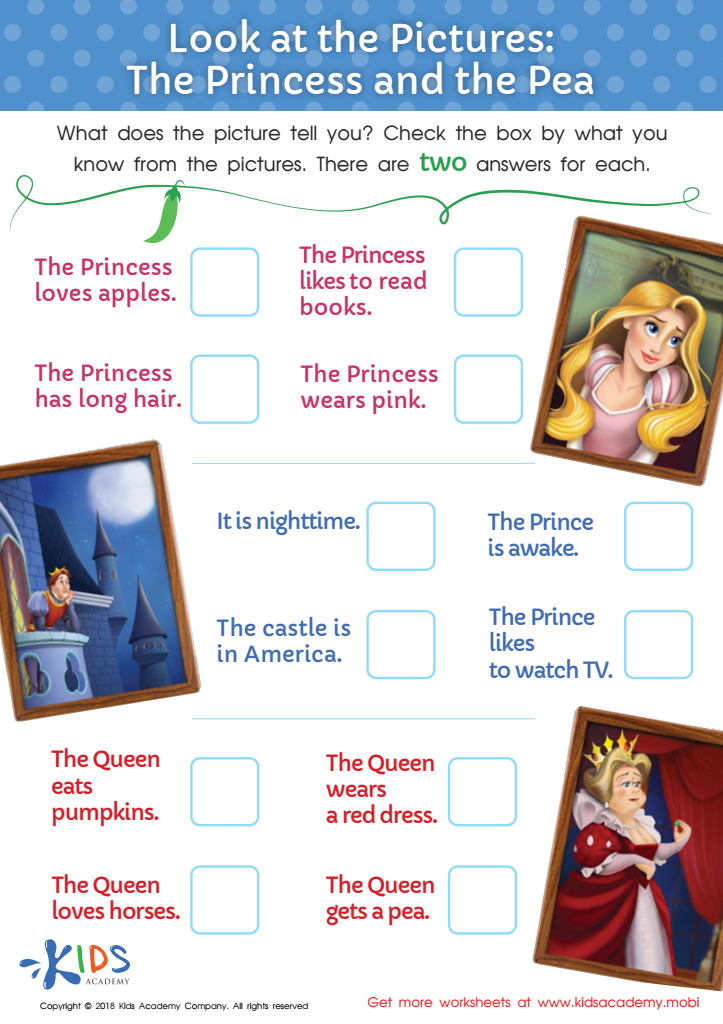
Look at the Pictures: The Princess and the Pea Worksheet

Look at the Pictures: The Princess and the Pea Worksheet

Early readers can benefit from picture clues to understand stories and text. Looking at images helps them learn the meaning of words and comprehend events. Use this worksheet on The Princess and the Pea to let students observe and learn from the pictures. It's a great way to help them comprehend early reading materials.
Look at the Pictures: The Princess and the Pea Worksheet
Worksheet
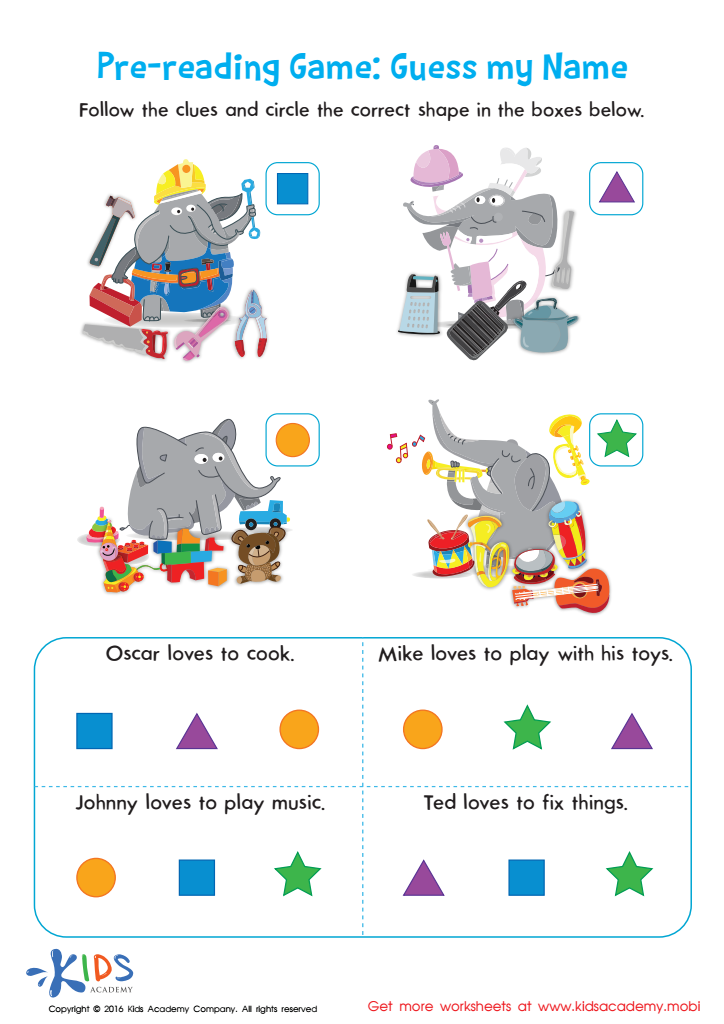
Pre reading worksheet guess my name

Pre Reading Worksheet Guess My Name

Guess My Name is a fun way to practice inference skills. Guess My Name is a fun pre-reading game to help your child practice drawing inferences from clues. With colorful illustrations, they'll use clues to match each elephant with its sentence and sharpen their inference skills.
Pre Reading Worksheet Guess My Name
Worksheet
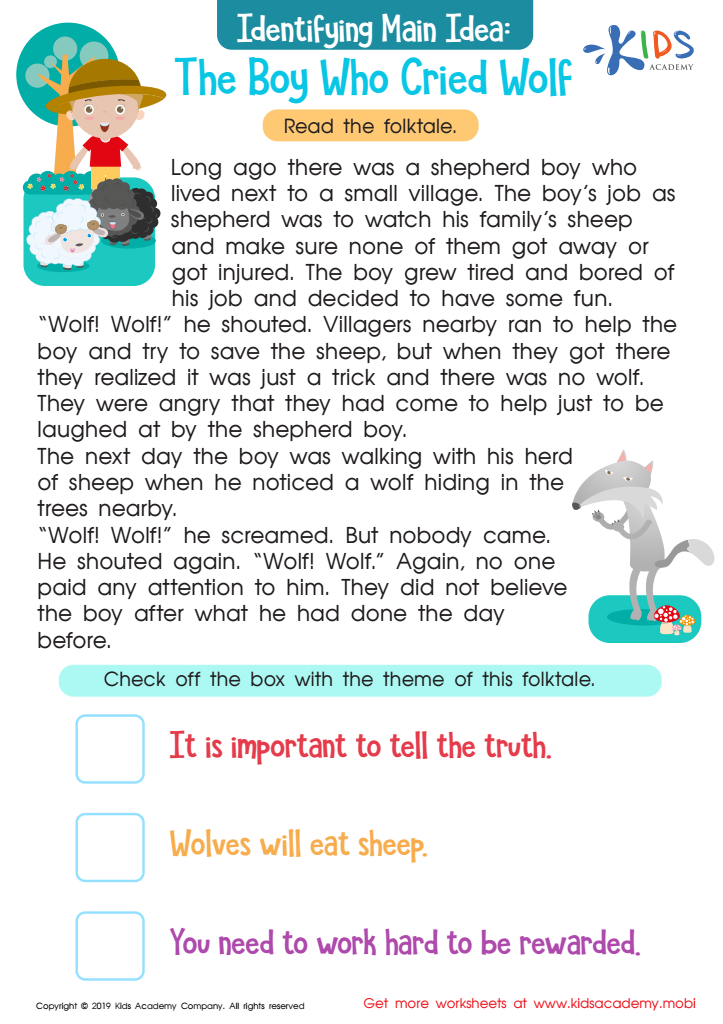
The Boy Who Cried Wolf Part 2 Worksheet


The Boy Who Cried Wolf Part 2 Worksheet

Kids love story time - no doubt they know their favorites! This worksheet tells a story with a theme or main idea. Read it carefully with your kids and ensure they understand every word. Then, help them answer the simple questions at the bottom of the page.
The Boy Who Cried Wolf Part 2 Worksheet

Worksheet


Vocabulary enhancement through reading fiction is crucial for children aged 3-9, as it lays the foundation for their literacy and language skills. Engaging with fictional stories introduces children to new words in context, helping them to not only understand the meaning but also how to use these words in everyday conversation. This age group is characterized by rapid cognitive and linguistic development, making it an ideal time for vocabulary expansion.

Moreover, reading fiction stimulates imagination and creativity, encouraging children to think critically and make connections between ideas. It also promotes empathy, as kids encounter diverse characters and situations, learning to navigate different perspectives and emotions. Research consistently shows that a strong vocabulary is linked to improved reading comprehension and academic performance in later years.

For parents and teachers, fostering a love of reading fiction can help create a rich language environment, reinforcing lessons and encouraging lifelong learning habits. By prioritizing vocabulary enhancement through engaging stories, adults equip children with essential tools for effective communication and academic success, ultimately fostering their overall cognitive development and emotional intelligence. Therefore, investing time in reading fiction is beneficial for nurturing well-rounded, articulate, and empathetic individuals.