
Animal identification Reading Non-Fiction Worksheets for Ages 3-9
4 filtered results
Difficulty Level
Grade
Age
-
From - To
Subject
Activity
Standards
Discover the world of animals with our beautifully crafted Animal Identification Reading Non-Fiction Worksheets, designed for ages 3-9. These engaging worksheets from Kids Academy introduce young explorers to a diverse range of creatures through interactive reading activities. Each worksheet helps kids develop their reading, comprehension, and critical thinking skills while enhancing their vocabulary and love for wildlife. Perfect for classroom or home learning, these resources make learning fun and educational. Make reading an adventure by delving into fascinating facts about the animal kingdom! Download, print, and start exploring today at Kids Academy!
Favorites
With answer key
Interactive
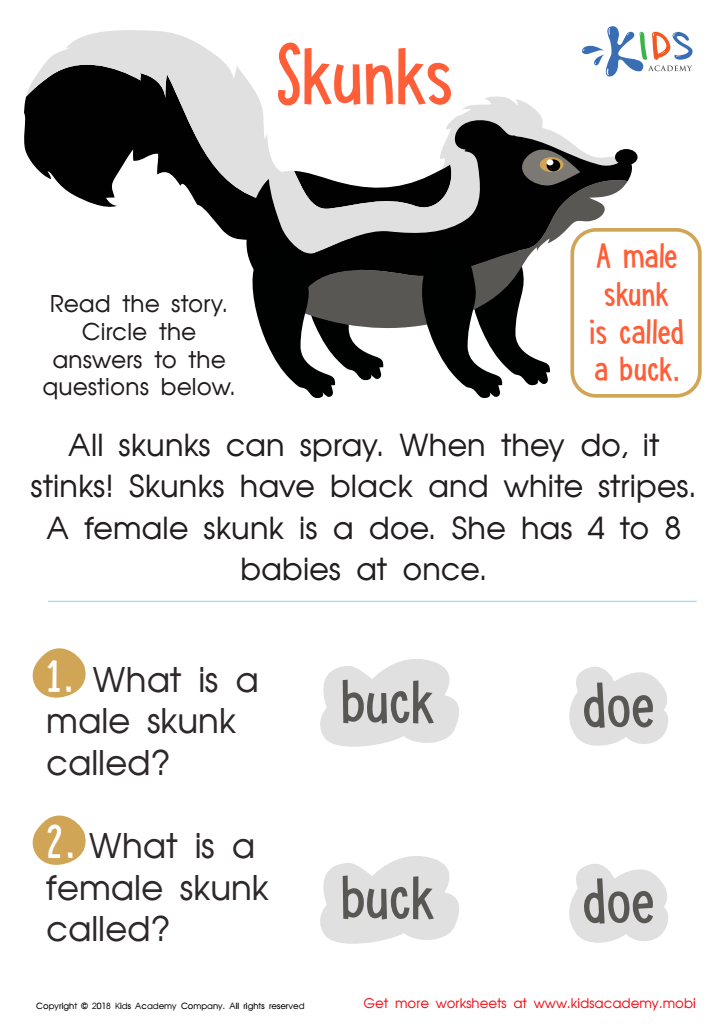
Skunks Worksheet
Kids can learn fascinating information about a beloved and smelly animal with this fun worksheet. They'll read articles, texts, and look at an accompanying picture while reading. Captions and sidebars can give extra details. Finally, answer the given questions by selecting the correct response. Reading is a fun and informative way to gain knowledge!
 Assign to My Students
Skunks Worksheet
Worksheet
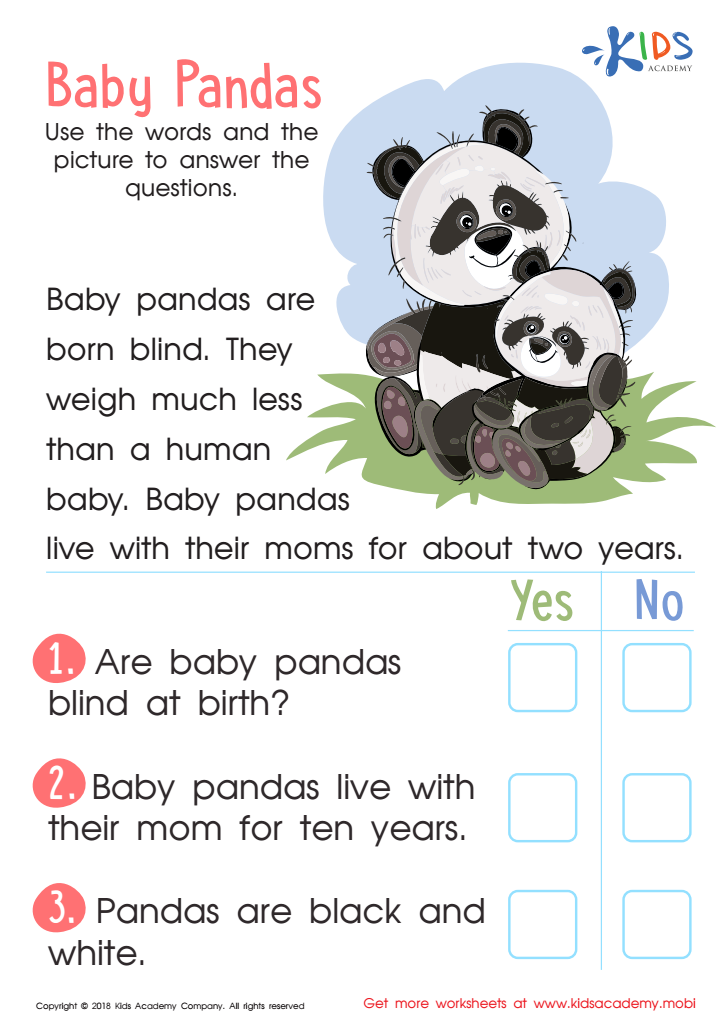
Baby Pandas Worksheet
Kids can't usually see pandas in person, but they can learn more about them with this fun worksheet! It includes a passage and picture, plus questions at the end to check kids' reading comprehension. Just ask them to read the text, check the "yes" and "no" boxes, and enjoy the fascinating facts about baby pandas!
Baby Pandas Worksheet
Worksheet
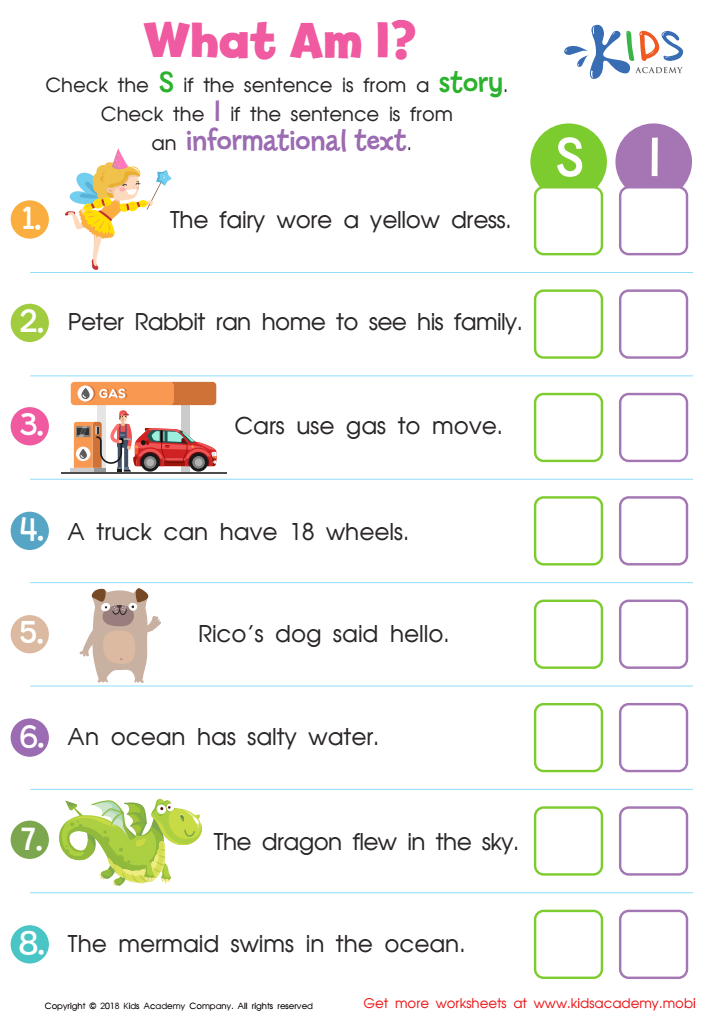
What Am I? Worksheet
This worksheet assesses students' ability to differentiate between stories and texts they read for facts. Students learn to distinguish between reading for pleasure and reading for information. It includes statements from both a story and an informational text, and students must decide what type of text it is.
What Am I? Worksheet
Worksheet
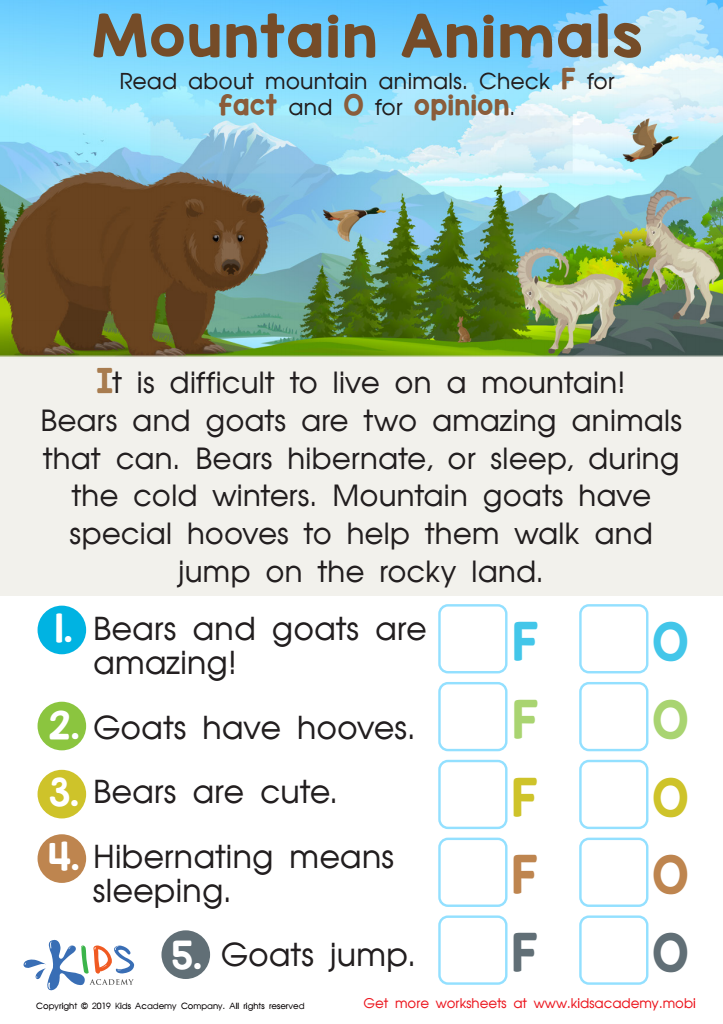
Mountain Animals Worksheet
Is mountain wildlife amazing? Fact or fiction? Help your child sharpen critical-thinking skills with this engaging worksheet. Featuring a fun nonfiction passage about animals like bears and goats, your child will read through the text and identify each statement as fact or fiction. Perfect for boosting reading comprehension and analytical abilities!
Mountain Animals Worksheet
Worksheet
Join Kids Academy for Free
Who is primarily going to use this learning content?








Animal identification through reading non-fiction books serves as an essential aspect of early childhood education, benefiting children aged 3-9 profoundly. Firstly, it enhances early literacy skills. Engaging with non-fiction texts about animals introduces children to a rich vocabulary, varied sentence structures, and informational text features like headings, captions, and diagrams. These elements foster comprehension and the ability to extract key details, setting a strong foundation for academic success.
Secondly, learning about animals stimulates curiosity and scientific thinking. Children develop observation skills, learn to ask questions, and make connections between different pieces of information. This nurtures critical thinking and a love for learning, pivotal in their cognitive development.
Moreover, animal identification connects children with nature, instilling a sense of wonder and respect for the environment. This early exposure fosters empathy and encourages responsible behaviors, laying the groundwork for environmental stewardship.
Additionally, engaging with non-fiction texts about animals can cater to diverse interests, making reading a rewarding and enjoyable experience. It supports differentiated learning by aligning with children’s varying preferences and abilities, thus promoting inclusion and engagement.
Overall, parents and teachers play a crucial role in enriching foundational language skills, fostering intellectual curiosity, and nurturing empathy by prioritizing non-fiction animal identification books in early education.








