Reading practice Reading Non-Fiction Worksheets for Ages 3-9
4 filtered results
-
From - To
Boost your child’s reading skills with our specially designed Reading Non-Fiction Worksheets for Ages 3-9. These engaging worksheets from Kids Academy help young learners develop a strong foundation in non-fiction reading through interactive and age-appropriate exercises. Designed to make learning fun, our worksheets encourage curiosity, improve comprehension, and build essential reading skills, such as identifying facts and understanding text structures. Perfect for both classroom and at-home learning, these resources foster a love for reading while enhancing critical thinking abilities in your budding readers. Engage your child today and watch them flourish with confidence in reading non-fiction texts!
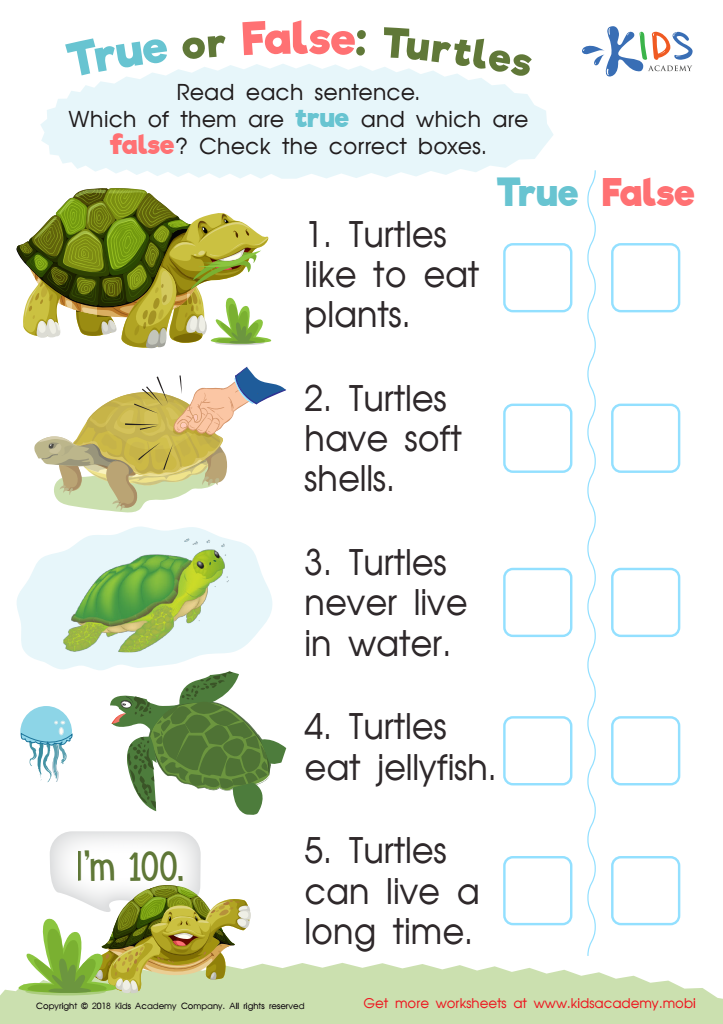
True or False: Turtles Worksheet
 Assign to My Students
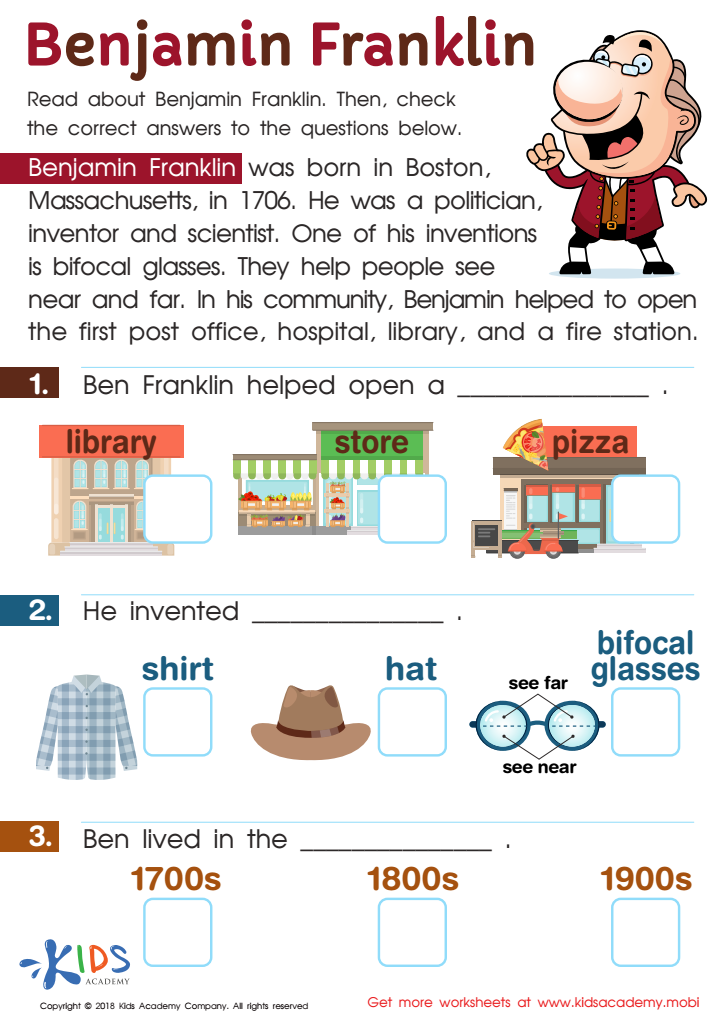
Benjamin Franklin Worksheet
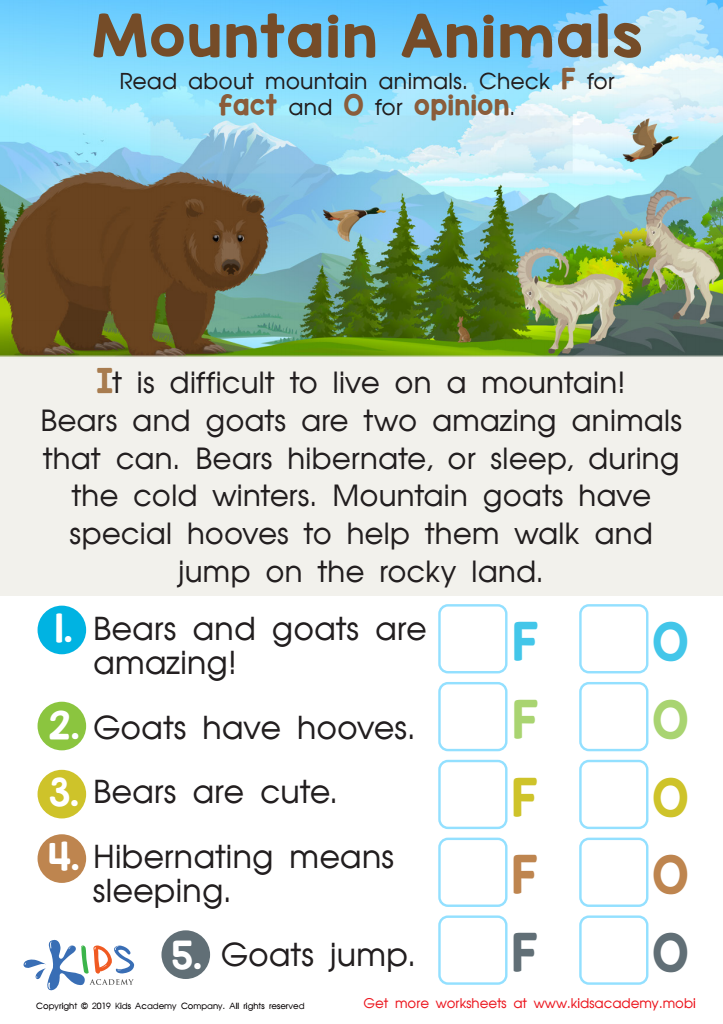
Mountain Animals Worksheet
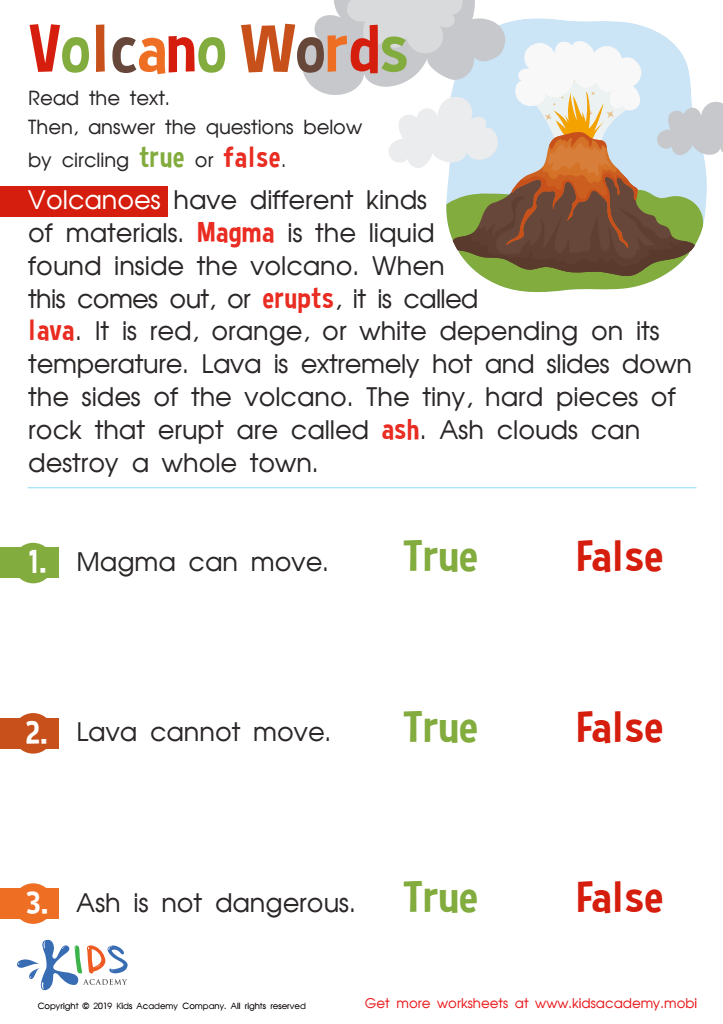
Volcano Words Worksheet








Reading non-fiction from an early age offers a treasure trove of benefits that directly impact a child’s cognitive and emotional growth. Parents and teachers should champion this habit for children aged 3-9 because it builds foundational knowledge about the world around them. Engaging with non-fiction helps these young learners develop critical thinking skills, as they start to ask questions and seek answers about real-world phenomena.
Furthermore, non-fiction is instrumental in enriching vocabulary and language skills. When children read about diverse topics like animals, plants, history, or space, they are introduced to new terms and concepts that stimulate curiosity and conversation. This diverse vocabulary enhances overall communication skills, making it easier for children to articulate their thoughts and understand complex ideas.
Reading early non-fiction can also develop focus and attention to detail. Children learn to sift through factual information to appreciate its value, fostering a sense of discipline that benefits their general academic performance. Additionally, it counters one extreme of focusing solely on fiction, balancing the educational spectrum.
Psychosocially, exposure to various real-life scenarios and different cultures can cultivate empathy and global awareness, thus forging more rounded and well-informed individuals. Therefore, nurturing a non-fiction reading habit in young children serves as a crucial stepping-stone for lifelong learning and personal development.








