Comparing Fractions Sight Words Worksheets for Ages 3-9 - Page 2
36 filtered results
-
From - To
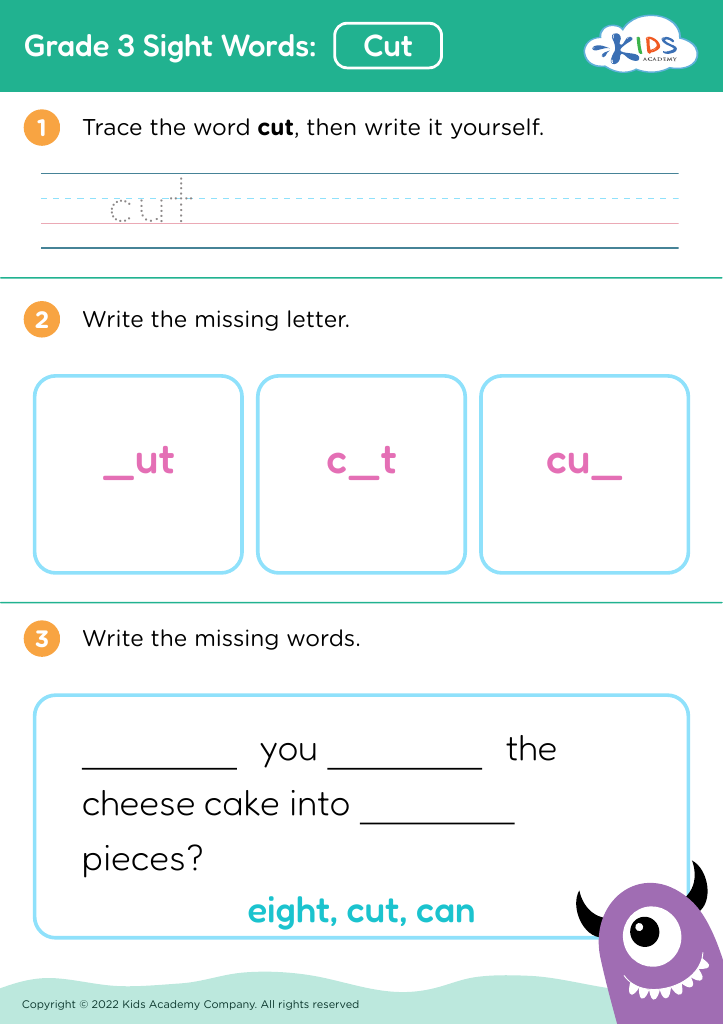

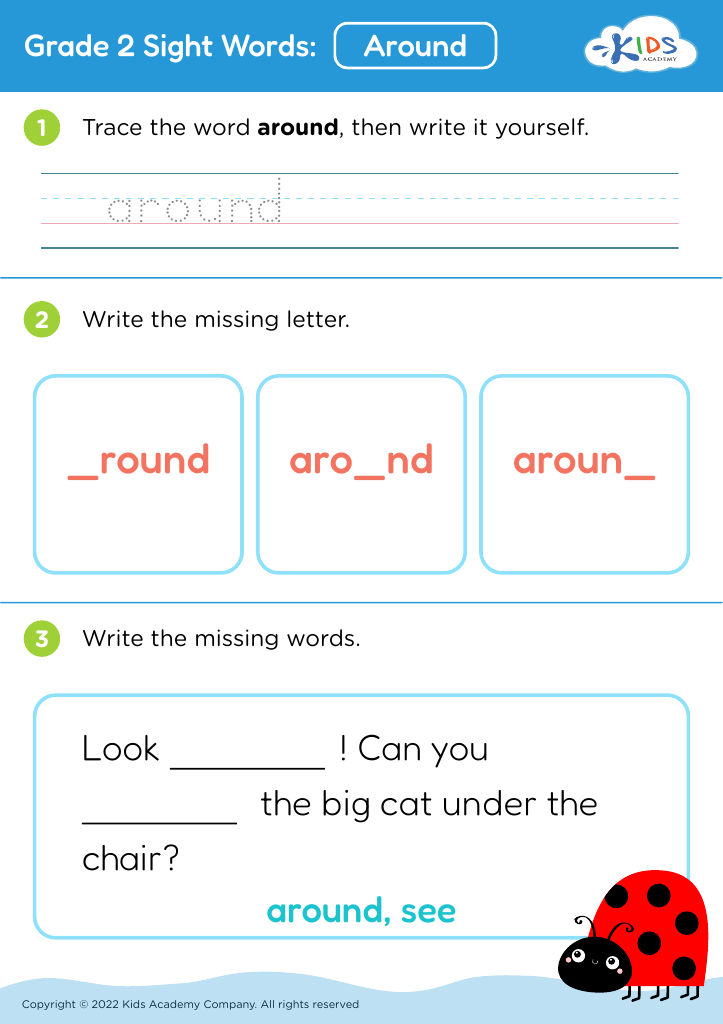
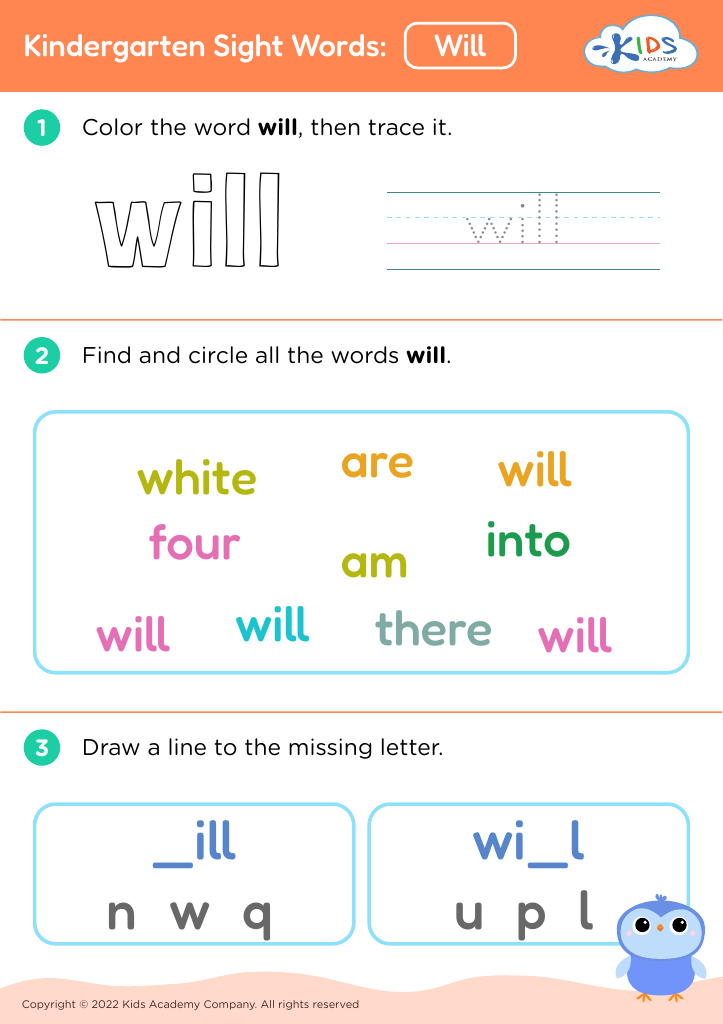
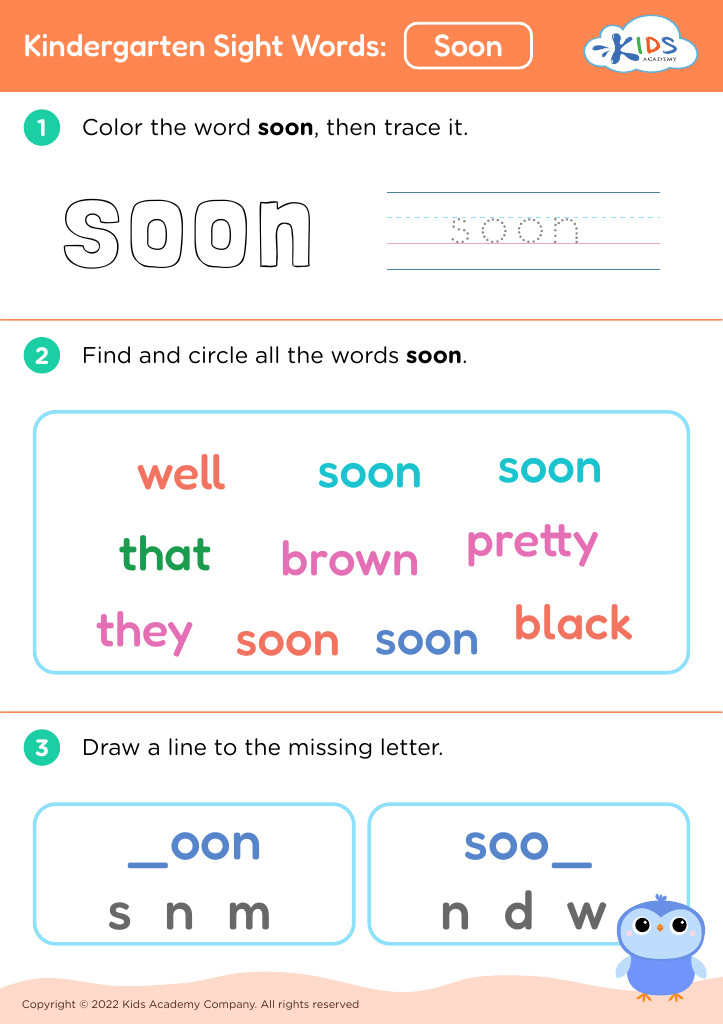
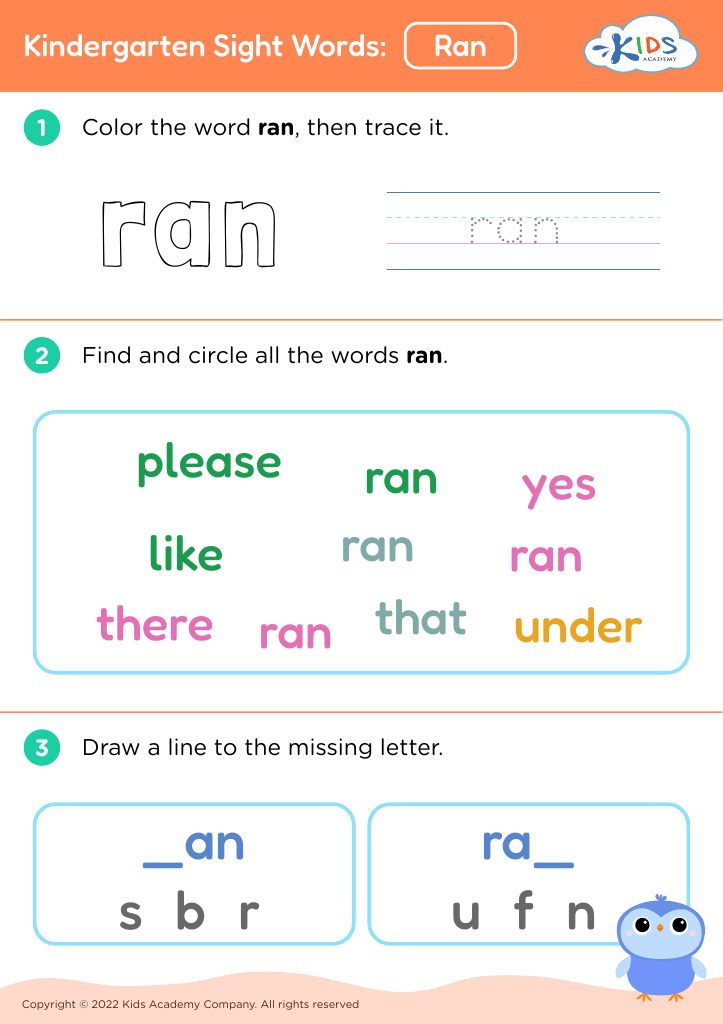
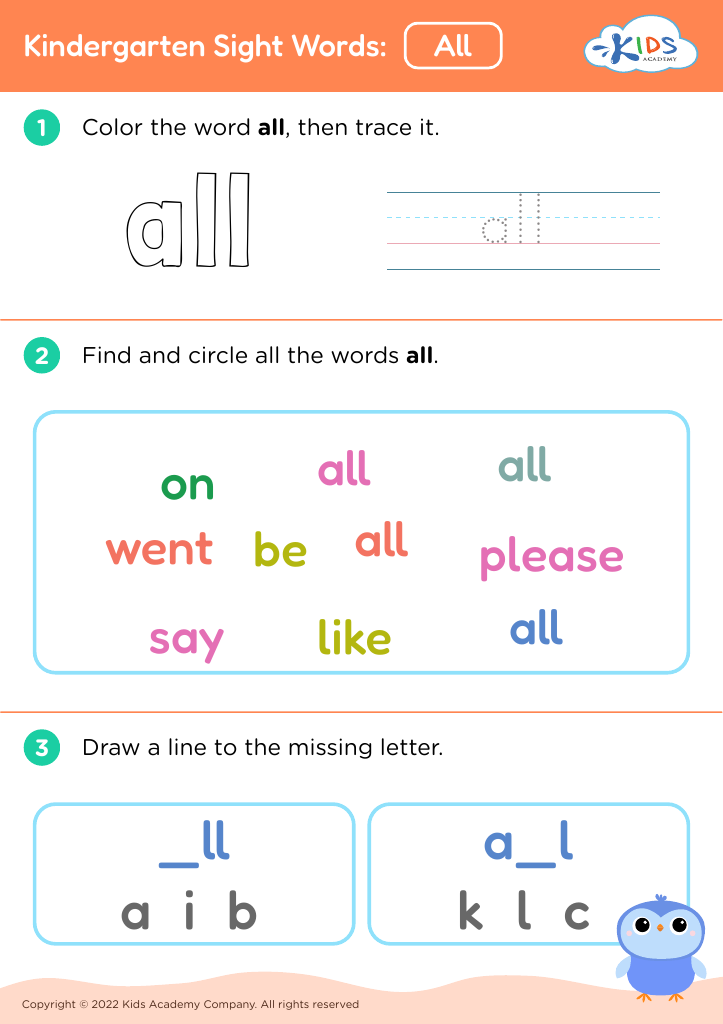








Parents and teachers should prioritize teaching children about comparing fractions as it lays vital groundwork for mathematical competency. Understanding fractions is not just about numbers; it is about developing critical thinking and problem-solving skills. For ages 3-9, children are in a key developmental stage where they can grasp basic mathematical concepts, including the idea of parts of a whole.
Comparing fractions enhances their ability to make decisions based on size and quantity, fostering analytical skills that will benefit them in everyday life. For instance, when children learn to compare who has more snacks or toys using fractions, they engage in practical math that reinforces learning.
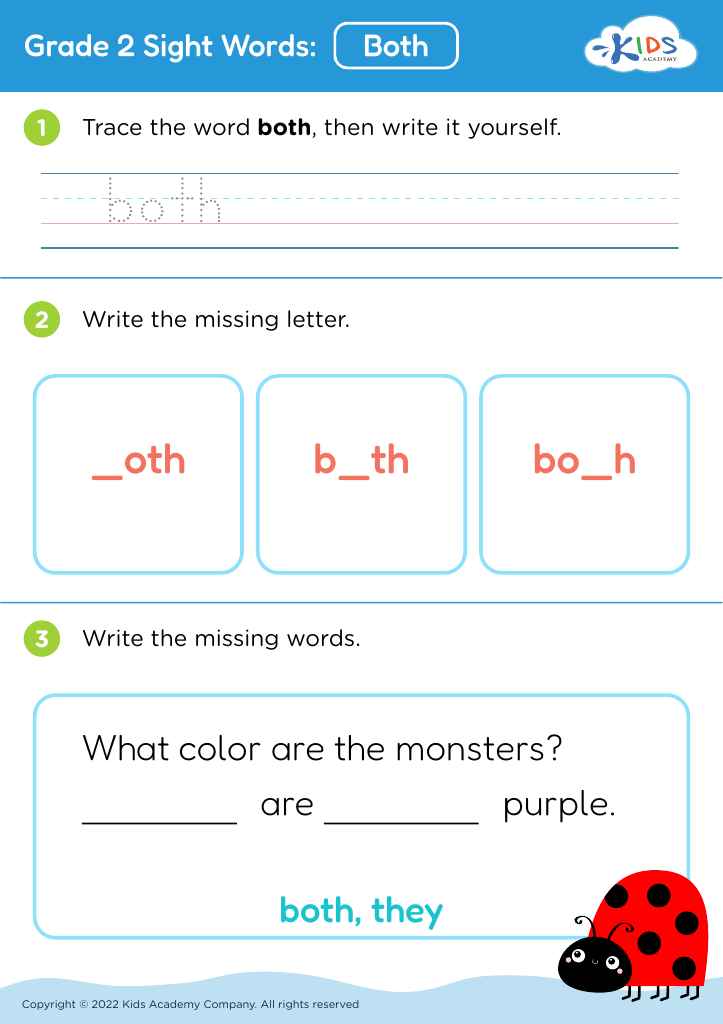
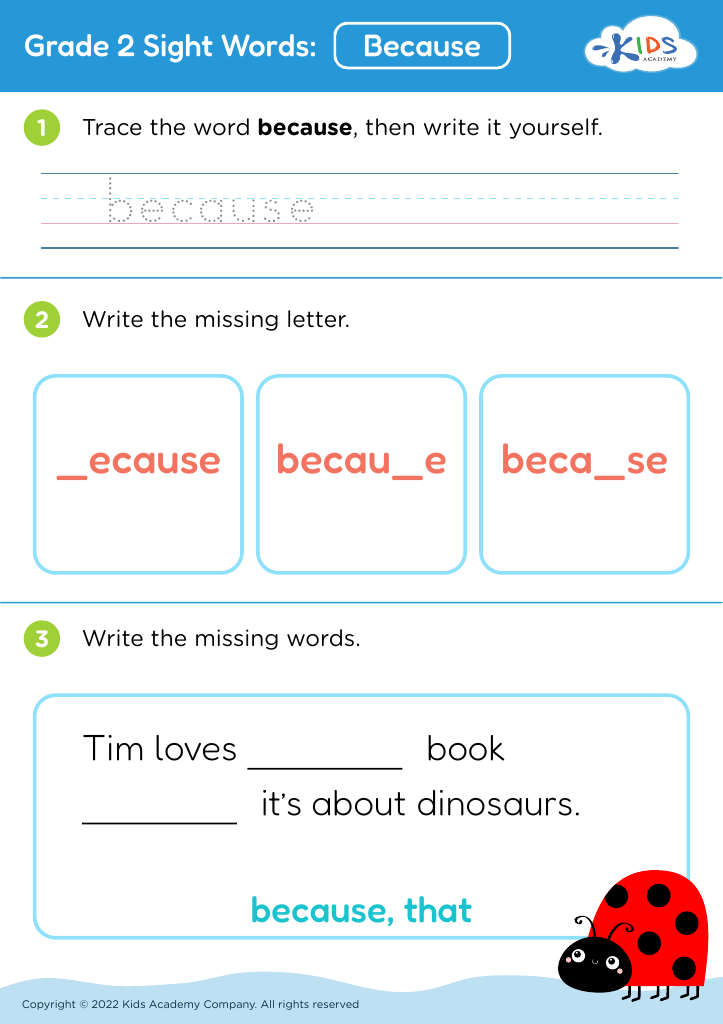
Moreover, introducing sight words related to fractions helps build linguistic skills by combining math and language learning. This approach supports cognitive development and makes the learning experience more engaging. By using context-based examples, "less than," "more than," and "equal to" enrich vocabulary while teaching important numeric concepts.
Ultimately, fostering a strong foundational understanding of fractions through sight words equips children with essential tools they will use throughout their education and in future mathematical endeavors, thus solidifying their confidence and ability in math. Engaging young learners with these concepts can fuel a lifelong love for math.