Improving reading skills Sight Words Worksheets for Ages 3-9
4 filtered results
-
From - To
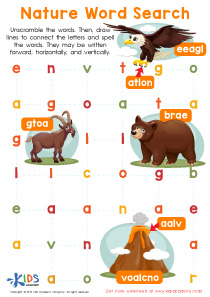
Boost your child's reading abilities with our "Improving Reading Skills: Sight Words Worksheets" designed specifically for ages 3-9. These engaging worksheets focus on the essential sight words that are foundational for early literacy. By utilizing fun activities, puzzles, and exercises, children will improve their word recognition, spelling, and comprehension skills. Our resources promote active learning, allowing young readers to build confidence while mastering commonly used words in everyday reading. Perfect for parents and educators alike, these worksheets support a well-rounded approach to reading development. Let your child embark on a fun, educational journey toward becoming a proficient reader today!
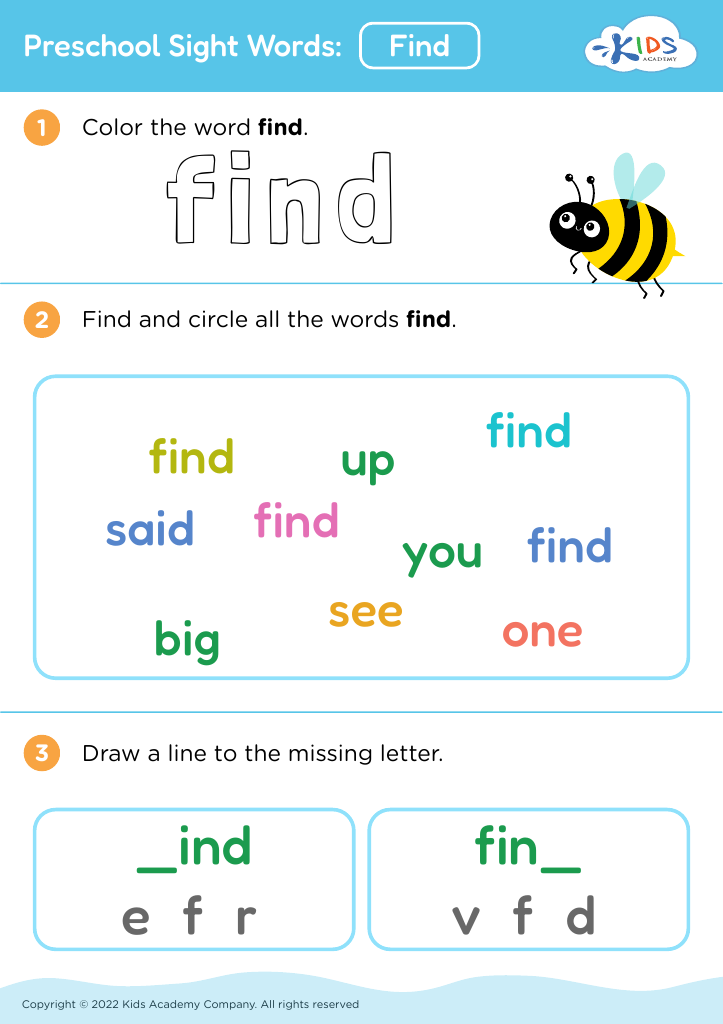







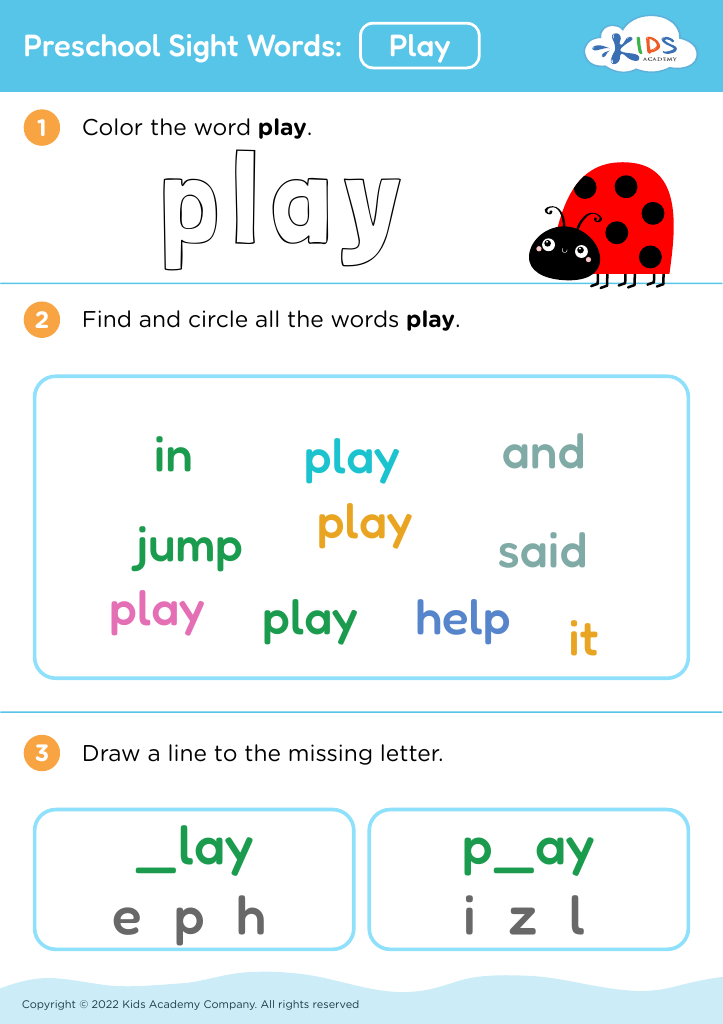
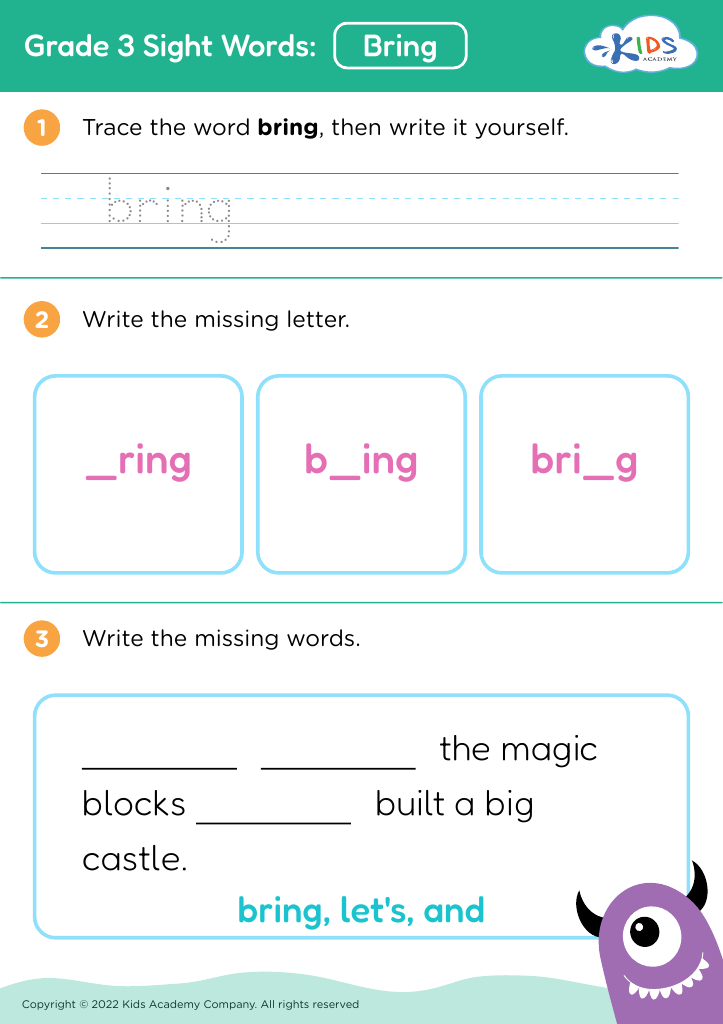
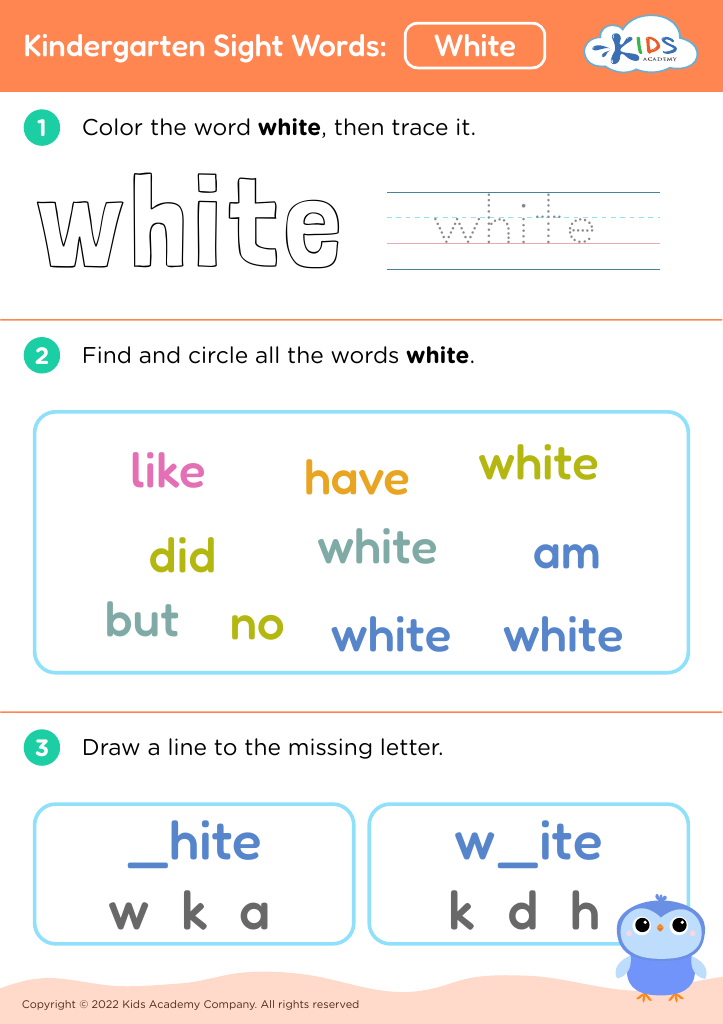








Improving reading skills, particularly through sight words, is crucial for children ages 3-9 as it forms the foundation for their future literacy and overall academic success. Sight words are common words that children should learn to recognize instantly without having to sound them out. Mastering these words enhances reading fluency, allowing young learners to focus on comprehension rather than decoding.
As children begin to read, gaining confidence in recognizing sight words can foster a love for reading. This early exposure helps create positive literacy experiences, which are essential for motivation and engagement in learning. Parents and teachers play a pivotal role in facilitating this process through consistent practice and encouragement.
Furthermore, reading proficiency is closely linked to various cognitive and social skills, including language development, critical thinking, and communication abilities. Kids who are proficient readers perform better in school and find greater success as they progress through their educational journey.
By prioritizing the improvement of reading skills through sight words, parents and teachers contribute significantly to a child's self-esteem and academic achievement, thus empowering children to become lifelong learners and confident individuals in an increasingly complex world. Investing time in this critical skill ensures that children have the tools they need to succeed.