Mathematical reasoning Sight Words Worksheets for Ages 3-9
6 filtered results
-
From - To
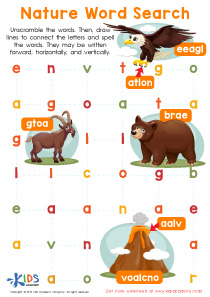
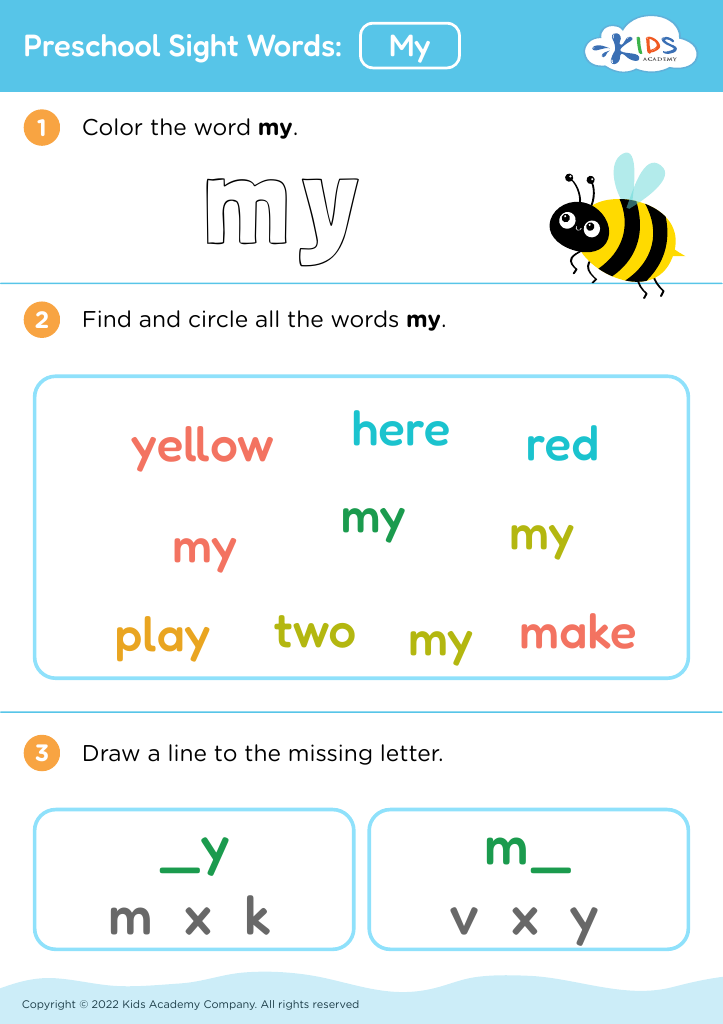
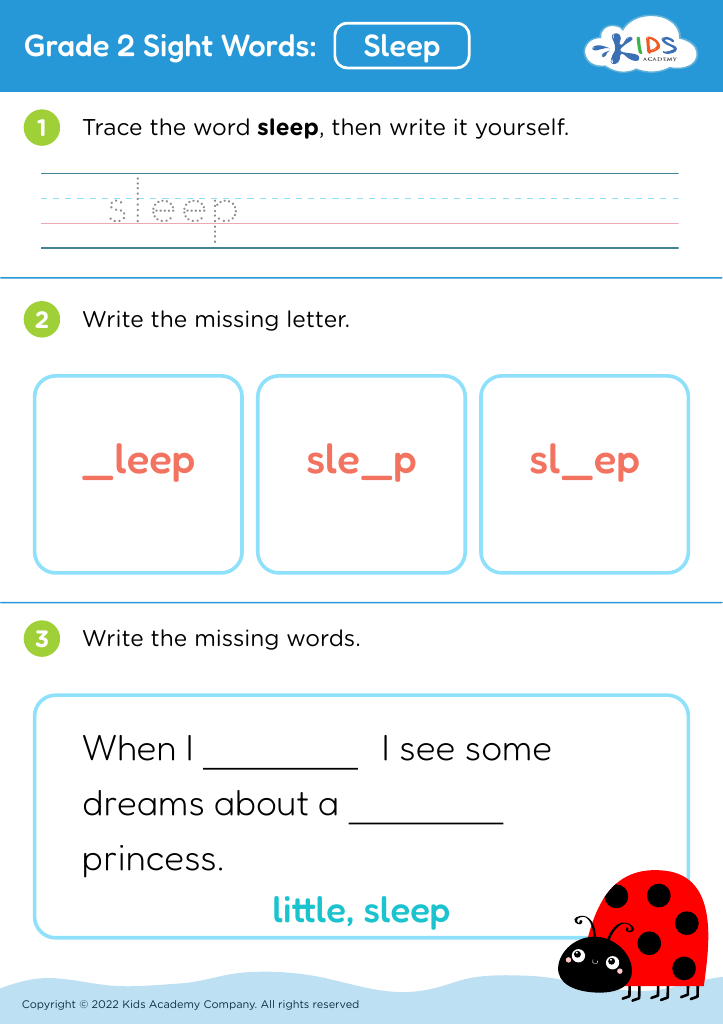
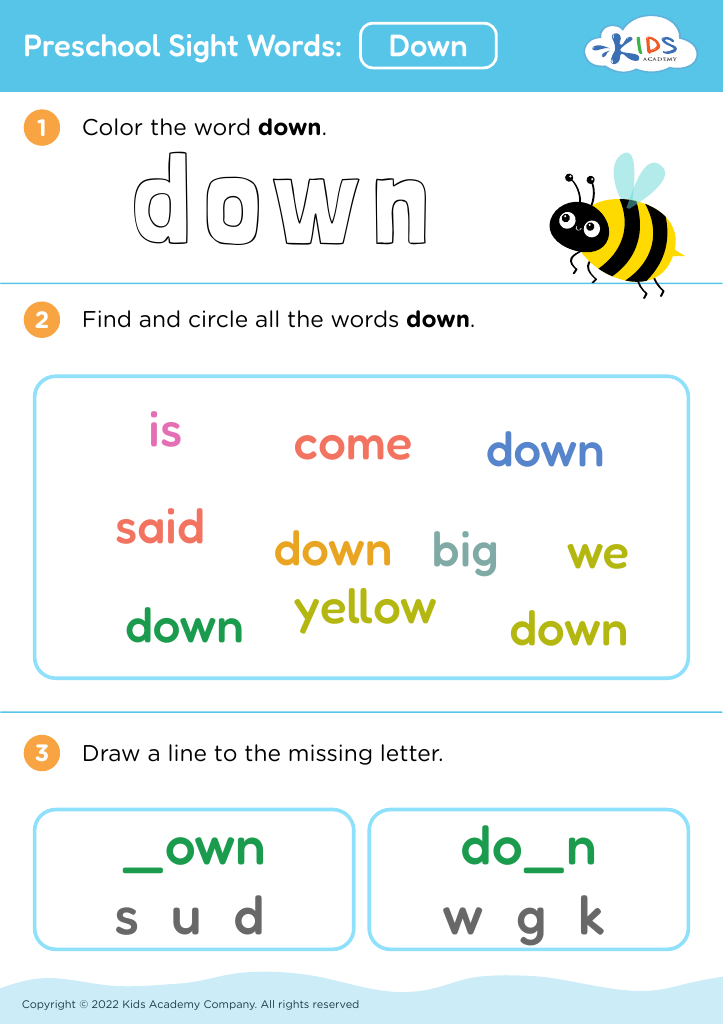
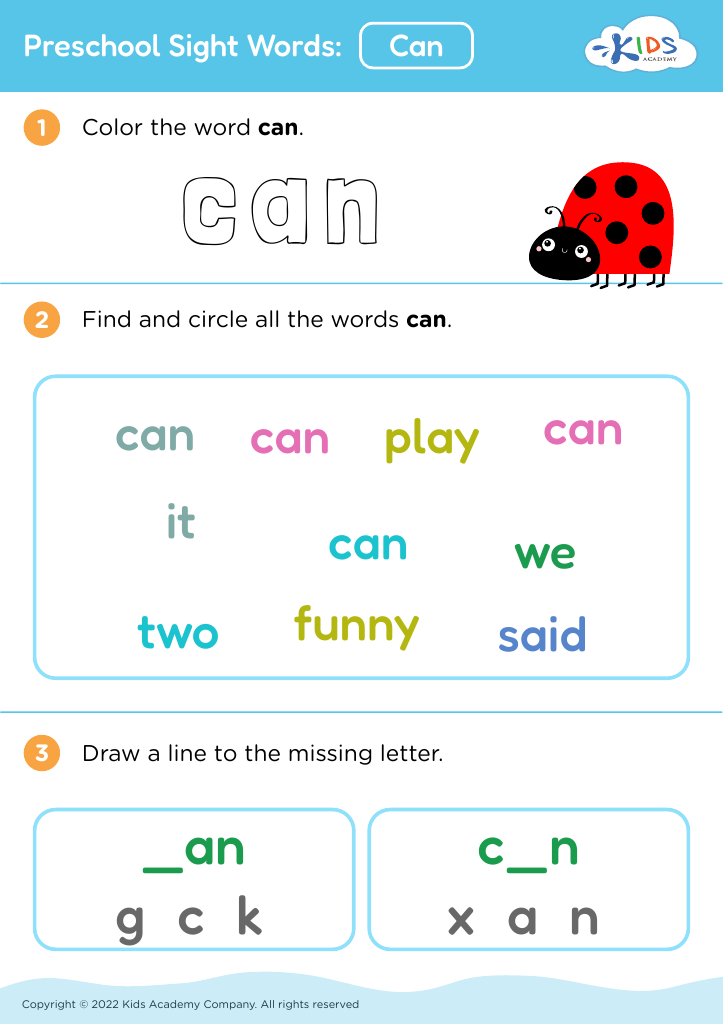
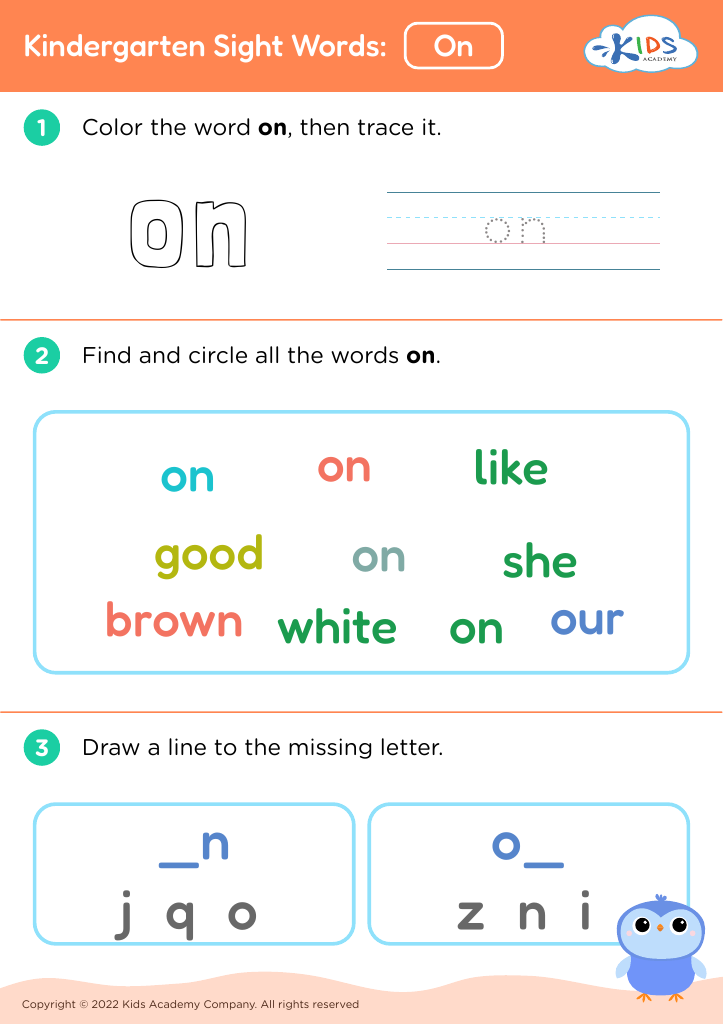
Discover our engaging Mathematical Reasoning Sight Words Worksheets designed for children ages 3 to 9! These interactive resources blend foundational math concepts with essential sight word recognition. Each worksheet features vibrant illustrations and age-appropriate challenges that encourage young learners to enhance their problem-solving skills while building their vocabulary. Ideal for home or classroom use, these worksheets promote critical thinking as children explore mathematical reasoning through fun, hands-on activities. Help your child unlock the world of numbers and words with our thoughtfully crafted exercises that make learning enjoyable and effective. Start your journey to mathematical literacy today!







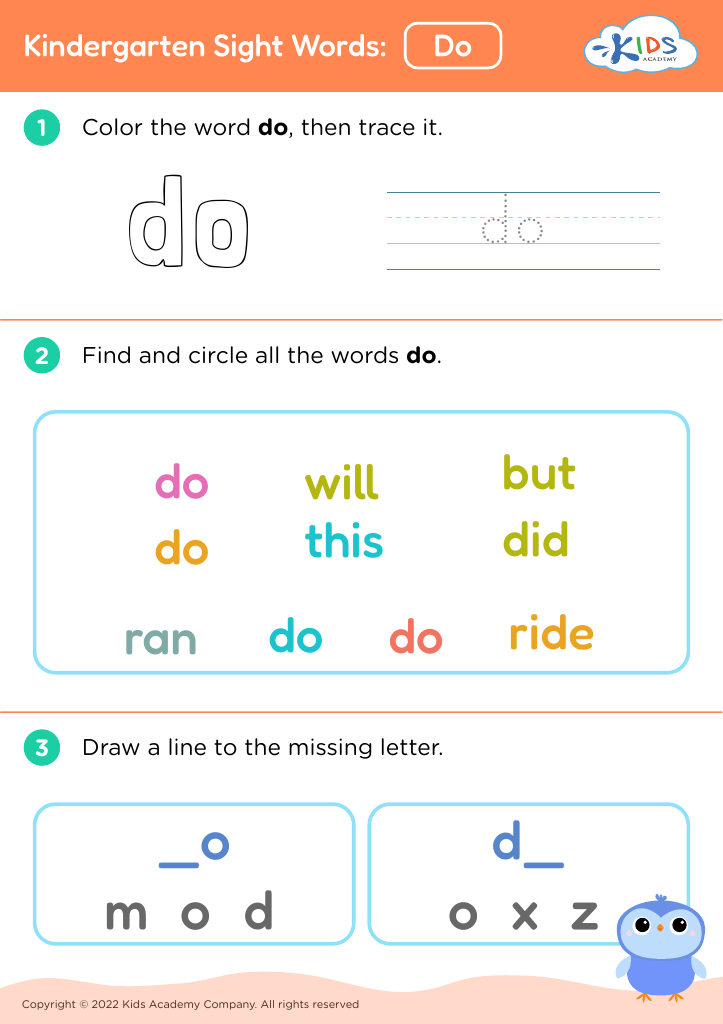








Parents and teachers should prioritize mathematical reasoning sight words for children aged 3-9 because these foundational concepts significantly enhance cognitive development and problem-solving skills. Just as sight words in reading help young learners recognize and understand texts quickly, mathematical reasoning sight words enable children to grasp essential math concepts, vocabulary, and relationships between numbers.
Using these sight words helps children articulate their thought processes, improving their ability to recognize patterns and approach problems methodically. Early exposure to mathematical language bolsters fluency, enabling children to move beyond rote memorization to deeper conceptual understanding. For instance, children who comprehend terms like "addition," "greater than," or "pair" can more easily tackle tasks involving simple calculations and comparisons, laying the groundwork for more advanced mathematical concepts.
Moreover, integrating these sight words into daily activities makes learning interactive and engaging. By recognizing and using these words, children are more likely to participate in conversations about math, promoting self-confidence and fostering a positive attitude toward the subject. Ultimately, nurturing mathematical reasoning early on prepares children for future academic success, equipping them with skills that are vital not only academically but in everyday life—creating capable, confident learners ready to face complex challenges.