Understanding patterns Sight Words Worksheets for Ages 3-9
8 filtered results
-
From - To
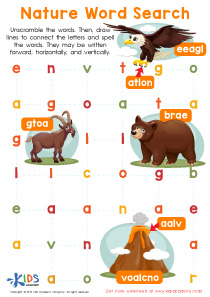
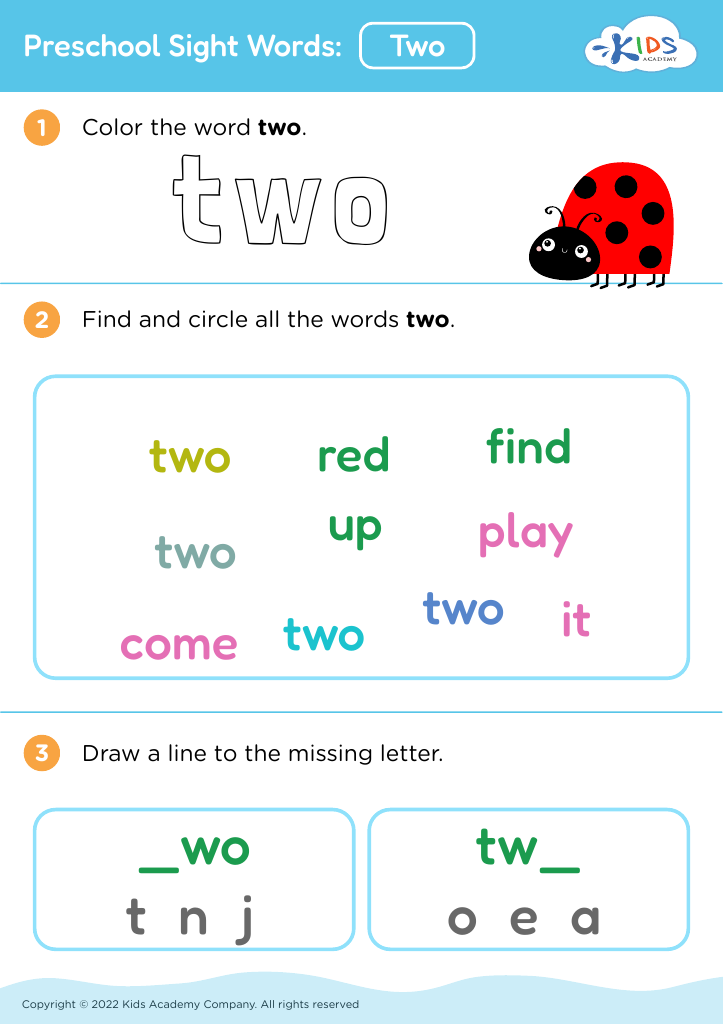
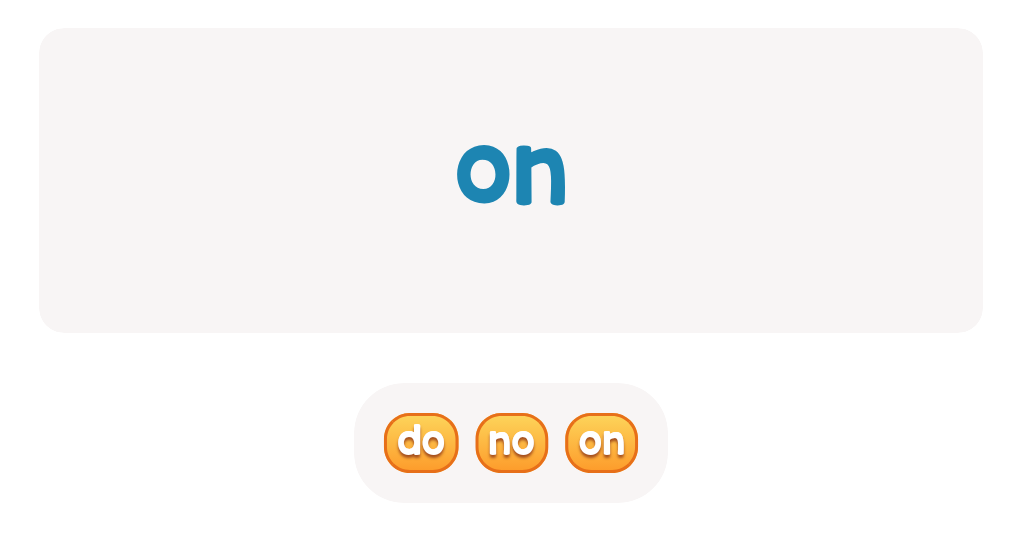
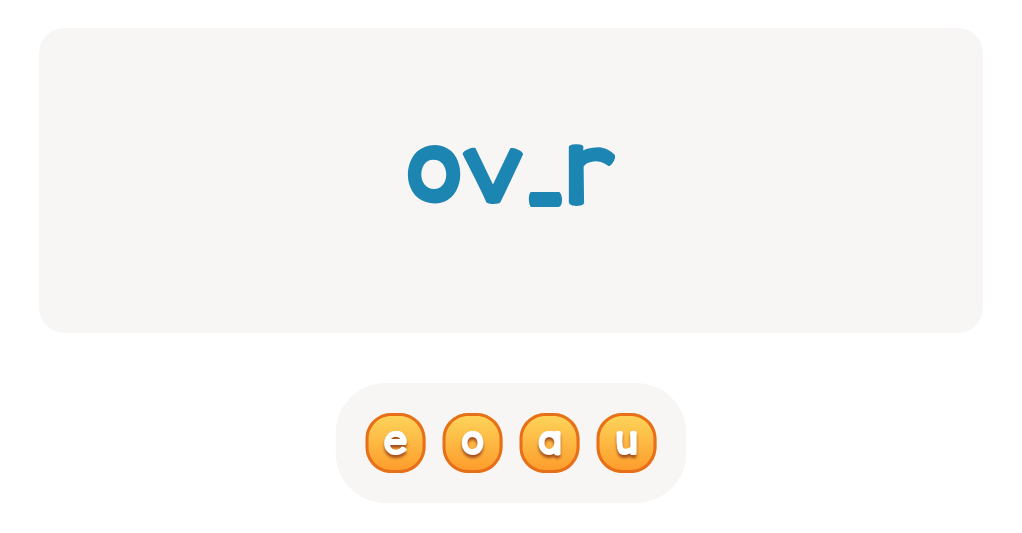
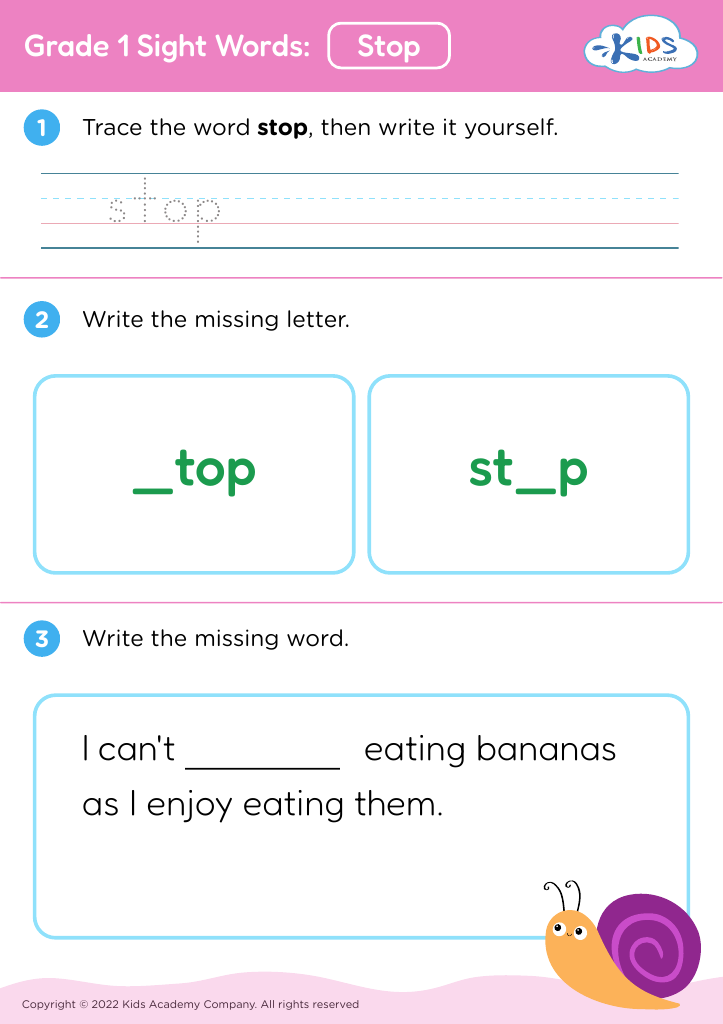
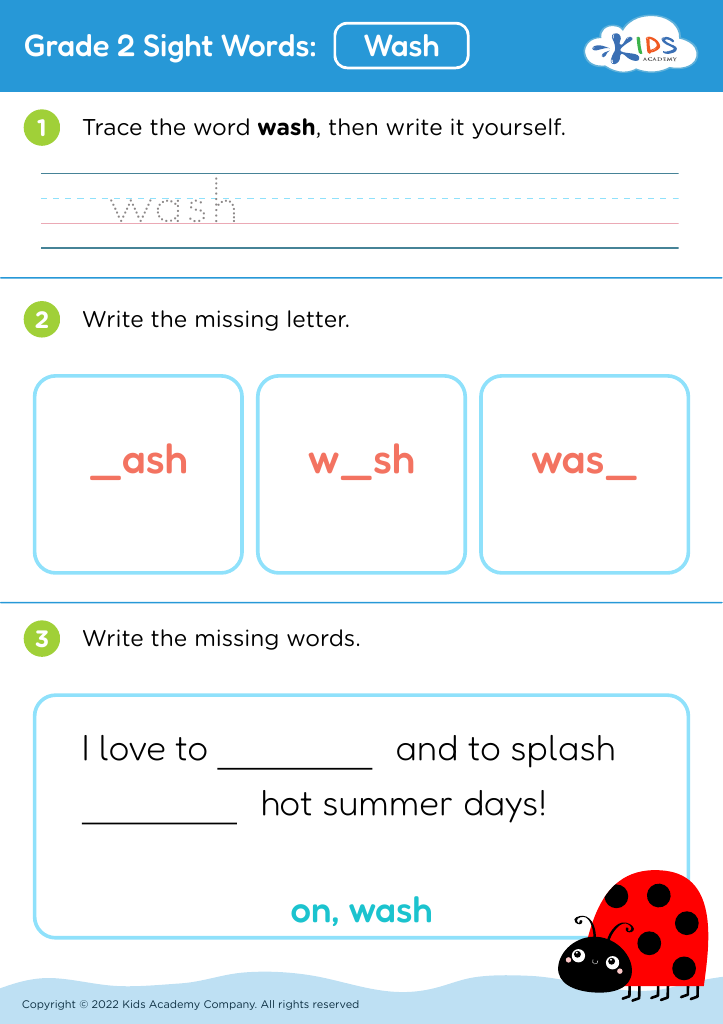
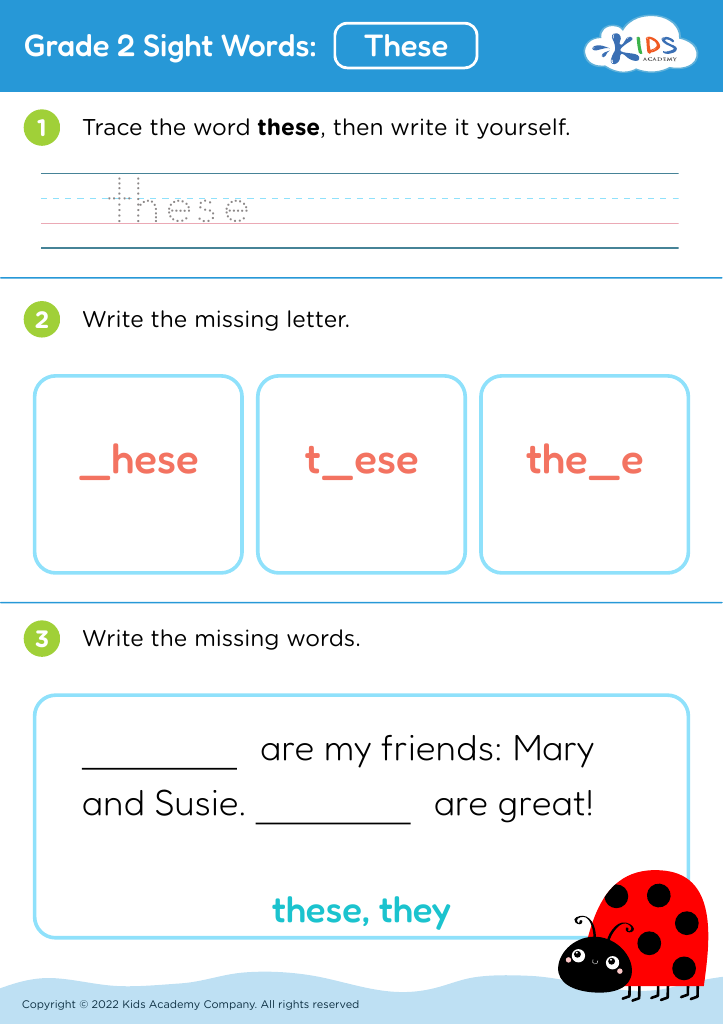
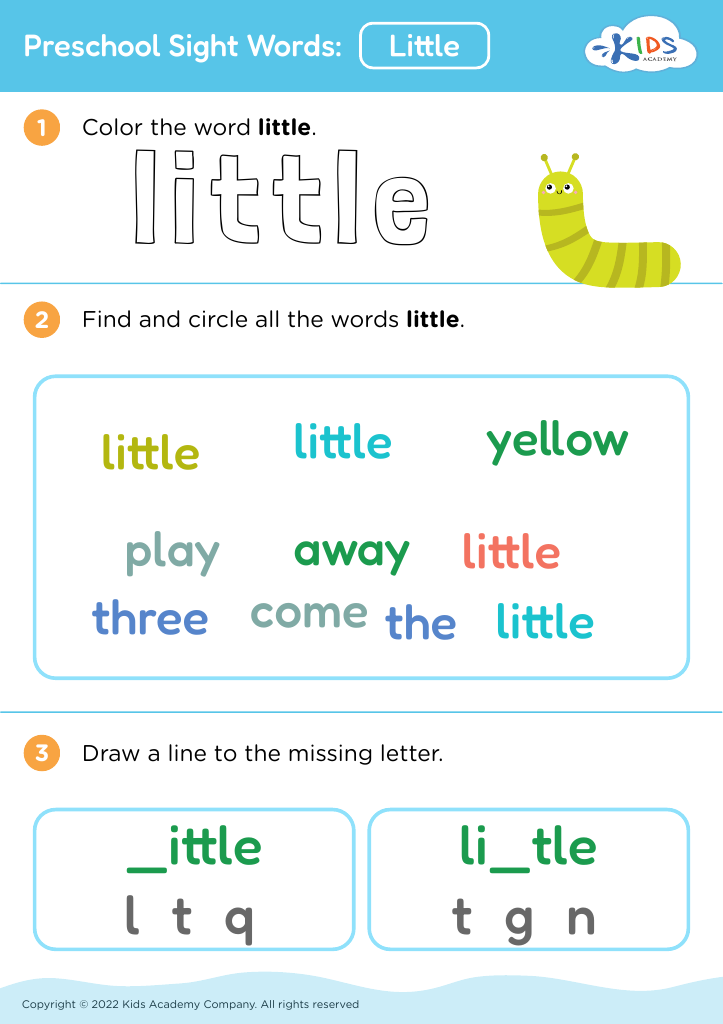
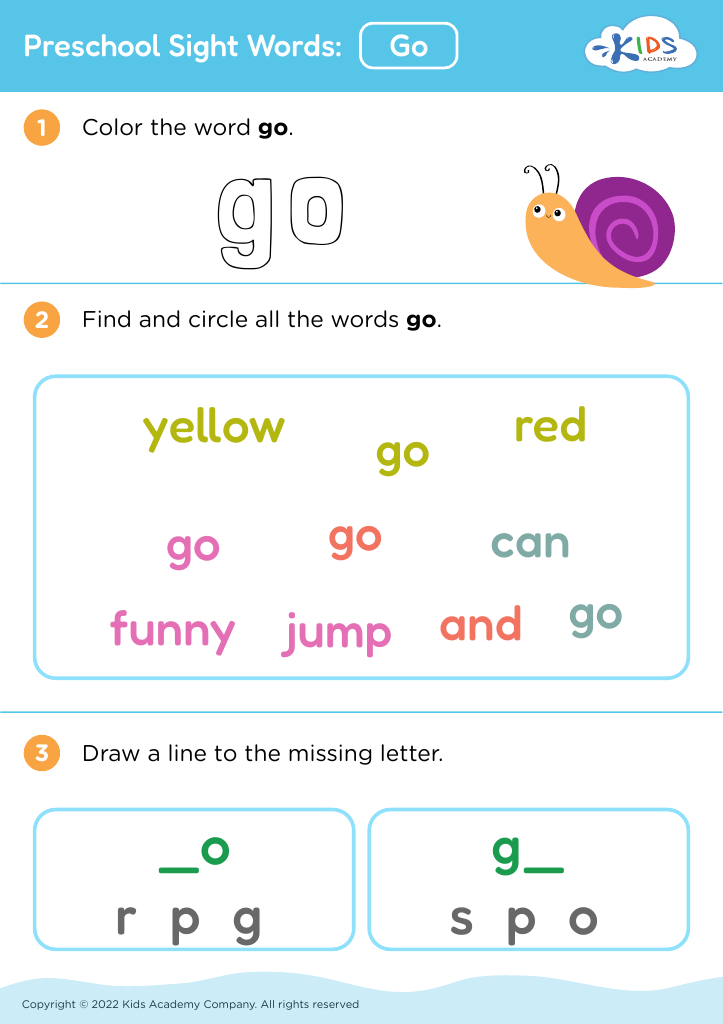
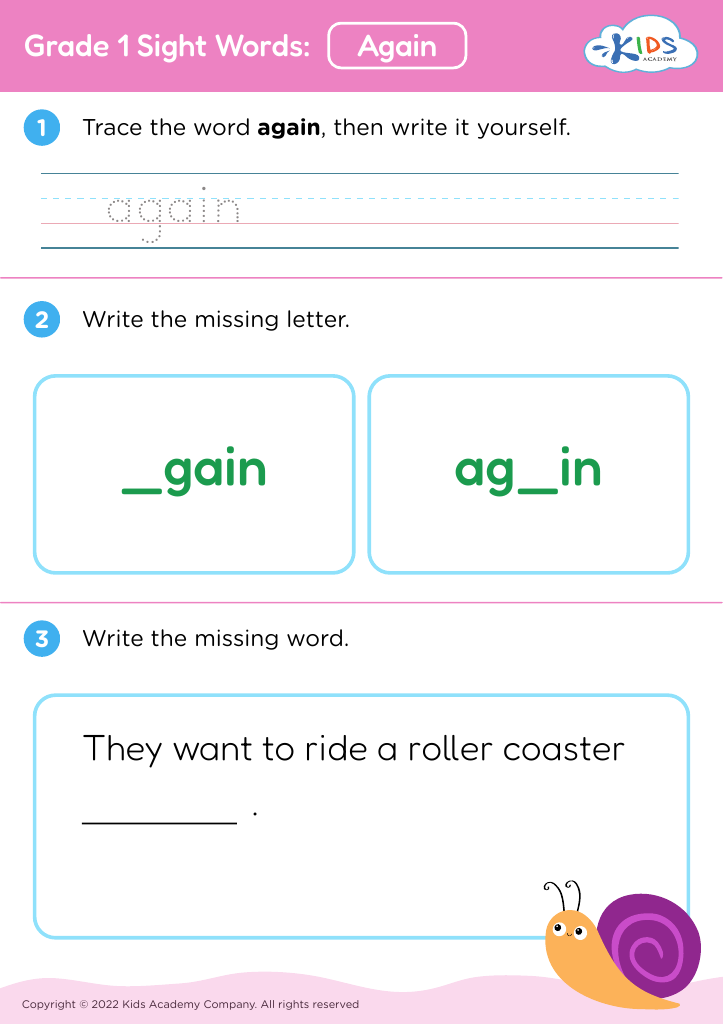
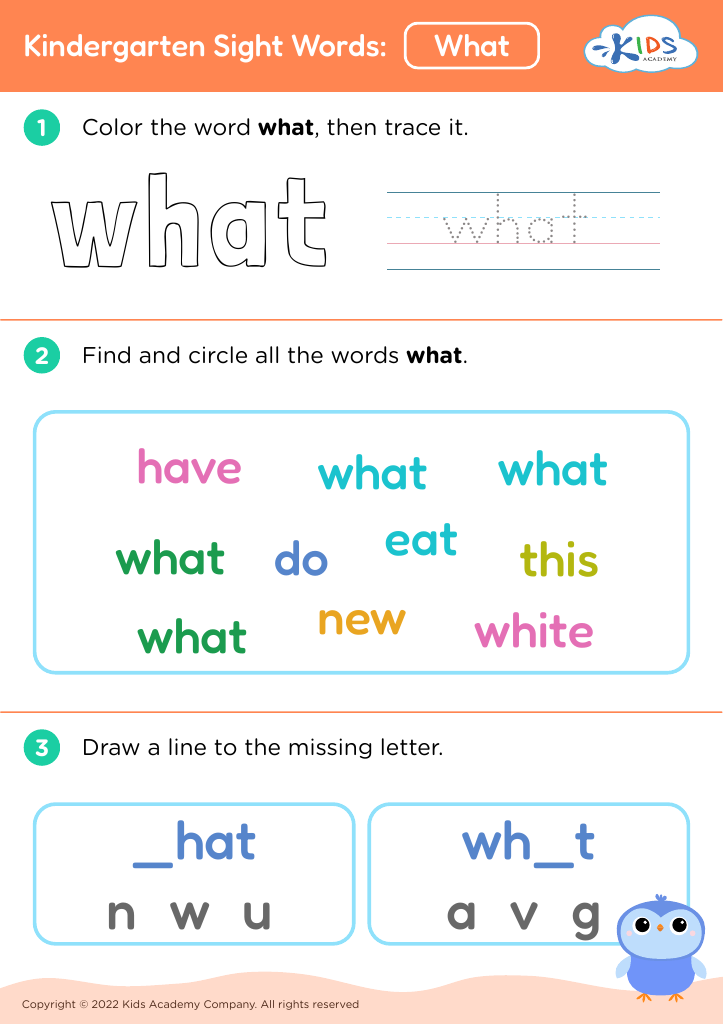
Unlock the magic of reading with our 'Understanding Patterns Sight Words Worksheets' designed for children aged 3-9. These vibrant and engaging worksheets help young readers recognize and remember sight words through exciting pattern-based activities. Our expertly crafted materials foster early literacy skills by integrating fun patterns that children naturally enjoy. Ideal for both classroom and at-home learning, these worksheets promote better word recognition, enhancing reading fluency and confidence. Equip your child with the tools they need for a lifelong love of reading. Try our 'Understanding Patterns Sight Words Worksheets' today and watch their language skills blossom!








.jpg)
Understanding patterns and sight words is crucial for children aged 3-9 because these skills form the foundation for effective reading and comprehension. Patterns help children recognize and predict sequences, fostering logical thinking and problem-solving abilities. By identifying patterns in letters, words, and sentences, children develop a sense of order and consistency in language, which enhances their ability to decode new words and understand sentence structures.
Sight words, on the other hand, are common words that children are encouraged to recognize instantly without needing to sound them out. Mastery of sight words leads to more fluent reading, as these words often appear frequently in texts. When children can quickly identify sight words, they read more smoothly and confidently, which improves their overall reading comprehension and enjoyment. Building a robust vocabulary of sight words also frees up cognitive resources, allowing young readers to focus more on understanding the meaning of text rather than laboriously decoding each word.
In summary, nurturing a child's ability to recognize patterns and sight words sets the stage for successful reading habits. This early literacy development is crucial for academic success and shapes a positive attitude towards learning, reading, and education in the long term.