Understanding symmetry Sight Words Worksheets for Ages 3-9
5 filtered results
Difficulty Level
Grade
Age
-
From - To
Subject
Activity
Standards
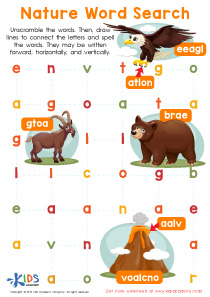
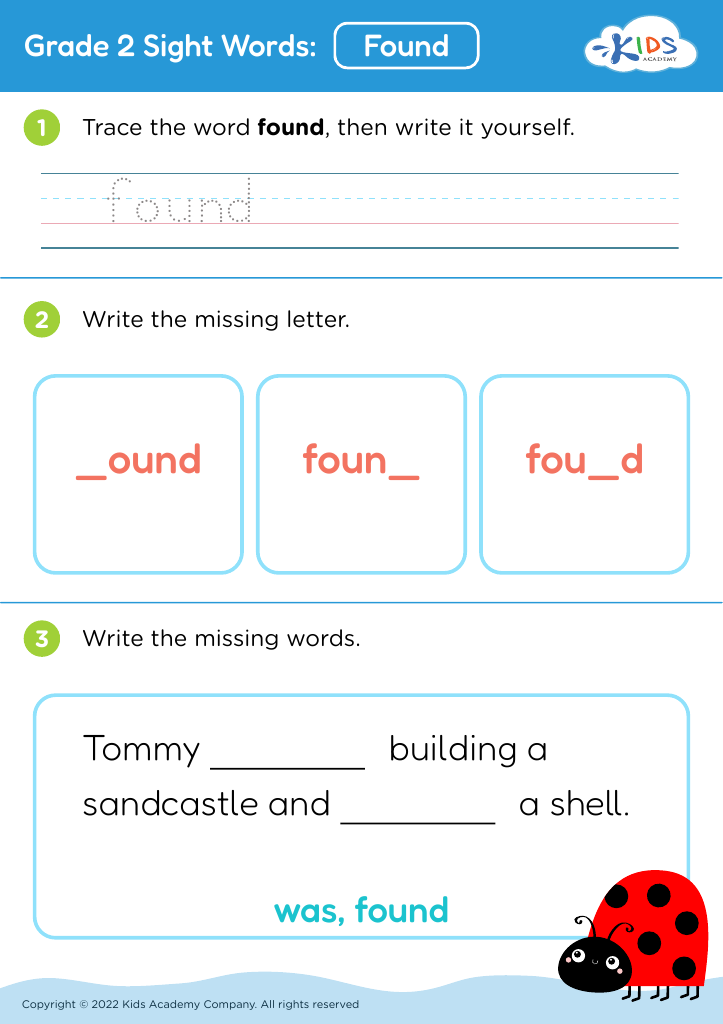
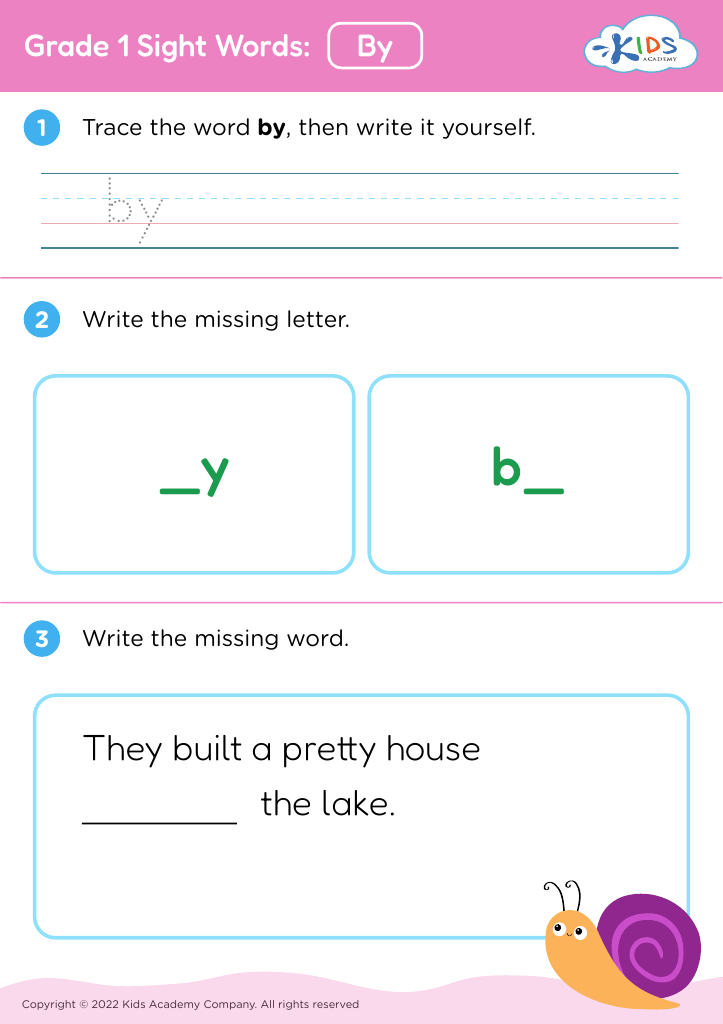
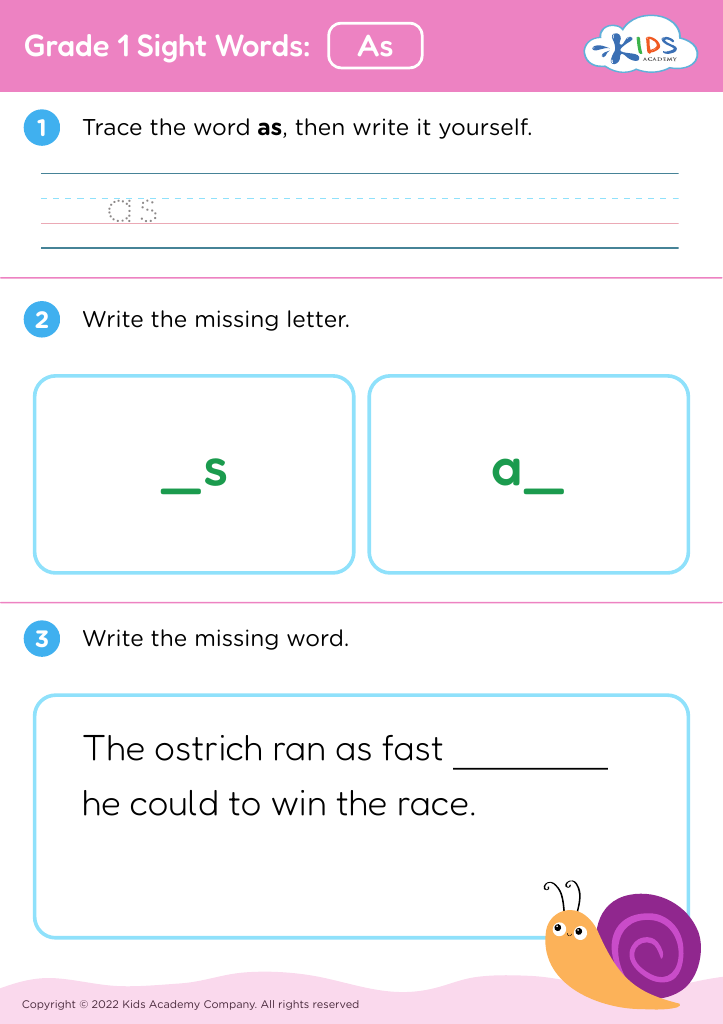
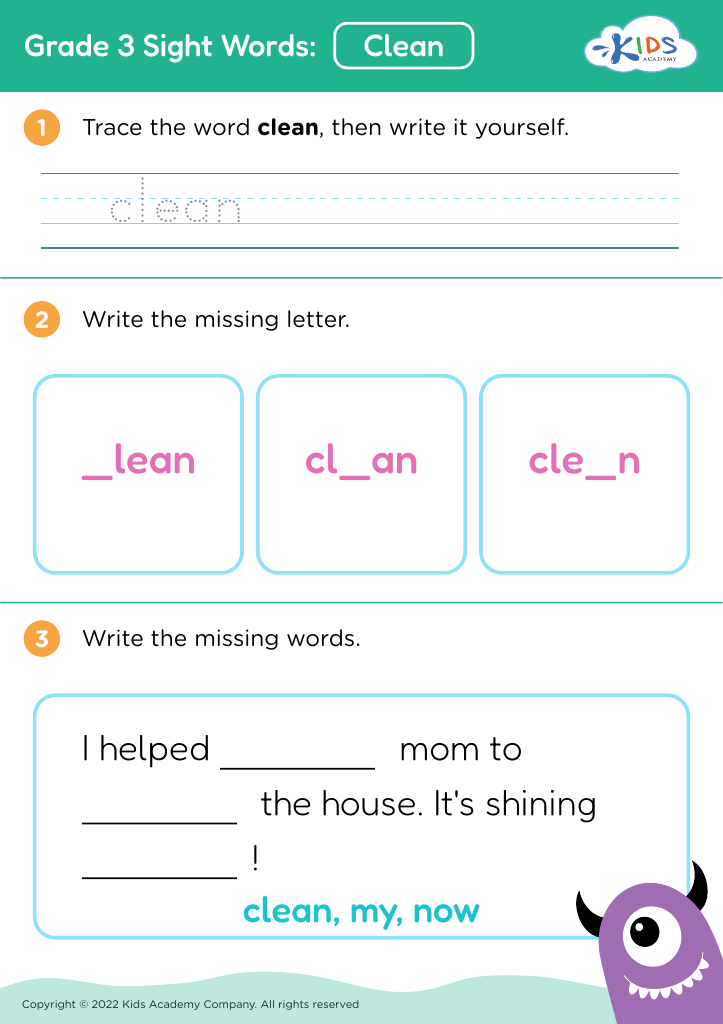
Discover our "Understanding Symmetry Sight Words Worksheets for Ages 3-9" at Kids Academy designed to blend foundational reading skills with essential mathematical principles. Targeted at young learners, these engaging worksheets focus on recognizing sight words while introducing the concept of symmetry. Perfect for early learners aged 3 to 9, our colorful and interactive activities support the development of critical thinking and visual-spatial recognition. Through fun-filled exercises, children enhance their reading proficiency and simultaneously grasp the basics of symmetry, preparing them for more advanced concepts. Equip your child with the tools to excel in both reading and math effortlessly.
Favorites
With answer key
Interactive


Join Kids Academy for Free
Who is primarily going to use this learning content?








Understanding symmetry and sight words are pivotal concepts for young children aged 3-9 because they form a critical foundation for cognitive and academic development. Symmetry, which involves recognizing balanced and uniform patterns, greatly enhances spatial awareness and problem-solving skills. When children understand symmetry, they develop the ability to recognize patterns and structures, which is crucial for mathematical reasoning and geometric intuition. This kind of spatial intelligence is not only beneficial in mathematics but also enhances overall visual and spatial perception, essential life skills in numerous activities and future learning scenarios.
Sight words, on the other hand, are common words that children are encouraged to recognize without having to sound them out. Mastery of sight words enhances reading fluency, comprehension, and confidence. Since sight words often do not follow standard phonetic rules, direct recognition is necessary for efficient reading. Early familiarity with sight words enables children to read simple texts more fluidly, facilitating better understanding of more complex narratives and instructions in later stages.
Parents and teachers should thus invest time and resources in teaching both these concepts to strengthen early educational frameworks. When children find patterns in symmetry and achieve fluency in sight word recognition, they build the foundational skills required for advanced learning, academic success, and everyday problem-solving.