
Cognitive Development Word Scramble Worksheets for Ages 3-9
5 filtered results
Difficulty Level
Grade
Age
-
From - To
Subject
Activity
Standards
Enhance your child's cognitive development with our Word Scramble Worksheets designed for ages 3-9. These engaging activities are perfect for sharpening critical thinking, problem-solving, and reading skills through fun and interactive play. With a variety of themes and difficulty levels, children will enjoy unscrambling letters to form words, improving vocabulary, and boosting spelling abilities. Our worksheets also foster creativity and patience, essential for young learners. Suitable for home or classroom use, these resources are ideal for promoting early literacy in an enjoyable and rewarding way. Unlock your child's potential today with our expertly crafted cognitive development word scramble worksheets!
Favorites
With answer key
Interactive
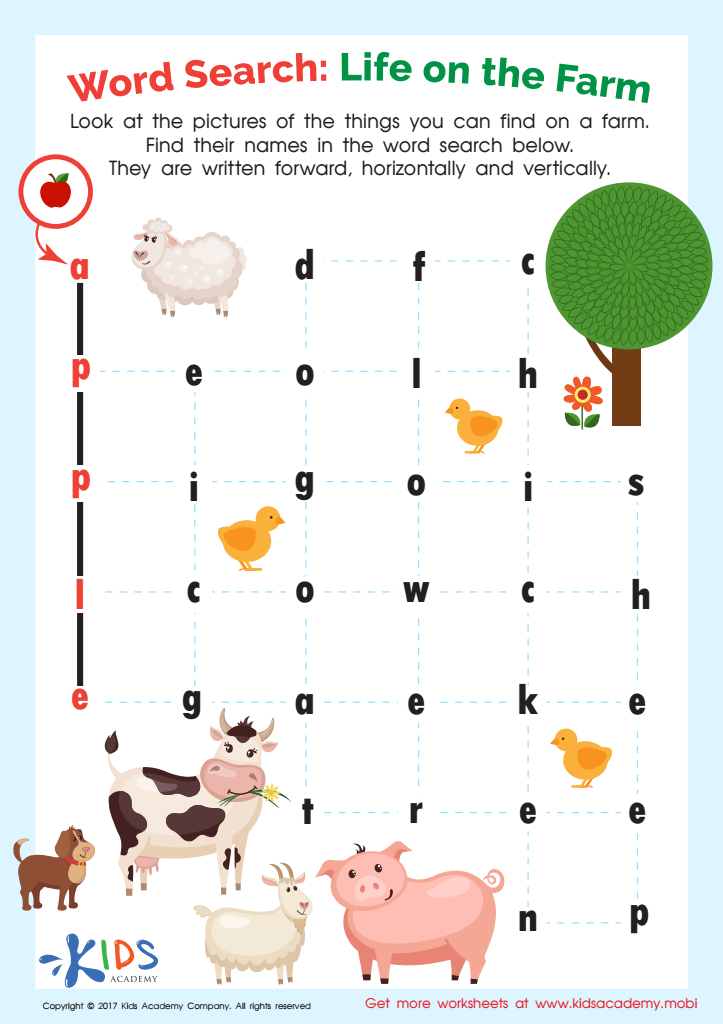
Word Search Puzzles Worksheet
2nd grade word search puzzles are great fun, helping kids flex their knowledge of words and spellings. Kids can use the pictures to find farm-themed words hidden on the page. It's a great way to learn!
 Assign to My Students
Word Search Puzzles Worksheet
Worksheet
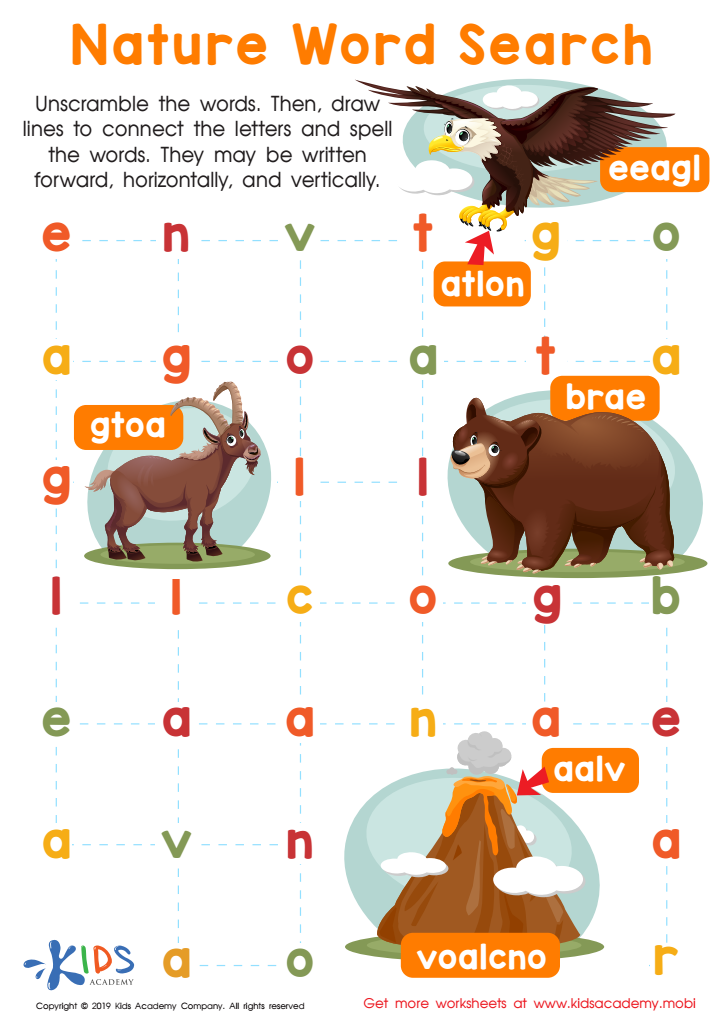
Nature Word Search Worksheet
Unscramble science vocabulary words and find them in this fun worksheet! Use the pictures as clues if you get stumped; you can also write down the words for reference. Solve the puzzle when you're done to finish!
Nature Word Search Worksheet
Worksheet
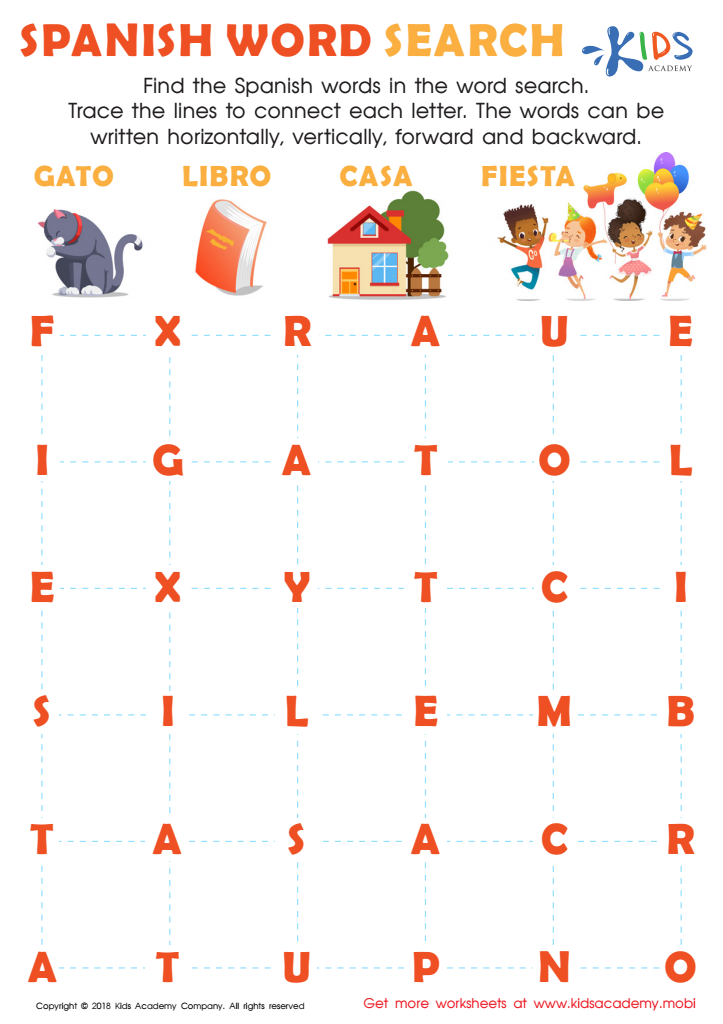
Spanish Word Search Worksheet
This free worksheet encourages students to learn Spanish words while developing visual, fine motor, and hand-eye coordination skills. Through colorful pictures and traceable lines, the task of finding words such as gato, libro, casa, and fiesta is disguised as a fun and engaging way to explore new cultures.
Spanish Word Search Worksheet
Worksheet
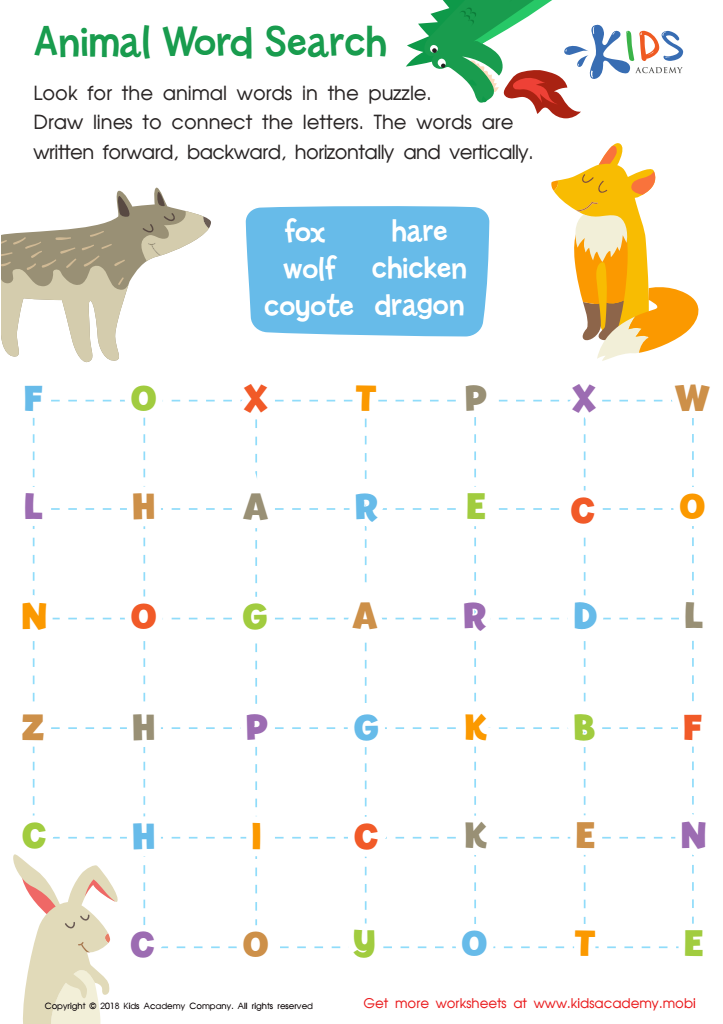
Animal Word Search Worksheet
Students can have fun and strengthen spelling and vocabulary skills with this word search worksheet. Search for animal words and circle the letters in the puzzle. Words can be found forwards, backwards, horizontally or vertically, providing a great challenge to foster critical thinking skills. An enriching activity for all ages!
Animal Word Search Worksheet
Worksheet
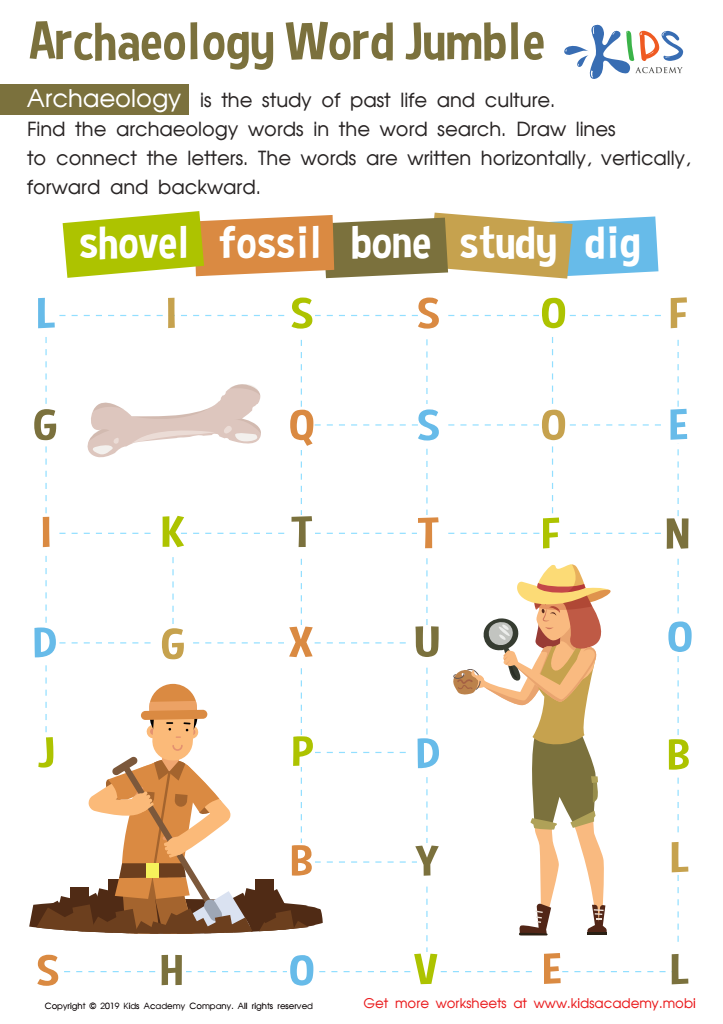
Archaeology Word Jumble Worksheet
Kids will love this fun, colorful word search about archeology! Tracing the lines, they'll uncover terms related to the study of past life and cultures. As they explore, they'll learn about fossils and bones and discover new archeology words.
Archaeology Word Jumble Worksheet
Worksheet
Join Kids Academy for Free
Who is primarily going to use this learning content?




Cognitive Development Word Scramble for ages 3-9 is a powerful tool that significantly contributes to a child's cognitive growth during early developmental stages. Engaging children in word scrambles promotes critical thinking, pattern recognition, and problem-solving skills. By reordering letters to form coherent words, children enhance their memory and academic vocabulary. This activity directly supports the development of literacy skills by familiarizing them with new words and correct spelling in a fun, interactive way.
Moreover, word scrambles augment fine motor skills when children write down or move the letters, which is crucial for early learners. They also stimulate attention to detail and concentration, as kids need to carefully observe and mentally manipulate letters. This can lead to improved reading and writing competencies, foundational skills crucial throughout their educational journey.
Additionally, when done in pairs or groups, word scrambles can foster social skills and teamwork, as children often collaborate and help each other solve the puzzles. This shared activity encourages positive learning experiences and favorable attitudes towards schooling.
Overall, prioritizing word puzzle activities like Cognitive Development Word Experiential activities Scramble for the 3-9 age group enriches cognitive processes, inherently blending fun and education, making both parents and teachers imperative stakeholders in supporting these resources.







