
Addition up to 5 Worksheets for 3-Year-Olds
4 filtered results
Difficulty Level
Grade
Age
-
From - To
Subject
Activity
Standards
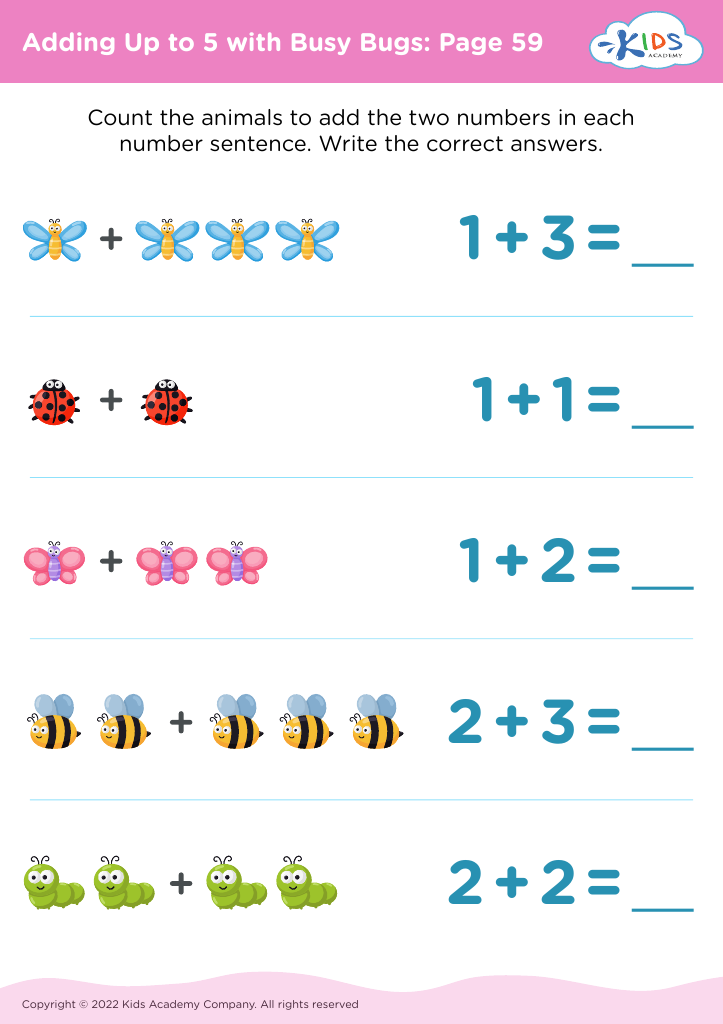
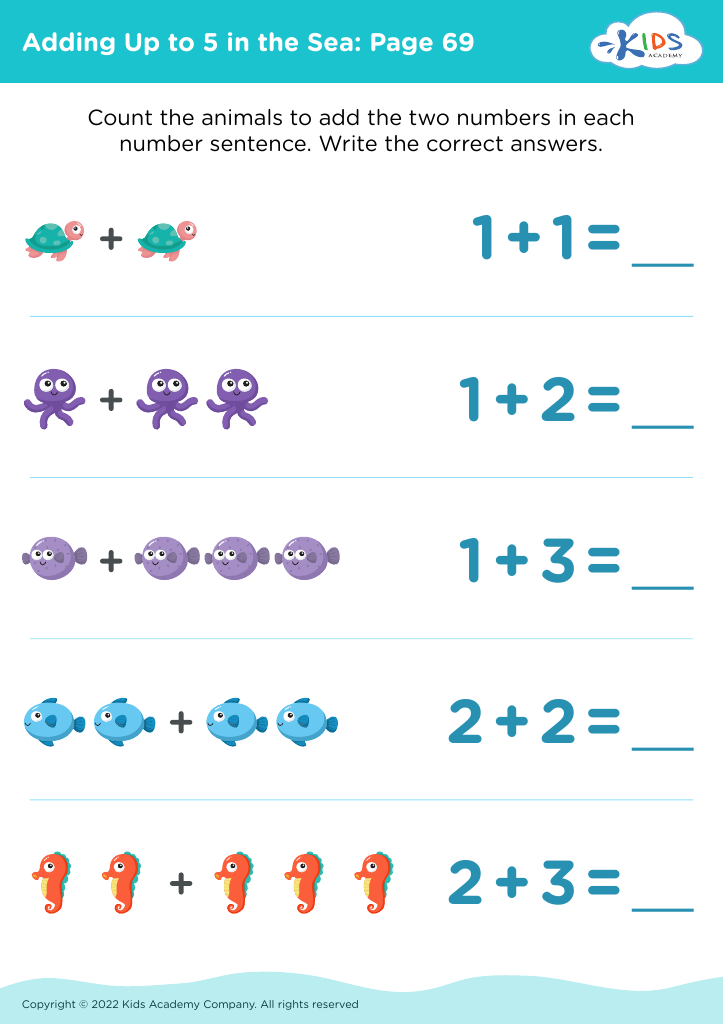
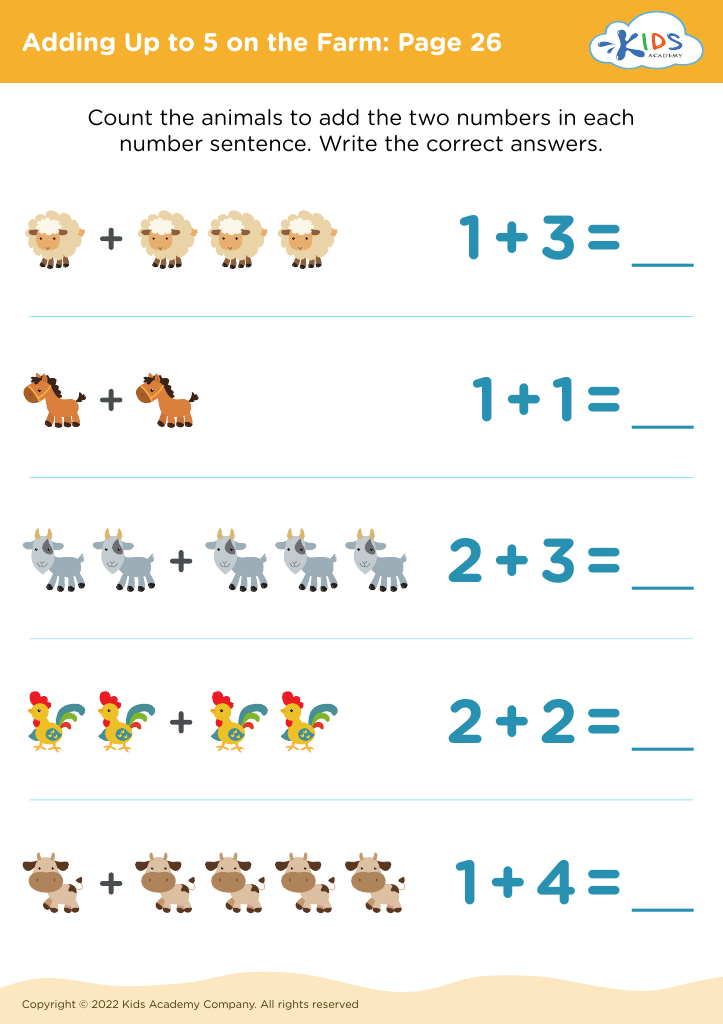
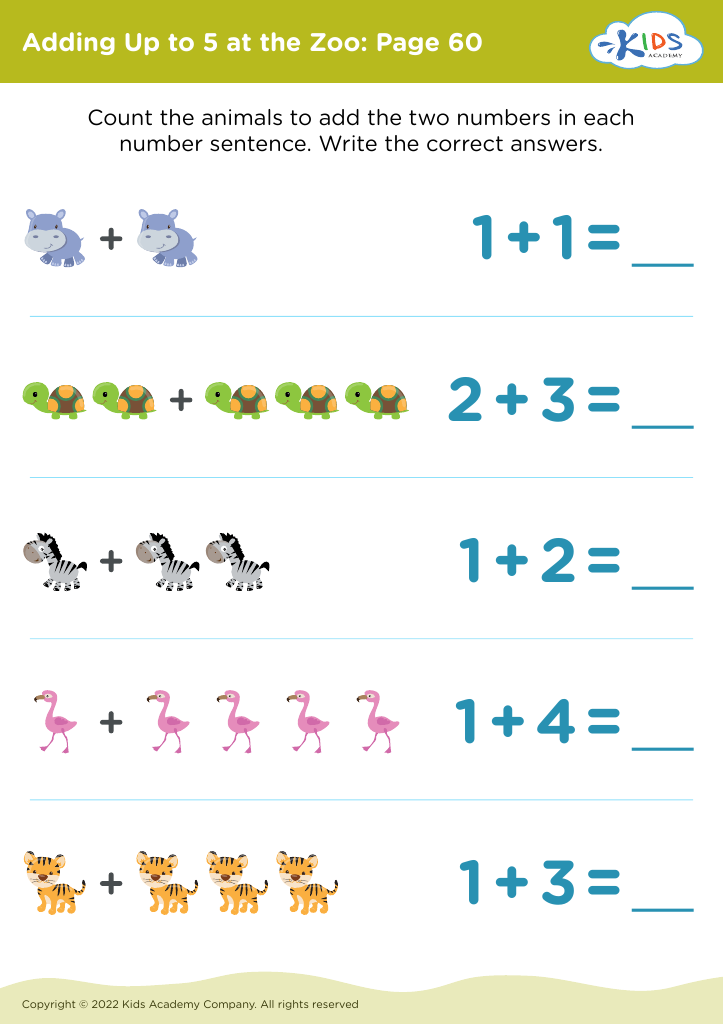
Welcome to our Addition up to 5 Worksheets for 3-Year-Olds! Designed to introduce young learners to the exciting world of math, these fun and engaging worksheets help build foundational addition skills. Using colorful illustrations and simple instructions, kids will enjoy exploring numbers through counting objects and solving basic addition problems. Each worksheet promotes early mathematical understanding while developing essential fine motor skills perfect for little hands. Ideal for preschool and home learning, these worksheets make learning exciting and accessible. Help your child embark on their math journey and watch their confidence in numbers grow! Perfect for ages 3 and up!
Favorites
With answer key
Interactive
Join Kids Academy for Free
Who is primarily going to use this learning content?


%20(1).jpg)





Teaching addition up to 5 for 3-year-olds is vital for several reasons. Firstly, early numeracy skills lay the foundation for mathematical understanding, which is crucial for future academic success. When young children engage with concepts of addition, they develop critical cognitive skills, including problem-solving and logical reasoning.
Moreover, early exposure to basic math in a playful and interactive manner can enhance children's joy of learning. Activities like counting objects, using fingers, or simple games make addition relatable and fun. This approach fosters a positive attitude towards math, reducing the likelihood of math anxiety later on.
Additionally, learning addition promotes language development as children articulate their thoughts while solving math problems. It also encourages social skills when children participate in group activities, sharing and discussing their ideas with peers.
For parents and teachers, nurturing these skills is not only about academics but also about fostering confidence, curiosity, and creativity in young learners. Emphasizing addition up to 5 provides opportunities for memorable and engaging learning experiences, establishing a strong groundwork for more complex mathematical concepts in the future. Thus, caring about early addition is essential in helping children grow into confident and capable learners.








