Comparing sizes Worksheets for 3-Year-Olds
4 filtered results
-
From - To
Explore our engaging "Comparing Sizes Worksheets for 3-Year-Olds" designed to introduce young learners to the concept of size differences in a fun and interactive way. These colorful worksheets feature various objects that children can easily relate to, helping them practice identifying and comparing smaller and larger items. Through visual representations and simple exercises, kids will develop their critical thinking skills as they learn to express their understanding of size in everyday life. Ideal for parents and educators, these worksheets make learning enjoyable while laying a strong foundation for future math skills. Download yours today and watch your little ones thrive!
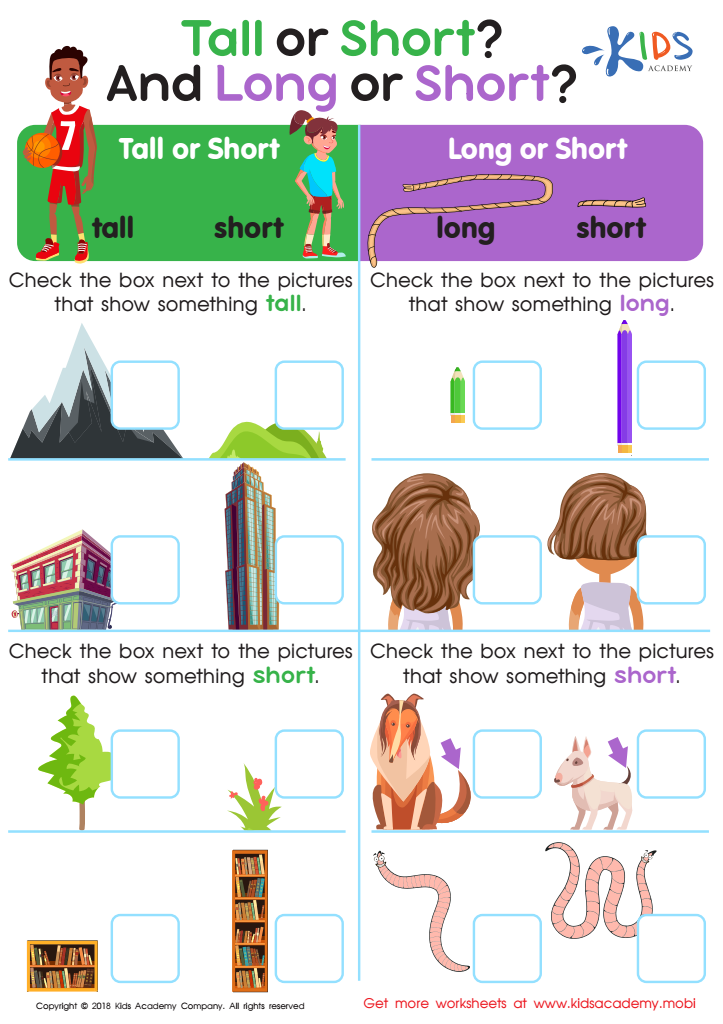
Tall or Short and Long or Short? Worksheet
 Assign to My Students
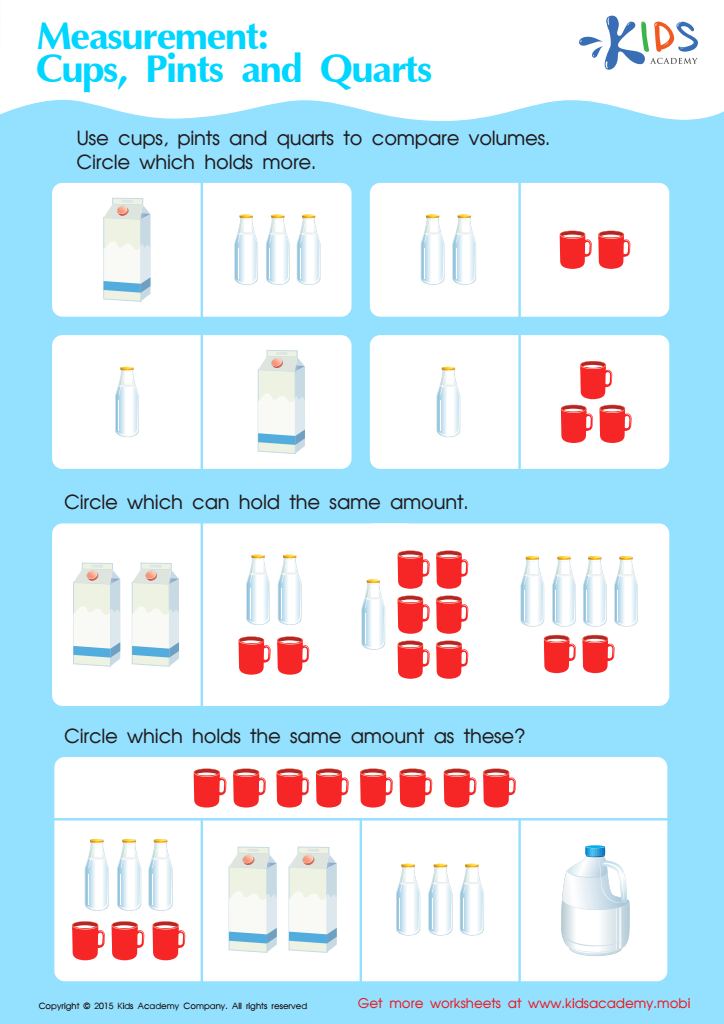
Measurement: Compare Volumes Worksheet
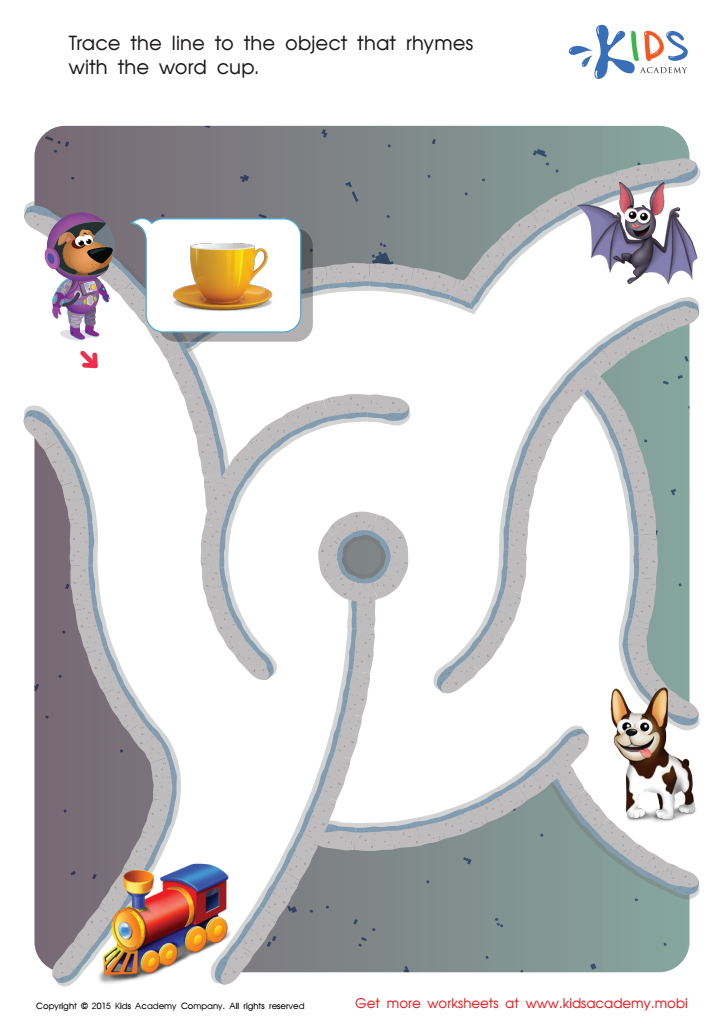
Cup Rhyming Words Worksheet
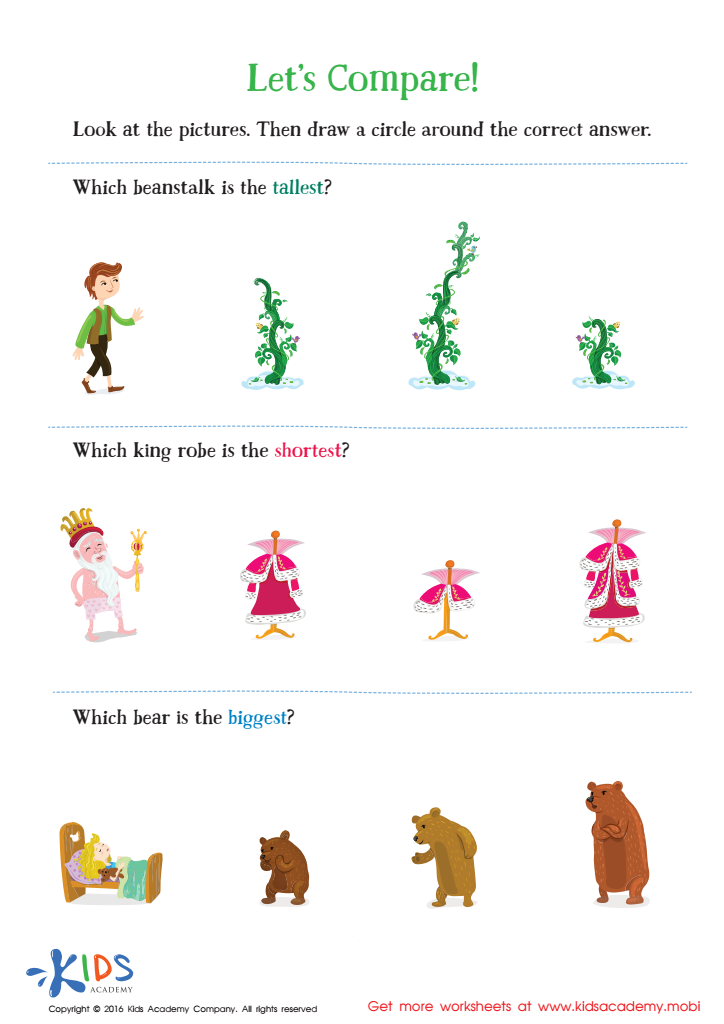
Fairy Tale Worksheet: Let's Compare







Comparing sizes is a critical foundational skill for 3-year-olds that lays the groundwork for later mathematical understanding and reasoning. At this age, children are naturally curious and eager to explore their environment, making it an ideal time for caregivers to introduce concepts of size such as big, small, taller, shorter, wider, and narrower.
Engaging in activities that promote size comparison helps children develop their observational and analytical skills. For example, sorting blocks or toys by size encourages them to think critically and build categorization skills. These activities spark creativity while introducing vocabulary related to measurement and dimensions, enriching their language skills.
In addition, comparing sizes fosters social development. As children engage in group activities that involve size comparison, they learn to communicate their thoughts, listen to others, and work collaboratively. This promotes not only social skills but also emotional intelligence, as they begin to understand concepts like cooperation and sharing.
Overall, focusing on comparing sizes not only enhances cognitive development but also nurtures essential life skills. For both parents and teachers, emphasizing this simple yet vital activity can significantly contribute to a child's overall growth and readiness for future learning challenges.








