Develop problem-solving skills Worksheets for 3-Year-Olds
3 filtered results
-
From - To
Enhance your preschooler's cognitive abilities with our "Develop problem-solving skills Worksheets for 3-Year-Olds." These thoughtfully designed printables foster critical thinking and creativity in young minds. Each activity encourages toddlers to explore various solutions, boosting their confidence and independence. From matching games to sequencing tasks, these worksheets offer age-appropriate challenges that keep learning fun and engaging. Perfect for parents and educators, our resources promote foundational skills essential for early childhood development. Download now from Kids Academy and set your little learner on a path to successful problem-solving.
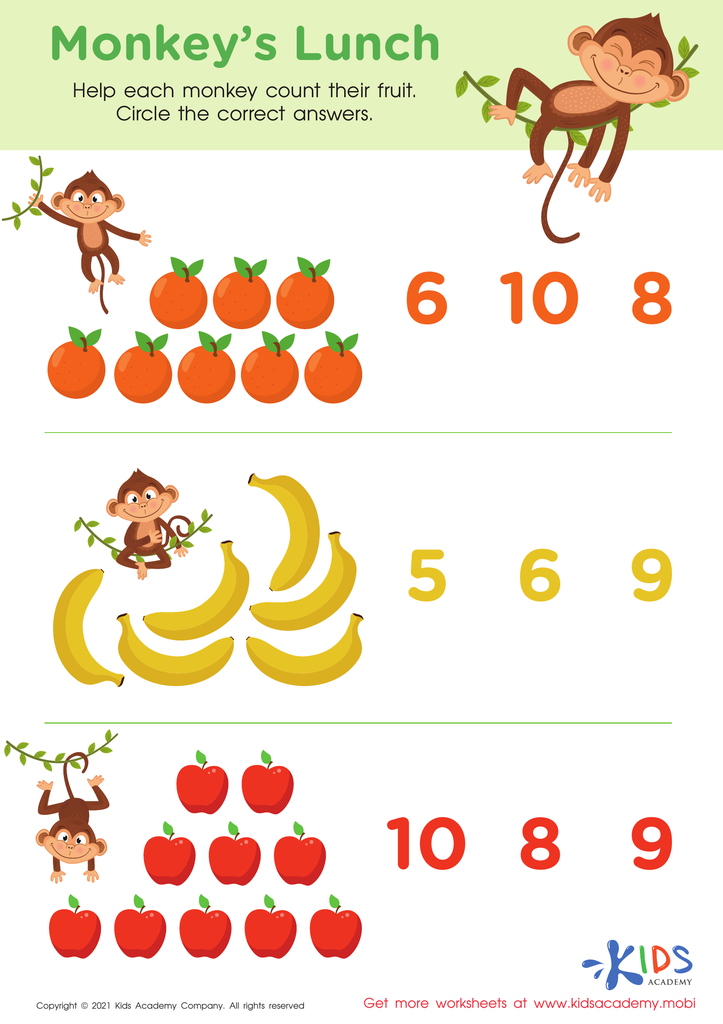
Monkey’s Lunch Worksheet
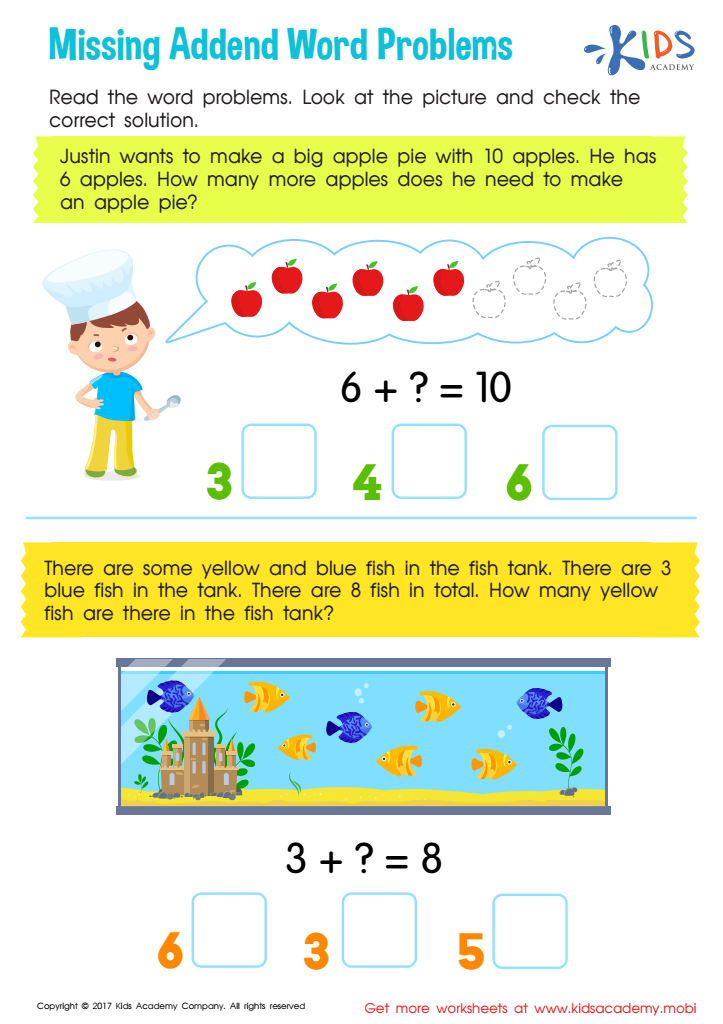
Missing Addend Word Problems Worksheet
 Assign to My Students
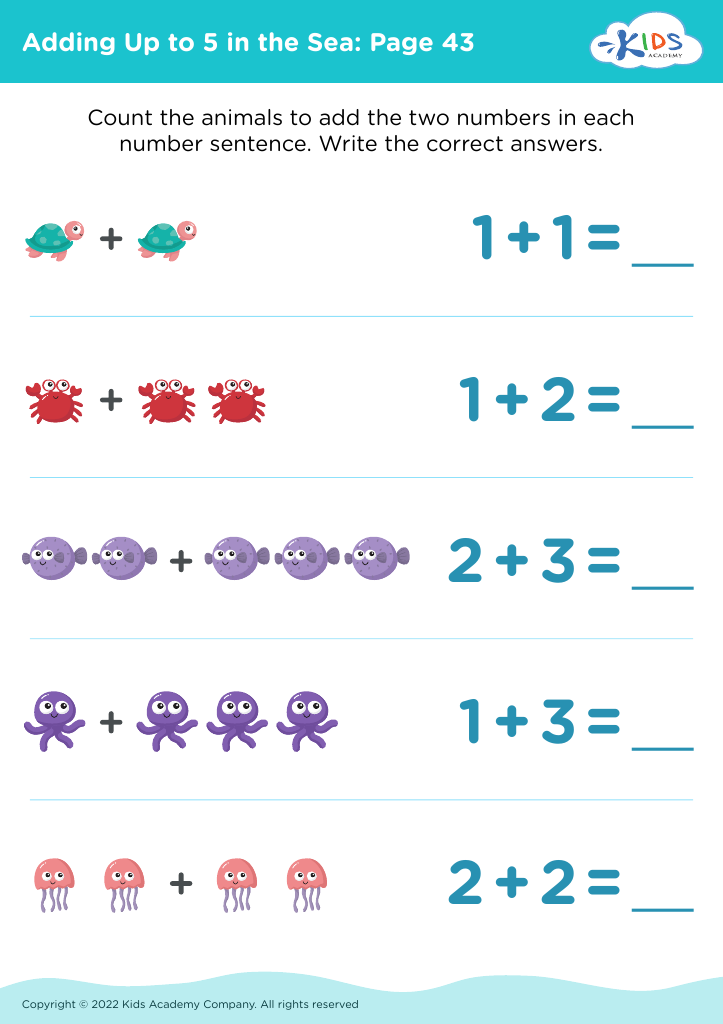








Developing problem-solving skills at an early age, around three years old, is crucial because it sets the foundation for cognitive, social, and emotional growth. At this stage, children are incredibly observant and impressionable, making it a prime time to nurture their ability to think critically and handle challenges.
First, fostering these skills enhances cognitive development. Problem-solving activities like puzzles, sorting games, and imaginative play help kids understand concepts such as cause and effect, sequencing, and spatial relationships. These are fundamental building blocks for later learning in math, science, and literacy.
Second, problem-solving skills improve social abilities. Children who can navigate minor challenges, like sharing toys or resolving minor disputes with peers, tend to form healthier relationships. They learn empathy, cooperation, and effective communication—skills essential for teamwork and social interactions throughout life.
Lastly, emotional development also benefits significantly. Children who frequently encounter and overcome small challenges develop resilience and confidence in their abilities. They grow to view obstacles as solvable problems rather than insurmountable barriers, leading to healthier emotional responses to stress and setbacks.
Parents and teachers should care about this because the skills and attitudes cultivated at this early age set a trajectory for future academic success, social competence, and emotional well-being, creating well-rounded individuals equipped to face the complexities of life.








