Phonetics understanding Worksheets for 3-Year-Olds
3 filtered results
-
From - To
Discover our engaging Phonetics Understanding Worksheets designed specifically for 3-year-olds. These interactive resources support early language development by introducing young learners to the sounds of letters and basic phonetic concepts. Each worksheet is crafted to stimulate curiosity and enhance listening skills through vibrant illustrations and fun activities. By exploring phonetic sounds, children build a strong foundation for reading and language comprehension. Ideal for parents and educators, our worksheets blend learning with play, making phonetics approachable and enjoyable. Equip your child with essential skills for their educational journey while fostering a love for language. Start your adventure with phonetics today!
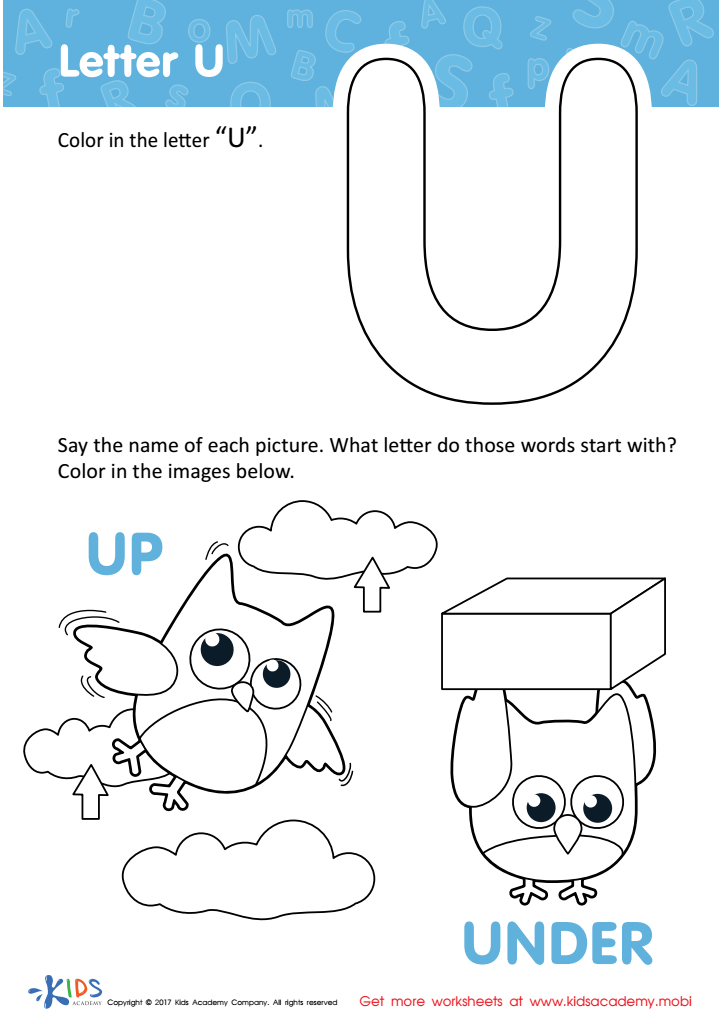
Letter U Coloring Sheet
 Assign to My Students
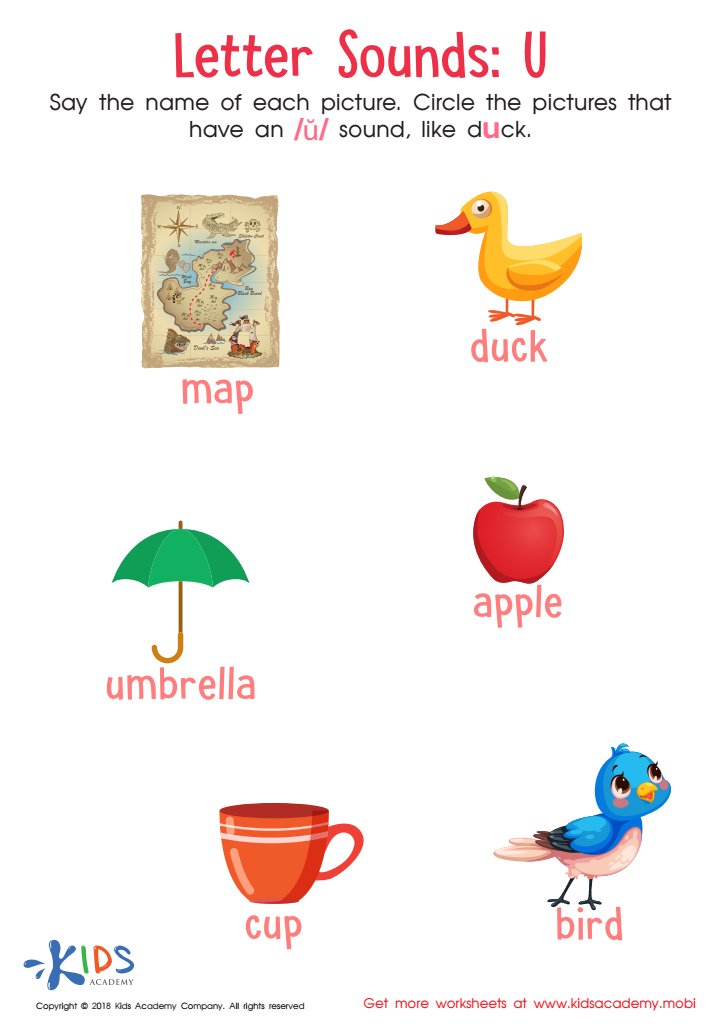
Letter U Sounds Worksheet
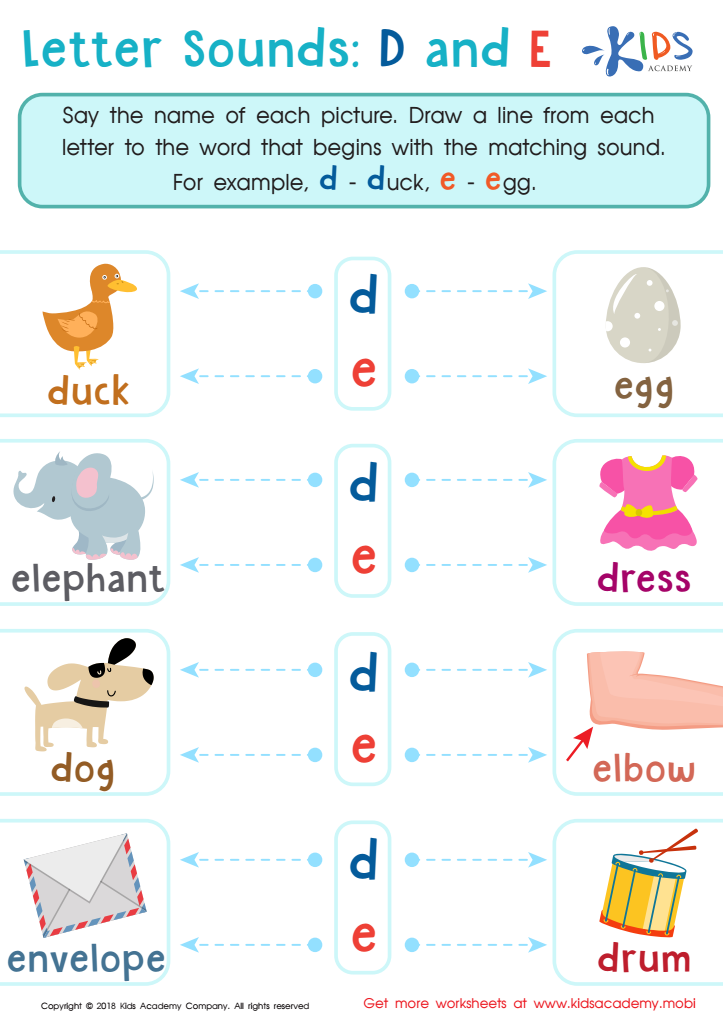
Letter D and E Sounds Worksheet






Phonetics understanding is crucial for 3-year-olds as it forms the foundation of language development. At this age, children begin to develop listening and speaking skills essential for effective communication. When parents and teachers facilitate phonetic awareness, they help children recognize sounds and distinguish them from one another, laying the groundwork for reading and writing.
Phonetics understanding enriches a child's vocabulary and pronunciation. It encourages them to experiment with sounds, fostering creativity in language use. Moreover, recognizing phonetic patterns helps children to decode words and comprehend language, essential skills in their later schooling.
Engaging with phonetics through games, songs, and playful activities enhances not only language skills but also cognitive development. As children begin to understand relationships between sounds and meanings, they grow more confident in their communication abilities.
Additionally, early phonetic instruction can help identify potential language delays, allowing for timely interventions and support. In an inclusive and stimulating environment, the collaboration between parents and teachers is vital to nurture phonetically aware children, ensuring they are equipped with the essential tools needed for successful future learning. Ultimately, fostering phonetic understanding empowers children, boosting their confidence, literacy skills, and overall academic success.








