Sound recognition Worksheets for 3-Year-Olds
5 filtered results
-
From - To
Discover our engaging Sound Recognition Worksheets for 3-Year-Olds, designed to enhance auditory skills and stimulate early learning! These interactive worksheets introduce young learners to various sounds, helping them develop critical listening abilities while having fun. Featuring captivating illustrations and age-appropriate activities, children can practice identifying and matching sounds from everyday objects, animals, and more. Our thoughtfully designed resources promote cognitive development, enhance vocabulary, and support language acquisition. Perfect for parents and educators, these worksheets offer an excellent way for preschoolers to explore the world of sound recognition in a playful and effective manner. Start your child’s auditory adventure today!
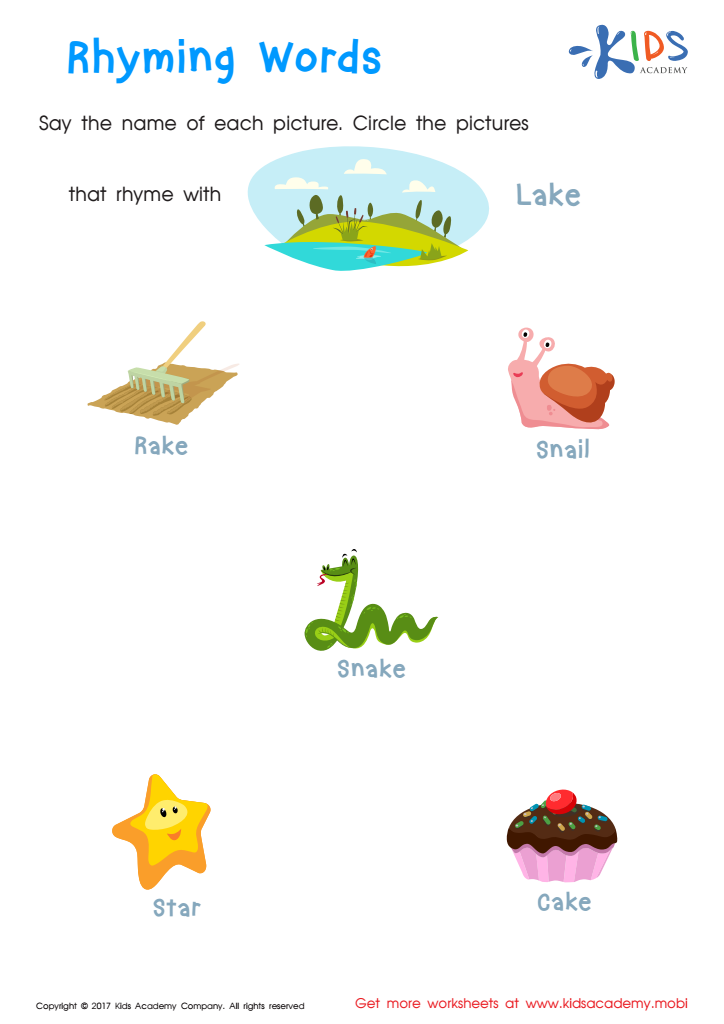
Rhyming Words Rhyming Worksheet
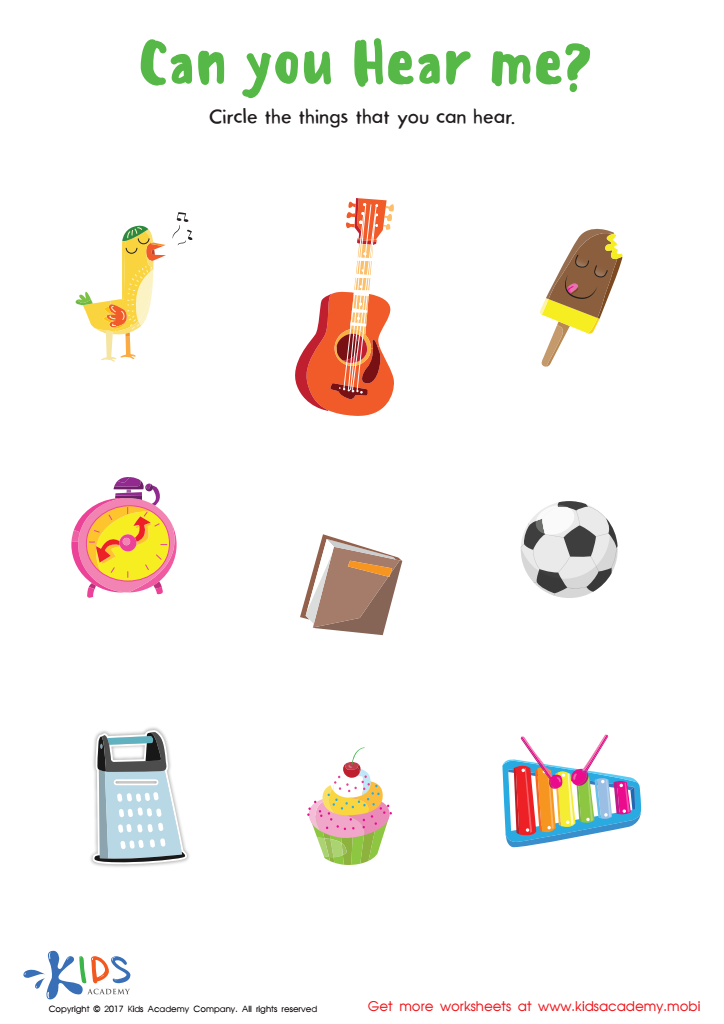
Can You Hear Me Worksheet

Long and Short U Worksheet
 Assign to My Students
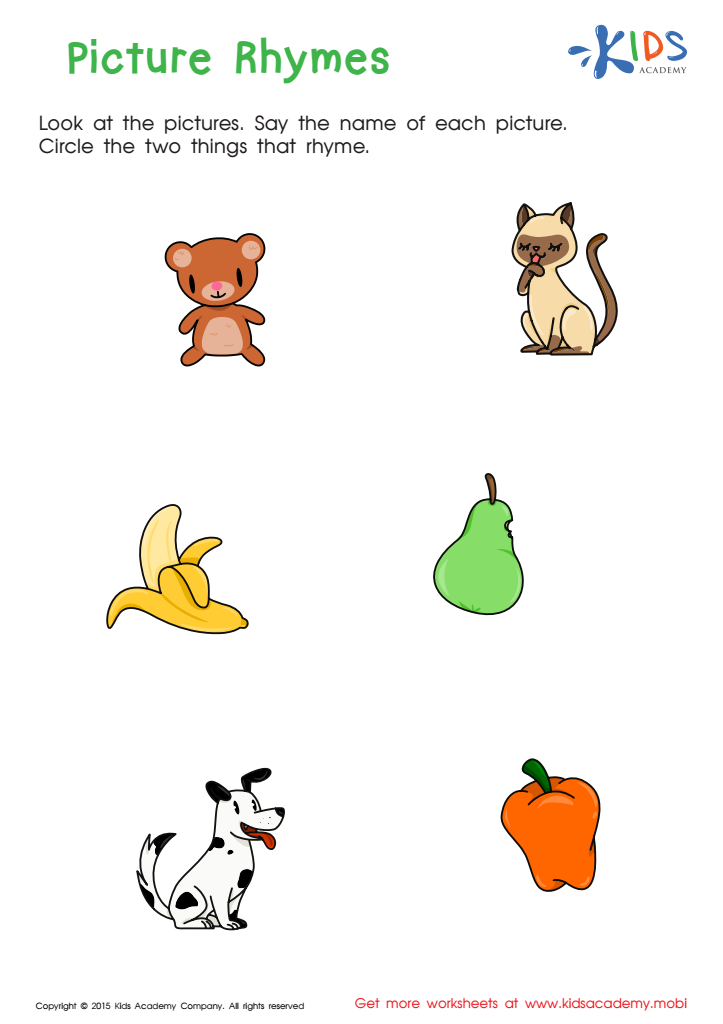
First Words: Picture Rhymes Worksheet
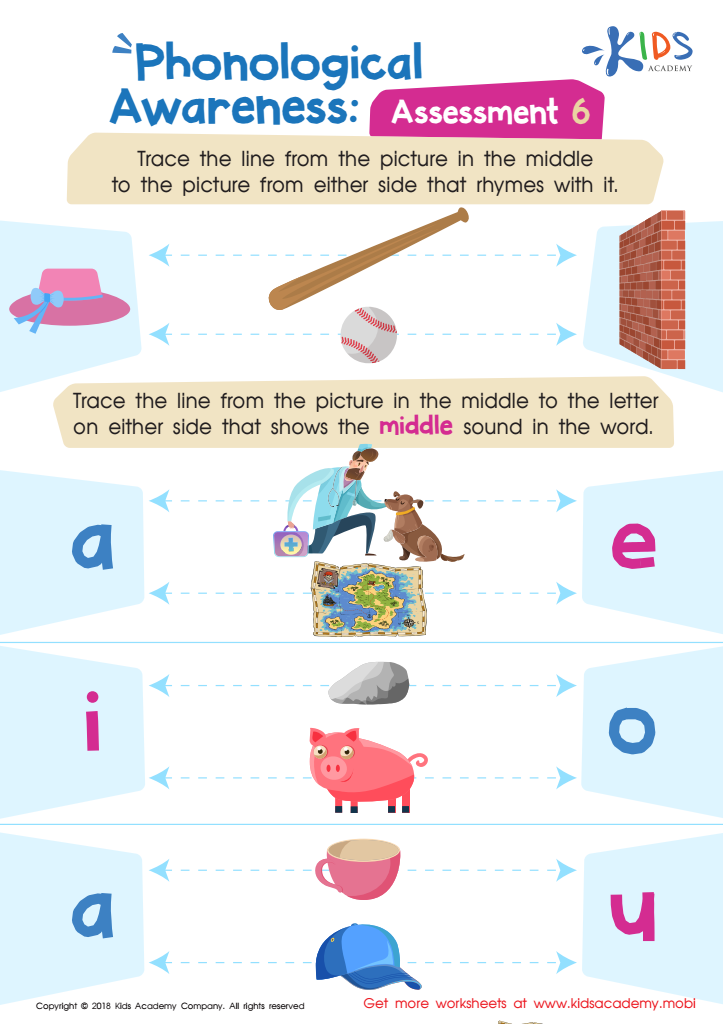
Phonological Awareness: Assessment 6 Worksheet






Sound recognition is a crucial skill that significantly influences a child's language development and cognitive growth, particularly for 3-year-olds. At this age, children are developing their ability to discern and interpret sounds, which lays the foundation for effective communication. Recognizing different sounds helps toddlers connect spoken language with the associated objects or actions, enhancing vocabulary acquisition and comprehension.
Moreover, sound recognition is linked to phonemic awareness, an essential precursor to reading success. By identifying and distinguishing sounds, children gain the skills necessary for recognizing letters and understanding that words are made up of individual sounds. Engaging with sound through activities like singing, rhyming, and reading aloud not only broadens a child’s linguistic capabilities but also fosters listening skills, critical for all areas of learning.
Additionally, awareness of environmental sounds and their meanings enriches children's understanding of the world around them, aiding their social and emotional development. As parents and teachers foster sound recognition through interactive play and supportive learning environments, they empower children to engage more fully in their surroundings, paving the way for a lifetime of learning. Thus, sound recognition is integral for a well-rounded foundation in literacy and overall development for 3-year-olds.








