
Story analysis Worksheets for 3-Year-Olds
4 filtered results
Difficulty Level
Grade
Age
-
From - To
Subject
Activity
Standards
Discover our engaging story analysis worksheets designed specifically for 3-year-olds! These fun and interactive activities help young children develop essential comprehension skills by encouraging them to think critically about stories. Simple questions and colorful illustrations make it easy for little ones to identify characters, settings, and main ideas while fostering a love for reading. Our worksheets promote language development, enhance creative thinking, and support early literacy in a playful way. Perfect for both home and classroom use, these story analysis exercises allow children to explore and express their understanding of stories, laying the foundation for their future academic success.
Favorites
With answer key
Interactive
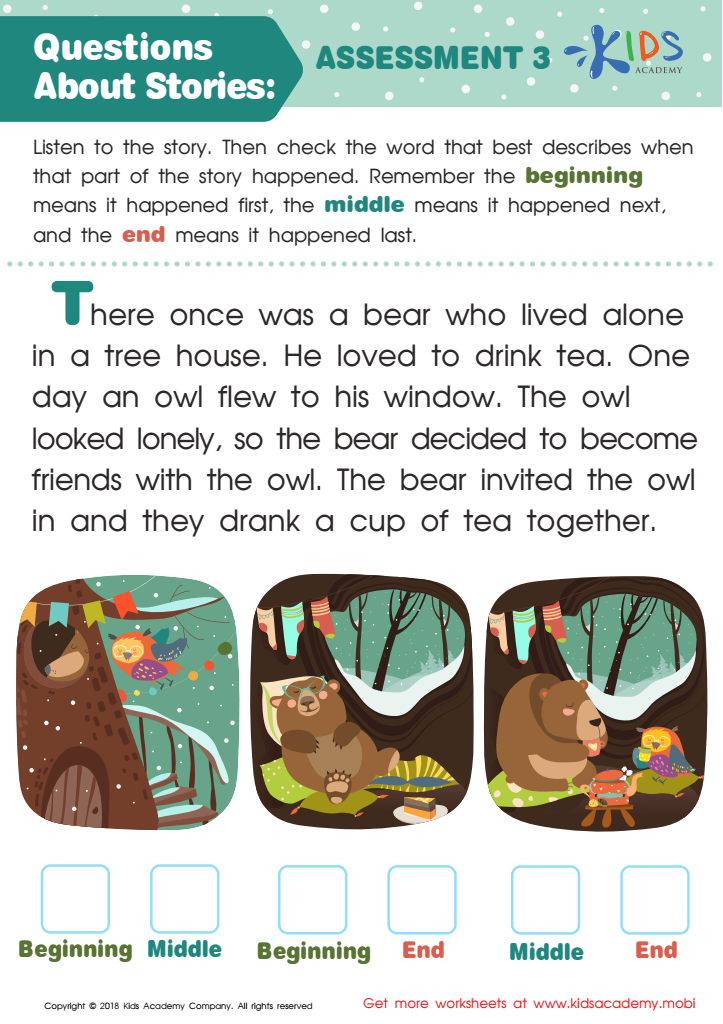
Questions About Stories: Assessment 3 Worksheet
Help kids understand stories by having them listen to a story and check boxes for the beginning, middle, and end. This worksheet makes it fun for even the youngest learners to recall story elements and sequence of events. Let them listen to the story from start to finish, then look at the pictures to check which part of the story they depict.
 Assign to My Students
Questions About Stories: Assessment 3 Worksheet
Worksheet
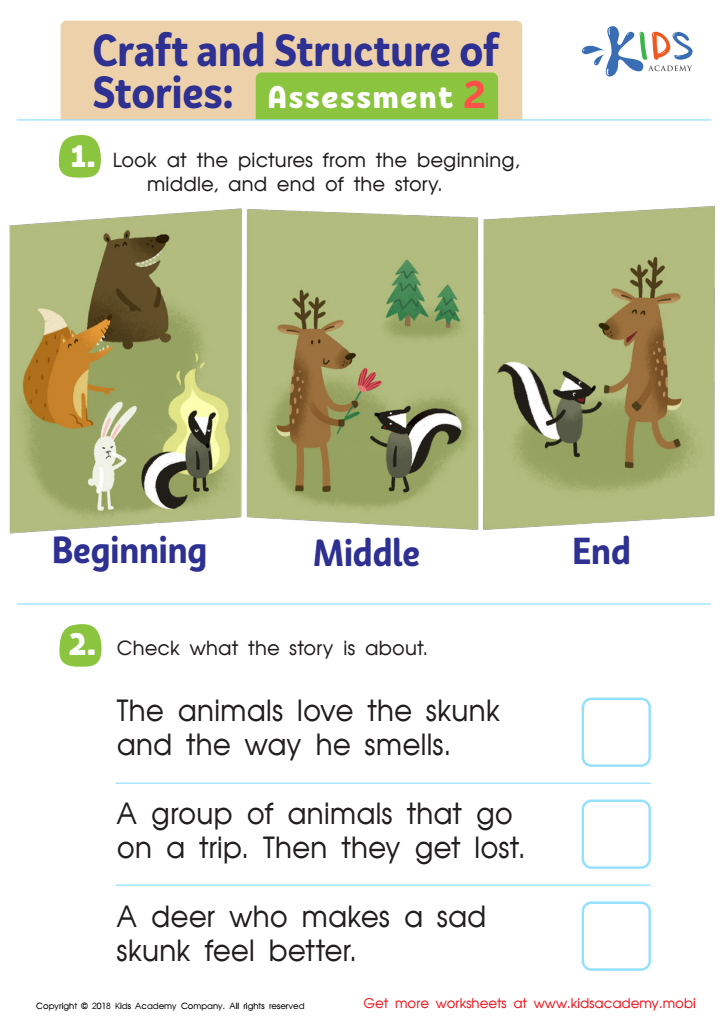
Craft and Structure of Stories: Assessment 2 Worksheet
Help your child assess their story sequencing and reading comprehension skills using this cute worksheet! It encourages them to look at the three pictures on the page, each representing a scene from the beginning, middle and end. Ask them what the story is about, then let them check the box next to the correct answer. This is a great way to ensure they understand the main events of a story.
Craft and Structure of Stories: Assessment 2 Worksheet
Worksheet
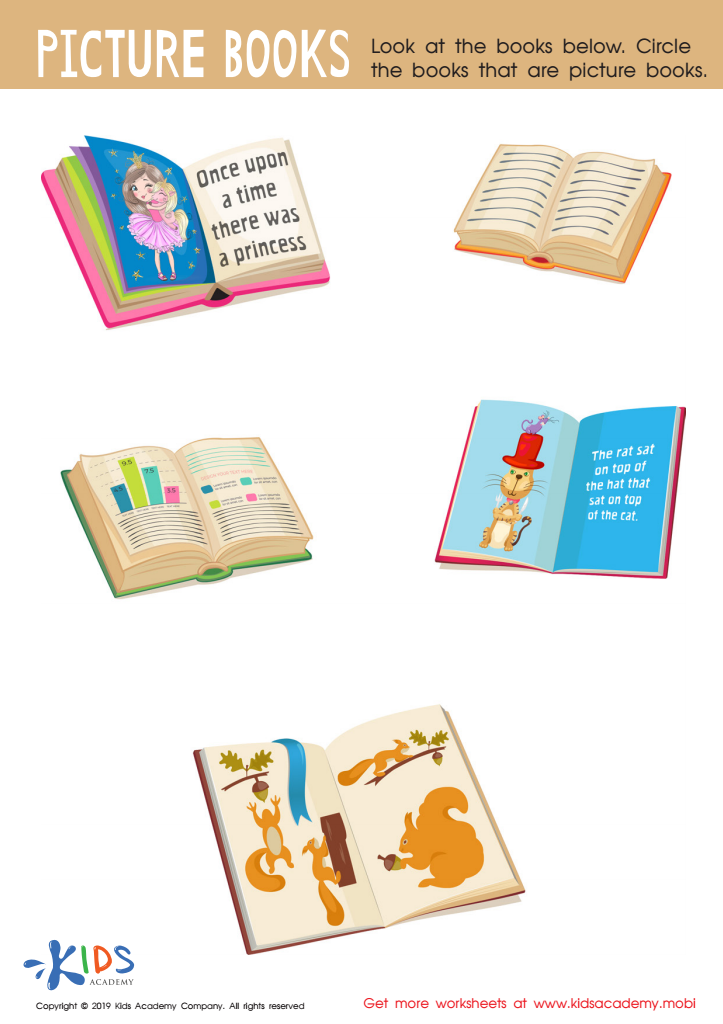
Picture Books Worksheet
Kids will love this exercise! Get their imaginations going with five colorful picture books. Ask them to circle the books that are picture books and have them enjoy the exciting stories, along with the colorful images. Reading can become that much more enjoyable!
Picture Books Worksheet
Worksheet
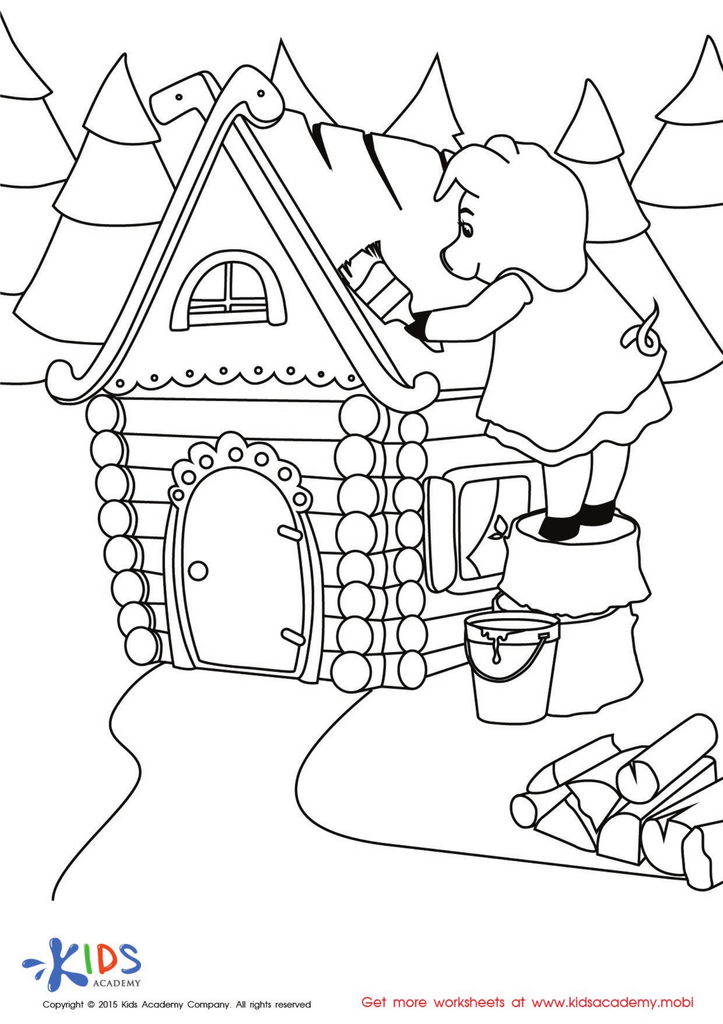
The Three Little Pigs Worksheet
Print out this fun coloring page and unleash your creativity! It features a cute little pig painting her new sticks house. What color will you choose? Work those fine motor muscles and enjoy the picture come to life! See what happens next to the three little pigs.
The Three Little Pigs Worksheet
Worksheet
Join Kids Academy for Free
Who is primarily going to use this learning content?








Story analysis for 3-year-olds is essential because it fosters early literacy skills and critical thinking. At this age, children are highly receptive to language and storytelling, making it a prime opportunity for nurturing their comprehension and vocabulary. By engaging in story analysis, parents or teachers help children identify main ideas, characters, and sequences, thereby enhancing their ability to understand and predict narratives.
Moreover, story analysis encourages children to express their thoughts and feelings about various stories, fostering emotional intelligence. This practice also promotes imagination and creativity, as children learn to visualize events in the story and relate them to their own experiences. Engaging with stories in a reflective manner helps build stronger connections to the content, which aids retention and enjoyment.
Additionally, discussing tales encourages social skills through shared dialogue, teaching children how to listen attentively and articulate their opinions. By integrating story analysis into daily routines, parents and teachers lay a strong foundation for future literacy development, critical thinking skills, and a lifelong love of reading. In summary, story analysis is vital in the formative years, influencing cognitive, emotional, and social growth.








