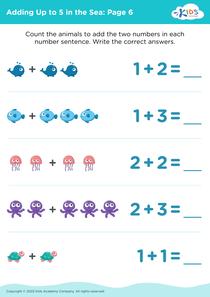
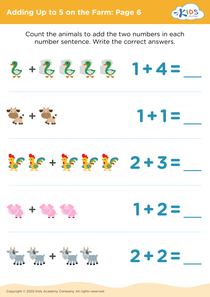
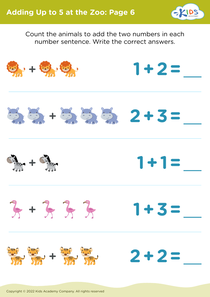
Animal recognition Adding in the Forest Worksheets for 3-Year-Olds
15 filtered results
-
From - To
Introducing "Animal Recognition Adding in the Forest Worksheets for 3-Year-Olds"! Dive into our enchanting forest-themed worksheets designed to make learning math fun and engaging for the little ones. These printables help young learners master basic addition while recognizing various forest animals. Each worksheet features vibrant illustrations and a simple, interactive format that fosters early math skills, counting, and animal recognition. Perfect for preschoolers, these activities are designed to capture their imagination and encourage their curiosity about nature. Give your child a head start in math with our expertly crafted and delightful worksheets!
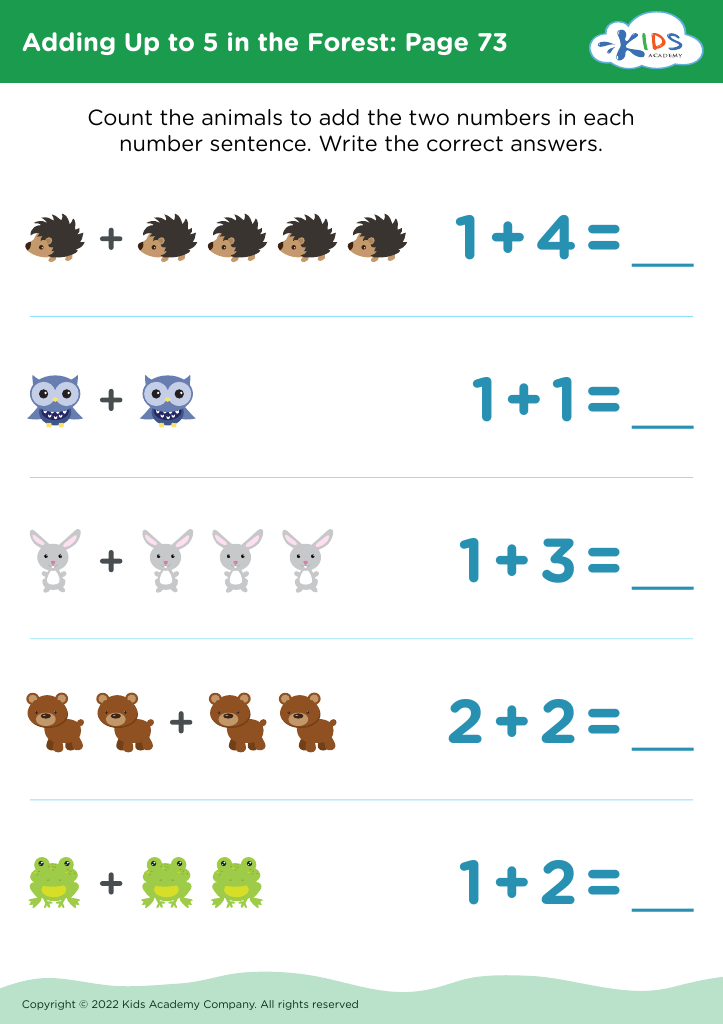
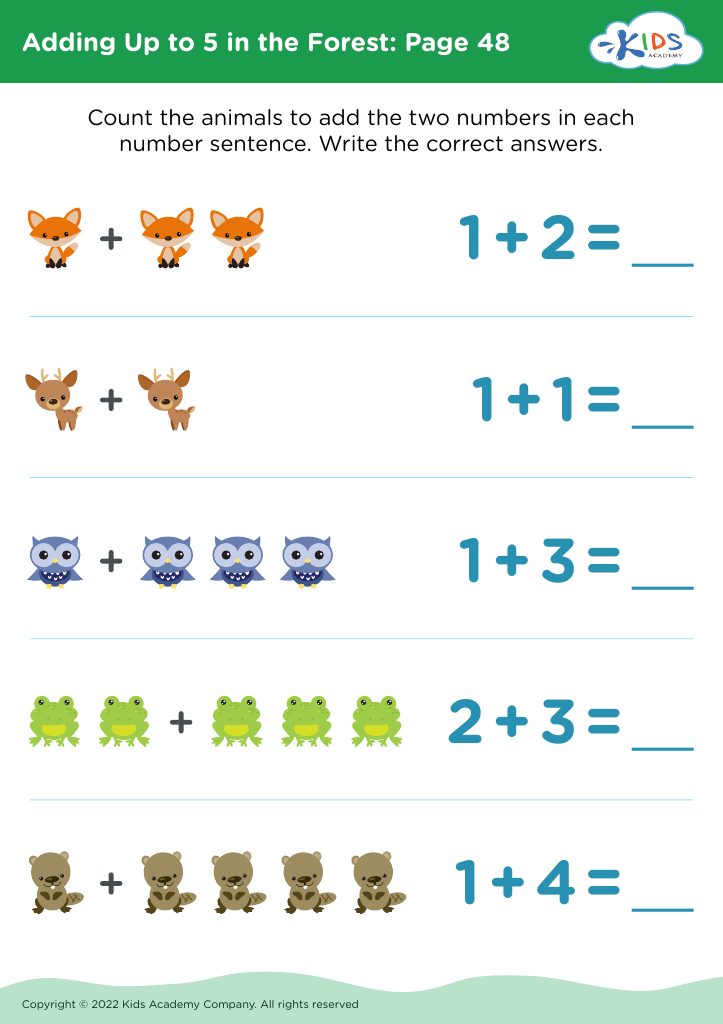
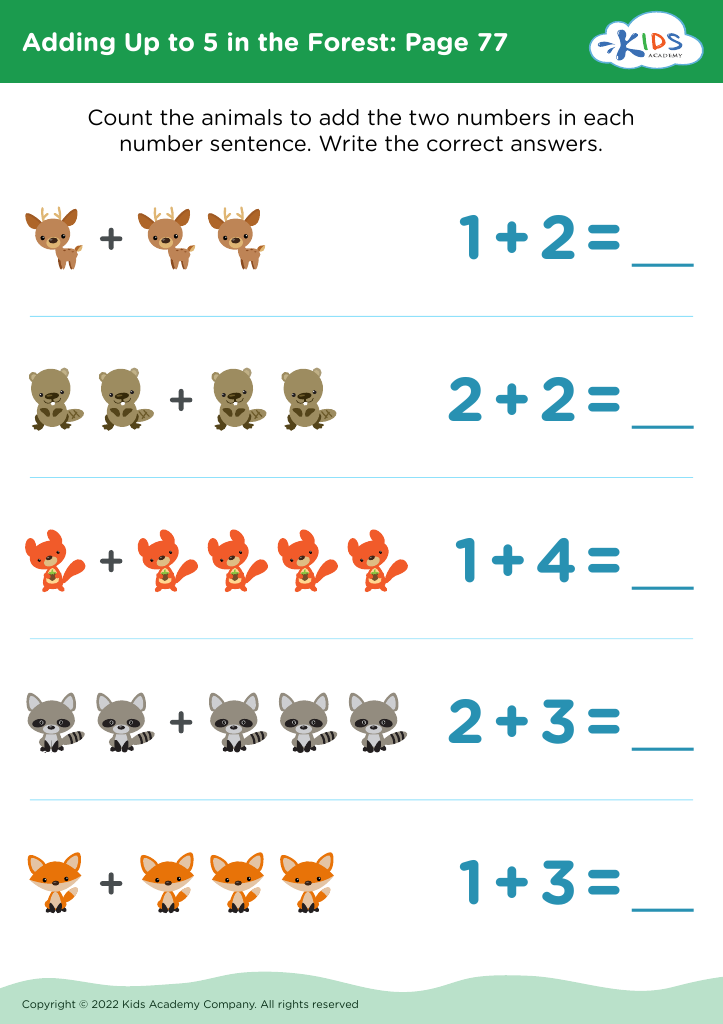
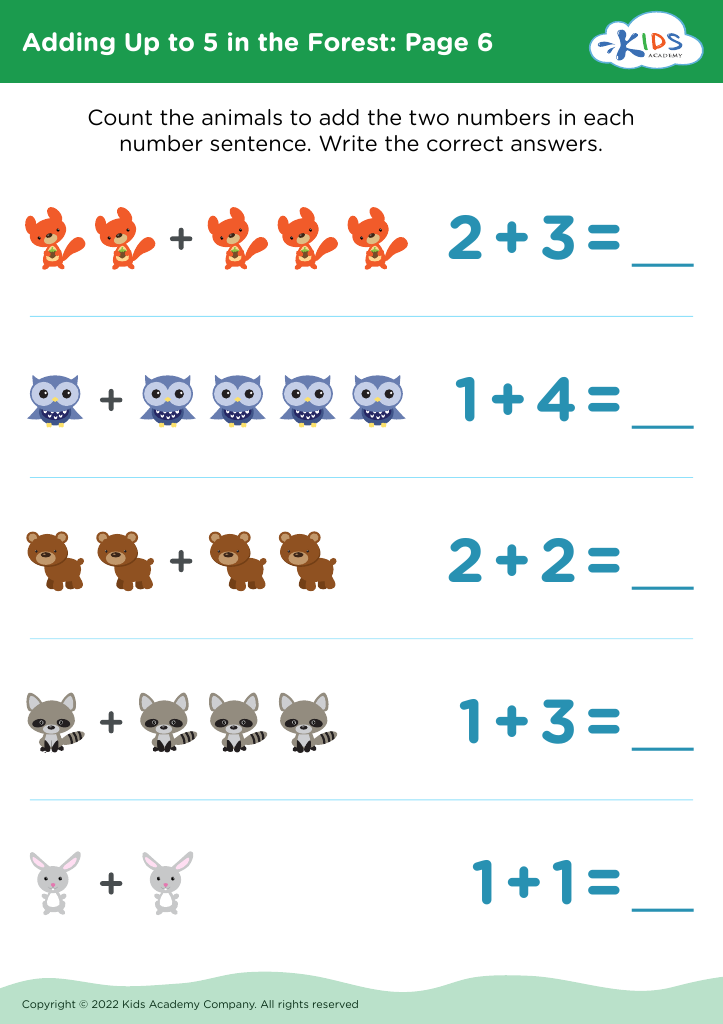
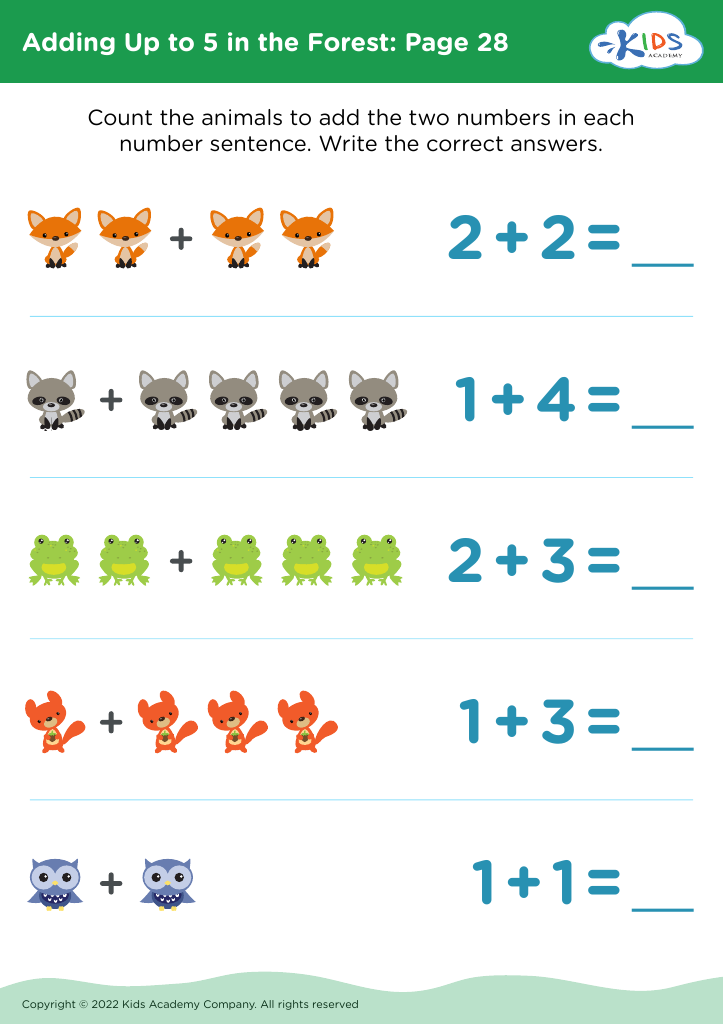
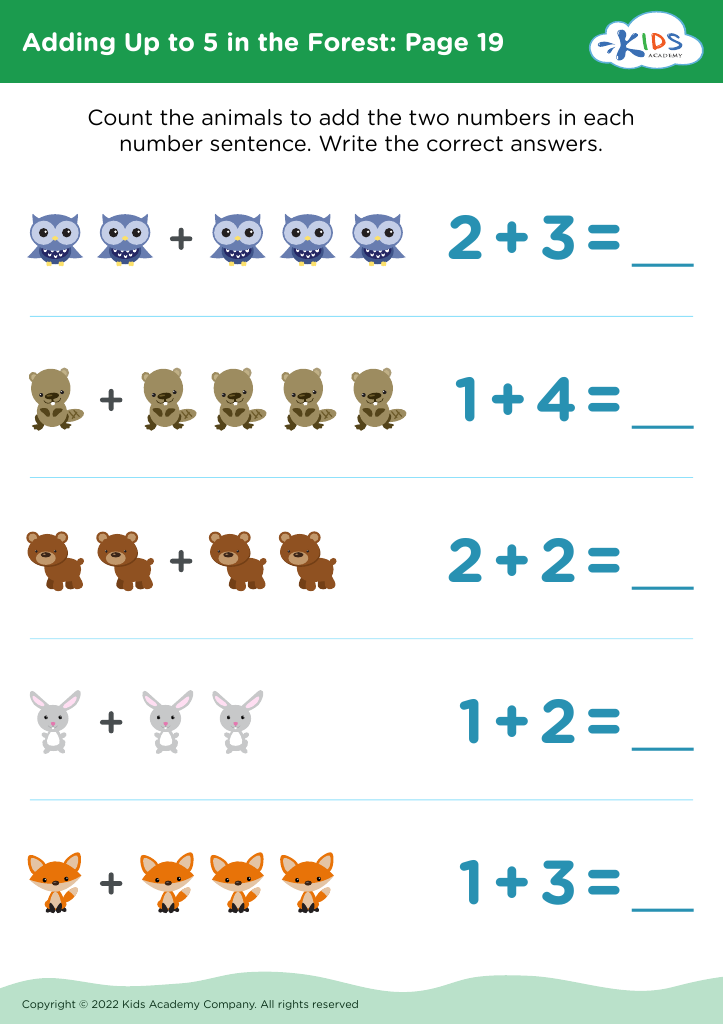
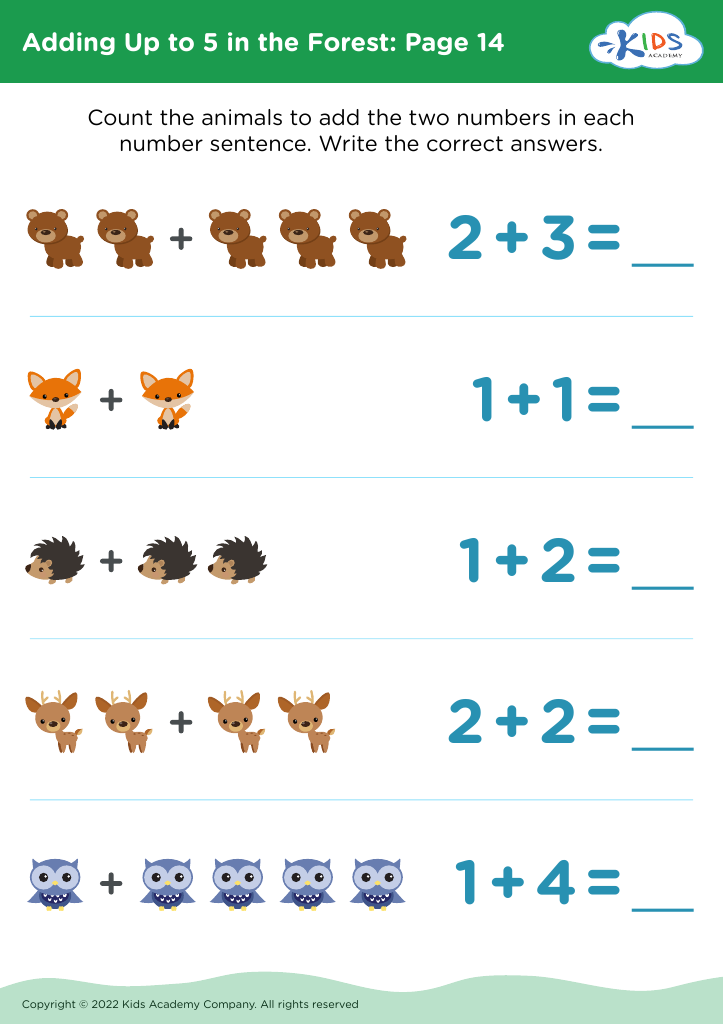
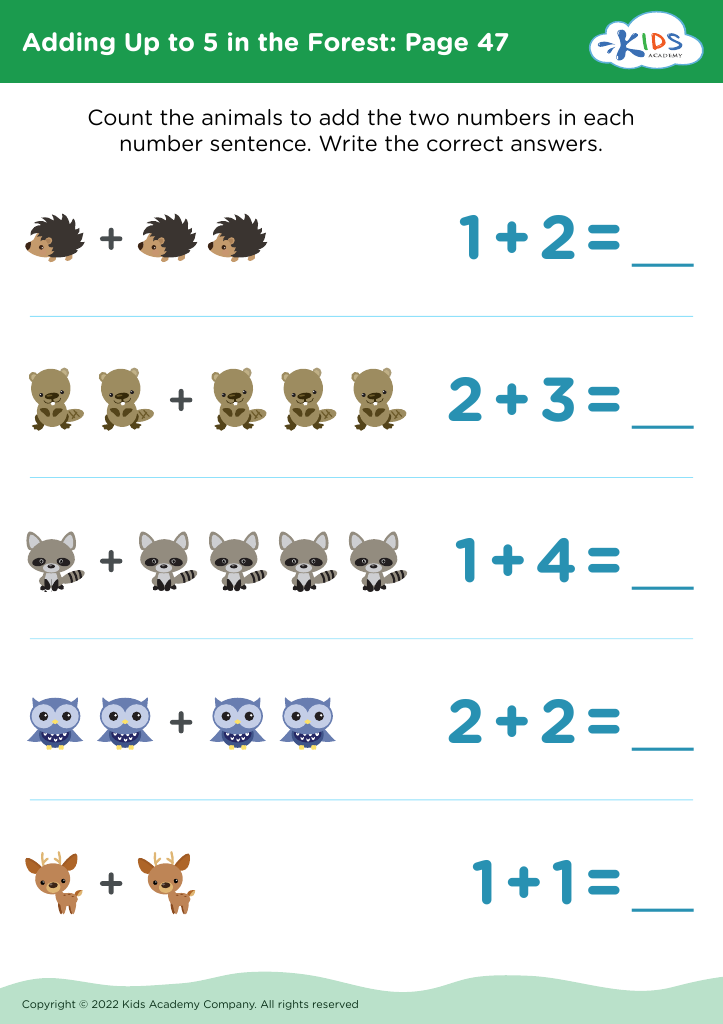
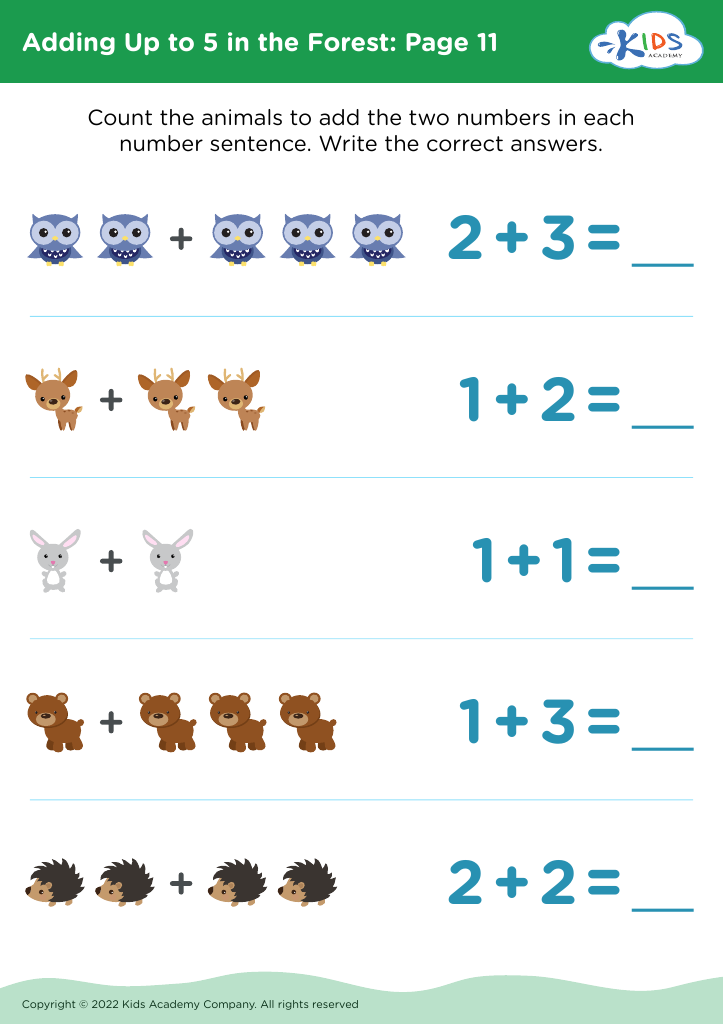
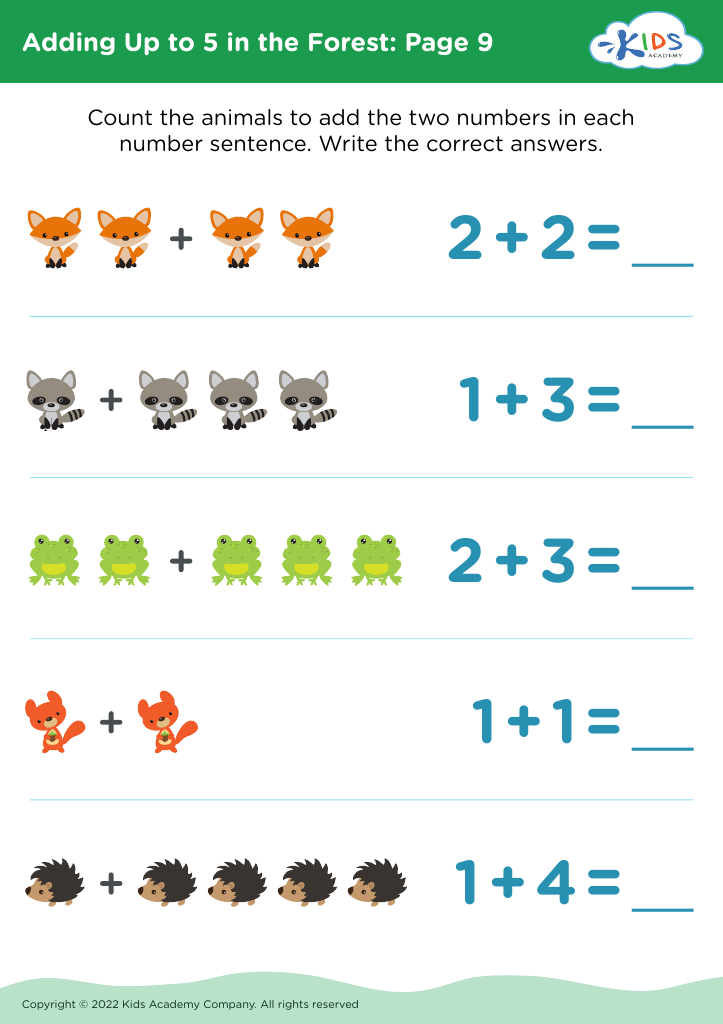
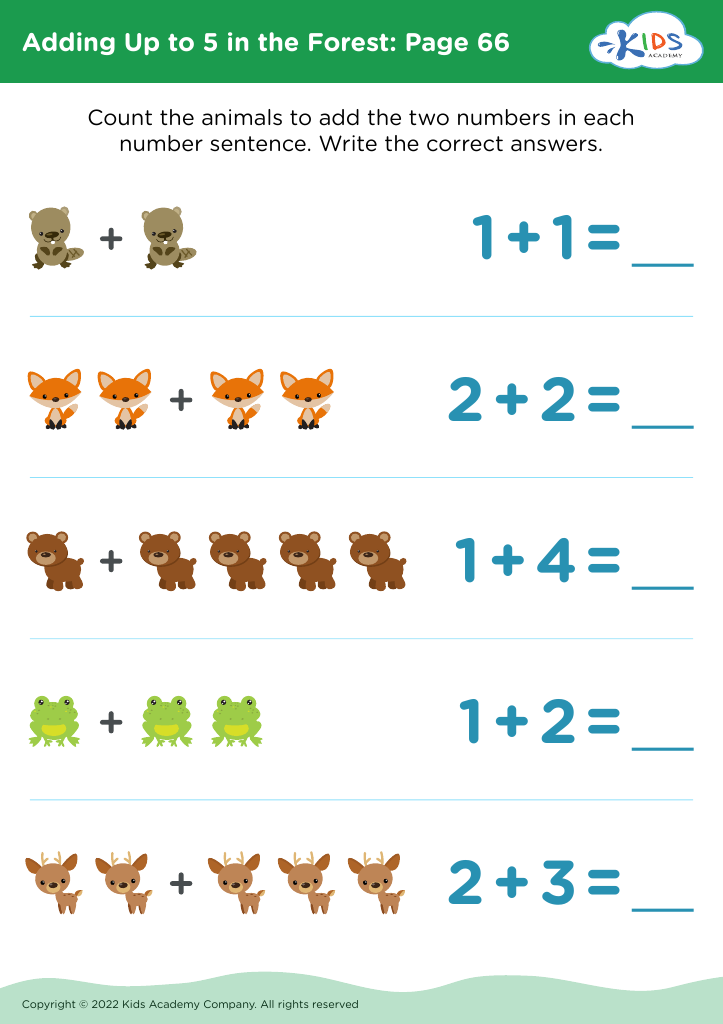
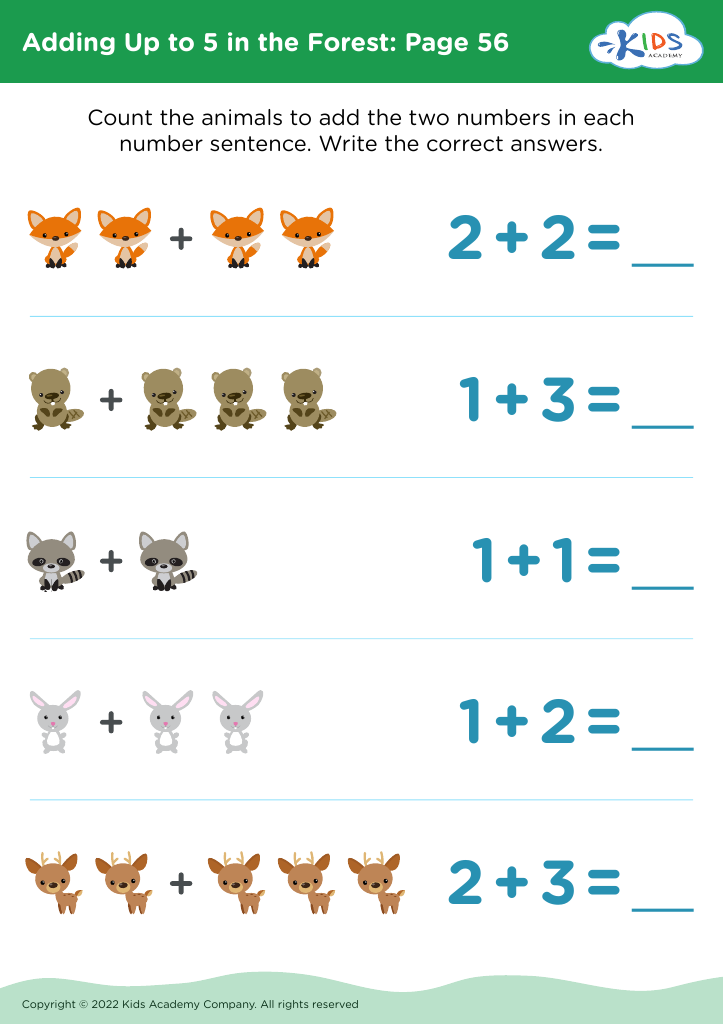
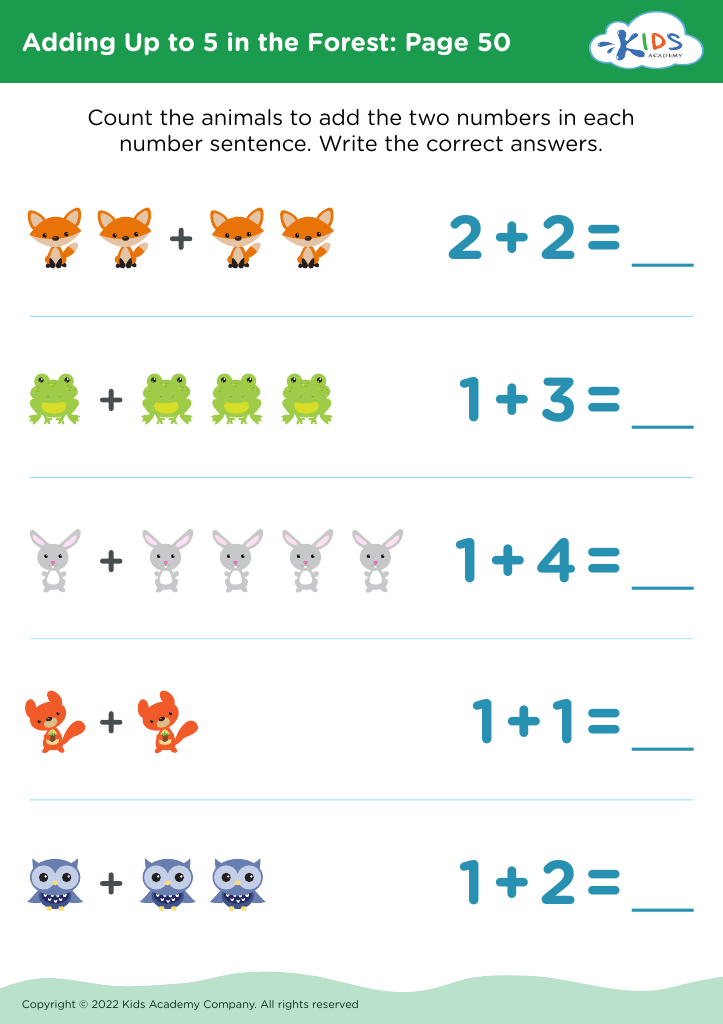
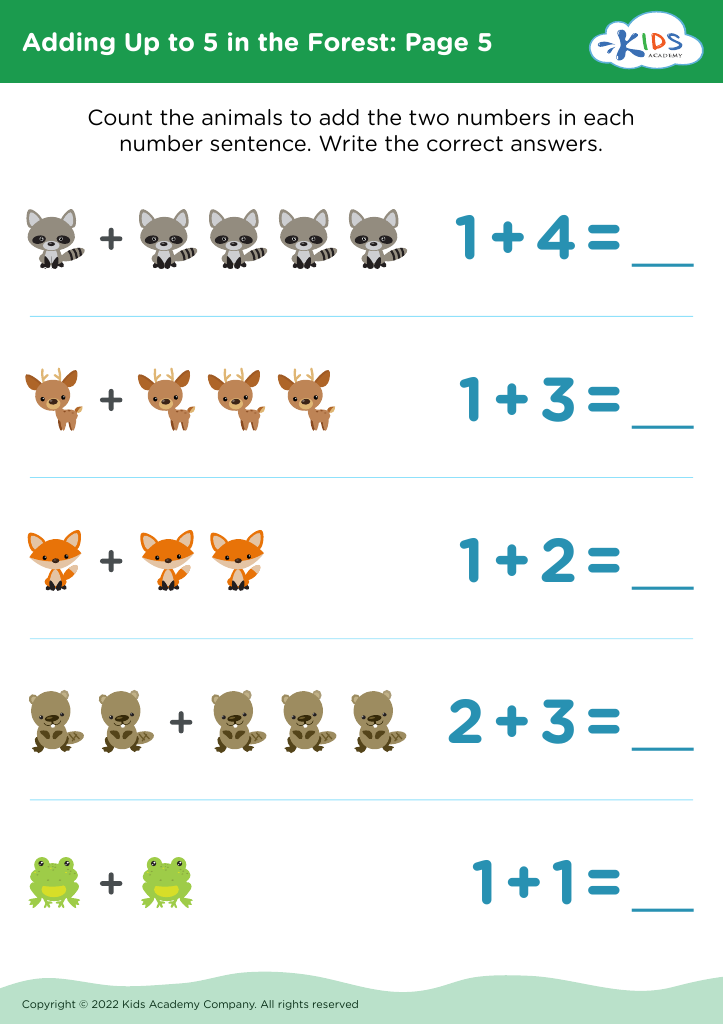
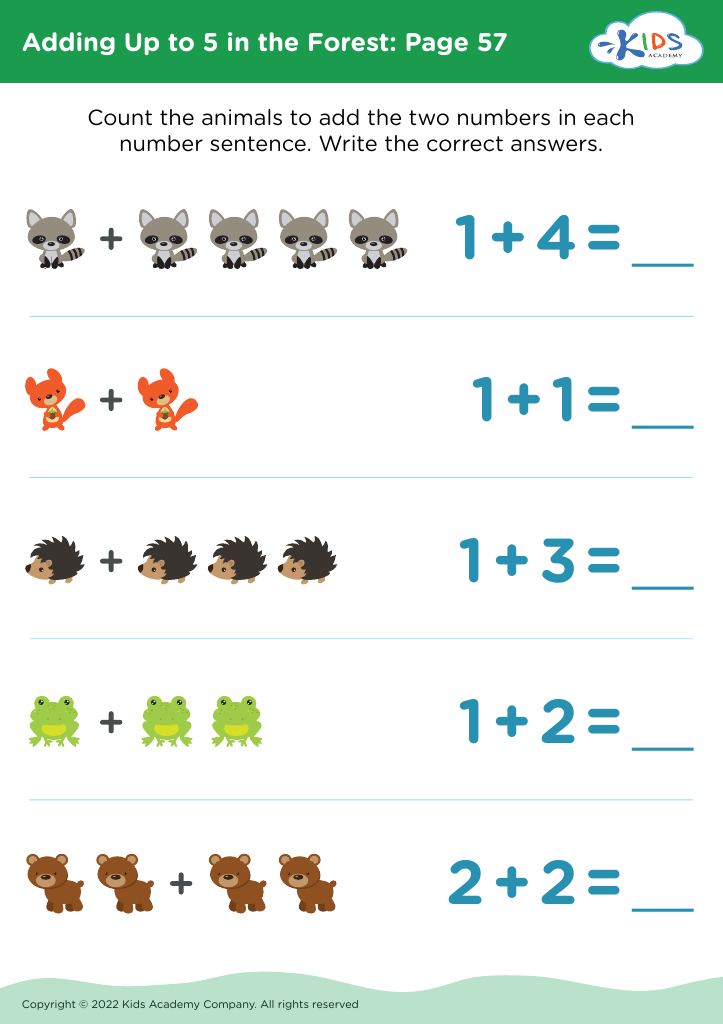



Animal recognition and understanding numbers or concepts of adding, particularly in the context of the forest, greatly benefit the development of 3-year-olds. This combination of activities is essential for cognitive, linguistic, and emotional growth. Firstly, recognizing different animals enhances a child's ability to categorize and differentiate between various species, which thereby improves their cognitive processing and memory skills. Teaching them the diverse aspects of forest animals fosters curiosity and a love for nature, laying the foundation for environmental stewardship.
Secondly, incorporating basic mathematical concepts, such as counting and simple addition through engaging scenarios like animals in a forest, introduces fundamental math skills in a context that is both fun and meaningful. This dual learning activity not only solidifies early numeracy skills but also nurtures problem-solving abilities.
Moreover, language development is bolstered as children learn new words associated with animals and their environments. Interacting with these concepts also spurs communication skills, facilitating better expression and comprehension.
Lastly, these activities can provide emotional benefits by allowing children to express joy and curiosity, engaging their imagination, and opening avenues for social interaction and collaborative play. Parents and teachers should thus prioritize animal recognition and adding exercises to deliver multifaceted educational benefits to preschoolers.