Basic Arithmetic Adding in the Forest Worksheets for 3-Year-Olds
5 filtered results
-
From - To
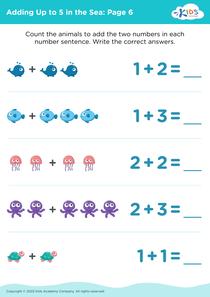
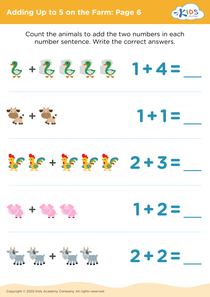
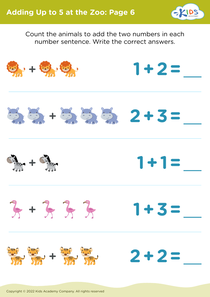
Discover the joy of learning with our "Basic Arithmetic Adding in the Forest Worksheets" tailored for 3-year-olds! These engaging worksheets introduce young learners to fundamental addition skills through delightful forest-themed activities. Children will explore counting, grouping, and simple addition problems featuring charming woodland creatures designed to capture their attention and spark their imagination. Each worksheet provides a fun and interactive way to strengthen early math skills while promoting critical thinking and problem-solving. Perfect for preschool classrooms or home learning, these worksheets support developmental milestones in a playful and engaging manner. Join us in making math an adventure in the forest!
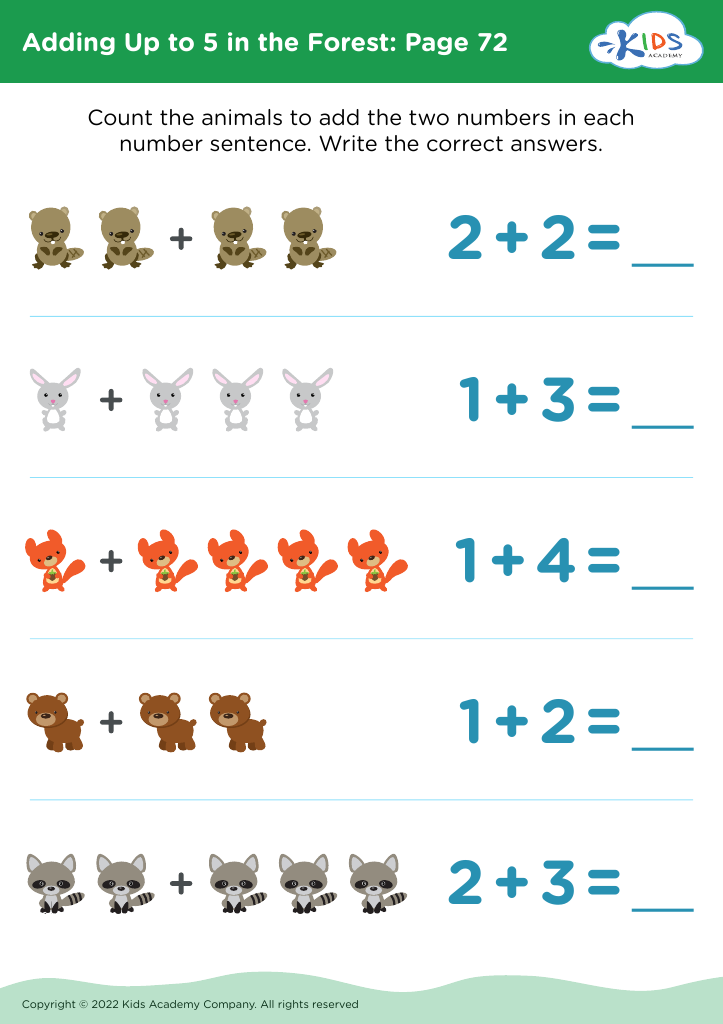
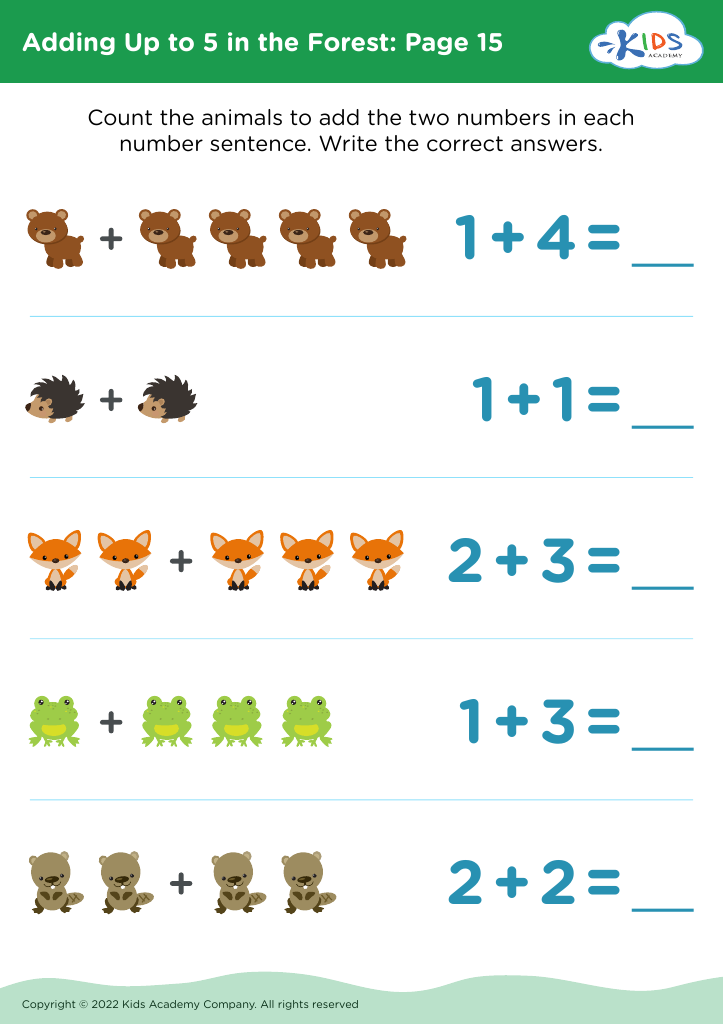
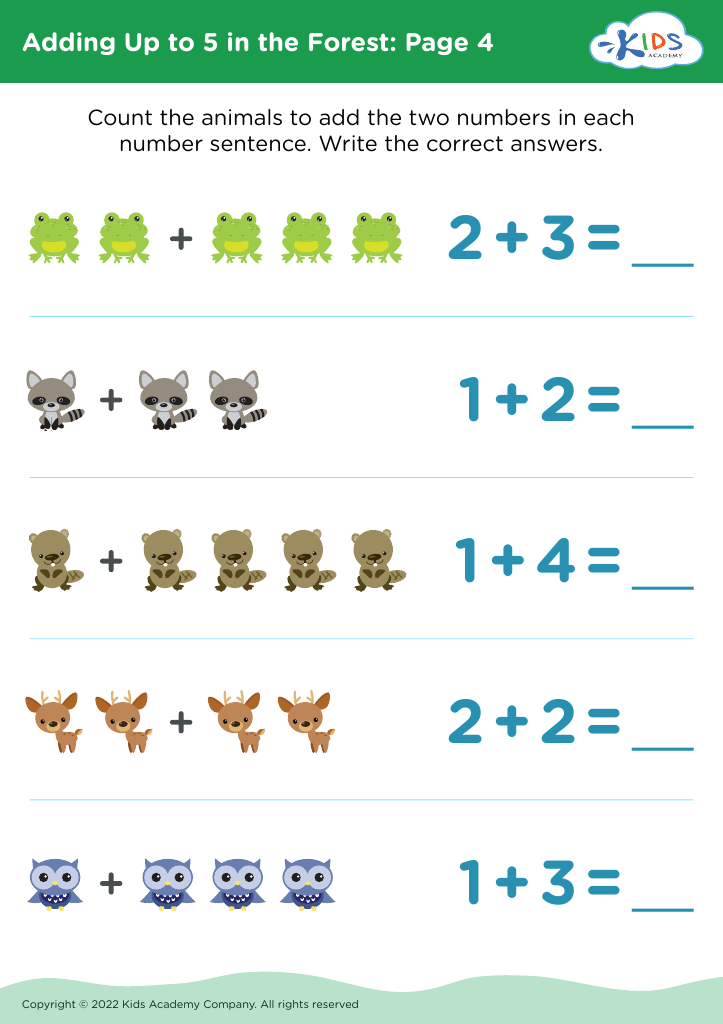
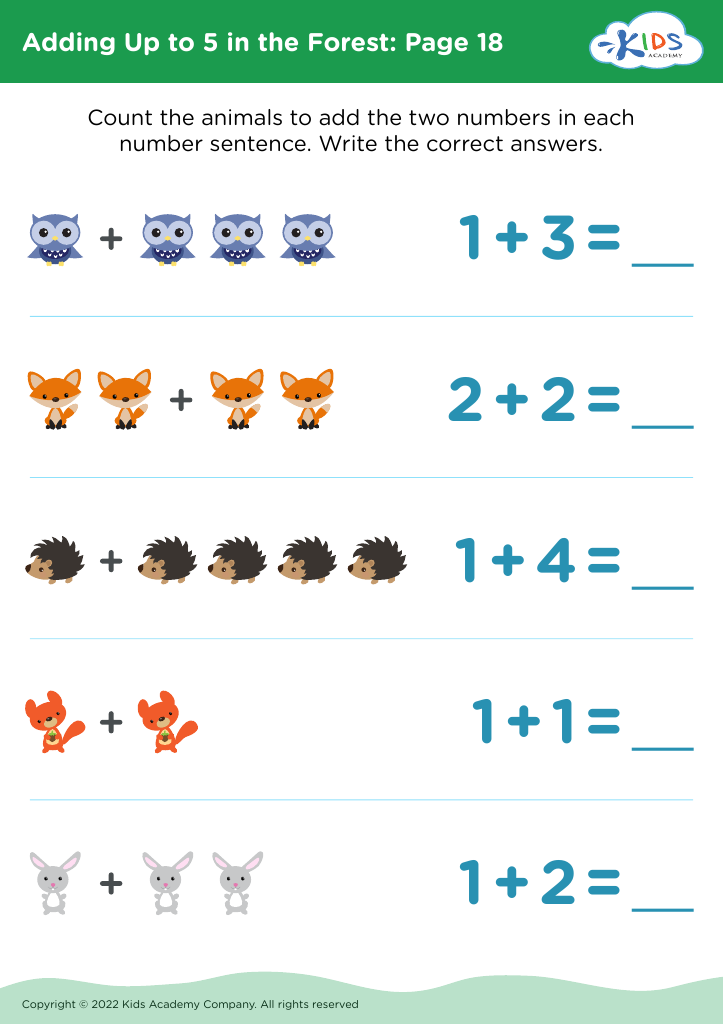
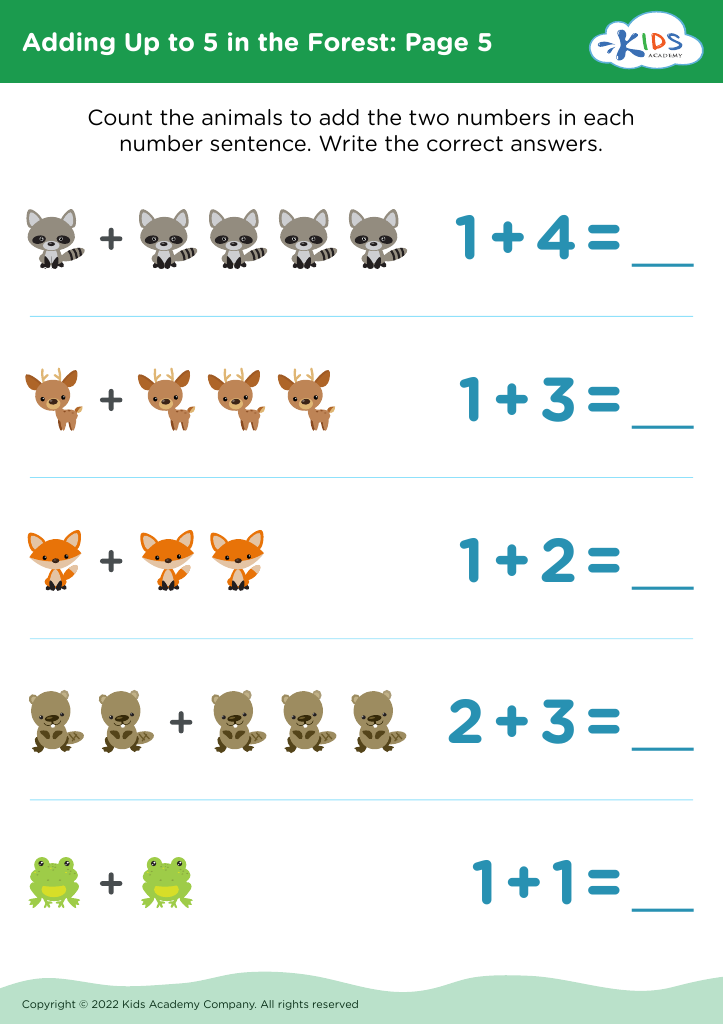



Teaching basic arithmetic, such as adding, in a fun and engaging way can significantly benefit the cognitive and social development of three-year-olds. Exploring concepts like adding through interactive activities set in a forest theme can foster a love for learning while reinforcing essential skills. The natural environment provides opportunities for hands-on experiences, making math relatable and enjoyable.
Incorporating elements of nature—perhaps counting leaves, acorns, or insects—allows young learners to make connections between abstract numbers and the real world. Such activities not only enhance numerical understanding but also stimulate curiosity and critical thinking. Additionally, learning in a group setting encourages cooperation and communication, important social skills for preschoolers.
For parents and teachers, fostering early math skills can lay a solid foundation for future learning. Mastering basic arithmetic paves the way for more complex mathematical concepts later on, contributing to overall academic success. Furthermore, engaging kids in playful counting experiences nurtures their enthusiasm and confidence in tackling challenges. By prioritizing fun, sensory-rich learning environments, caregivers can inspire a lifelong passion for math and learning in young children, ultimately shaping well-rounded individuals.