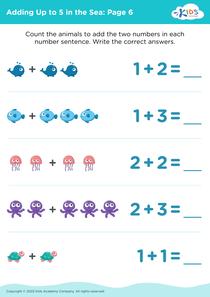
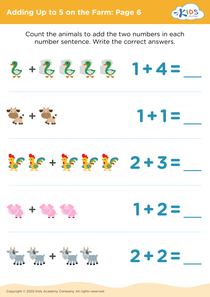
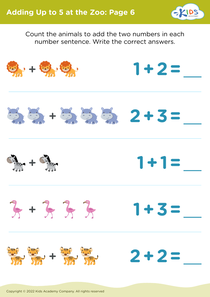
Nature appreciation Adding in the Forest Worksheets for 3-Year-Olds
5 filtered results
-
From - To
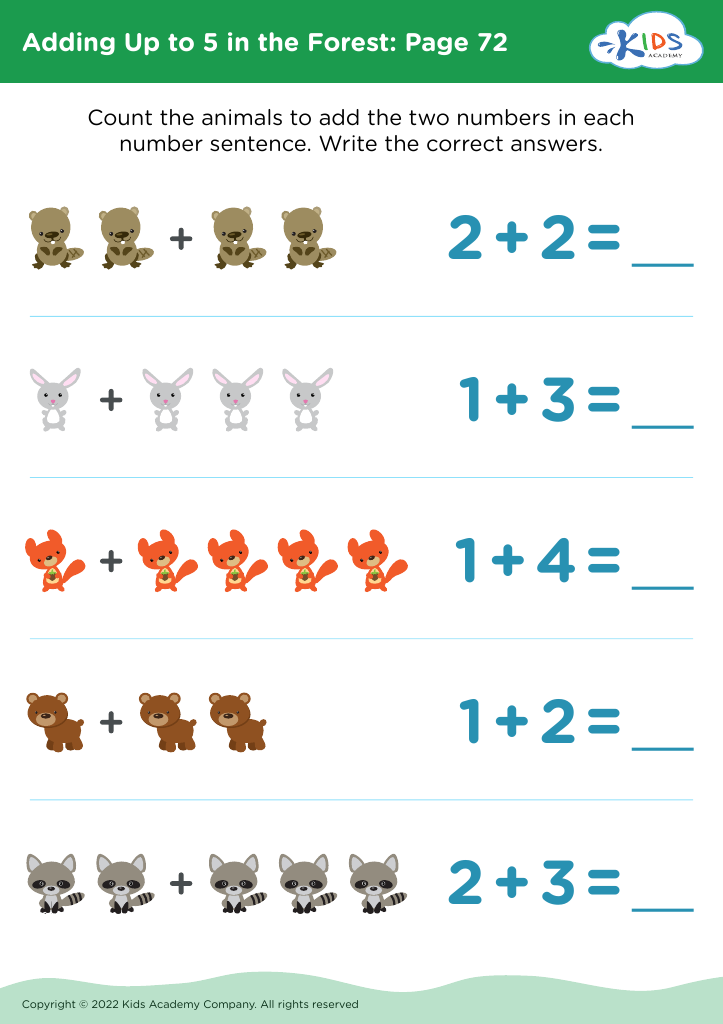
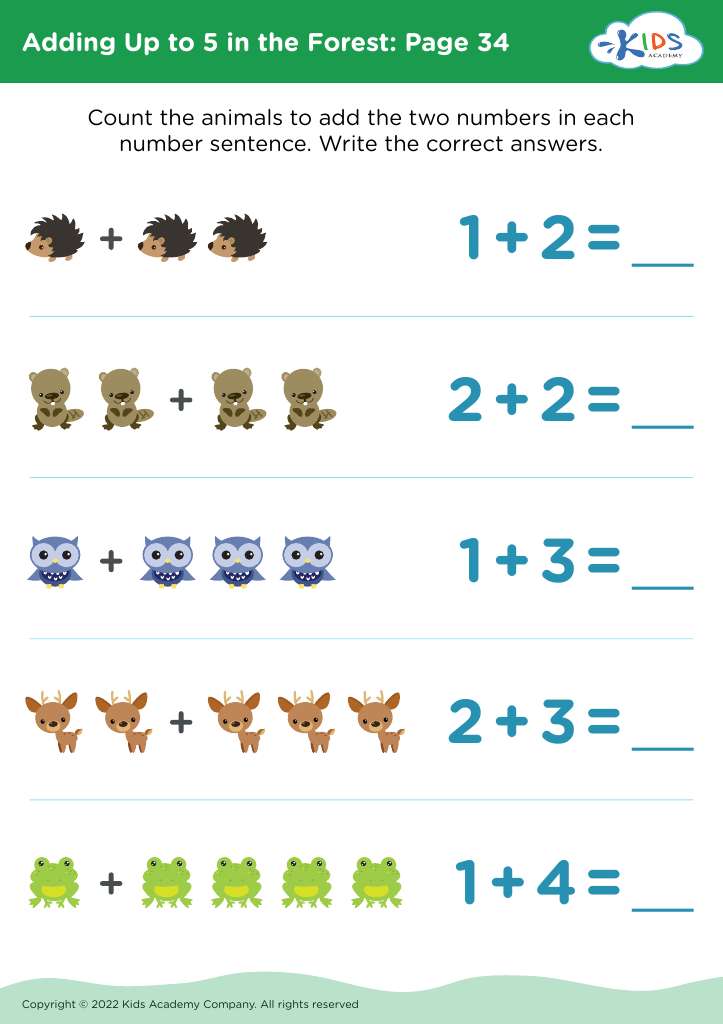
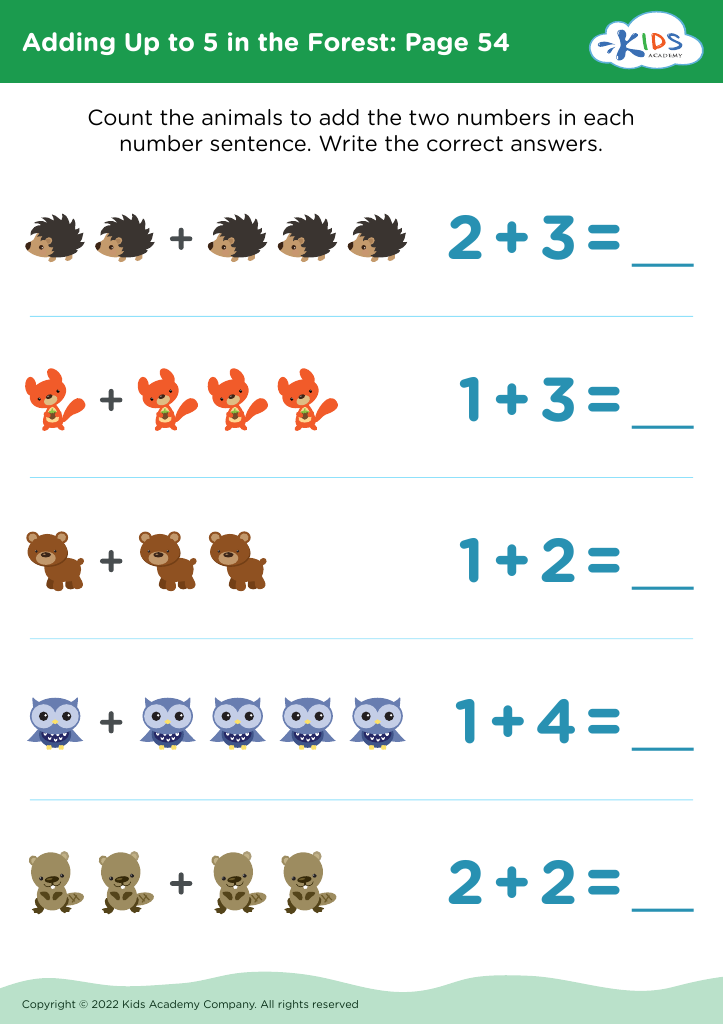
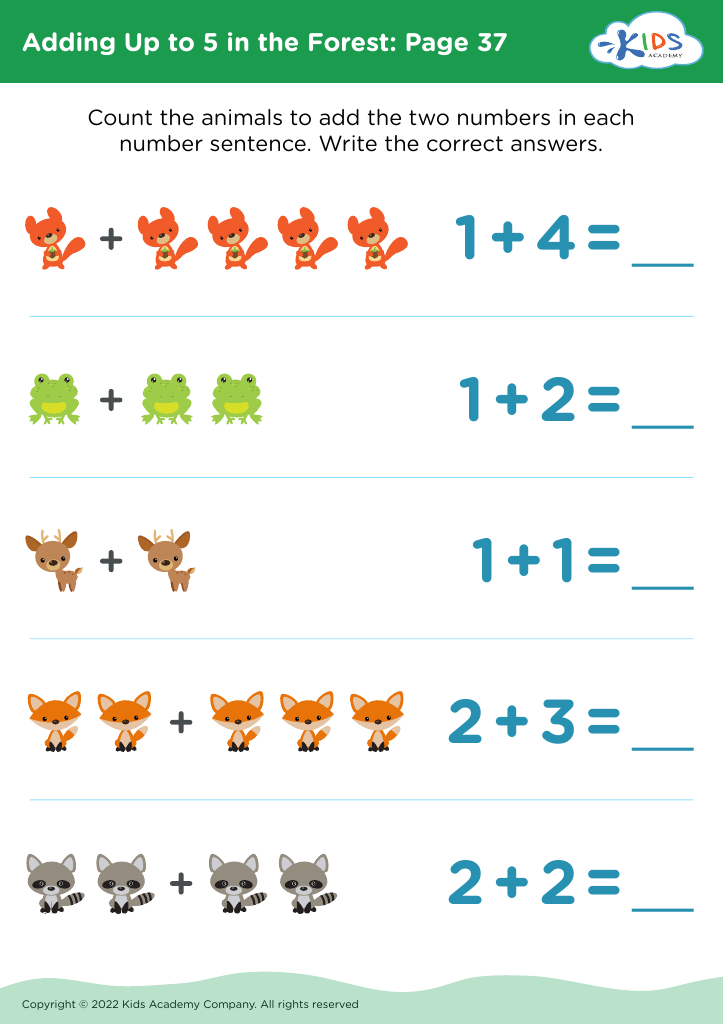
Explore the wonder of nature with our "Nature Appreciation: Adding in the Forest Worksheets" designed specifically for 3-year-olds. These engaging and colorful worksheets make math fun by integrating concepts of counting and addition with delightful forest themes. As young learners navigate through charming illustrations of trees, animals, and plants, they'll build essential math skills while nurturing a love for nature. Each worksheet promotes observational skills and environmental awareness, fostering a deeper connection to the world around them. Perfect for early education settings or home learning, these activities provide a playful and enriching way to develop foundational math abilities.
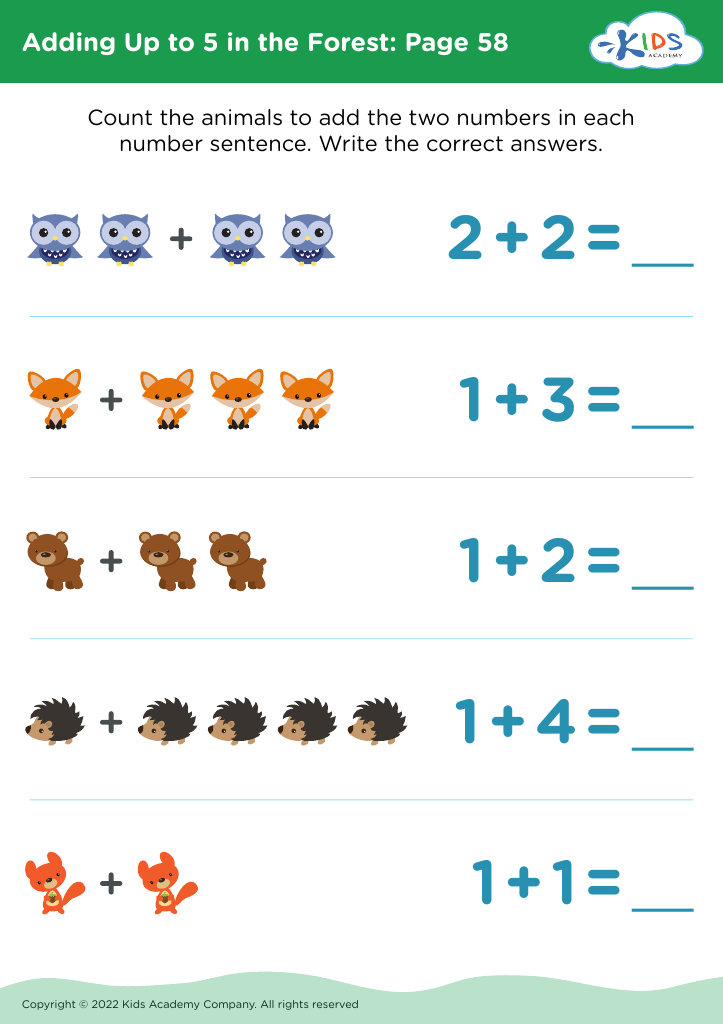



Nature appreciation is crucial for young learners, especially for 3-year-olds, as it lays the foundation for their cognitive, emotional, and social development. Engaging with nature, particularly in forest settings, sparks curiosity and fosters a sense of wonder in young children. When parents and teachers introduce children to the beauty of forests, they encourage exploration and hands-on learning, which are essential components of early childhood education.
Exposure to natural environments enhances sensory experiences, stimulating children's senses through varied sights, sounds, and textures. This promotes critical thinking and creativity as they observe wildlife, plants, and ecosystems firsthand. Additionally, being in nature provides a venue for physical activity, improving motor skills and overall health.
Social skills also flourish in group settings outdoors; children share experiences, collaborate in play, and learn to respect the environment. Furthermore, nurturing a connection to nature builds an appreciation for ecological stewardship, instilling values that can lead to responsible environmental behavior as they grow.
Incorporating forest experiences into early learning helps cultivate well-rounded individuals who are emotionally balanced, socially aware, and prepared for a lifetime of exploration and learning. Therefore, promoting nature appreciation among young children should be a priority for parents and educators alike.