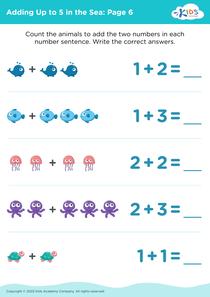
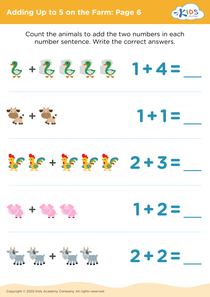
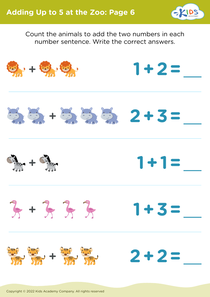
Problem Solving Adding in the Forest Worksheets for 3-Year-Olds
3 filtered results
-
From - To
Introduce your little one to the magical world of math with our "Problem Solving Adding in the Forest Worksheets for 3-Year-Olds"! These engaging, thoughtfully designed worksheets blend fun forest themes with essential early math skills. Perfect for curious toddlers, each activity is crafted to develop problem-solving abilities and basic addition through interactive and colorful exercises. Whether counting woodland creatures or adding forest treasures, your child will enjoy an educational adventure that enhances focus and builds a strong math foundation. Ideal for home or classroom use, these worksheets turn learning into a joyful and rewarding experience for young explorers!
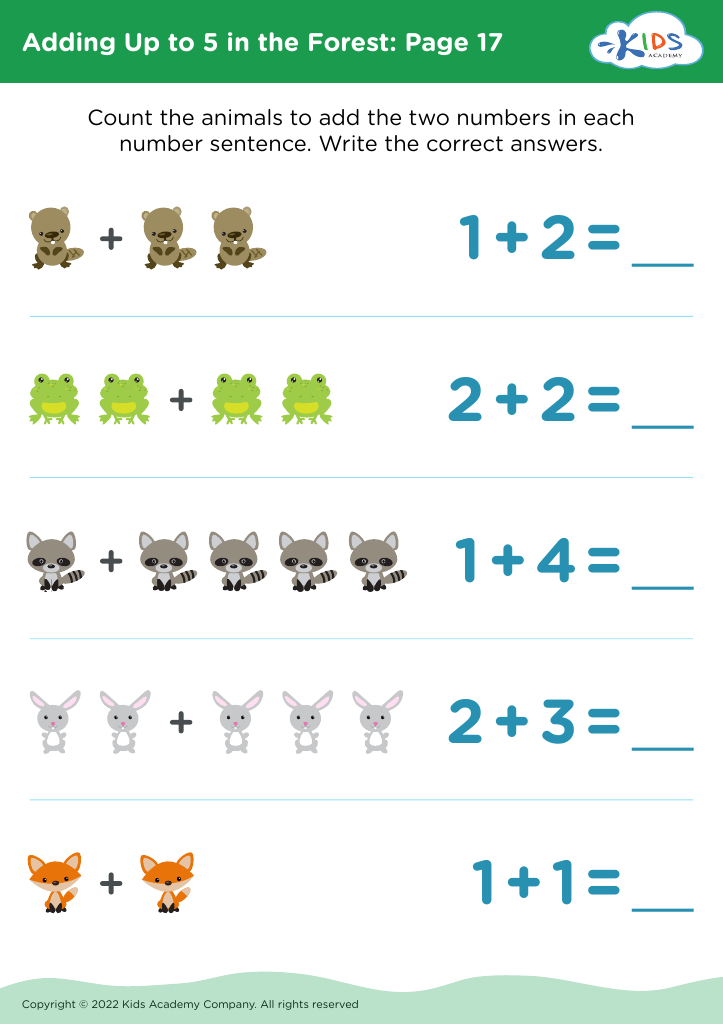
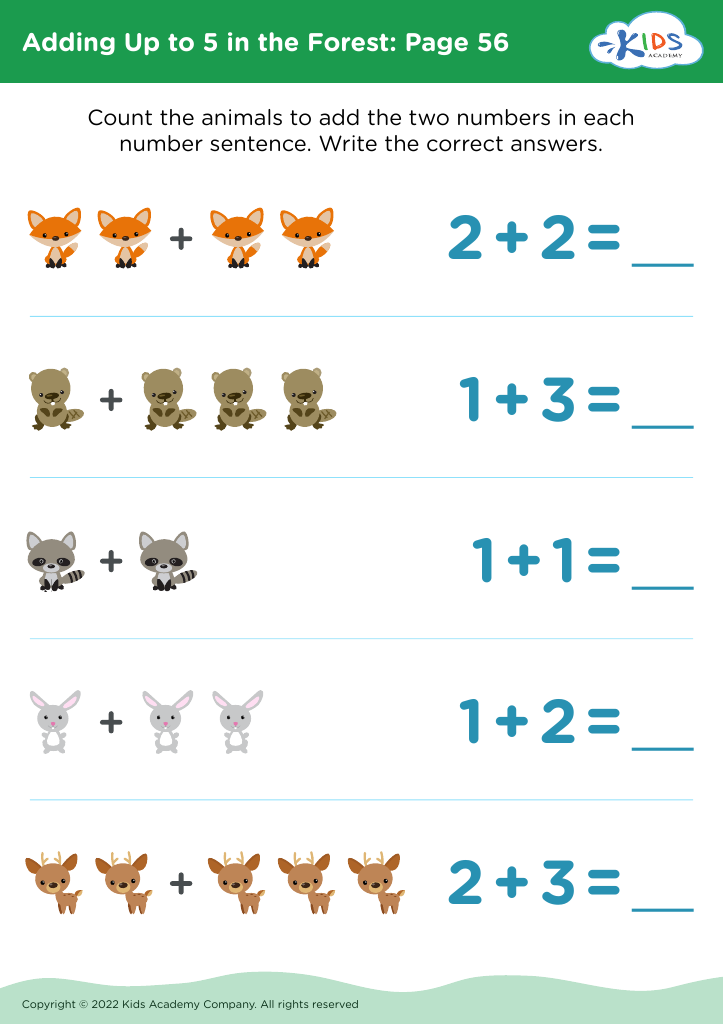
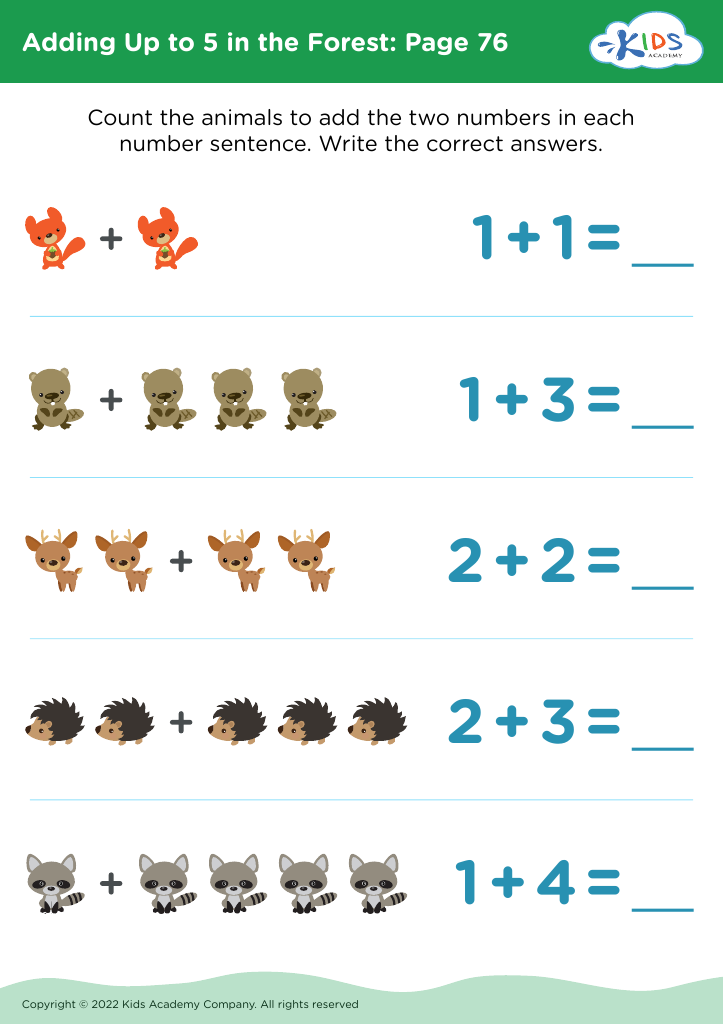



Problem solving skills are foundational in early childhood development, serving as a crucial component for cognitive growth. "Problem Solving Adding in the Forest" is an engaging activity where 3-year-olds use basic addition to help animals in a forest setting. Such an interactive and imaginative exercise holds significant importance for both parents and teachers.
Firstly, integrating problem solving and addition in a playful manner nurtures mathematical thinking from an early age. Children as young as three begin to grasp the concept of numbers, counting, and basic operations, which are essential for their future academic success. Helping animals in the forest context makes math relatable and less intimidating, fostering a positive attitude toward the subject.
Moreover, the forest theme enhances their understanding of the world and sparks curiosity about nature. It offers a rich narrative that promotes language development and comprehension skills as kids listen to and talk about the story.
Engaging children in problem-solving tasks encourages critical thinking, determination, and perseverance. As they figure out solutions, young learners build self-confidence and independence.
Finally, these activities provide opportunities for parents and teachers to observe each child's unique approach, strengths, and areas for improvement. These insights help tailor support catered to individual needs, laying a strong foundation for lifelong learning.
In essence, parents and teachers should care about such targeted and enjoyable problem-solving activities because they stimulate cognitive, social, and emotional development in a natural and compelling way.