Addition up to 5 Adding Up to 5 Worksheets for 3-Year-Olds
4 filtered results
-
From - To
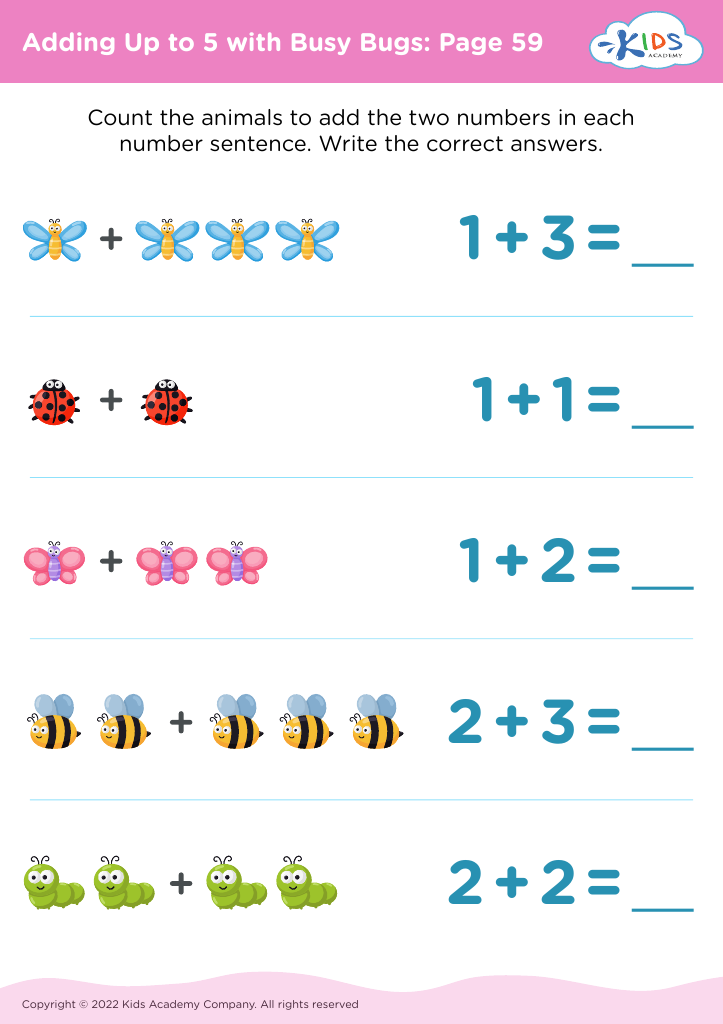
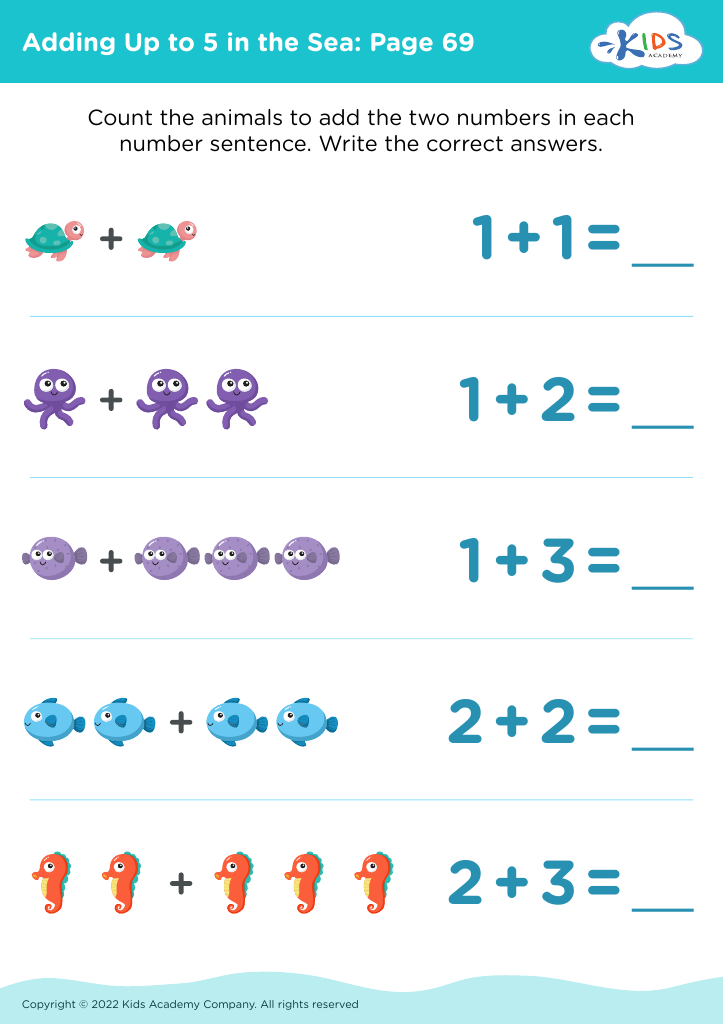
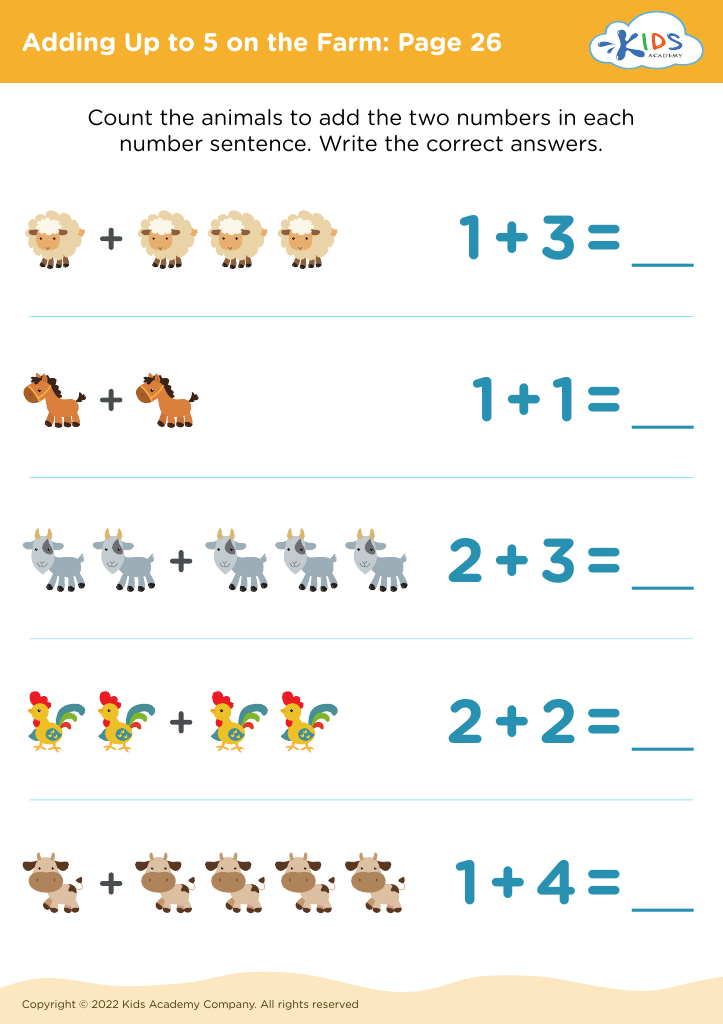
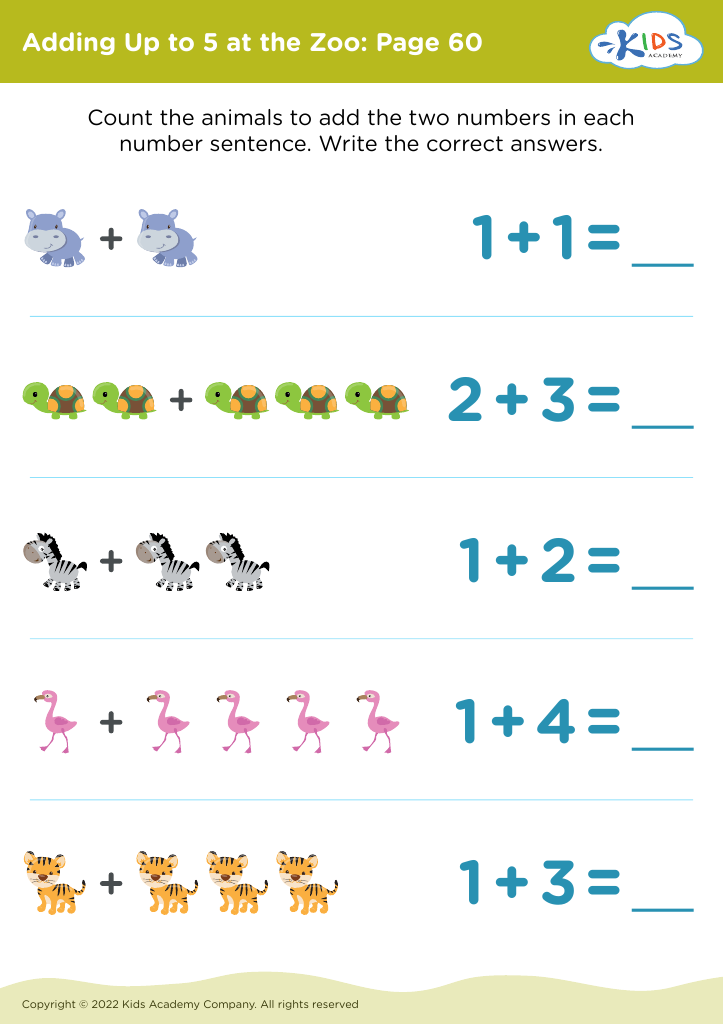
Welcome to our Addition Up to 5 worksheets designed specifically for 3-year-olds! These engaging and fun worksheets aim to introduce young learners to the basic concepts of addition using numbers up to 5. With colorful illustrations and interactive activities, your child will develop essential number recognition and counting skills while enjoying the learning process. Each worksheet is carefully crafted to keep little ones motivated and help them grasp addition through play. Perfect for parents and educators, these resources lay a strong foundation for early math learning. Start your child’s math journey today with our delightful addition worksheets!






%20(1).jpg)

Parents and teachers should prioritize teaching addition up to 5 to 3-year-olds because it lays the groundwork for essential mathematical concepts and problem-solving skills. At this age, children are naturally curious and eager to make sense of the world around them. Introducing simple addition helps to cultivate a positive attitude towards learning math, promoting confidence and enjoyment in the subject.
Engaging in basic addition activities enhances cognitive development, encouraging critical thinking and reasoning. For instance, using everyday objects like toys, fruits, or blocks makes the learning process interactive and fun. This hands-on approach supports language development as children articulate their thought processes and share their discoveries.
Moreover, mastering basic addition aids in developing early numeracy skills that are foundational for future learning. It complements other critical skills like counting, recognizing patterns, and understanding relationships between quantities. The social aspect of working with parents or peers during these math activities fosters teamwork and communication.
Ultimately, early exposure to addition up to 5 develops a strong mathematical foundation, preparing young learners for more complex concepts in later years while nurturing their enthusiasm for lifelong learning. This investment in early math education can positively influence a child's academic journey.








