Filters

90 filtered results

Clear all filters
Favorites
With answer key
Interactive

90 filtered results

Difficulty Level

Grade


Check out this FREE Trial Lesson on Adding Up to 5 for age 3!

X

Favorites
With answer key
Interactive
  • 3
  • Animal recognition
  • Adding Up to 5
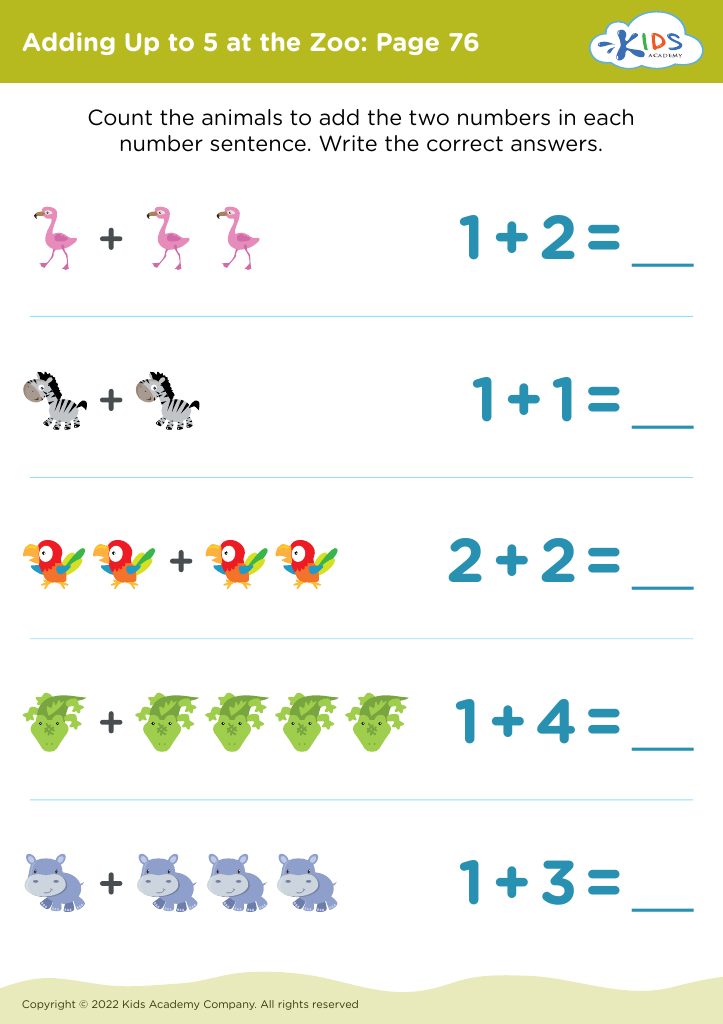
Adding Up to 5 at the Zoo: Page 76
Worksheet
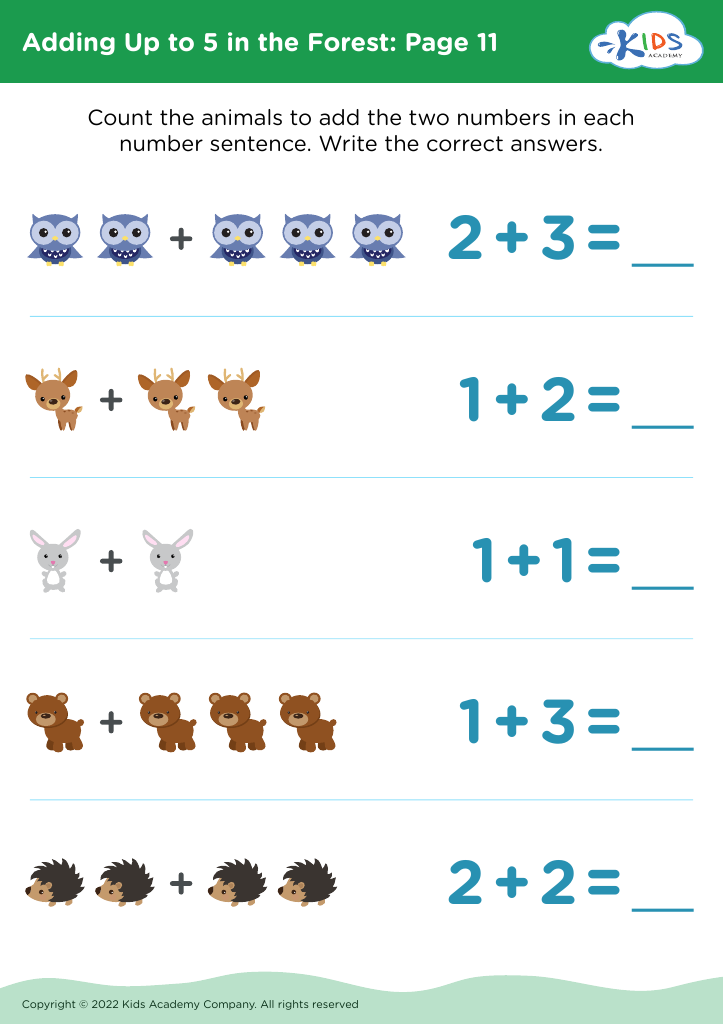
Adding Up to 5 in the Forest: Page 11
Worksheet
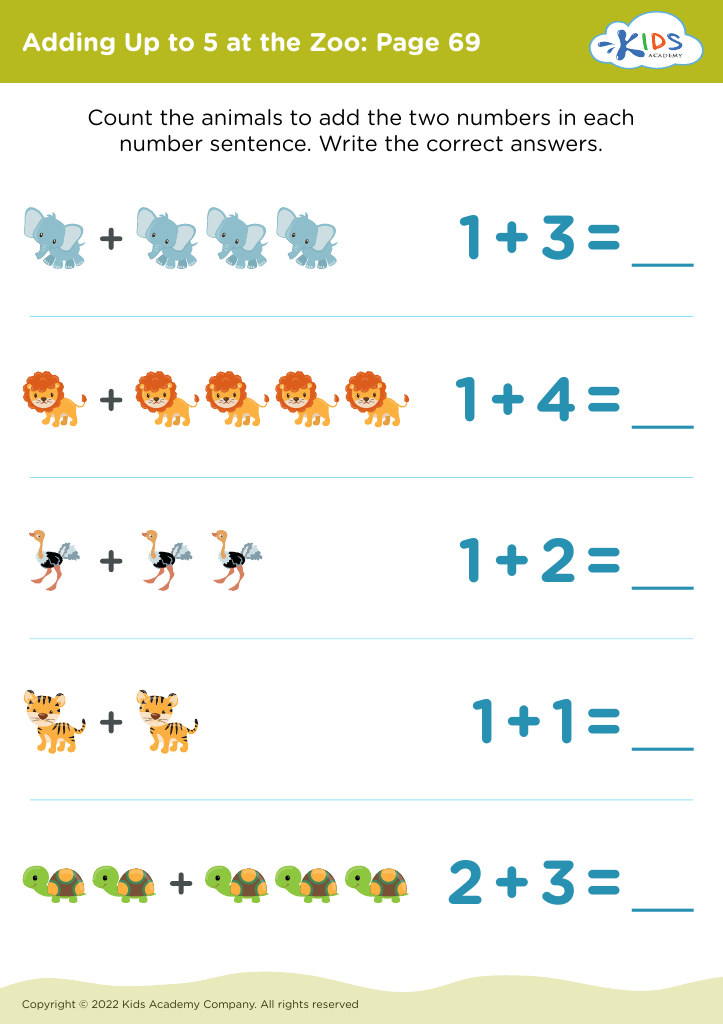
Adding Up to 5 at the Zoo: Page 69
Worksheet
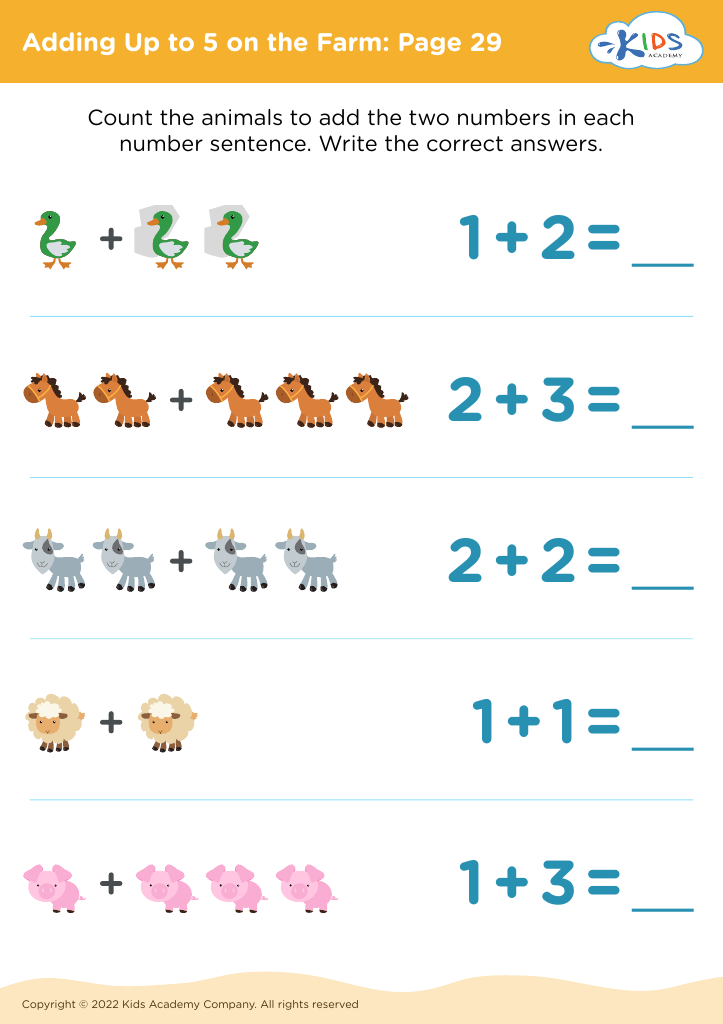
Adding Up to 5 on the Farm: Page 29
Worksheet
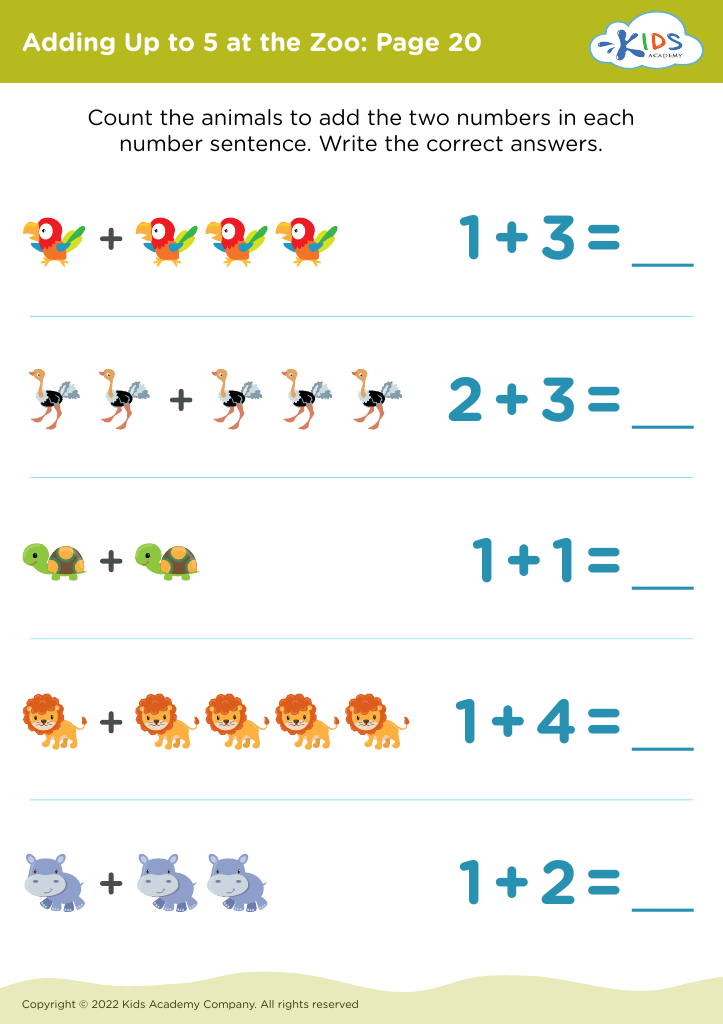
Adding Up to 5 at the Zoo: Page 20
Worksheet
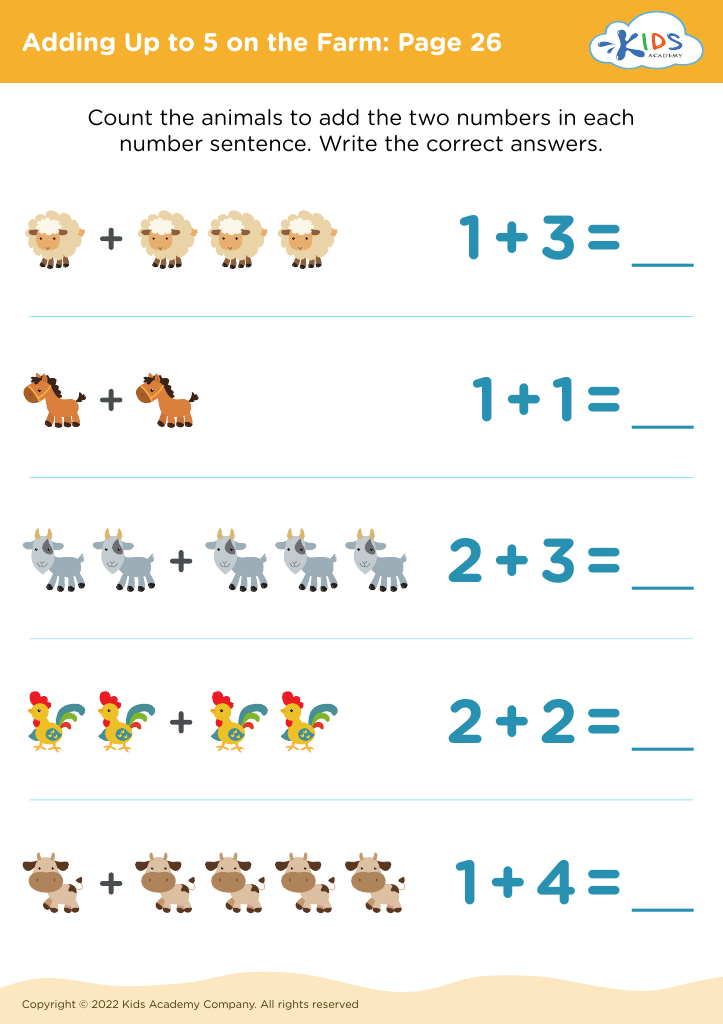
Adding Up to 5 on the Farm: Page 26
Worksheet
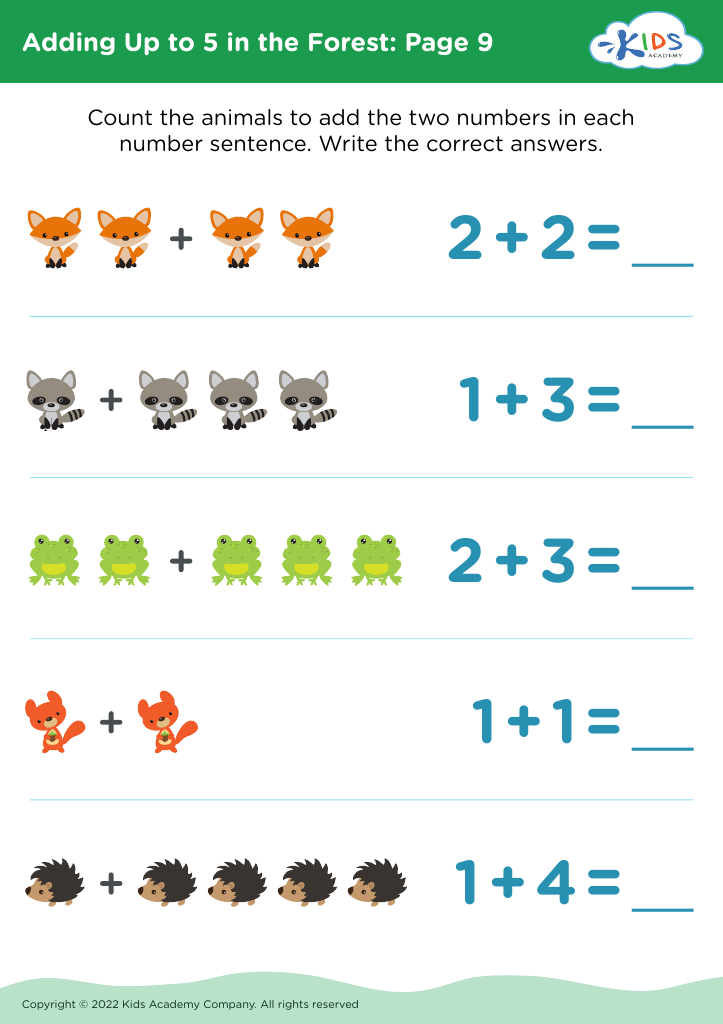
Adding Up to 5 in the Forest: Page 9
Worksheet
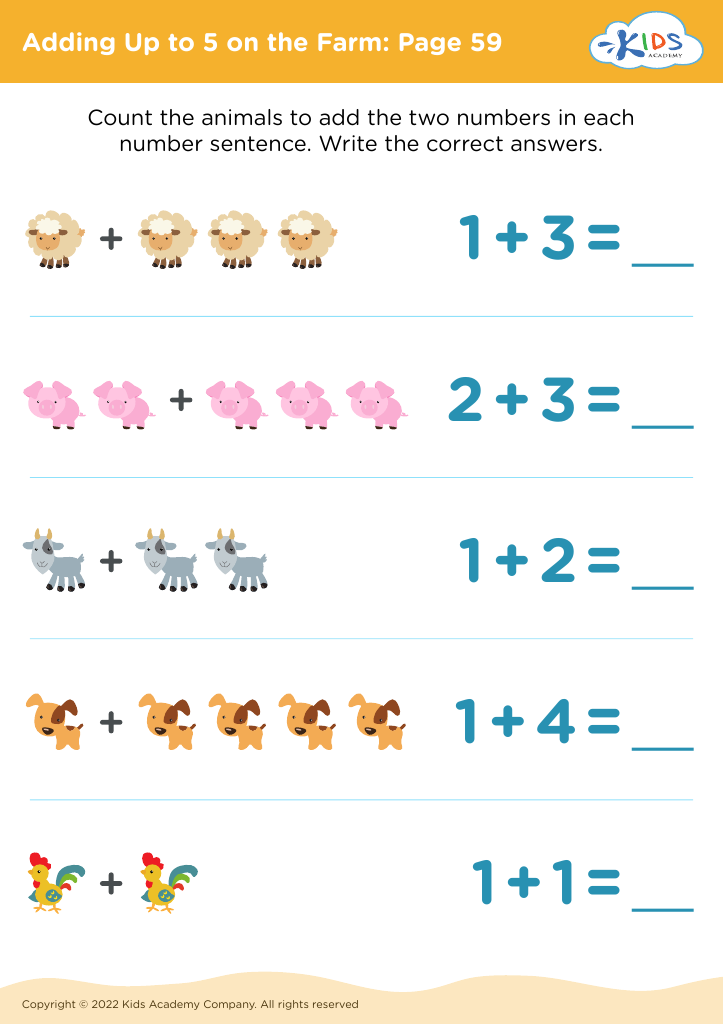
Adding Up to 5 on the Farm: Page 59
Worksheet
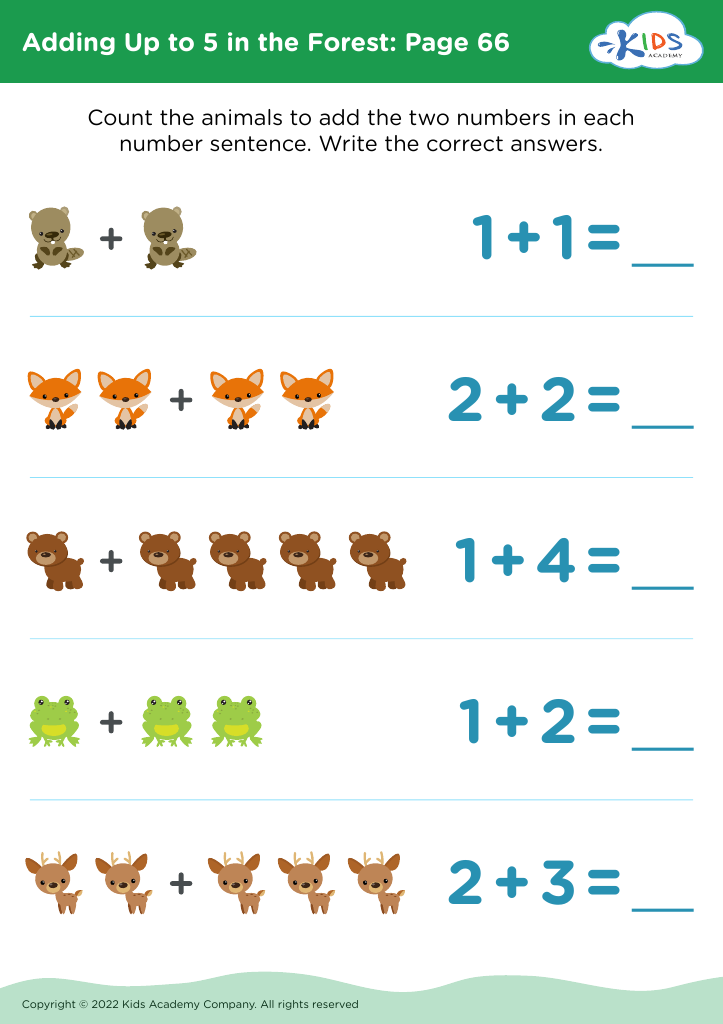
Adding Up to 5 in the Forest: Page 66
Worksheet
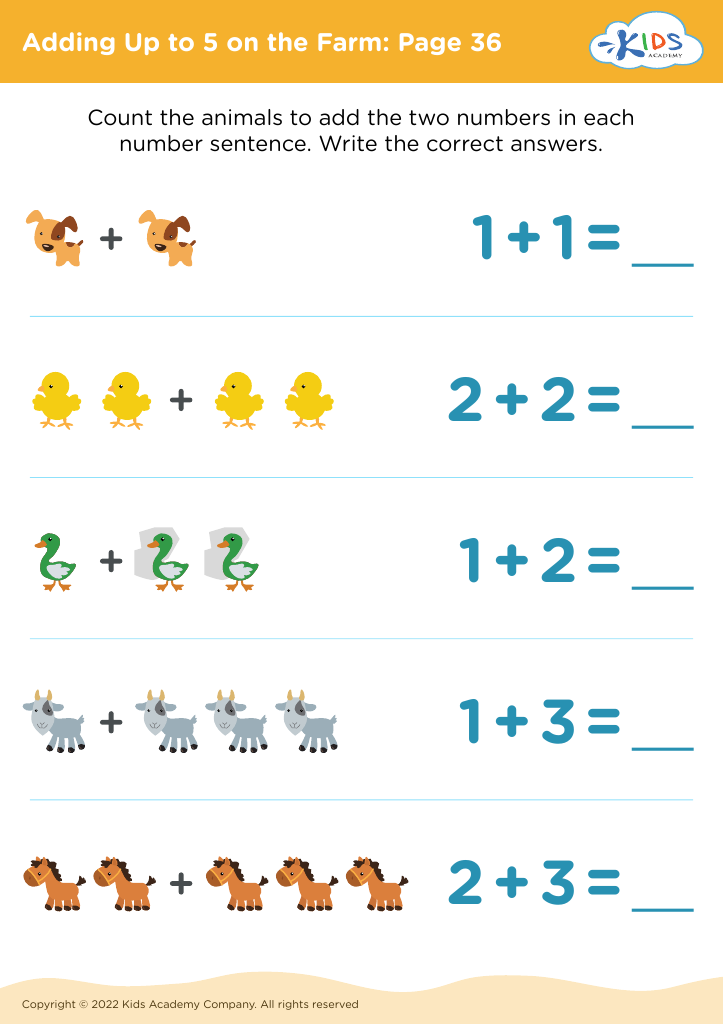
Adding Up to 5 on the Farm: Page 36
Worksheet
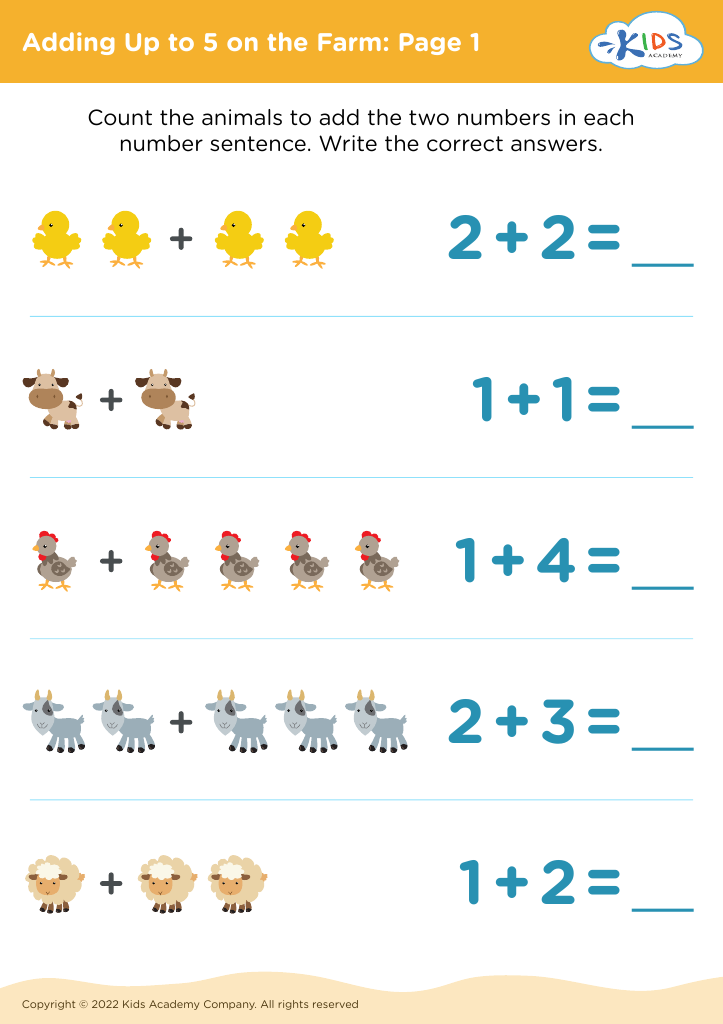
Adding Up to 5 on the Farm: Page 1
Worksheet
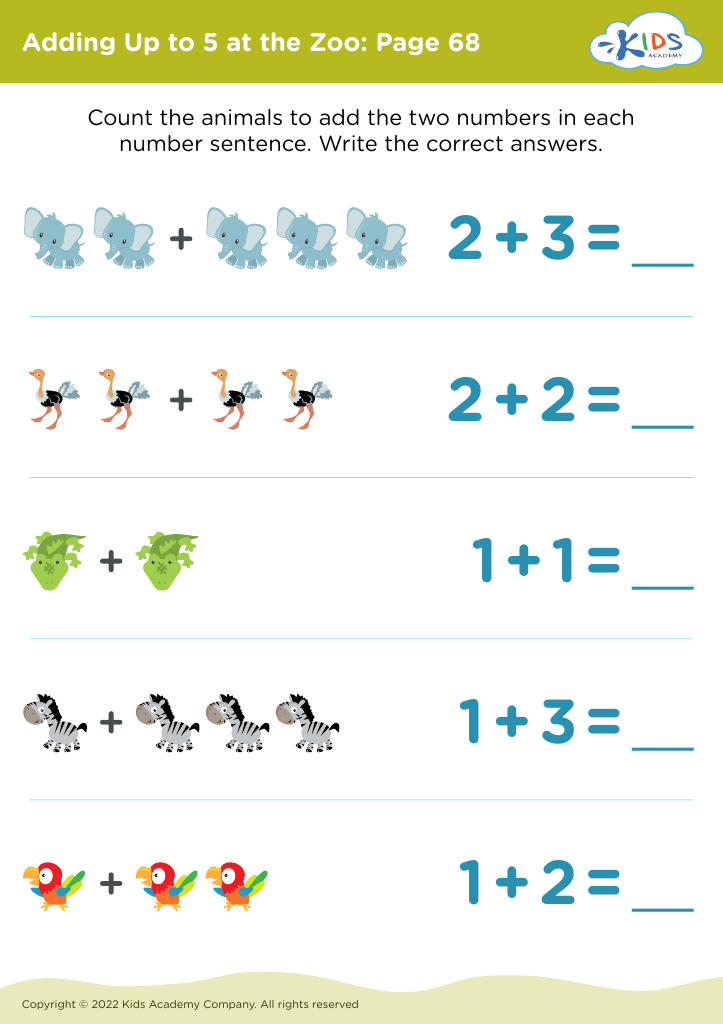
Adding Up to 5 at the Zoo: Page 68
Worksheet
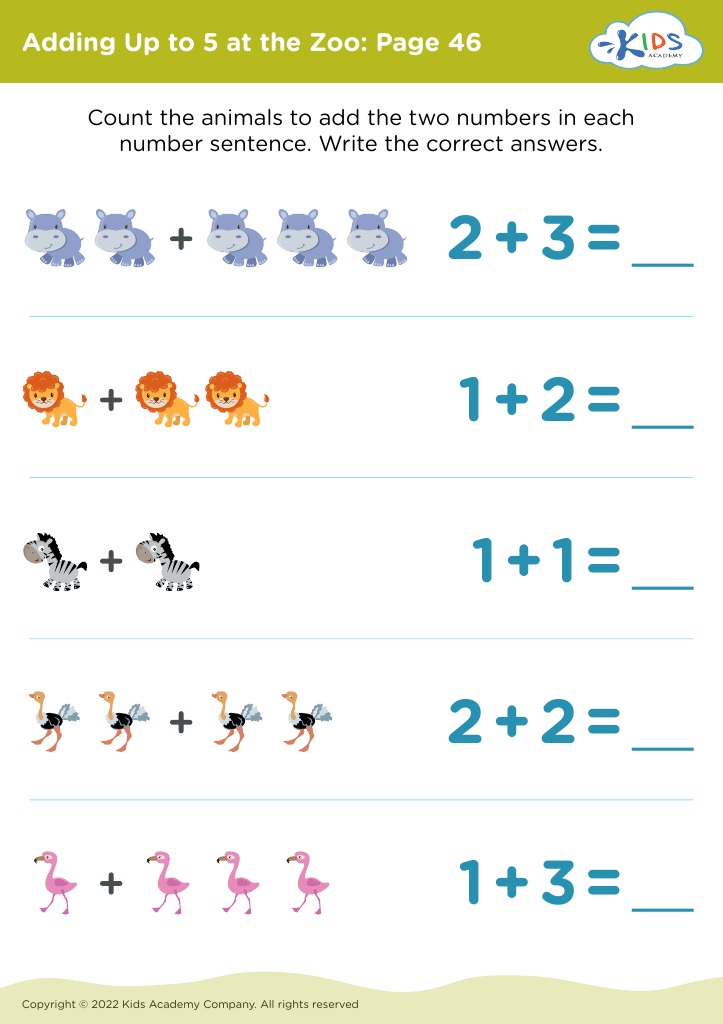
Adding Up to 5 at the Zoo: Page 46
Worksheet
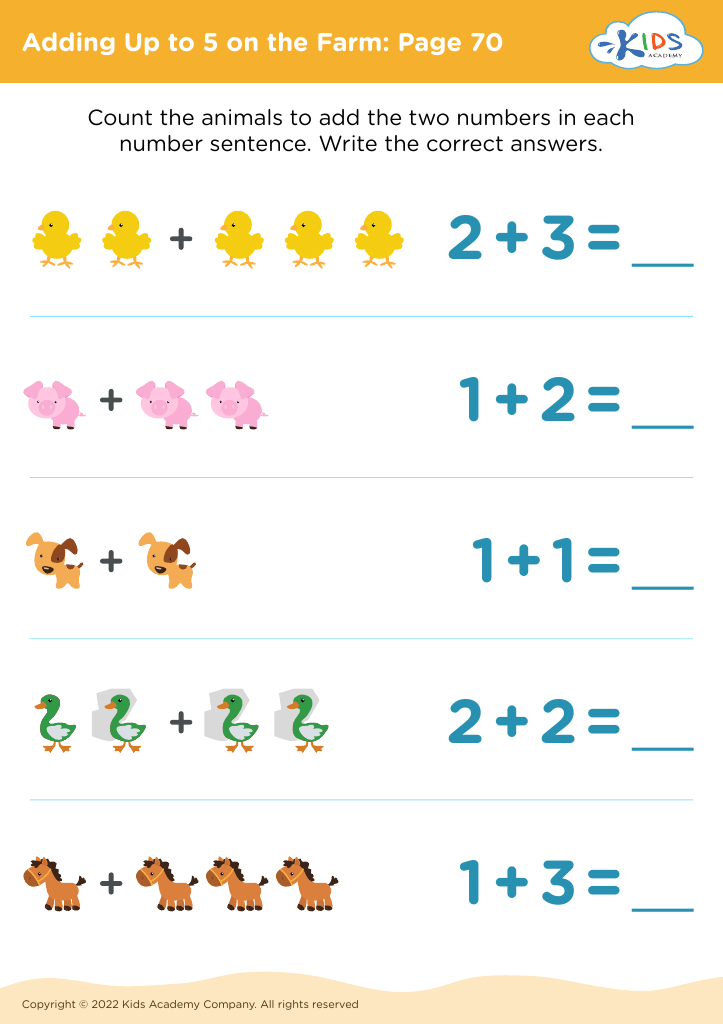
Adding Up to 5 on the Farm: Page 70
Worksheet
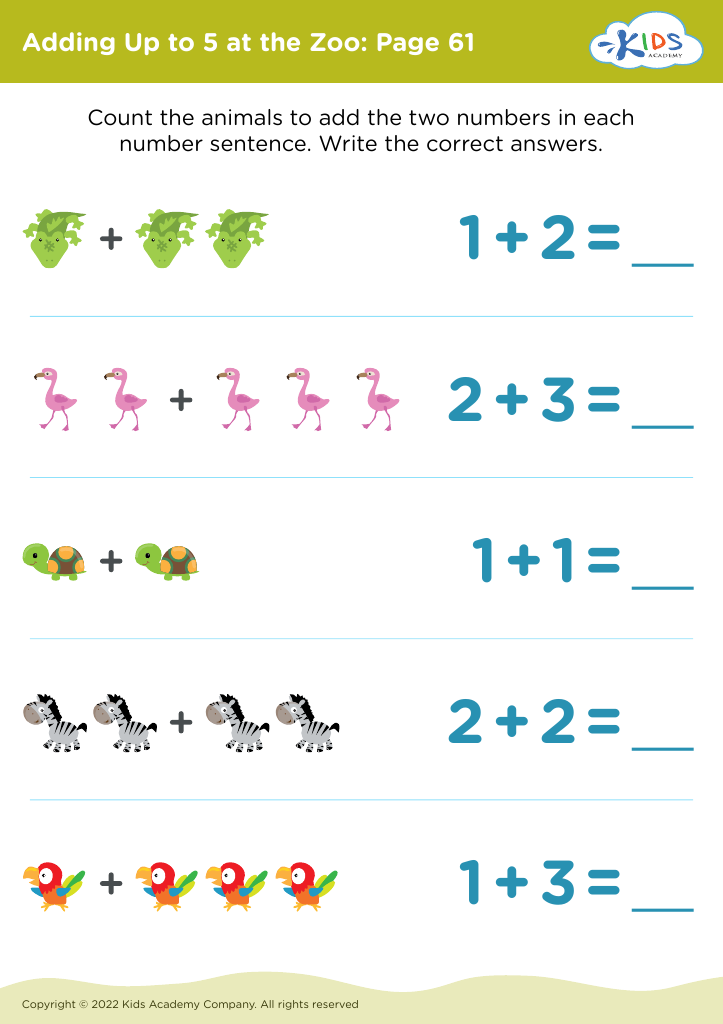
Adding Up to 5 at the Zoo: Page 61
Worksheet
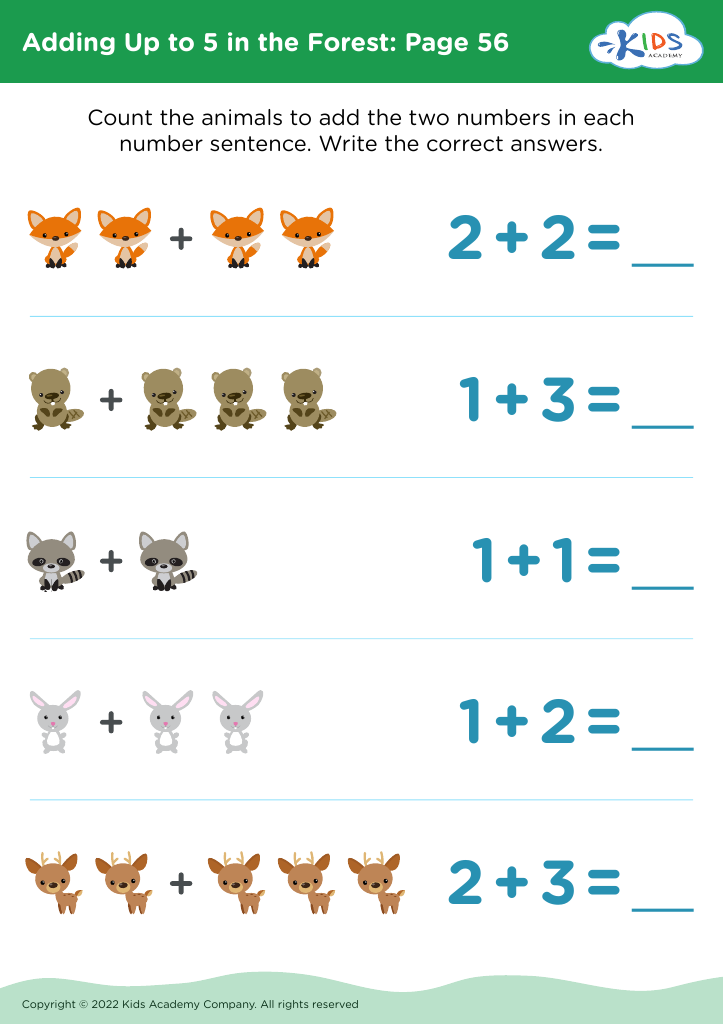
Adding Up to 5 in the Forest: Page 56
Worksheet
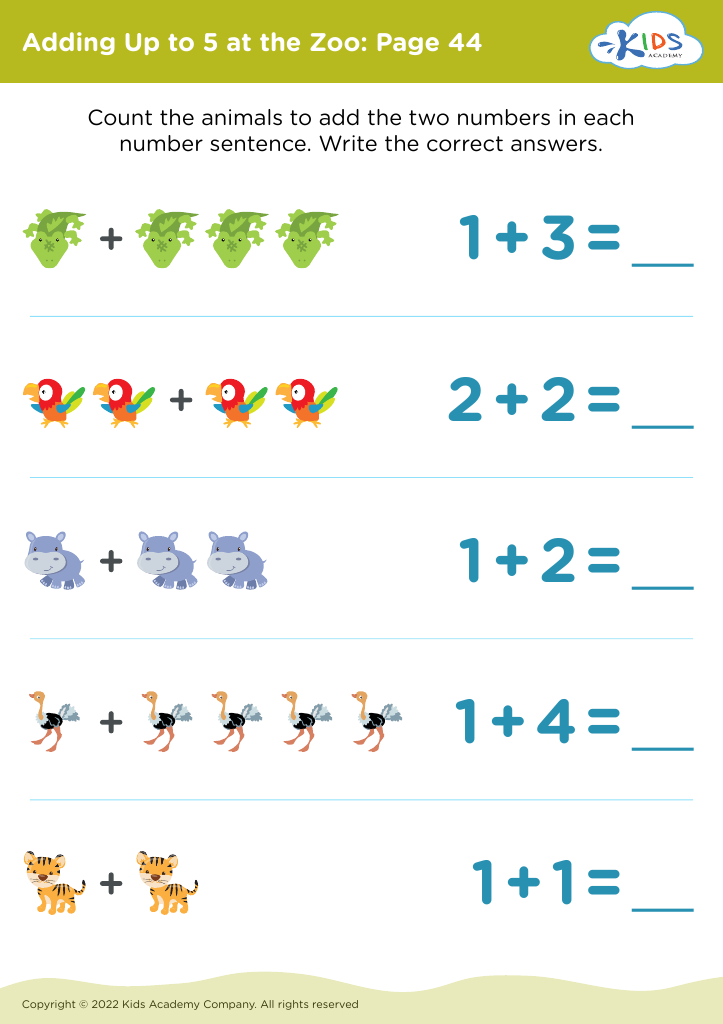
Adding Up to 5 at the Zoo: Page 44
Worksheet
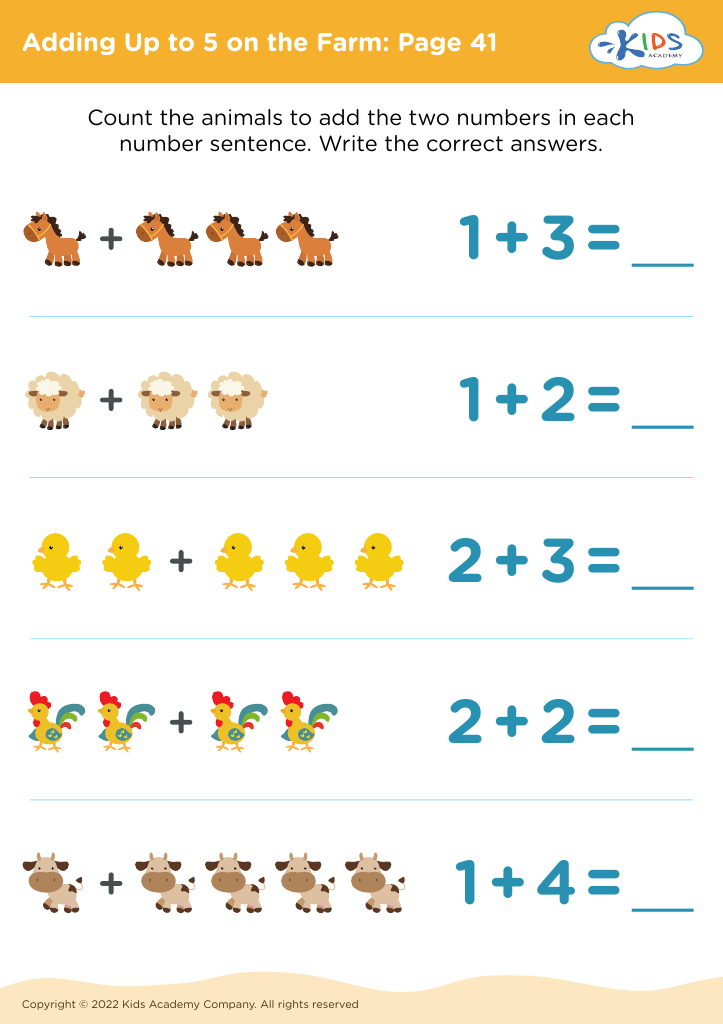
Adding Up to 5 on the Farm: Page 41
Worksheet
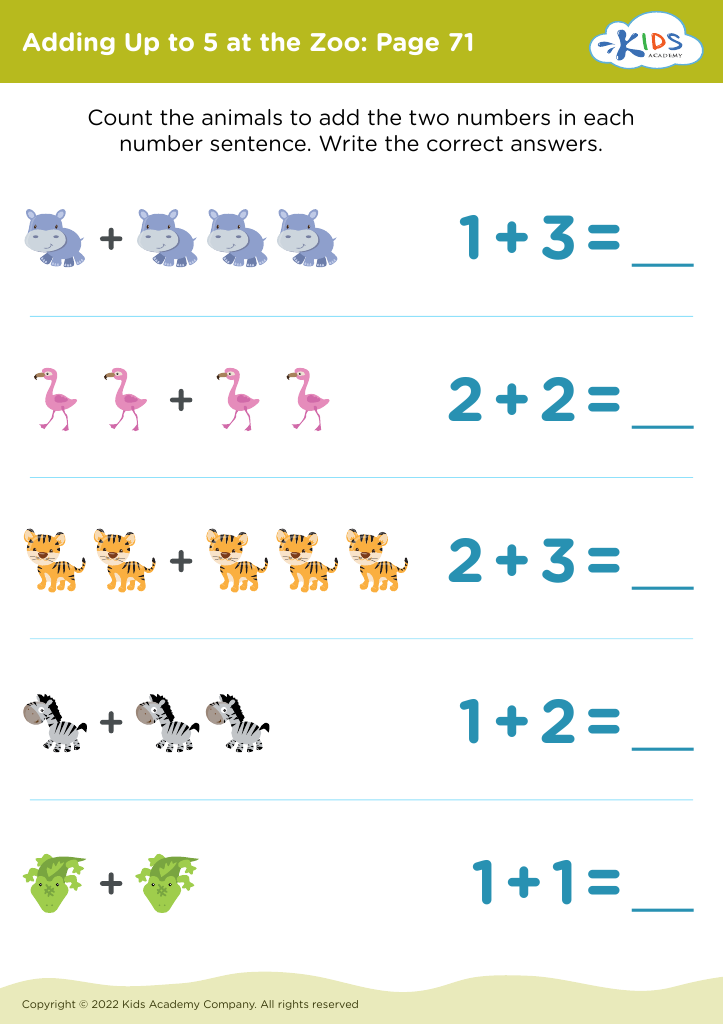
Adding Up to 5 at the Zoo: Page 71
Worksheet
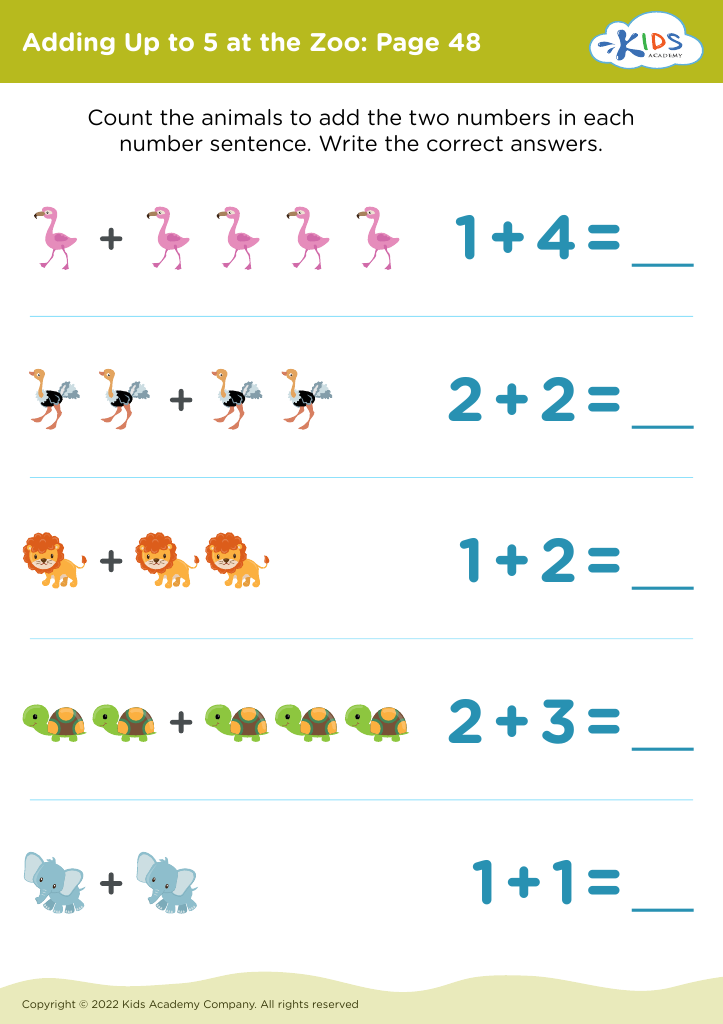
Adding Up to 5 at the Zoo: Page 48
Worksheet
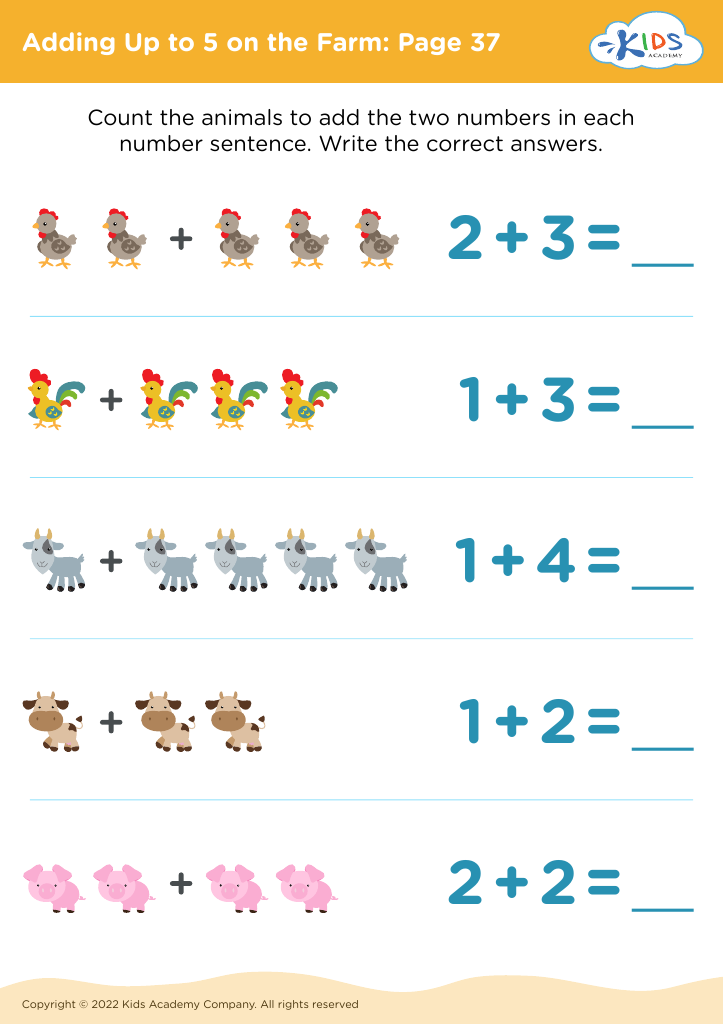
Adding Up to 5 on the Farm: Page 37
Worksheet
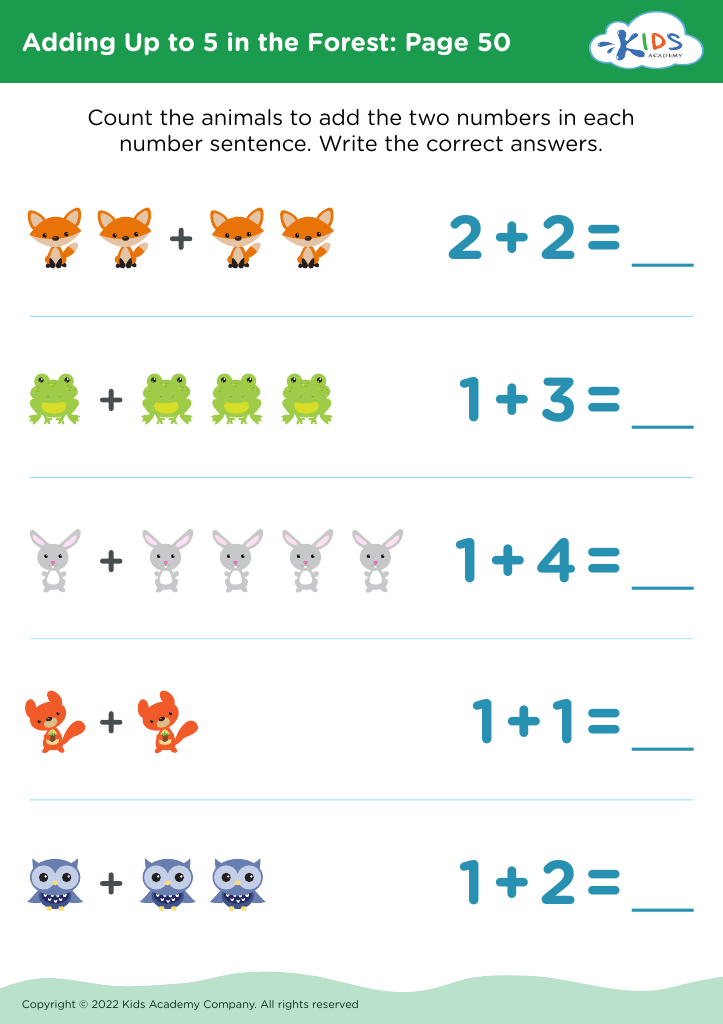
Adding Up to 5 in the Forest: Page 50
Worksheet
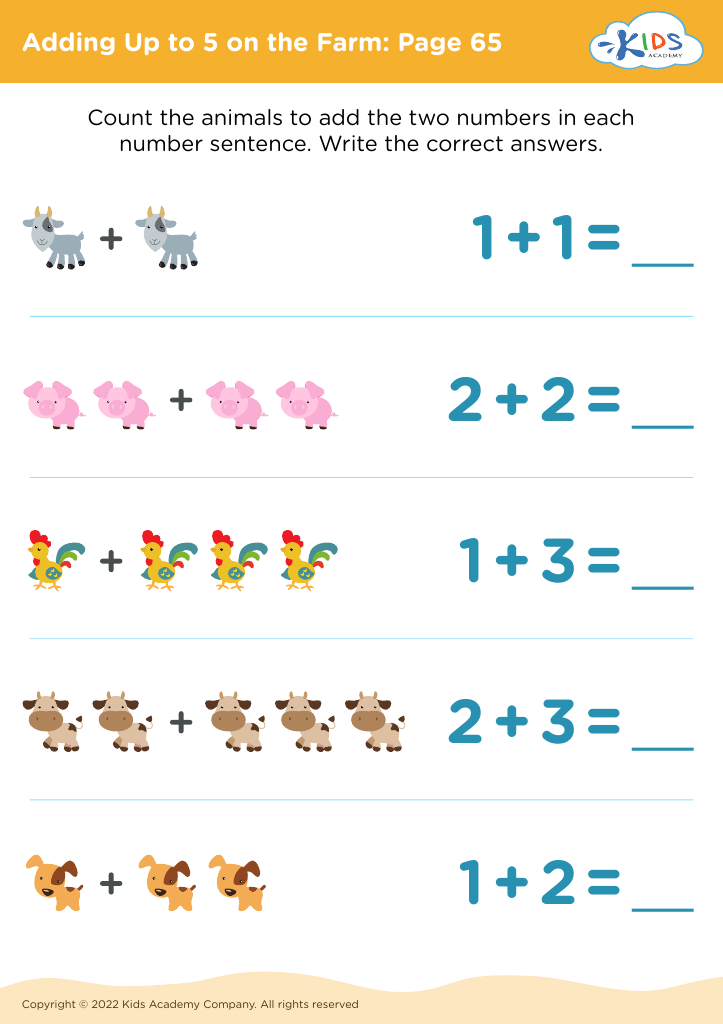
Adding Up to 5 on the Farm: Page 65
Worksheet
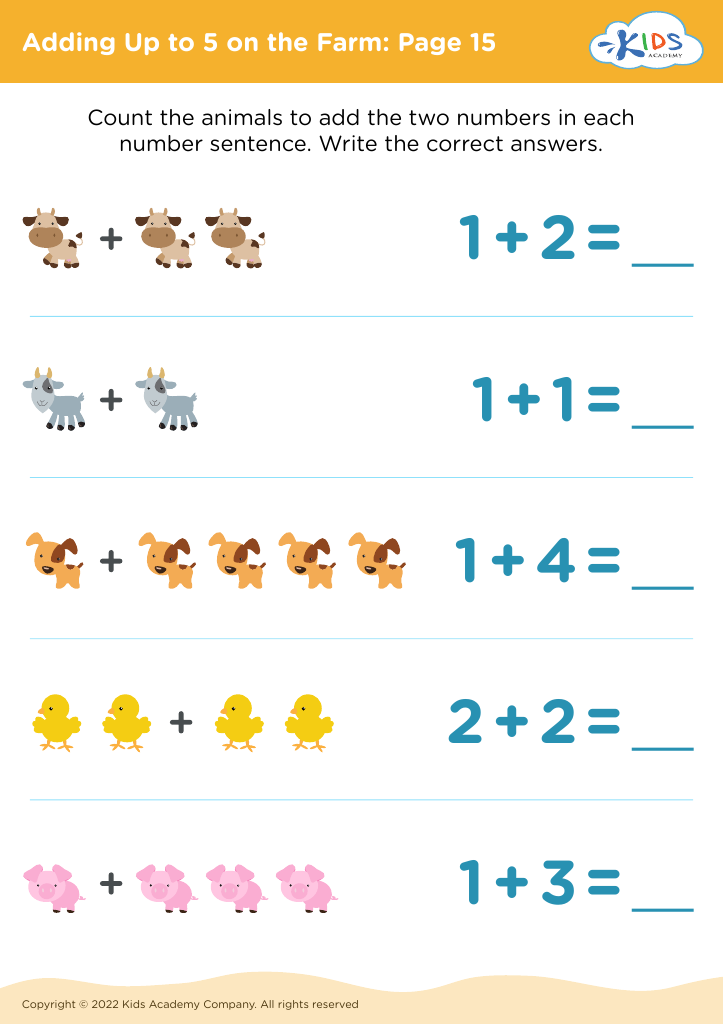
Adding Up to 5 on the Farm: Page 15
Worksheet


Animal recognition and basic math skills, such as adding up to 5, are crucial developmental milestones for 3-year-olds. Teaching children to recognize animals not only enhances their vocabulary and cognitive skills but also fosters an appreciation for nature and living beings. Identifying animals fuels curiosity, encouraging exploration and conversation about different habitats, behaviors, and roles in the ecosystem.

Combining animal recognition with early math skills like counting and addition provides an engaging, hands-on learning experience. For instance, using animal toys, flashcards, or storybooks, parents and teachers can create interactive activities where children count animals and add them together, reinforcing number concepts. This integrative approach maintains their interest and enthusiasm for learning, making educational activities feel more like play.

Moreover, early exposure to these skills supports critical thinking and problem-solving abilities. When children can relate math concepts to their world, they're more likely to understand and retain them. Additionally, these foundational skills build confidence before they transition to more complex subjects in kindergarten. In summary, nurturing animal recognition and simple math through engaging ways is essential for cognitive, social, and emotional development in young learners, giving them a strong start in their educational journey.