Filters

21 filtered results

Clear all filters
Favorites
With answer key
Interactive

21 filtered results

Difficulty Level

Grade


Discover our engaging "Basic Math Skills Adding Up to 5 Worksheets" designed specifically for 3-year-olds. These fun and colorful worksheets introduce young learners to the foundational concept of addition through interactive activities that involve counting and combining numbers up to 5. Each worksheet encourages hands-on learning, helping children improve their number recognition and fine motor skills while enjoying playful illustrations. Perfect for parents and educators, these resources promote early mathematical understanding in a friendly and approachable way. Empower your child’s learning journey with essential math skills that pave the way for future success! Get ready for a fun-filled math experience!
Check out this FREE Trial Lesson on Adding Up to 5 for age 3!

H

Favorites
With answer key
Interactive
  • 3
  • Basic Math Skills
  • Adding Up to 5
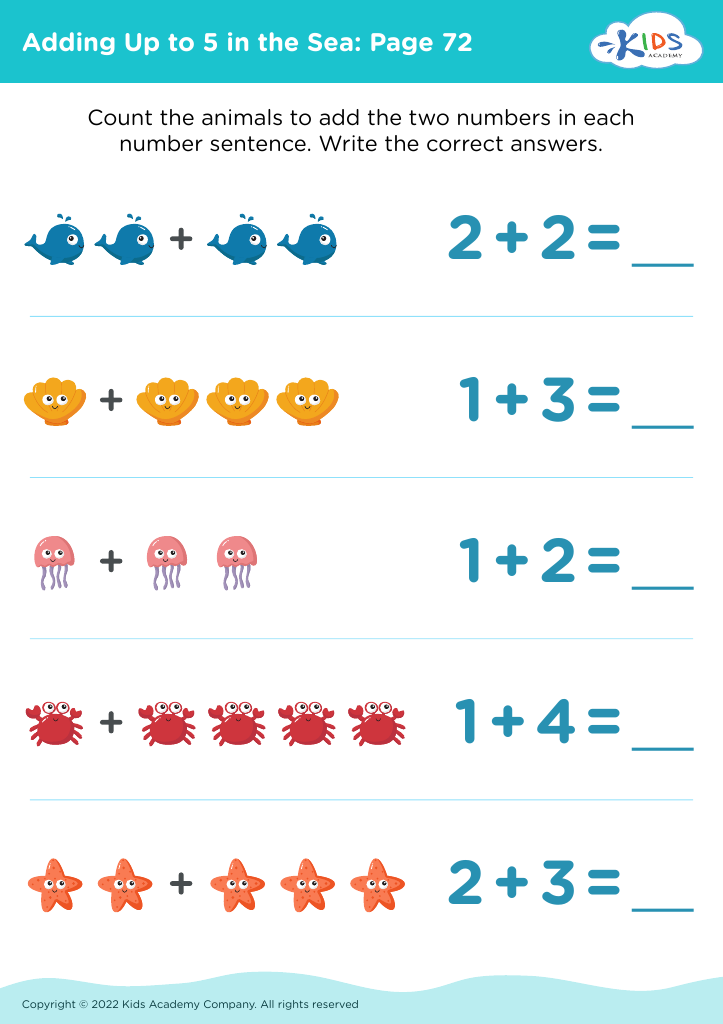
Adding Up to 5 in the Sea: Page 72
Worksheet
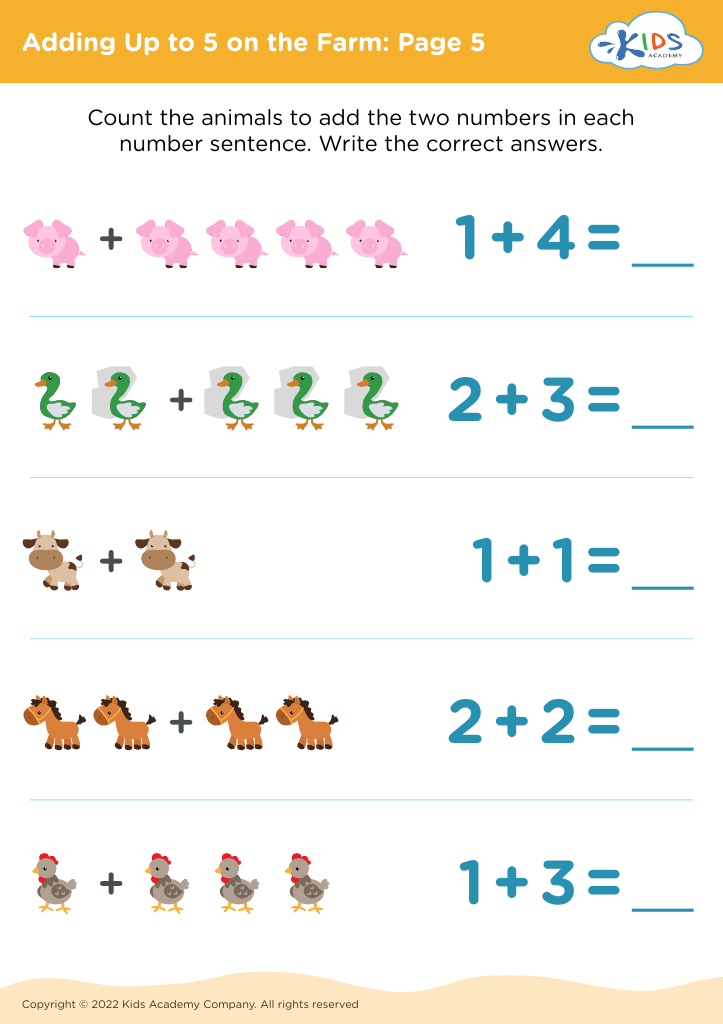
Adding Up to 5 on the Farm: Page 5
Worksheet
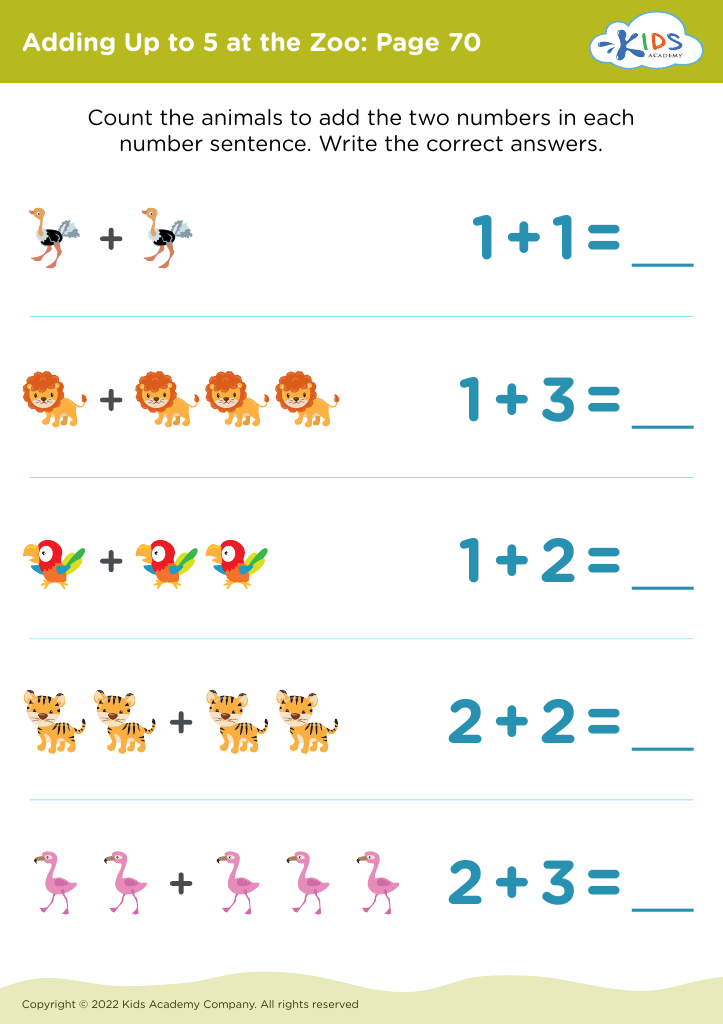
Adding Up to 5 at the Zoo: Page 70
Worksheet
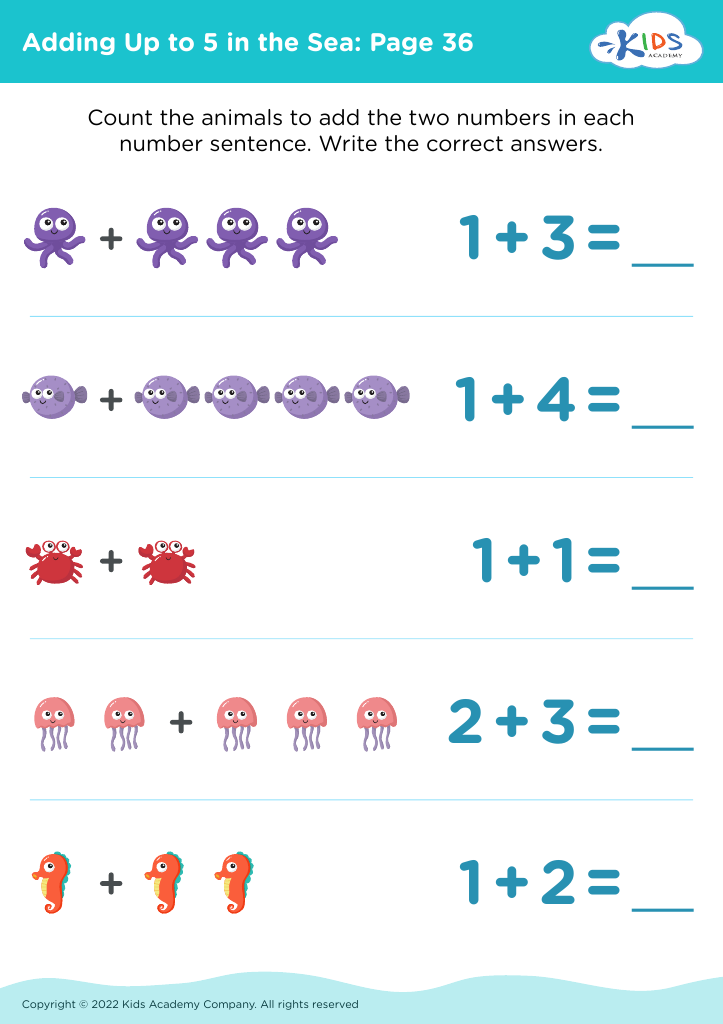
Adding Up to 5 in the Sea: Page 36
Worksheet
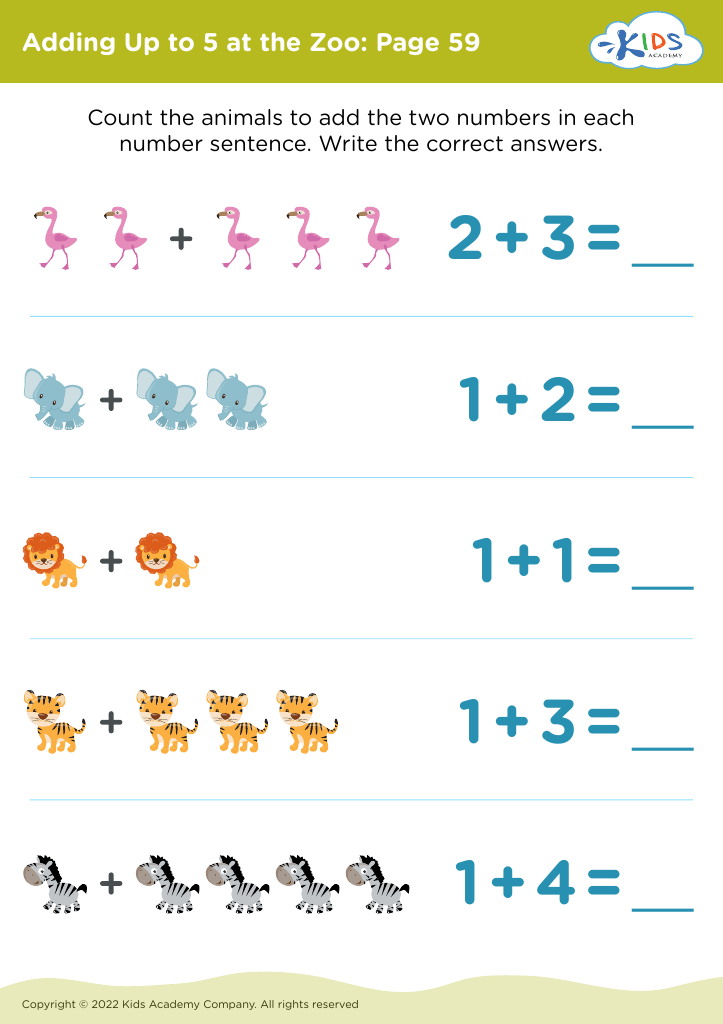
Adding Up to 5 at the Zoo: Page 59
Worksheet
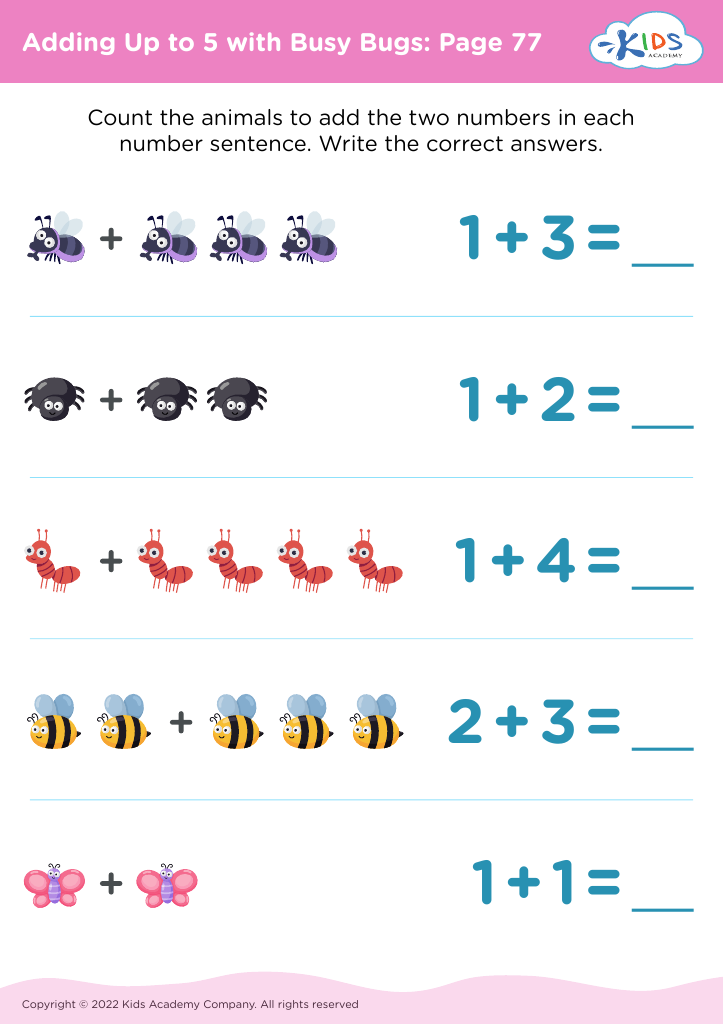
Adding Up to 5 with Busy Bugs: Page 77
Worksheet
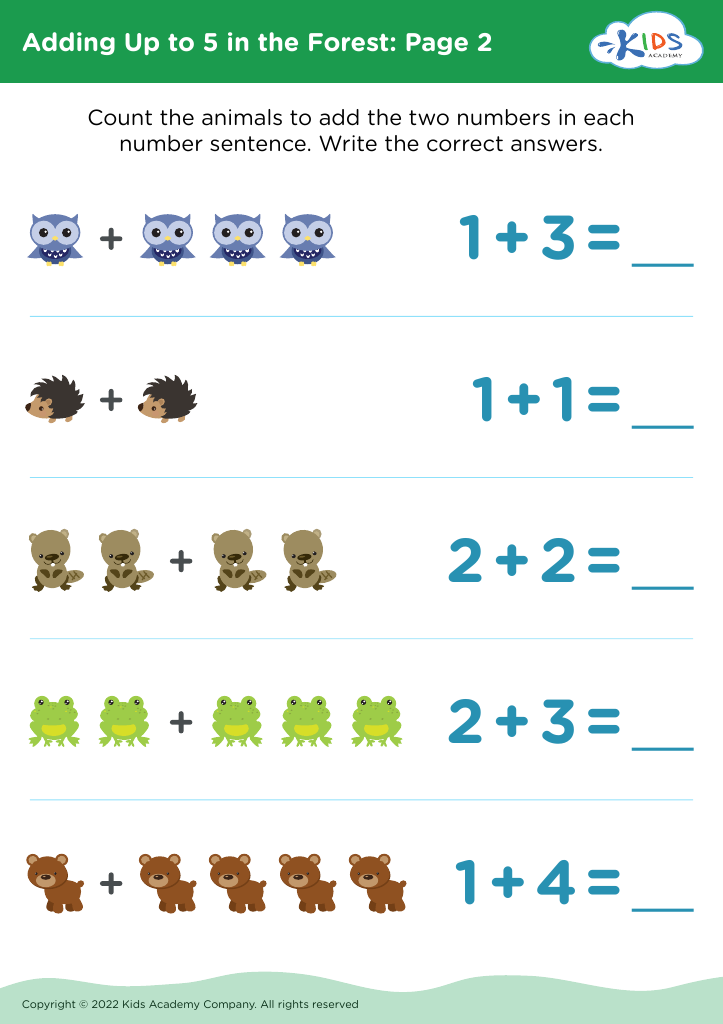
Adding Up to 5 in the Forest: Page 2
Worksheet
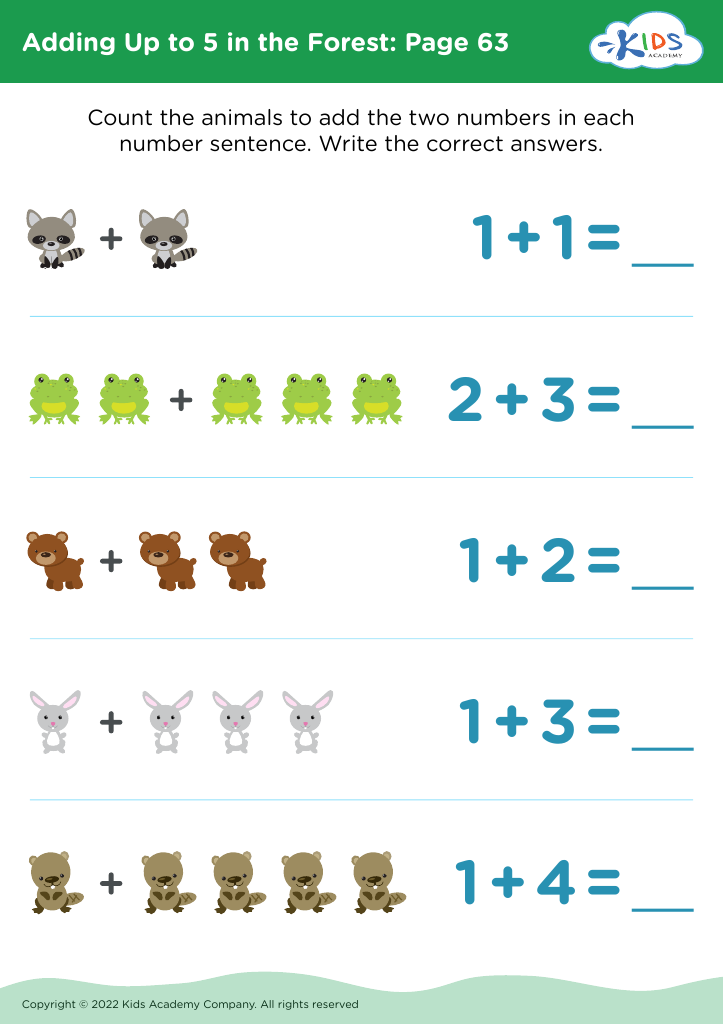
Adding Up to 5 in the Forest: Page 63
Worksheet
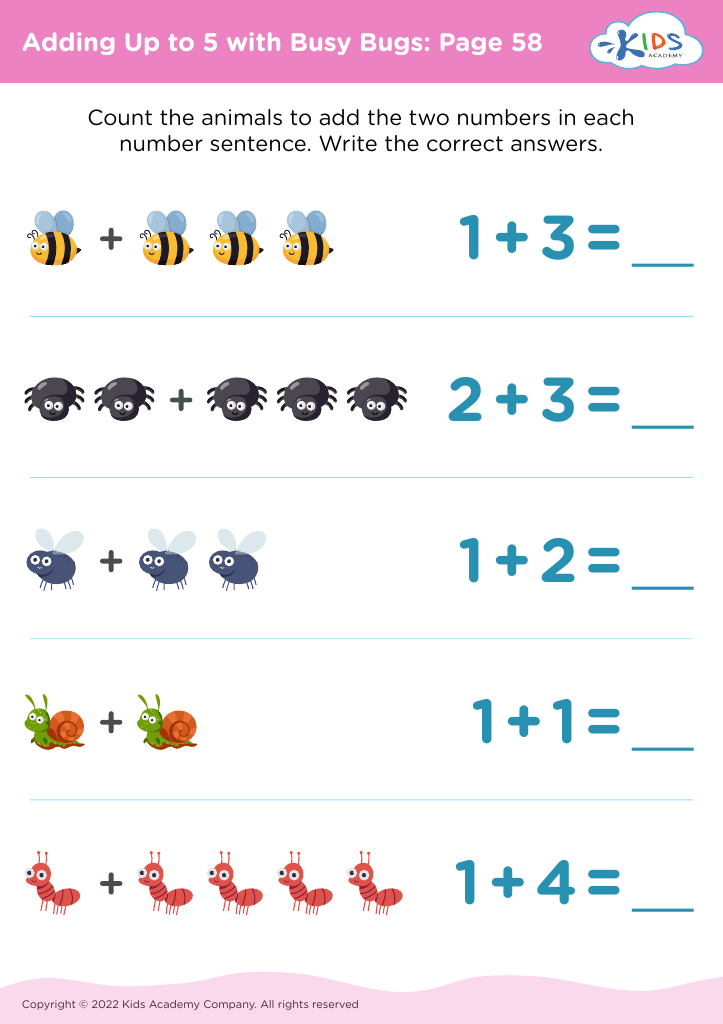
Adding Up to 5 with Busy Bugs: Page 58
Worksheet
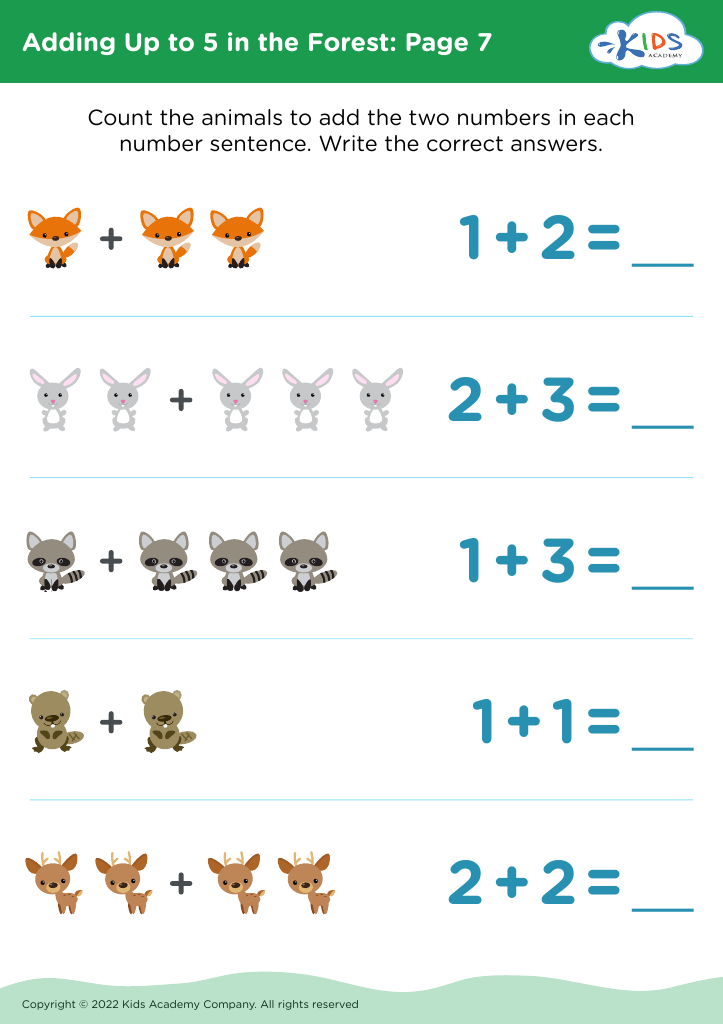
Adding Up to 5 in the Forest: Page 7
Worksheet
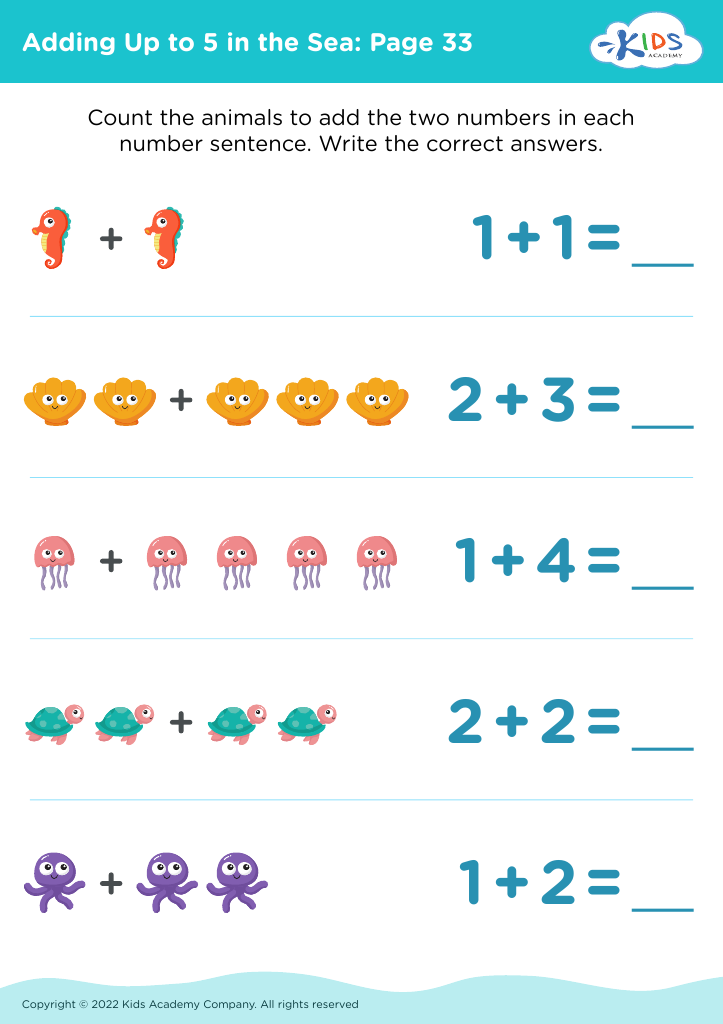
Adding Up to 5 in the Sea: Page 33
Worksheet
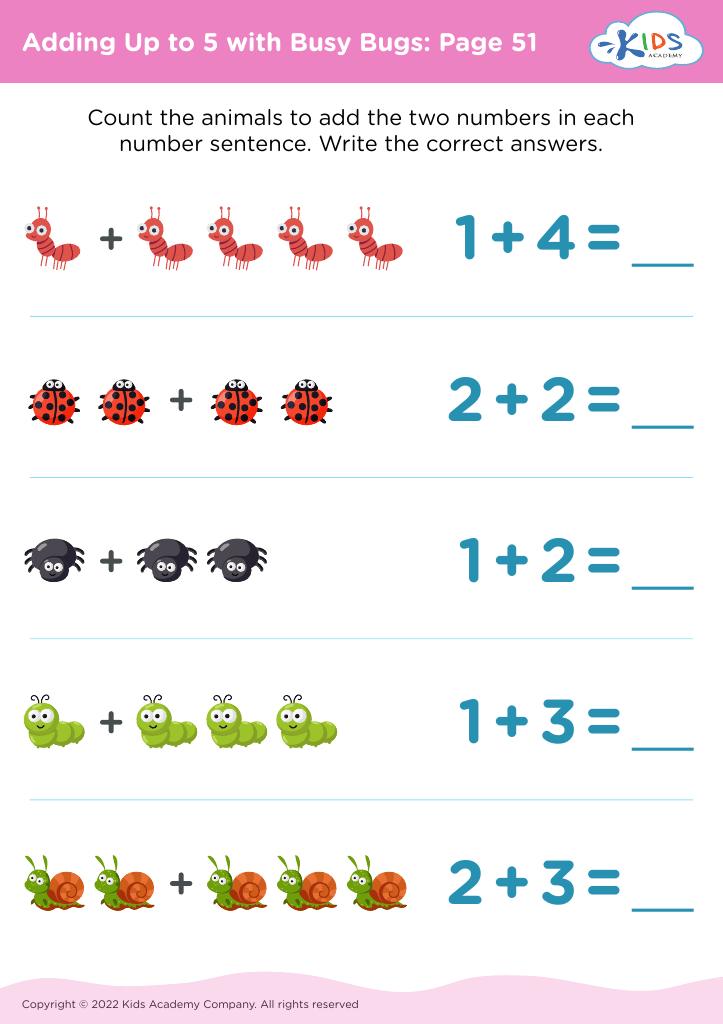
Adding Up to 5 with Busy Bugs: Page 51
Worksheet
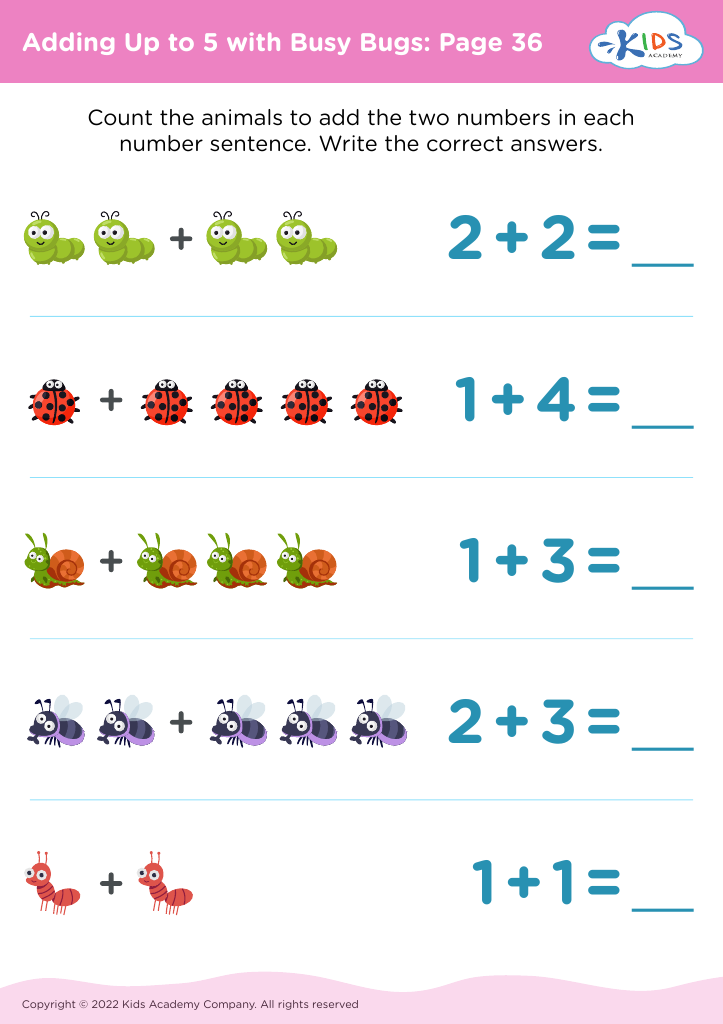
Adding Up to 5 with Busy Bugs: Page 36
Worksheet
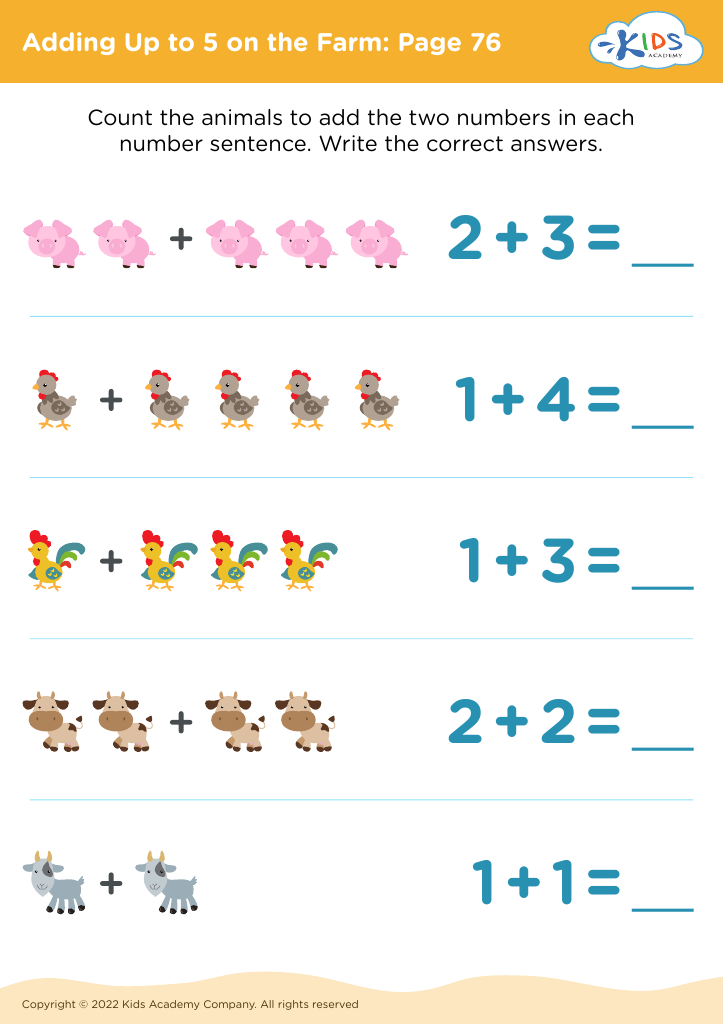
Adding Up to 5 on the Farm: Page 76
Worksheet
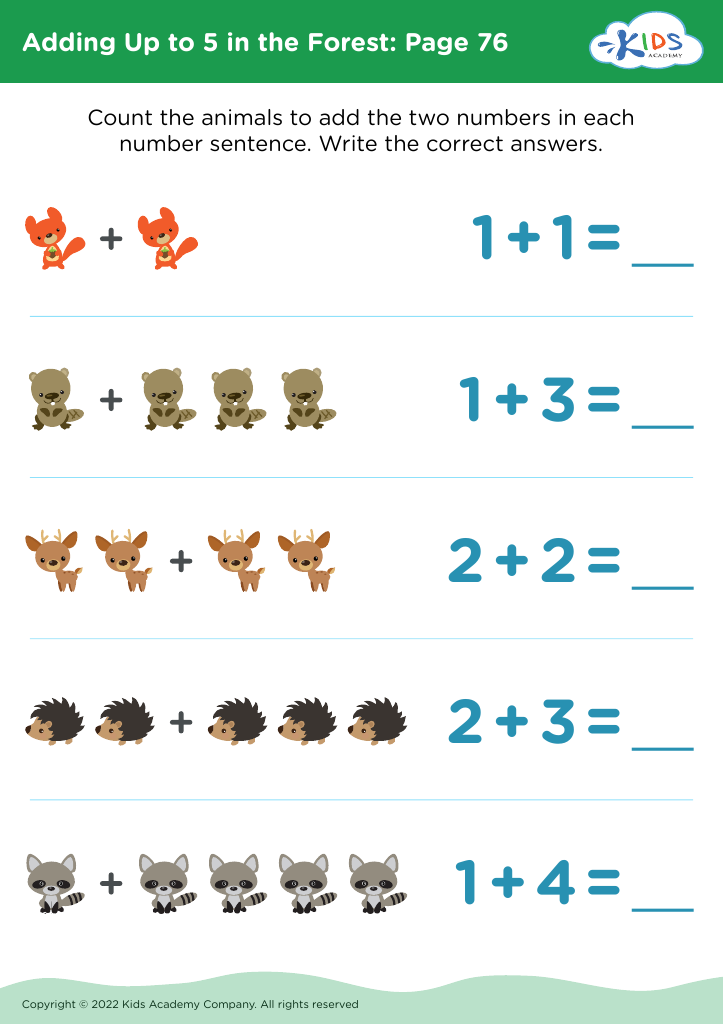
Adding Up to 5 in the Forest: Page 76
Worksheet
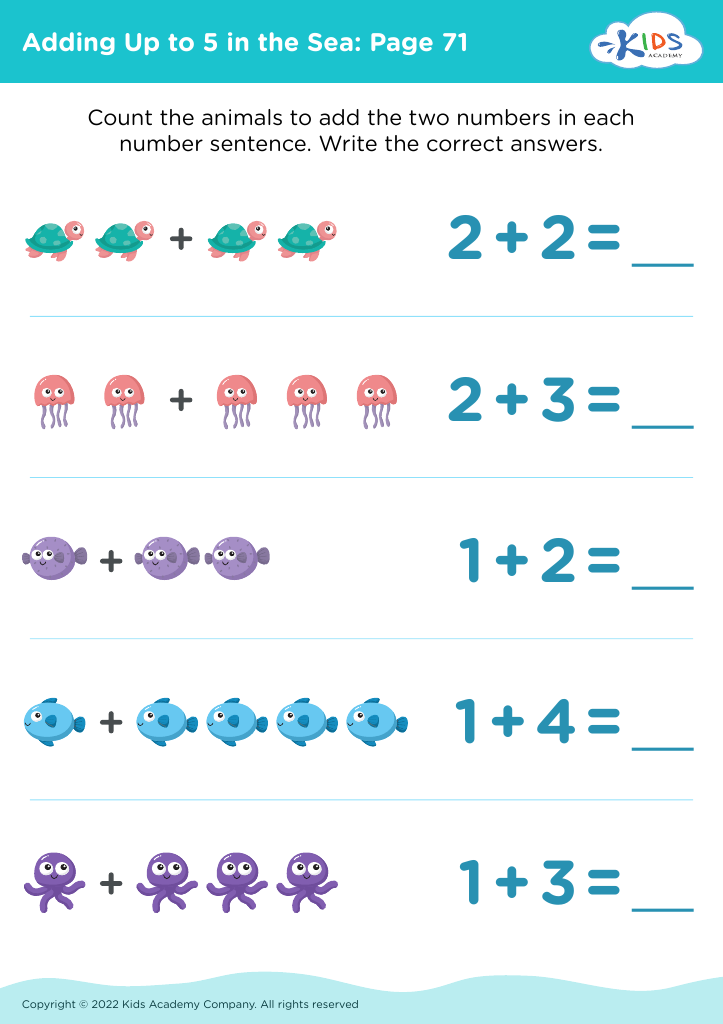
Adding Up to 5 in the Sea: Page 71
Worksheet
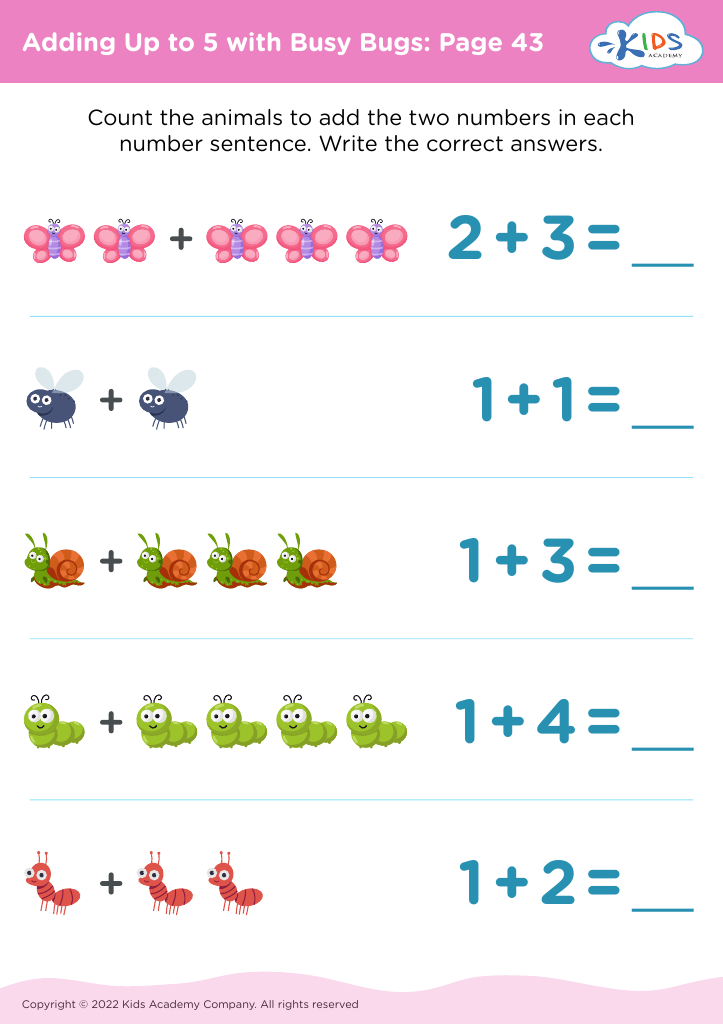
Adding Up to 5 with Busy Bugs: Page 43
Worksheet
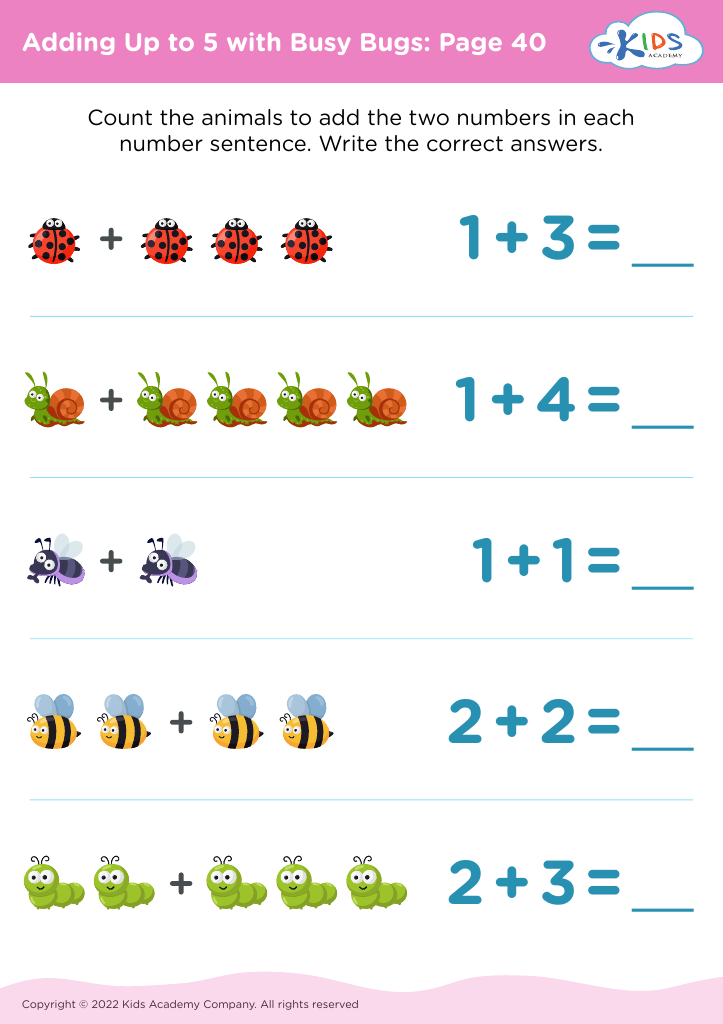
Adding Up to 5 with Busy Bugs: Page 40
Worksheet
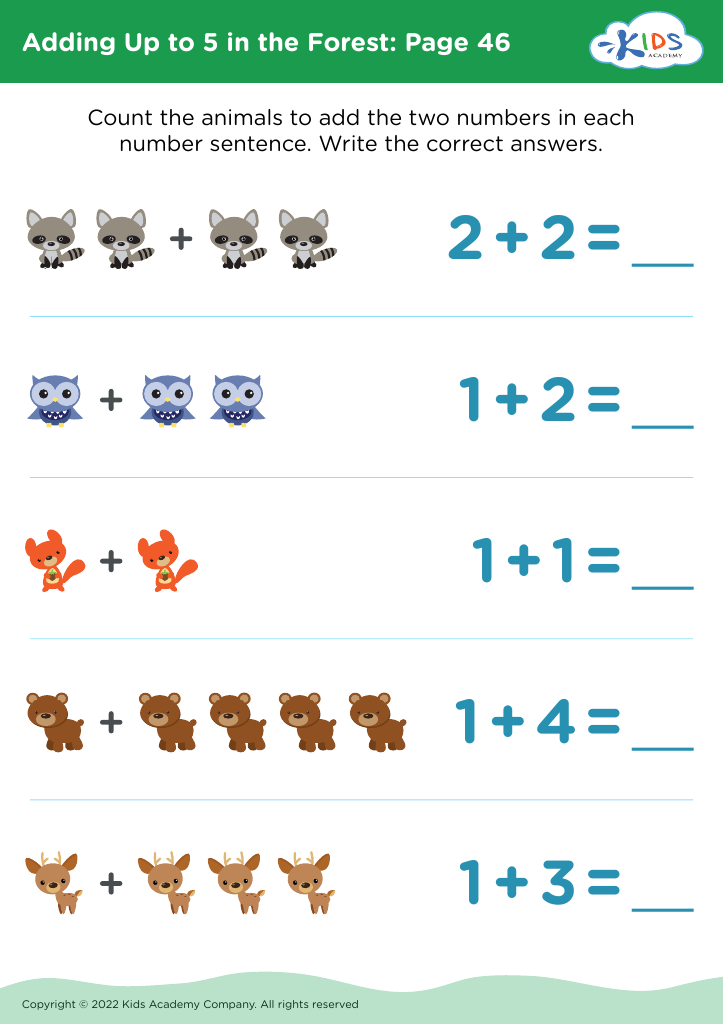
Adding Up to 5 in the Forest: Page 46
Worksheet
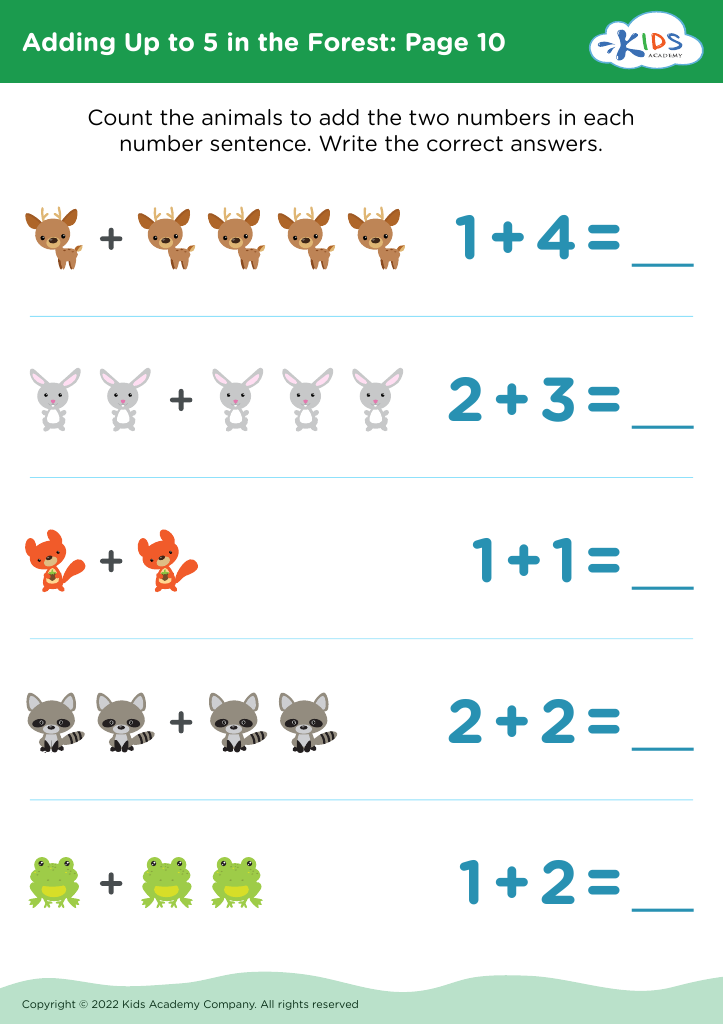
Adding Up to 5 in the Forest: Page 10
Worksheet
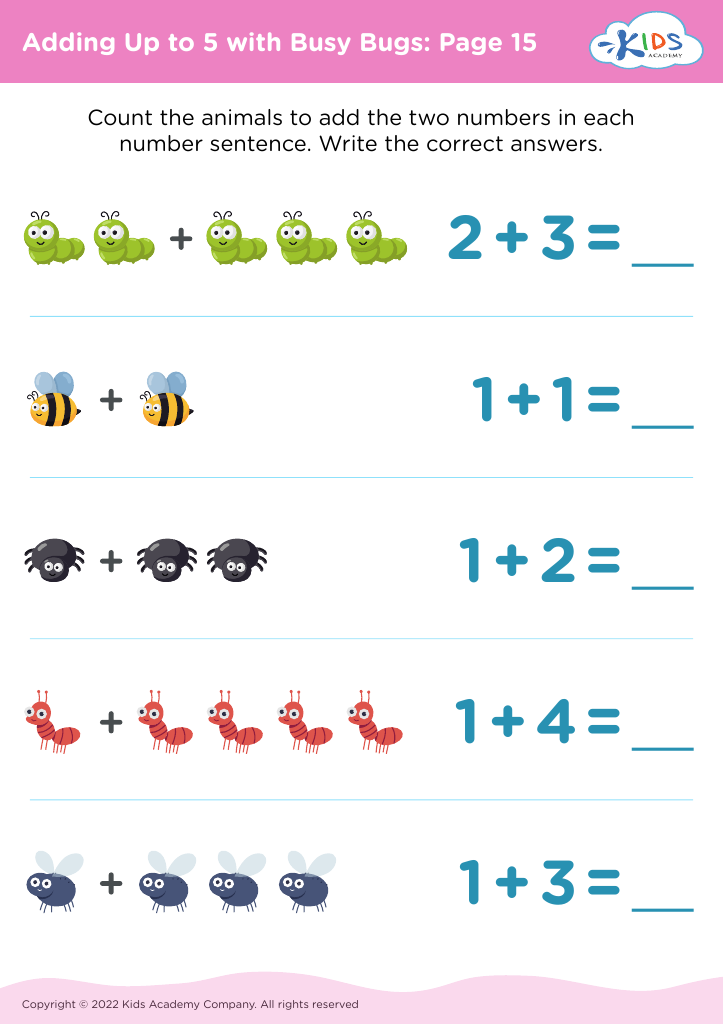
Adding Up to 5 with Busy Bugs: Page 15
Worksheet


Developing basic math skills, such as adding up to 5, is crucial for 3-year-olds as it lays the foundation for later mathematical understanding and overall cognitive development. At this age, children are naturally curious and eager to explore numbers in their environment. When parents or teachers emphasize basic addition, they not only foster a love for learning but also engage young minds in critical early skill-building activities.

Learning to add up to 5 enhances children's problem-solving abilities, encourages logical thinking, and helps them grasp essential concepts like quantity and comparison. This knowledge will be foundational as they progress to more complex mathematical concepts in later years. Additionally, incorporating simple math into playtime—through counting toys or combining snack pieces—makes learning feel more accessible and fun.

Furthermore, nurturing these skills promotes confidence; children gain assurance when they successfully solve simple math problems. Engaging children in hands-on, interactive activities helps form a positive relationship with math, encouraging a mindset that views learning as enjoyable rather than stressful. Therefore, prioritizing basic math skills at this young age empowers children for future academic success and cultivates essential life skills that go beyond the classroom.