Enhancing focus Adding Up to 5 Worksheets for 3-Year-Olds
4 filtered results
-
From - To
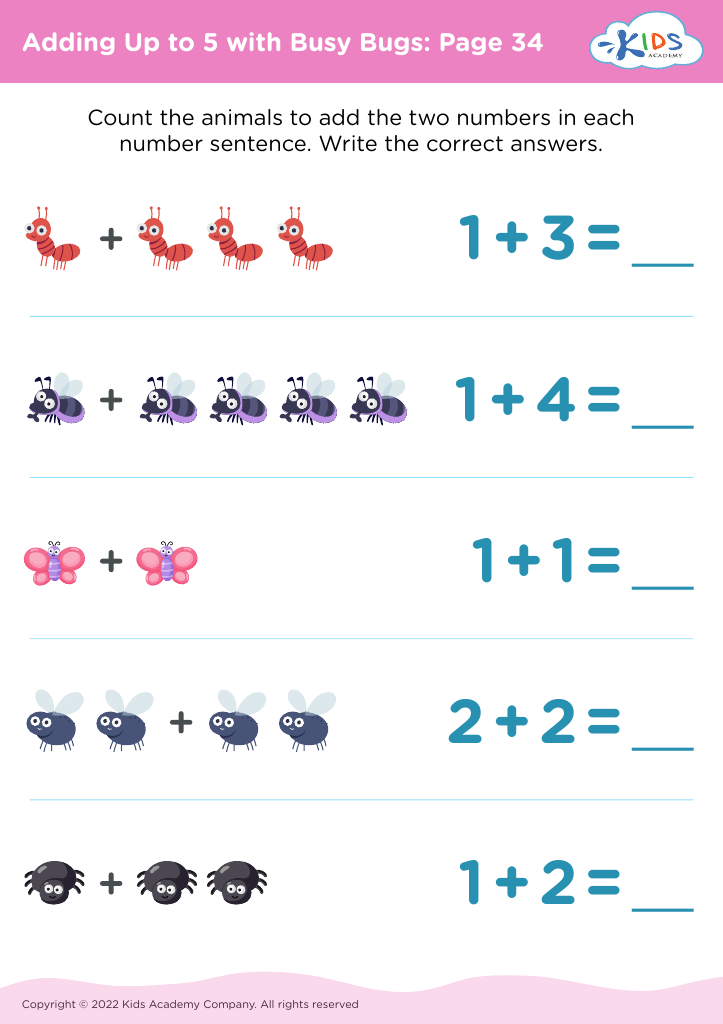
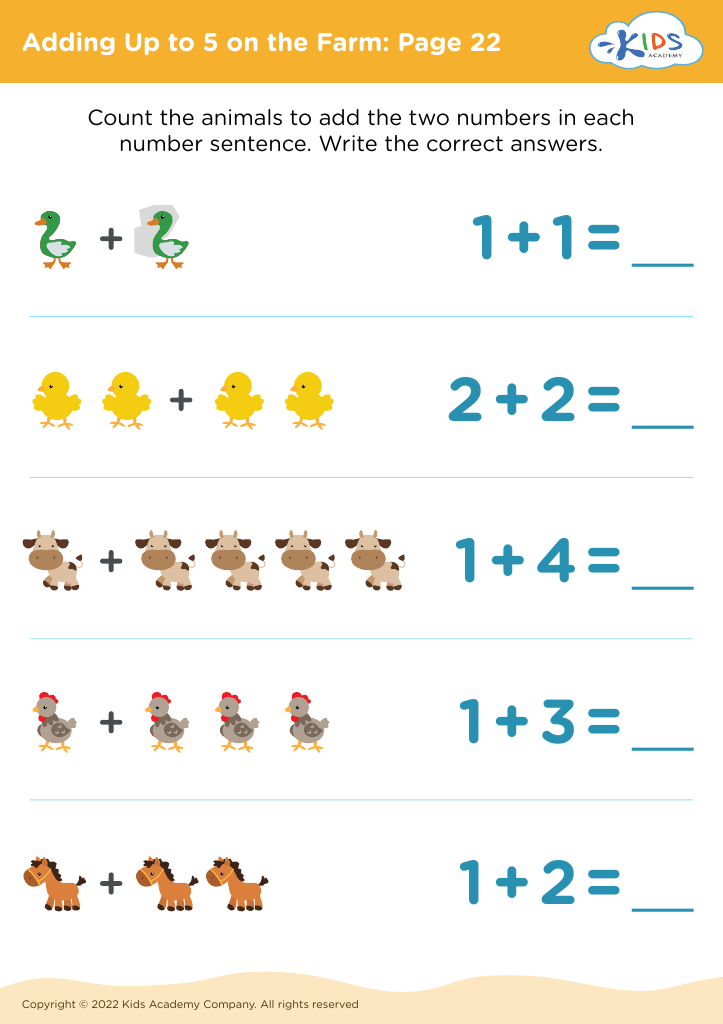
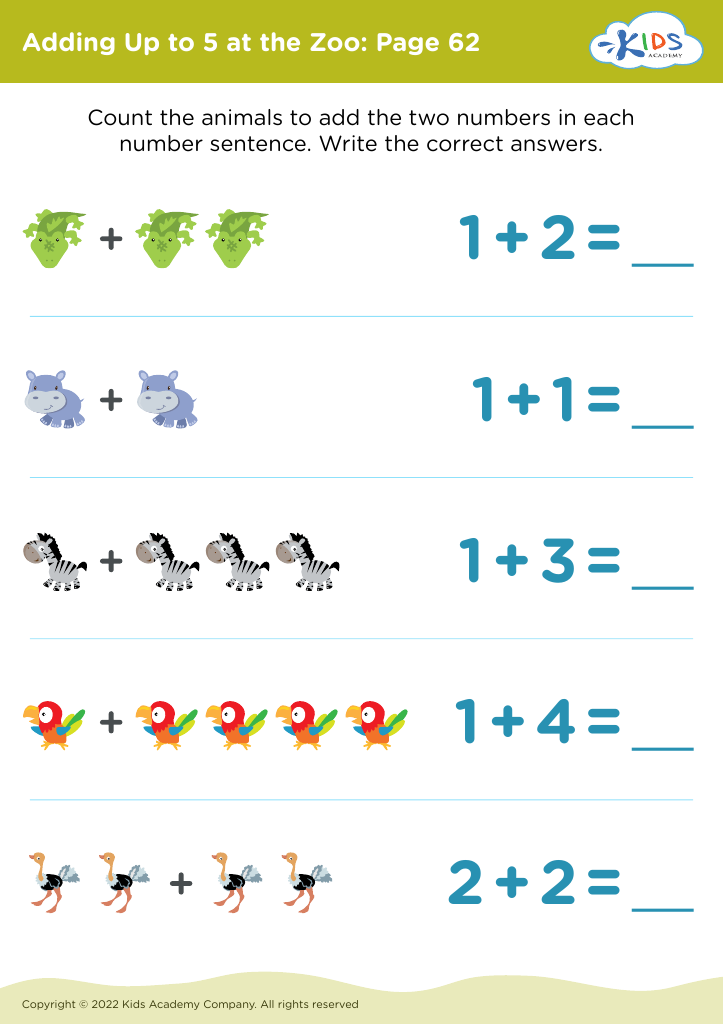
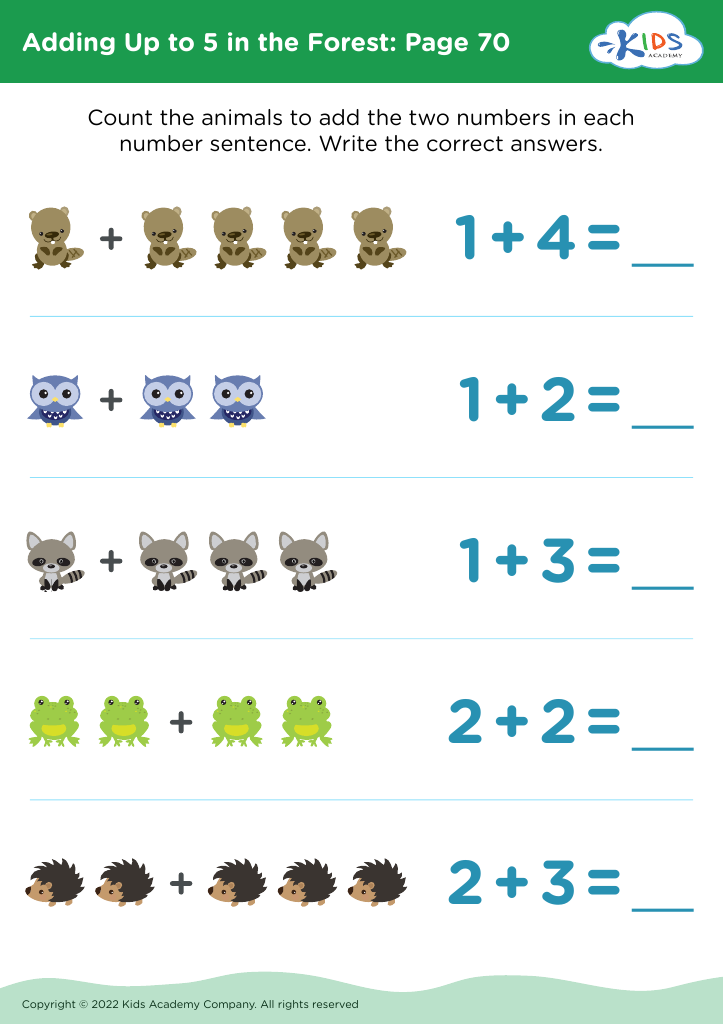
Enhance your child's focus and concentration with our "Adding Up to 5" worksheets designed specifically for 3-year-olds! These engaging and interactive activities introduce young learners to basic math concepts while promoting problem-solving skills. Each worksheet helps children practice addition in a fun and captivating way, utilizing colorful illustrations and relatable scenarios. As they complete these exercises, kids will strengthen their focus, attention span, and critical thinking abilities. Ideal for use at home or in the classroom, our worksheets provide a delightful learning experience for early learners. Download and watch your child thrive in their mathematical journey today!







.jpg)
Enhancing focus and developing foundational math skills, such as adding up to 5, are crucial for 3-year-olds as these skills lay the groundwork for future learning. At this age, children are naturally curious and eager to explore their environments. Engaging them in focused activities like counting and simple addition helps refine their ability to concentrate, fostering self-discipline and attention span—skills essential for both academic success and everyday life.
Moreover, introducing math concepts early helps eliminate math anxiety later on. When parents and teachers incorporate playful learning, such as counting objects during playtime or encouraging number recognition through songs and rhymes, they create a positive associations with math. These activities support cognitive development, memory, and problem-solving skills.
Additionally, enhancing focus through fun, targeted exercises also aids social skills, as children often work together in group settings to solve problems or play counting games. As they interact, they learn patience, cooperation, and communication. Consequently, by investing time and energy into enhancing focus and initial math skills, adults not only support cognitive development but also contribute to a child's overall social and emotional growth, ensuring they are well prepared for upcoming educational challenges.








