Fine motor skills (writing) Adding Up to 5 Worksheets for 3-Year-Olds - Page 2
32 filtered results
-
From - To





.jpg)


Fine motor skills are essential for a child's development as they are foundational for various everyday tasks. For 3-year-olds, developing fine motor skills, particularly in writing, paves the way for effective communication and self-expression. Good fine motor skills aid in letter formation, fostering better handwriting as they progress in school.
Moreover, these skills play a crucial role in a child's ability to perform daily activities, such as buttoning clothes, using utensils, and engaging in arts and crafts. This independence boosts a child's confidence and encourages exploration and creativity.
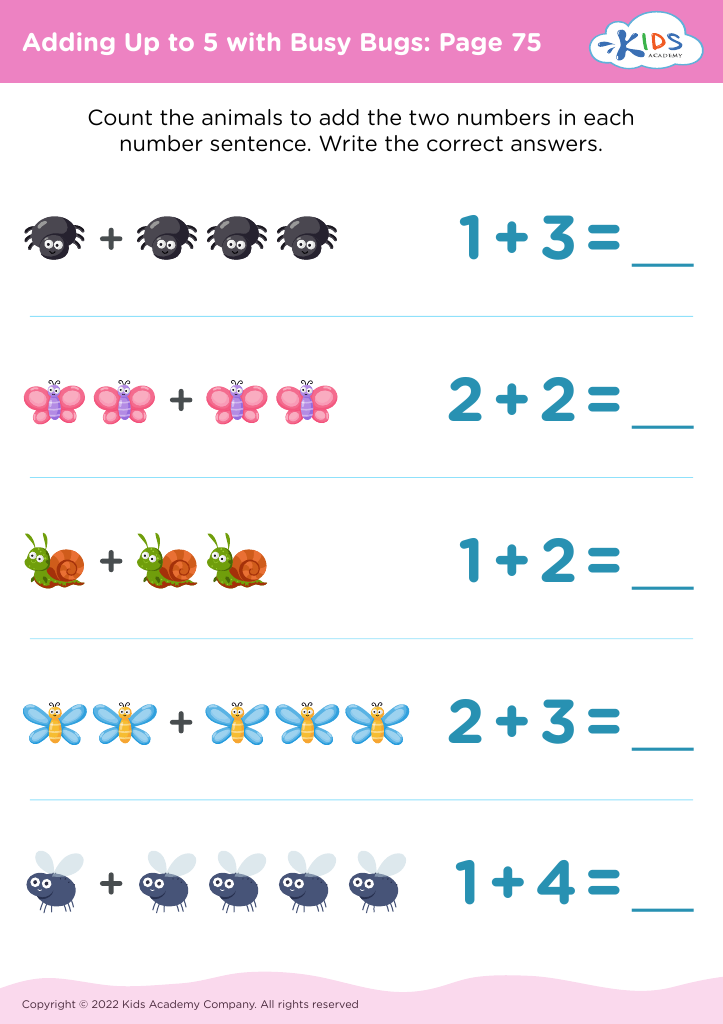
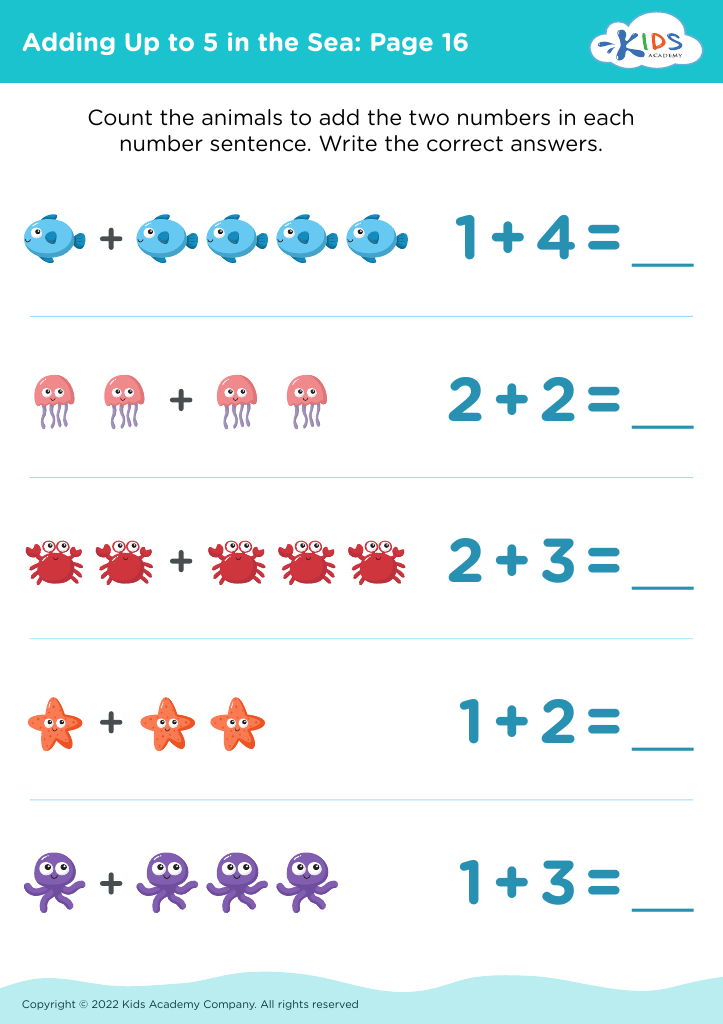
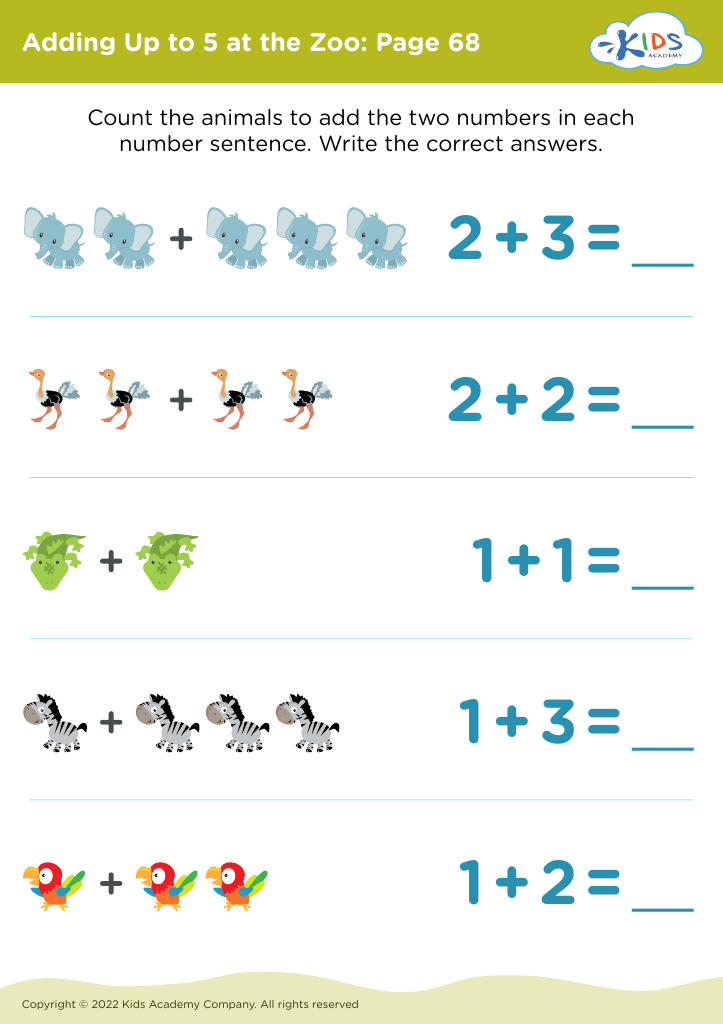
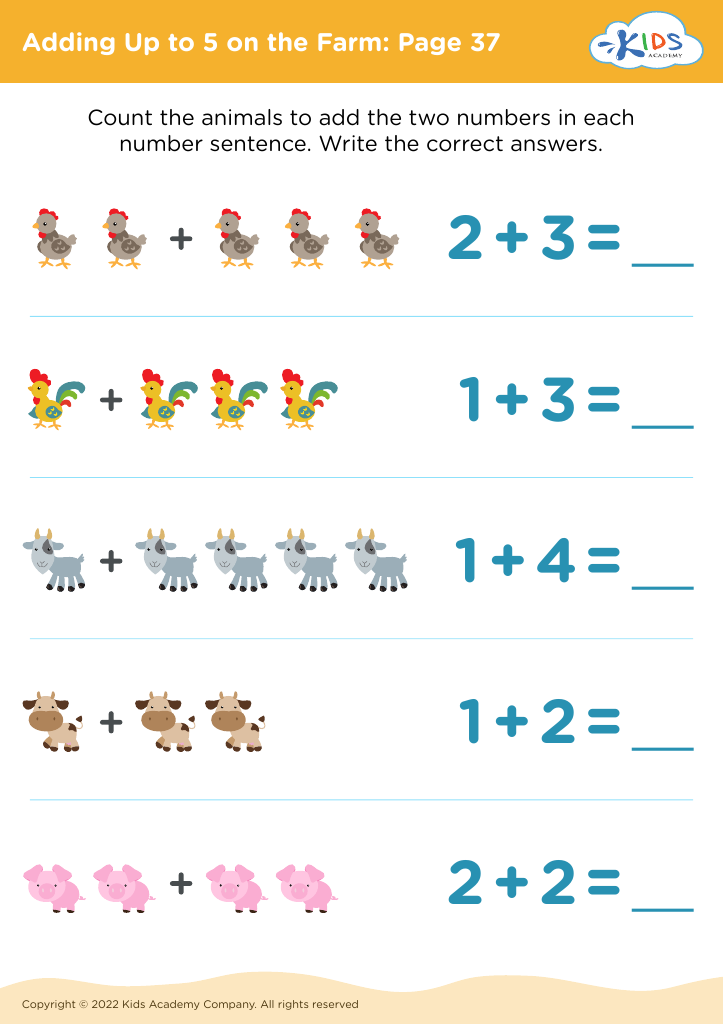
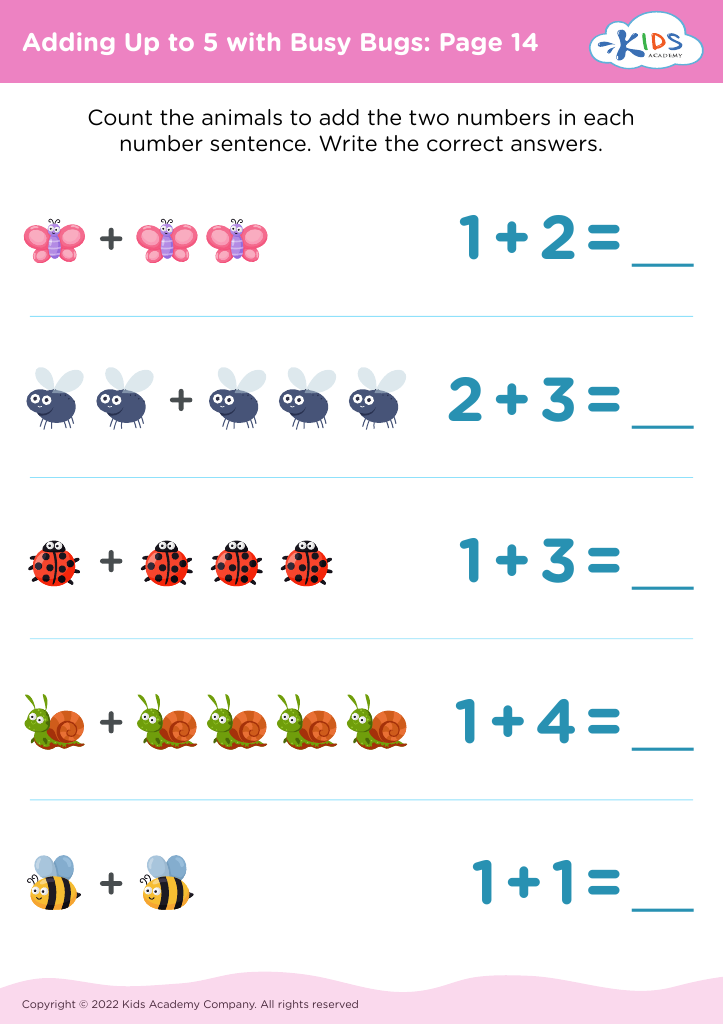
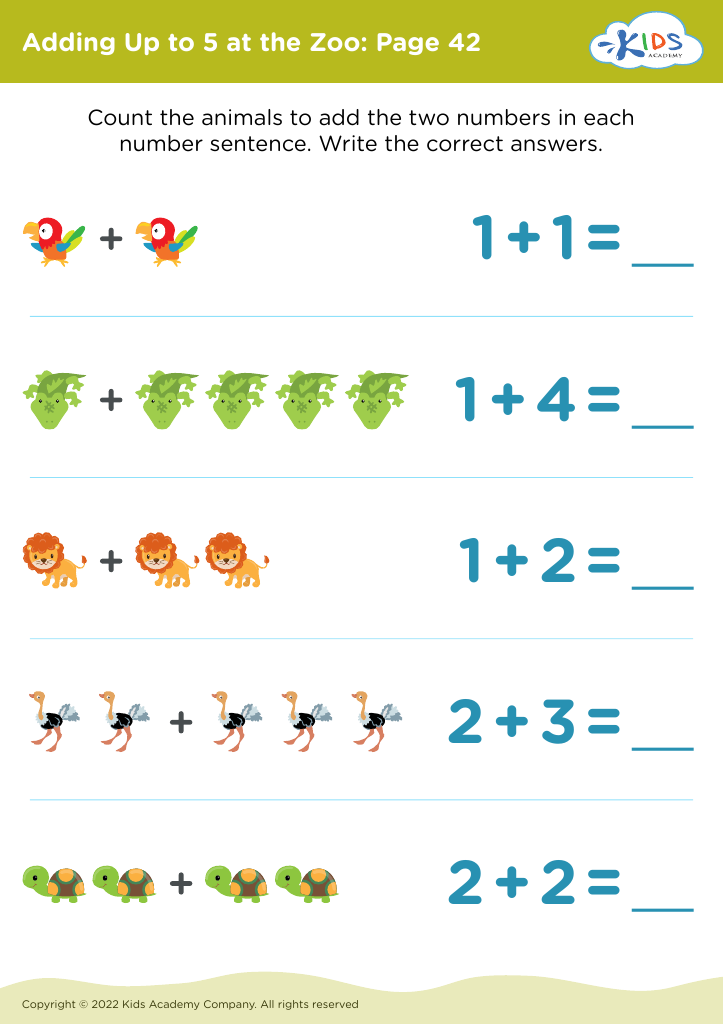
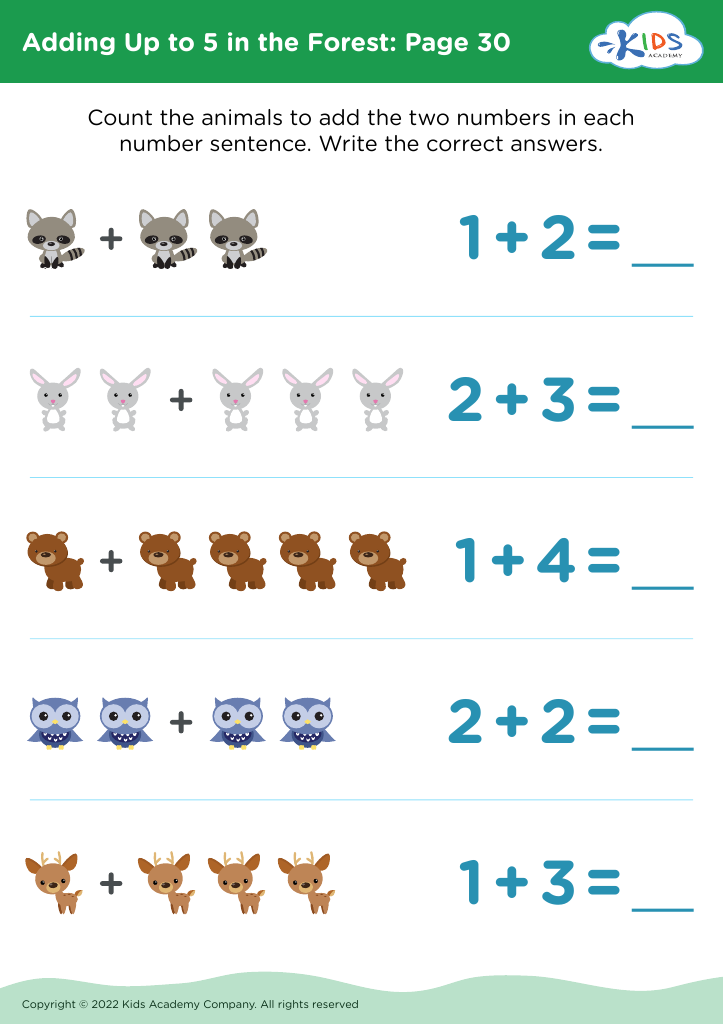
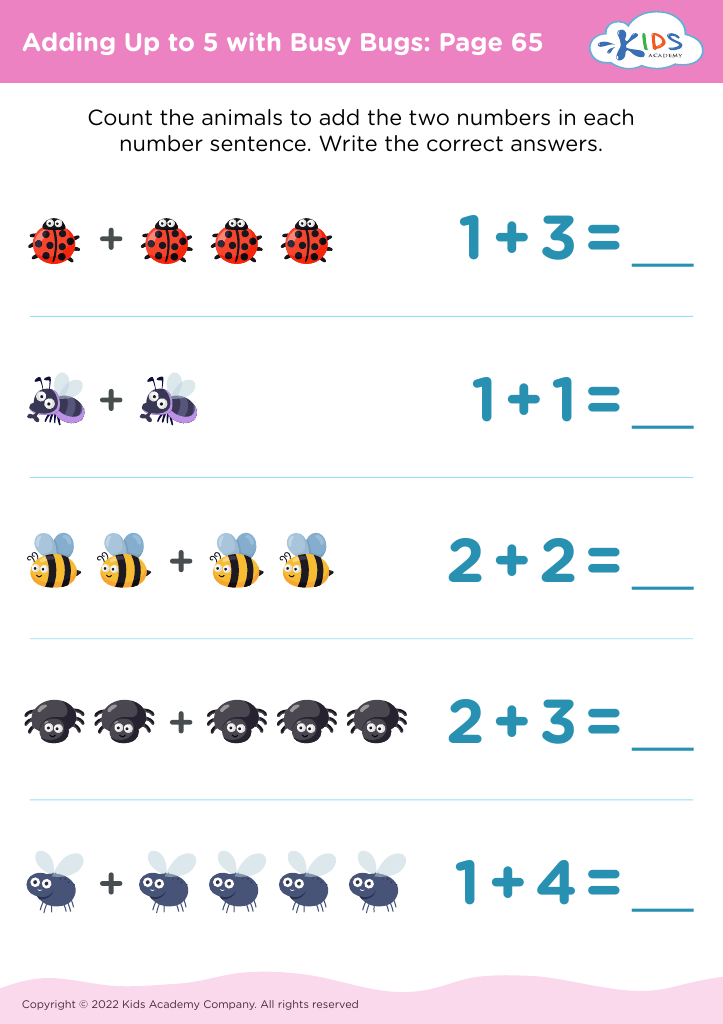
Adding concepts like "Adding Up to 5" introduces basic mathematical understanding, nurturing problem-solving skills and cognitive development. When combined with writing, children gain the ability to represent numbers symbolically, connecting mathematics with literacy.
Parents and teachers should care because strong fine motor skills linked to writing and math can enhance a child's overall academic success and promote lifelong learning habits. By focusing on developing these abilities early, they set the stage for a well-rounded, confident learner who can tackle more complex tasks in the future. Supporting fine motor development through playful activities not only aids in skill acquisition but also makes learning enjoyable and engaging.








