Understanding numbers Adding Up to 5 Worksheets for 3-Year-Olds
3 filtered results
-
From - To
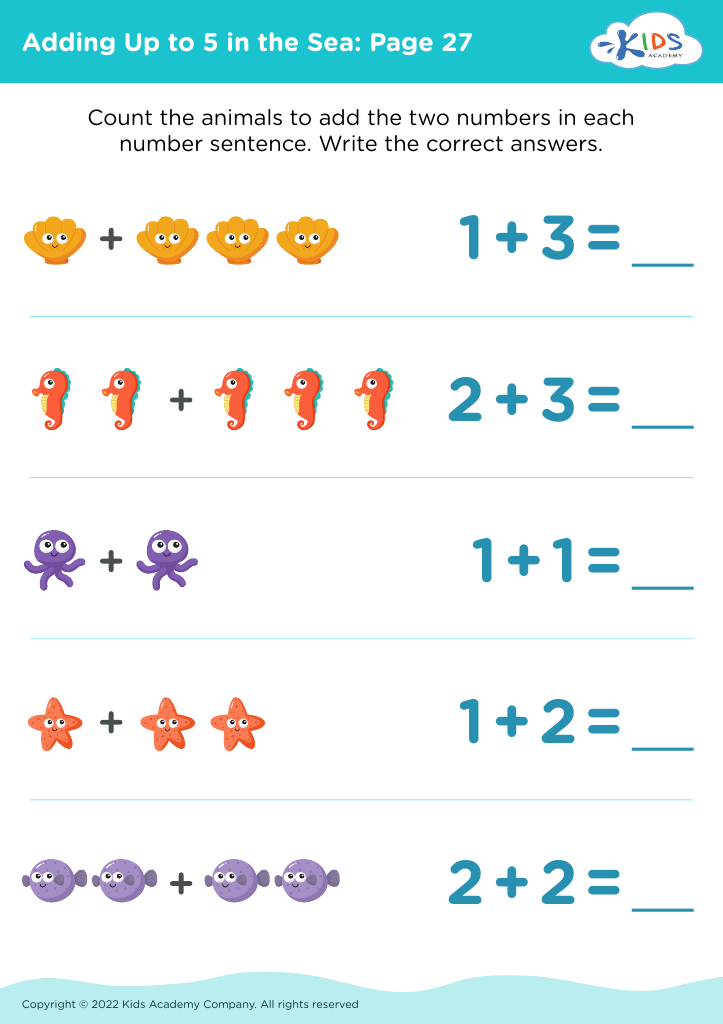
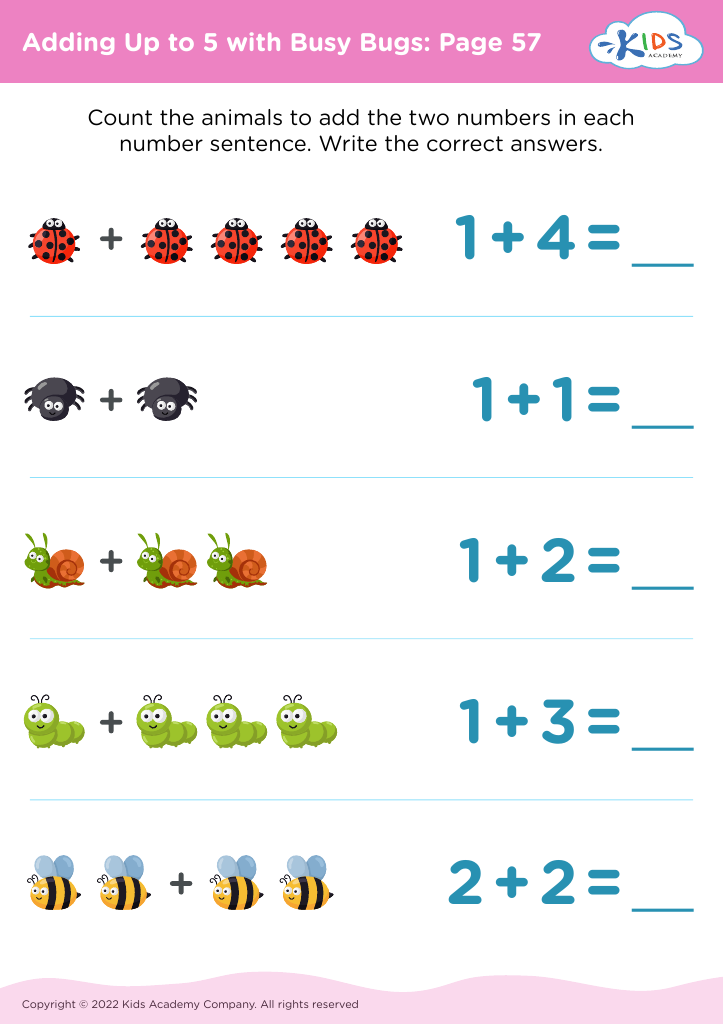
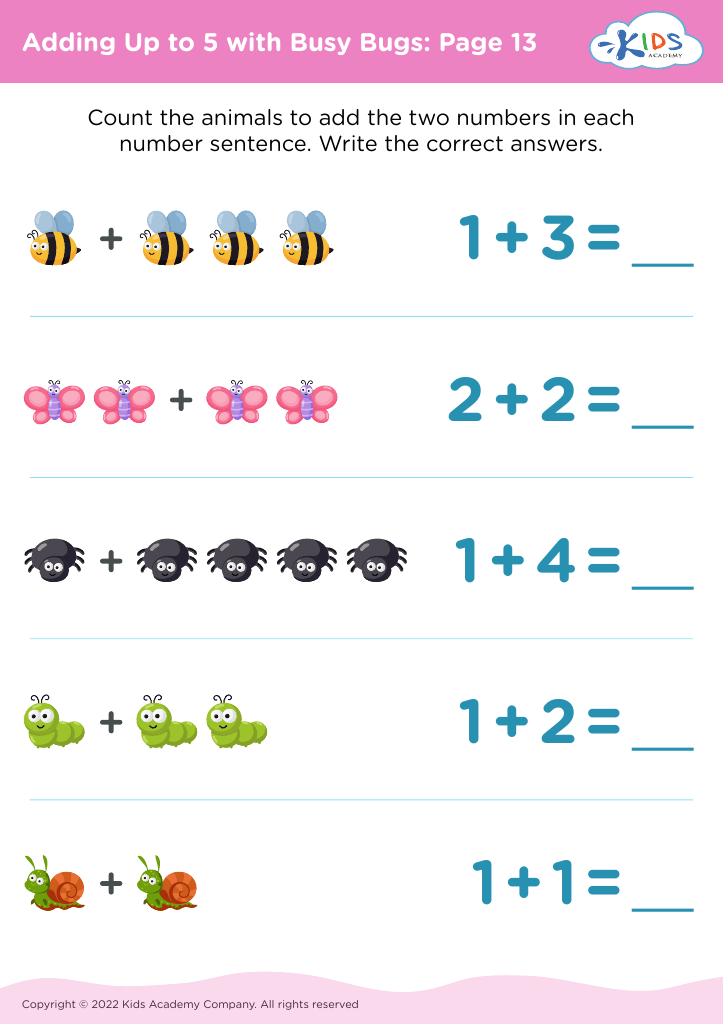
Welcome to our "Understanding Numbers Adding Up to 5 Worksheets" designed specifically for 3-year-olds! These engaging worksheets aim to introduce your little ones to the concept of addition through fun and interactive activities. Children will learn to recognize numbers while adding up to 5 using colorful illustrations and relatable examples. Our resources help develop essential early math skills, fostering confidence and enjoyment in learning. Plus, the printable format makes it easy to incorporate these worksheets into your daily routine. Let’s embark on this exciting journey of number recognition and addition together, laying the groundwork for future math success!



%20(1).jpg)




Understanding numbers and the concept of addition, even at a simple level such as adding up to 5, is crucial for the developmental growth of 3-year-olds. Early math skills form the foundation for more complex problem-solving and mathematical understanding in later years. When parents and teachers introduce numbers and the idea of addition at this stage, they are enhancing children's cognitive abilities, encouraging logical reasoning, and fostering language development.
Furthermore, engaging with numbers helps children develop critical thinking skills. Understanding the concept of quantity, recognizing patterns, and beginning to grasp the idea of sums equips them for more advanced math concepts in the future.
By incorporating playful activities, such as counting toys or snacks, children learn to associate numbers with real-world objects. This hands-on learning experience not only makes math more relatable but also builds confidence in their ability to tackle mathematical challenges.
Additionally, these early experiences with numbers can instill a love for learning and exploration in various subjects, setting the stage for a positive educational journey. Ultimately, nurturing early math skills is an investment in a child's future academic success and overall problem-solving abilities. Thus, it is vital for parents and teachers to prioritize and celebrate these learning experiences.








