Problem-Solving Skills Addition Facts Worksheets for 3-Year-Olds
3 filtered results
-
From - To
Introduce your little ones to the exciting world of math with our "Problem-Solving Skills Addition Facts Worksheets for 3-Year-Olds"! Tailored specifically for early learners, these worksheets focus on developing foundational problem-solving skills while introducing basic addition concepts. Through engaging activities and colorful illustrations, children will explore simple addition facts, enhancing their critical thinking and numerical understanding. As they work their way through fun, interactive problems, toddlers will build confidence in their math abilities. Perfect for homeschooling, classroom learning, or supplemental activities, these worksheets lay the groundwork for lifelong math success. Start nurturing your child's problem-solving skills today!
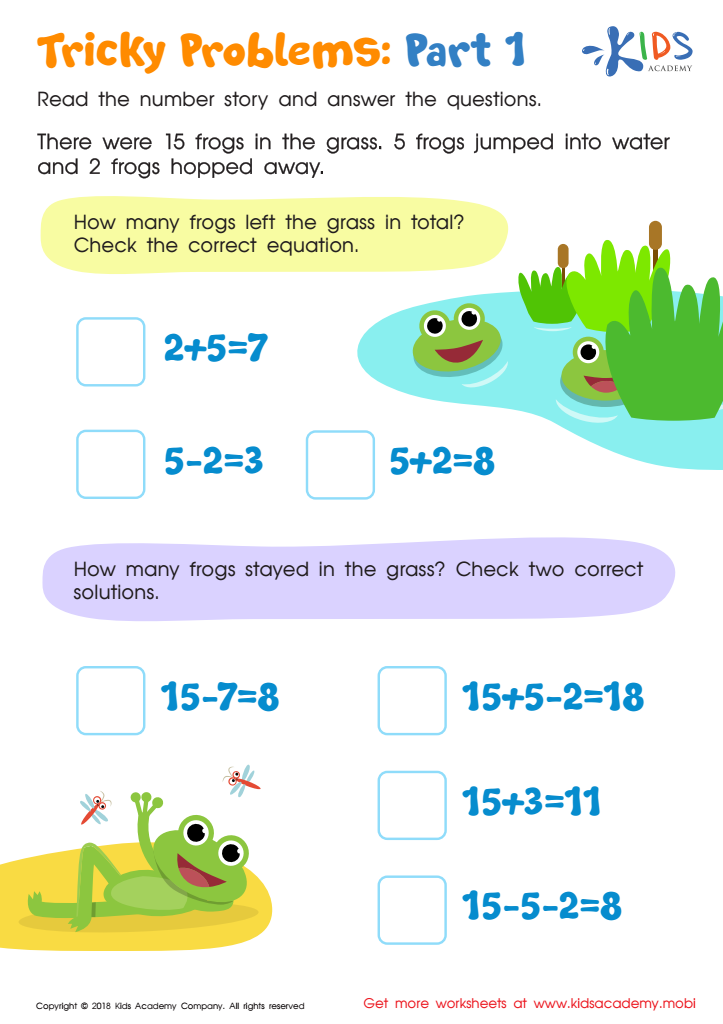
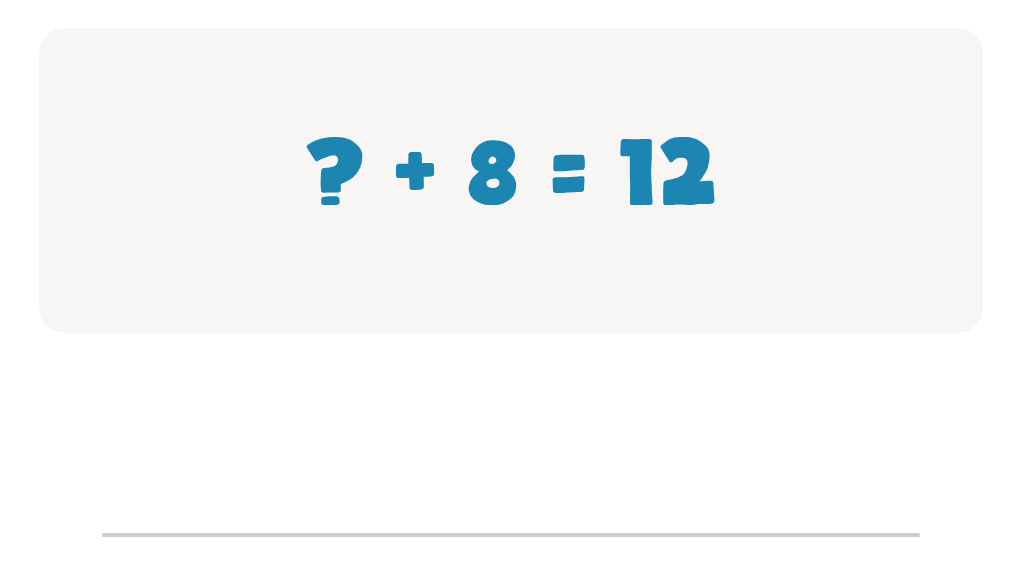
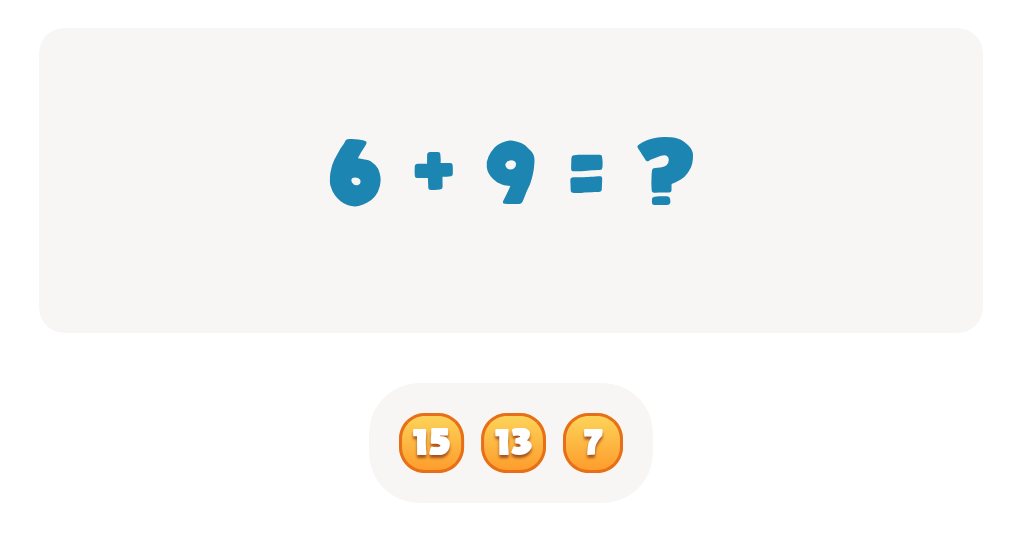
Tricky Problems Worksheet: Part 1
 Assign to My Students




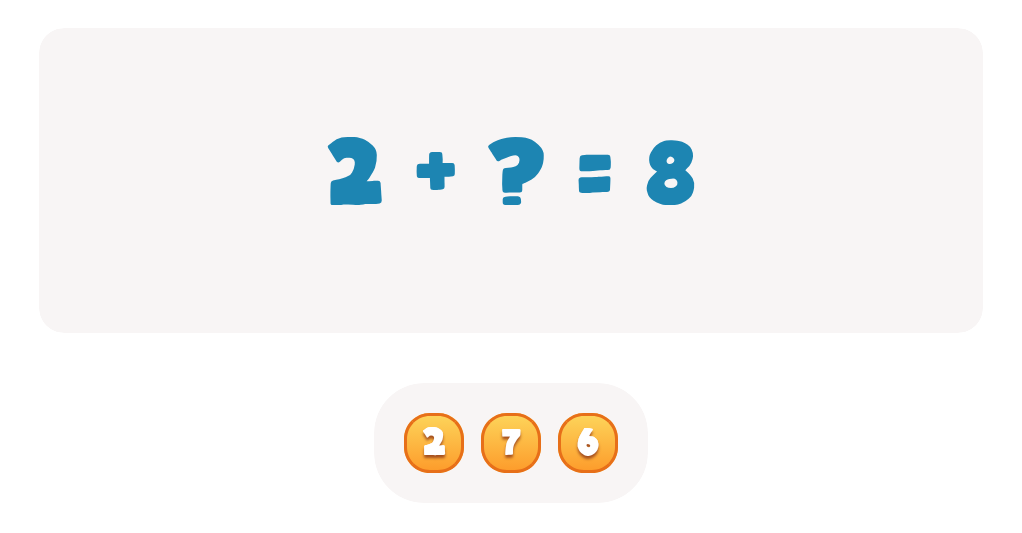

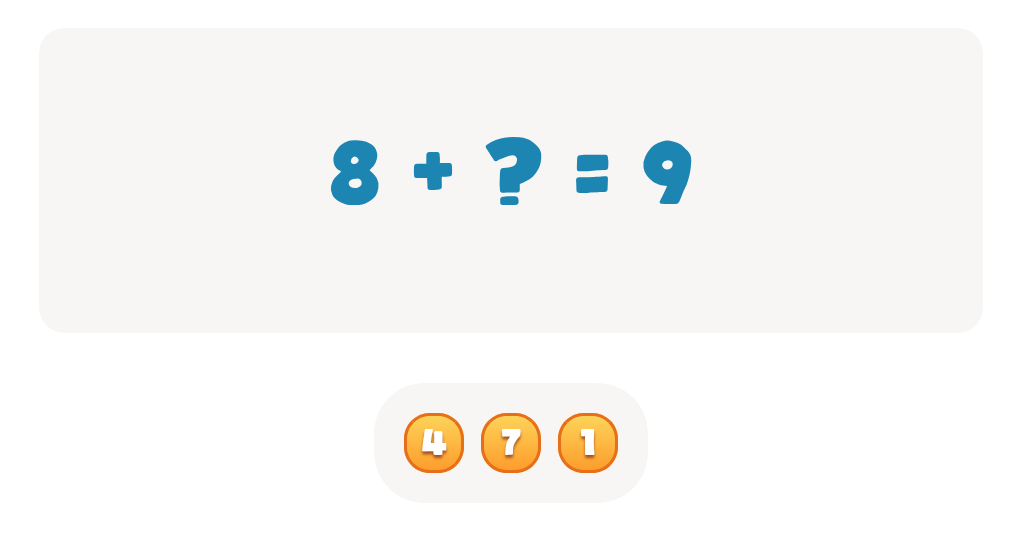

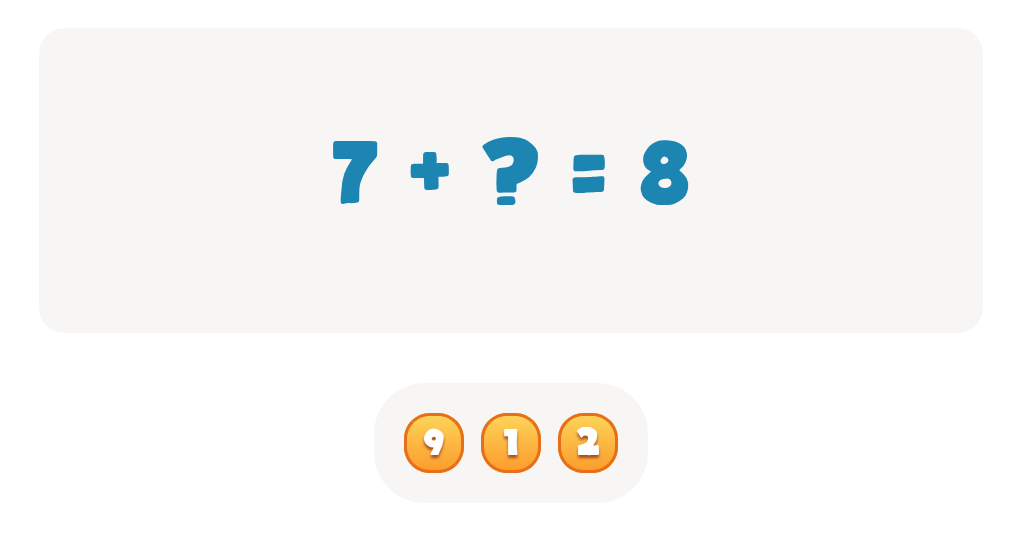
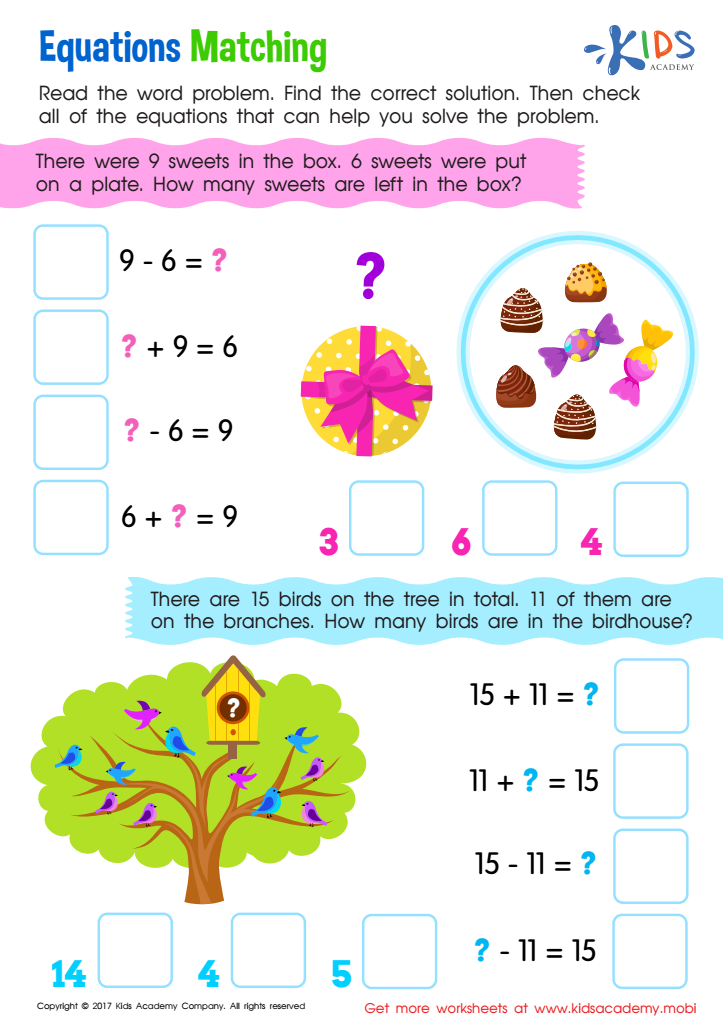
Equations Matching Word Problems Worksheet
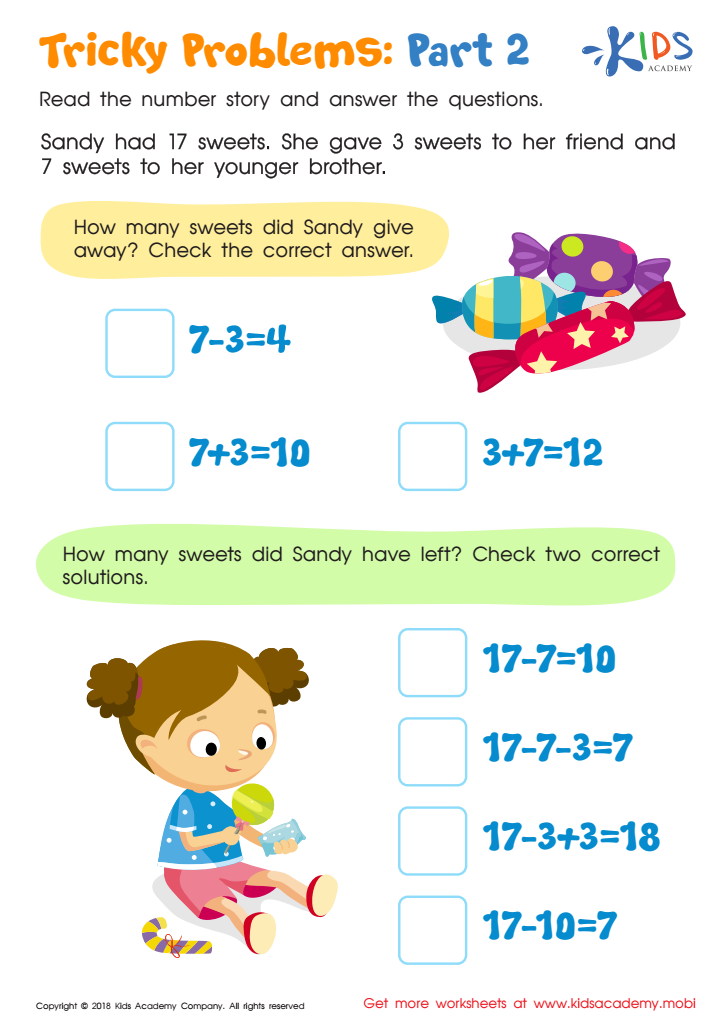
Tricky Problems Worksheet: Part 2








Parents and teachers should care about problem-solving skills, particularly in the context of addition facts for 3-year-olds, because these foundational skills play a crucial role in a child's cognitive development and future academic success. Problem-solving encourages critical thinking, promotes curiosity, and fosters resilience, essential traits that will aid children as they tackle more complex challenges later in life.
Introducing basic addition facts at such an early age helps children recognize numbers and understand quantity, laying the groundwork for mathematical literacy. Engaging children in playful problem-solving activities—like counting objects, playing with blocks, or using simple puzzles—makes learning interactive and enjoyable. This early exposure helps develop number sense and the ability to relate objects to numerical values.
Moreover, nurturing a child's problem-solving abilities boosts their confidence and encourages a love for learning. When adults celebrate a child's efforts to solve problems, it reinforces perseverance and logical thinking, both of which are incredibly valuable throughout their educational journey and beyond. Thus, focusing on problem-solving skills through fun and engaging activities can significantly impact children's learning attitudes and their long-term academic achievements.








