Improve counting skills Addition & Subtraction Worksheets for 3-Year-Olds
4 filtered results
-
From - To
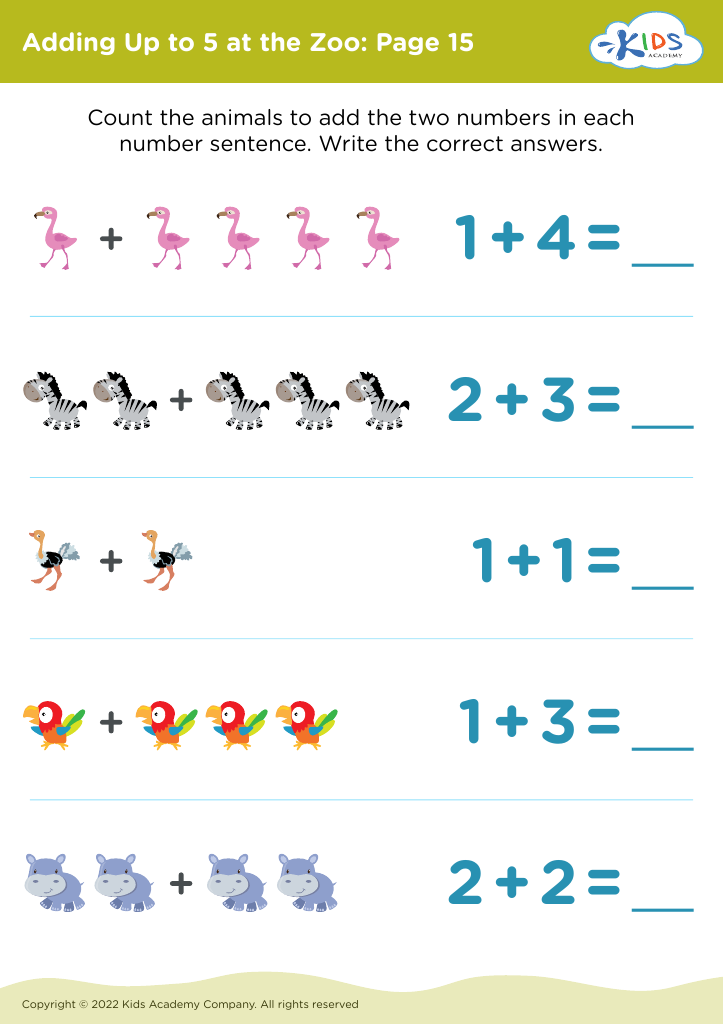
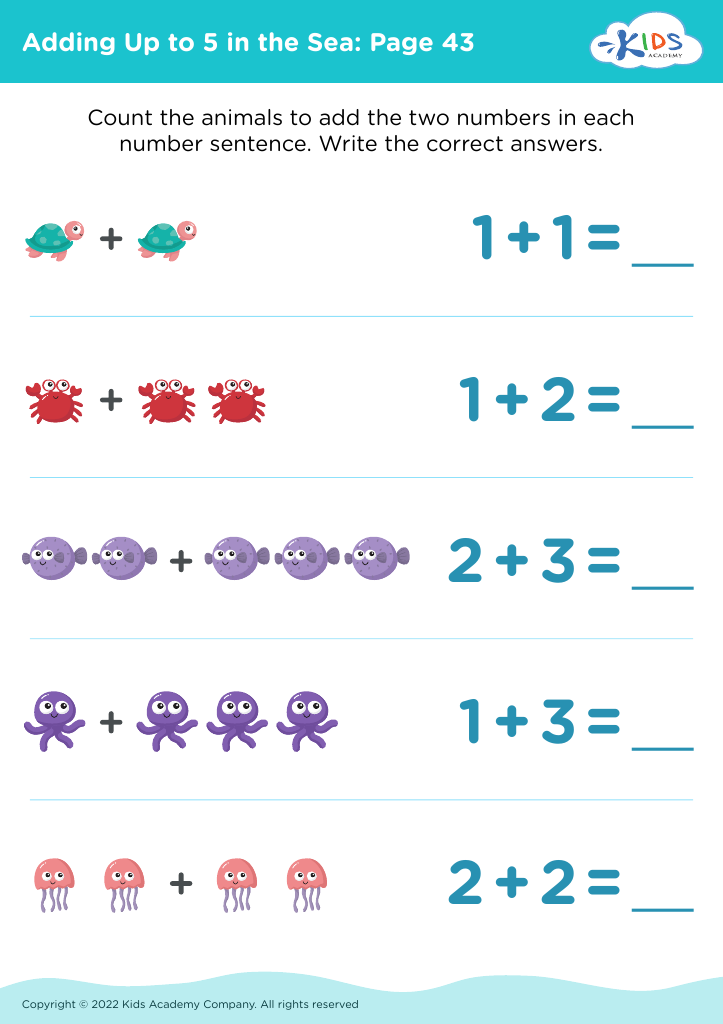
Boost your child’s early math skills with our engaging collection of Counting, Addition & Subtraction Worksheets designed specifically for 3-year-olds. At Kids Academy, our fun and educational worksheets help young learners grasp basic math concepts through colorful illustrations and interactive activities. These printable resources are perfect for fostering a love for numbers while enhancing counting accuracy and promoting problem-solving abilities. With easy-to-follow exercises that encourage practice and repetition, our worksheets will support your child’s journey to mastering addition and subtraction. Download now to make learning an enjoyable adventure for your little one!
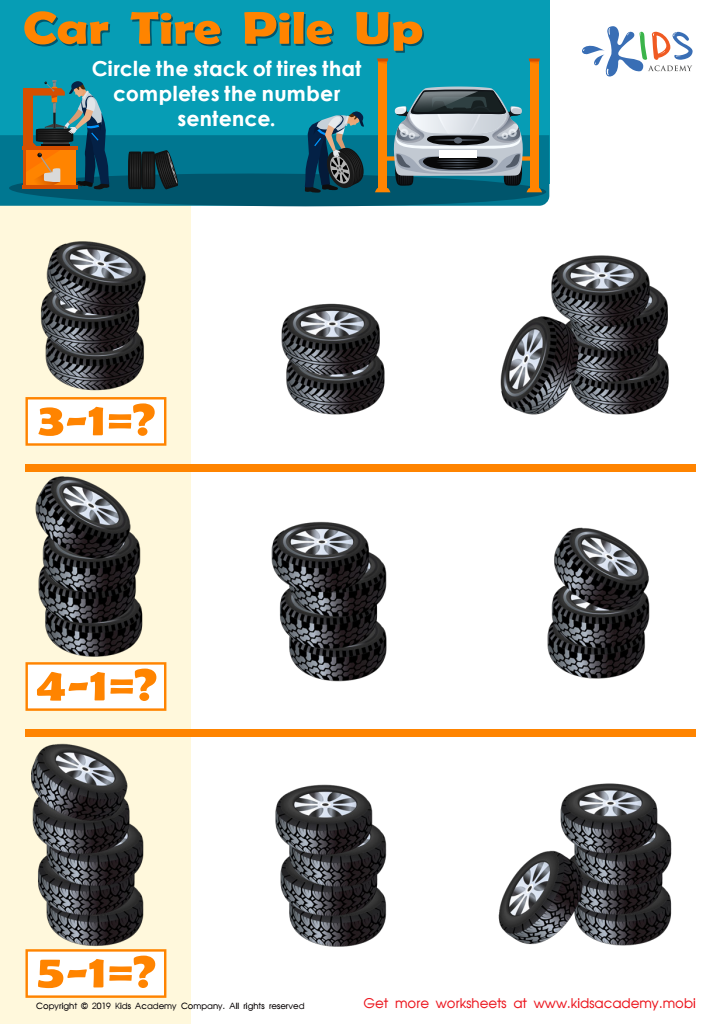
Car Tire Pile Up Worksheet
 Assign to My Students
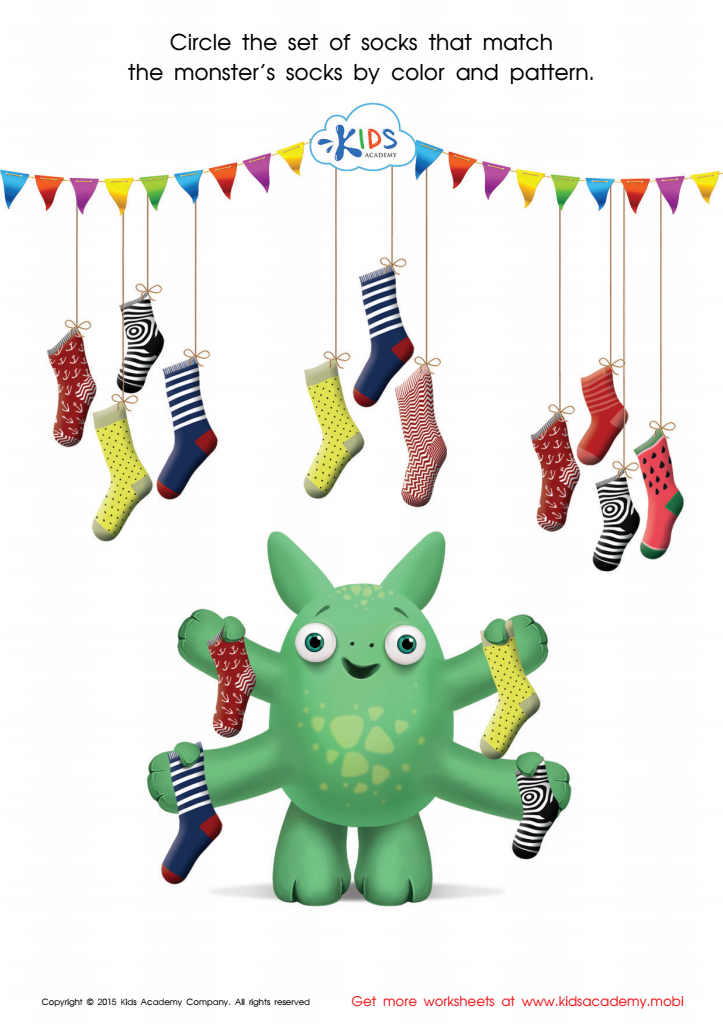
Connecting the Monster's Socks Printable








Parents and teachers play crucial roles in early childhood development, and fostering counting, addition, and subtraction skills in 3-year-olds is essential for several reasons. At this age, children's brains are particularly adaptable and primed for acquiring foundational mathematical concepts. Introducing these skills early helps to build a solid math foundation, fostering a positive attitude towards learning and critical thinking.
Counting, and basic addition and subtraction, not only teach numerical knowledge but also enhance cognitive development. These activities require children to observe patterns, think logically, and understand the relationship between numbers. Engaging in simple math tasks improves memory, attention span, and problem-solving skills—abilities that are important across all areas of learning and daily life.
Additionally, early math skills prepare children for success in a more structured educational environment. Familiarity with numbers and basic operations reduces future anxiety and promotes confidence when encountering more complex math in kindergarten and beyond. Incorporating counting games and simple addition or subtraction in playful, meaningful ways enables children to grasp concepts naturally and enjoyably.
In summary, focusing on early math skills is instrumental in promoting cognitive development, easing future academic transitions, and enriching overall child development. Parents and teachers who emphasize these skills provide children with vital tools, setting them on a path towards lifelong learning and success.








