Animal identification Addition Worksheets for 3-Year-Olds - Page 2
27 filtered results
-
From - To
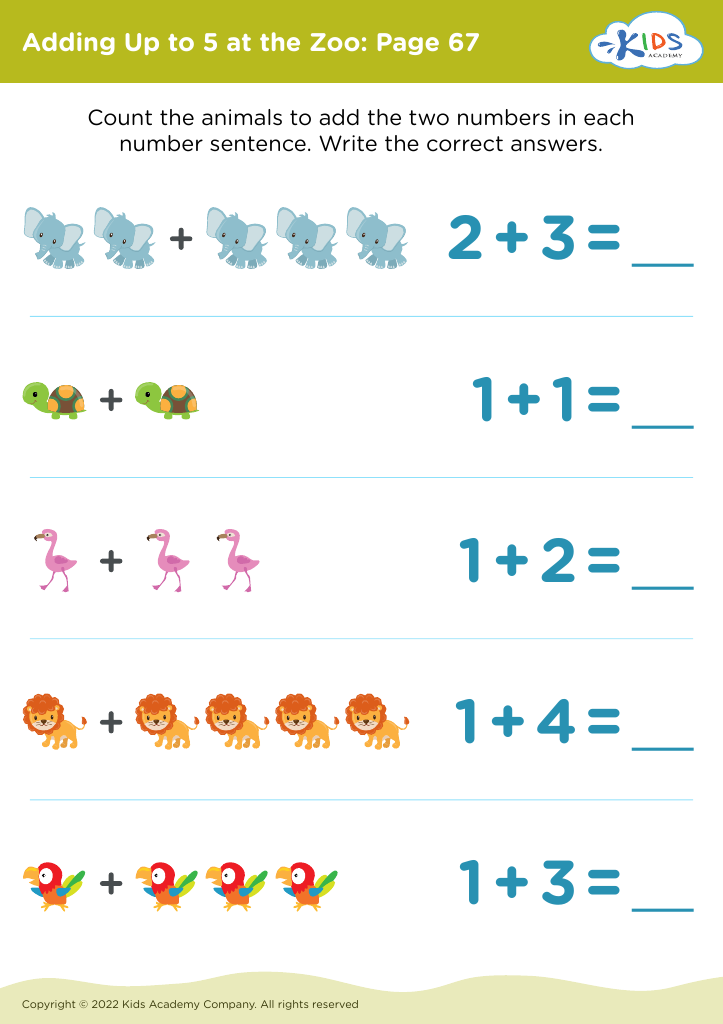
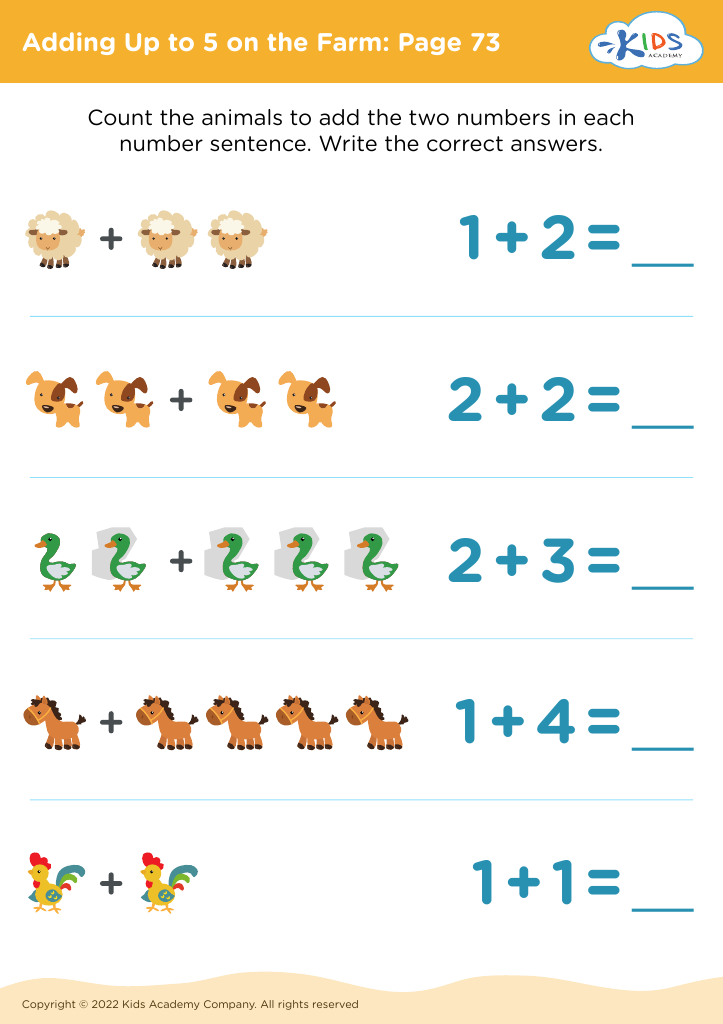
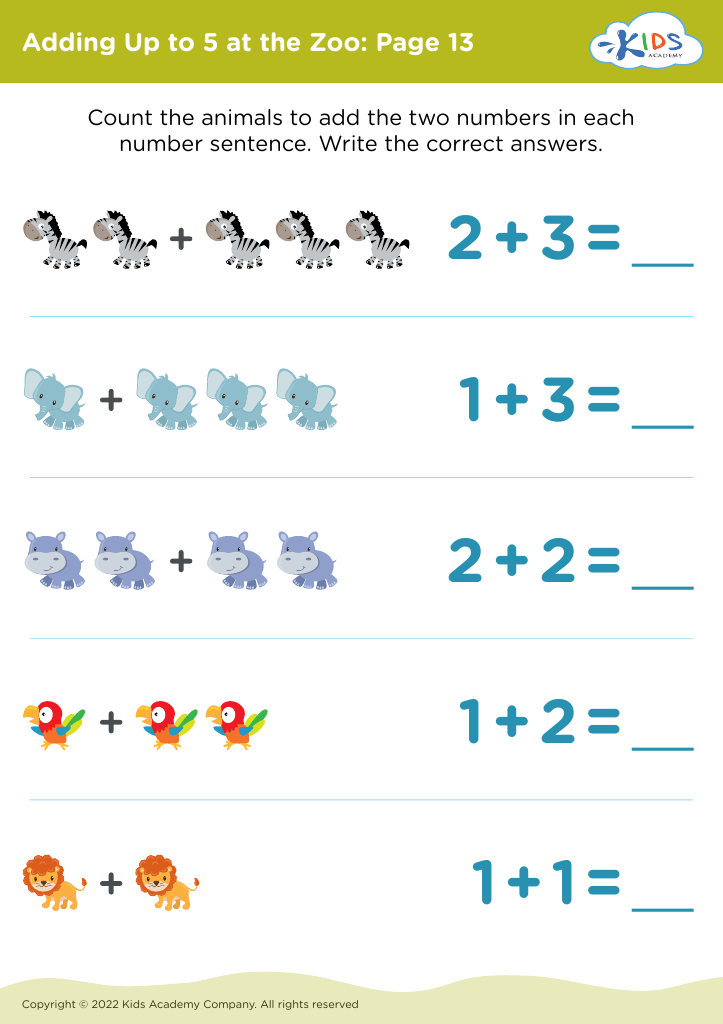








Animal identification activities for 3-year-olds are essential for several reasons. First, they foster early cognitive development by enhancing memory skills and boosting vocabulary. As young learners identify various animals, they also learn the names of these creatures, creating a foundation for language development.
Second, engaging in animal identification encourages curiosity and wonder about the natural world. Children begin to understand that each animal has unique features, behaviors, and habitats, promoting observational skills. This exploration can lead to discussions about animal roles in ecosystems, promoting environmental awareness from a young age.
Additionally, animal identification activities can enhance social skills. When parents or teachers guide children in these activities, it allows for shared experiences and meaningful interactions, fostering communication skills and cooperative play.
Moreover, incorporating animal identification into play helps build a sense of community and belonging. Children often bond over shared interests, which can improve their emotional and social well-being.
Lastly, these activities can lay the groundwork for future learning in science, biology, and conservation, sparking an early interest in subjects that might become lifelong pursuits. In essence, animal identification is an engaging way to support holistic development in young children.








