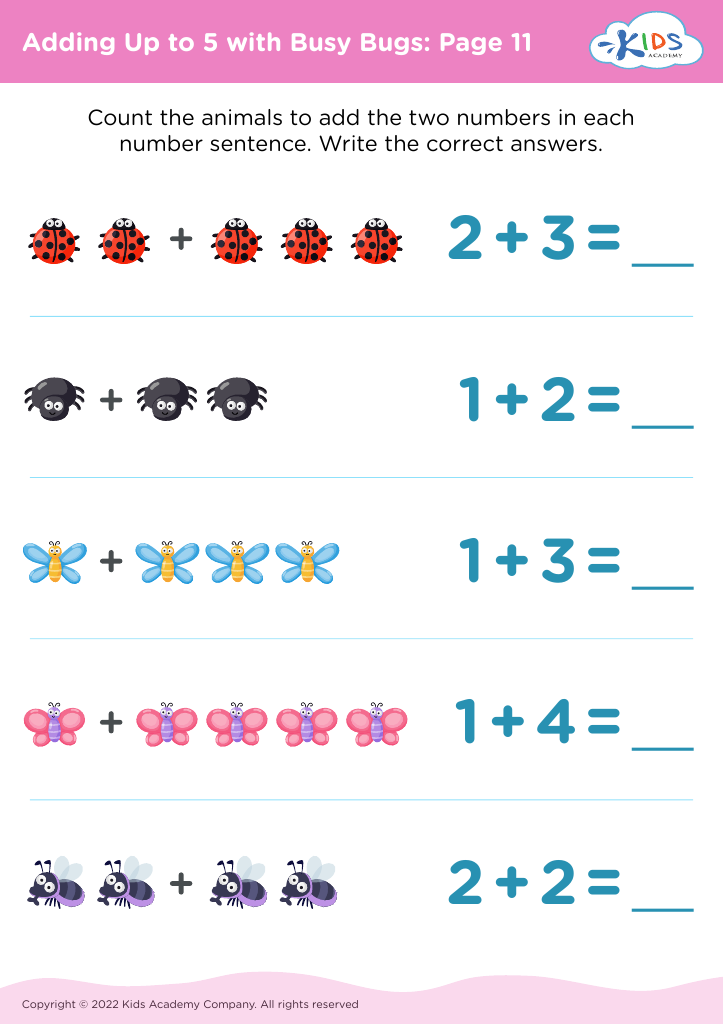
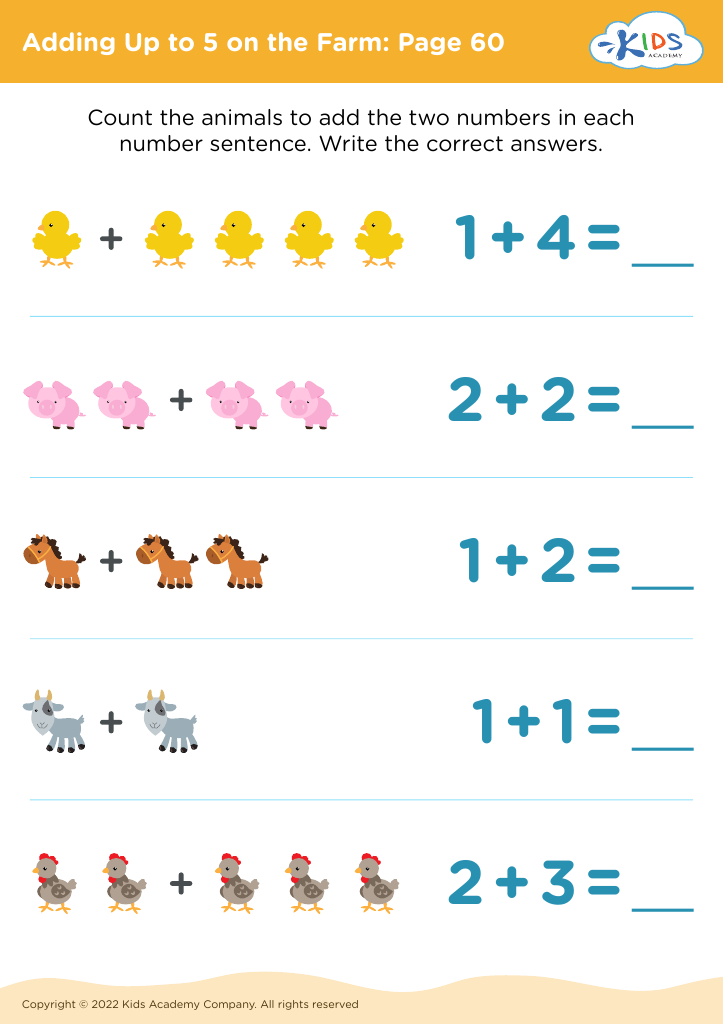
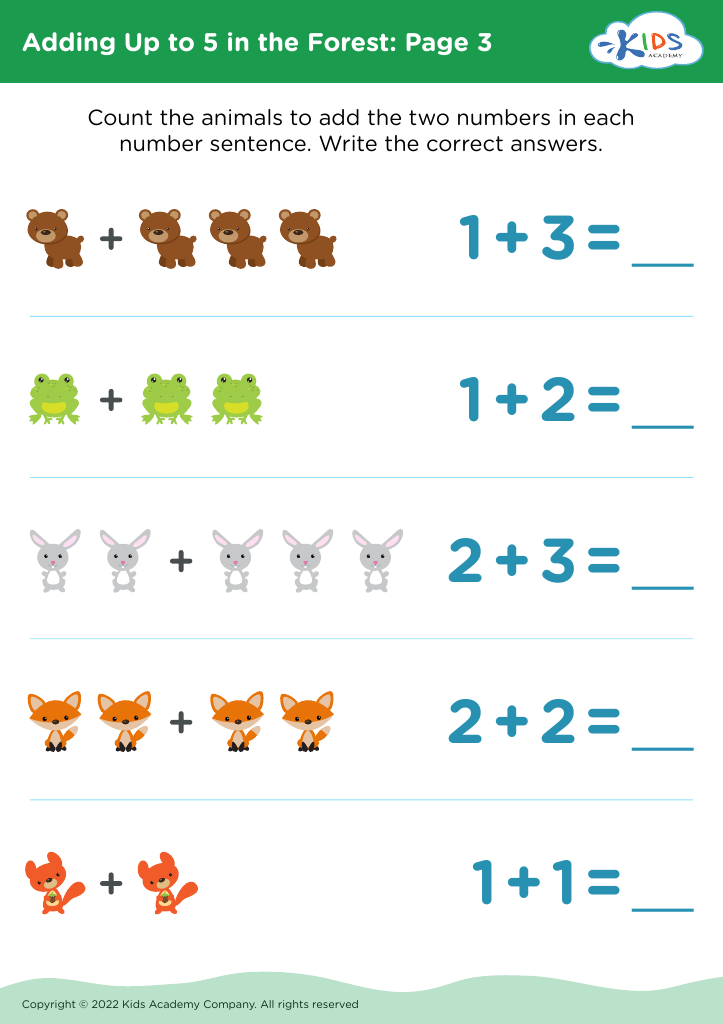
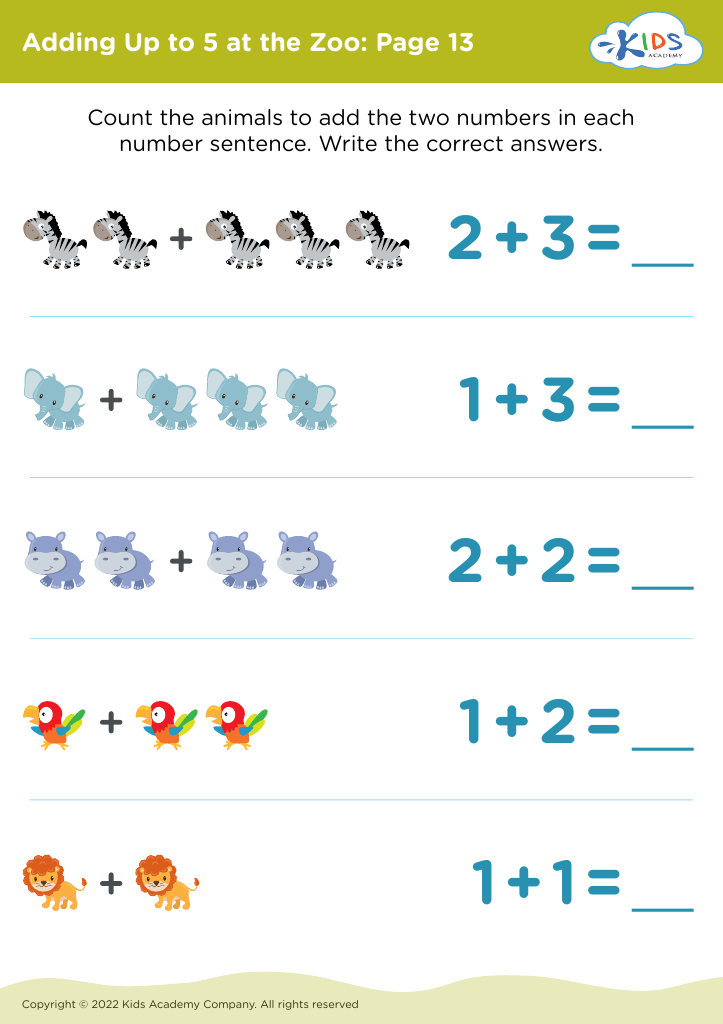
Basic Addition Skills Addition Worksheets for 3-Year-Olds - Page 11


.jpg)




Parents and teachers should care about teaching basic addition skills to 3-year-olds because early math skills are foundational to a child's cognitive development and future academic success. Introducing basic addition at a young age helps children develop critical thinking and problem-solving skills. At this developmental stage, young learners are naturally curious and more apt to grasp new concepts through simple, play-based activities. These early math lessons enhance number sense, which is their understanding of number concepts, quantities, and relationships between numbers.
Early exposure to addition also builds a child’s confidence in their ability to tackle mathematical challenges. When children successfully engage with basic math, they gain a positive attitude towards learning and perseverance. Furthermore, engaging in addition exercises strengthens their memory and concentration, both essential skills for every area of learning.
Math is an integral part of daily life. Familiarity with addition helps children make sense of everyday situations involving quantities, whether they are sharing toys or understanding time. Early math skills form a basis for more complex mathematical concepts that will surface later in their educational journey. By fostering good math practices early on, parents and teachers set children on a path towards academic achievement and practical life skills.








