Animal identification Math Worksheets for 3-Year-Olds - Page 2
30 filtered results
-
From - To
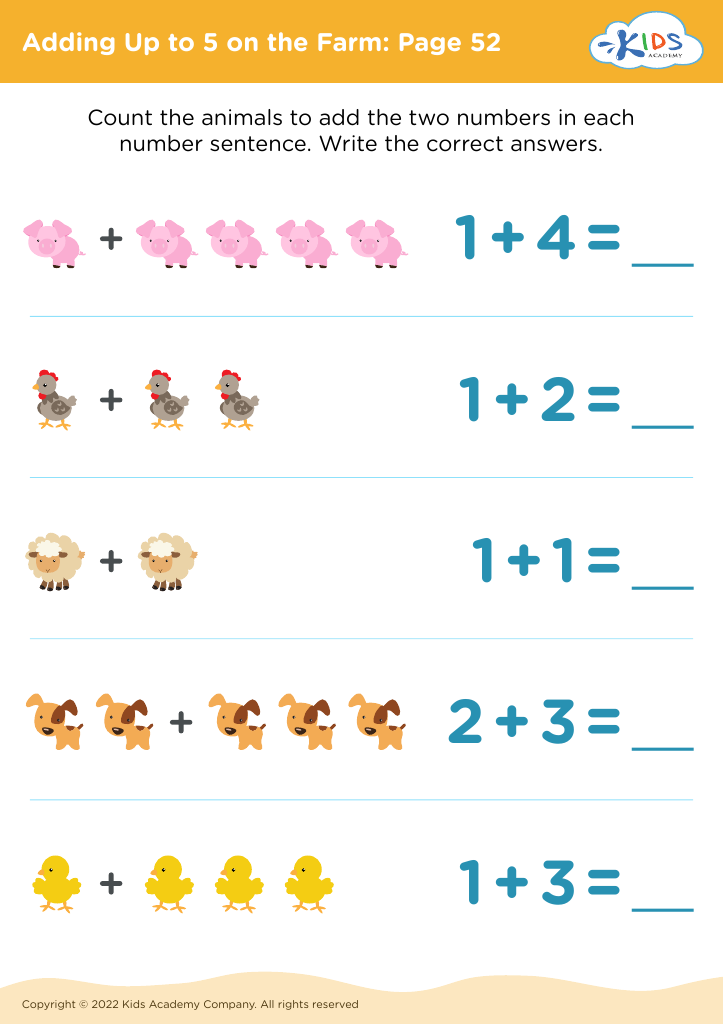
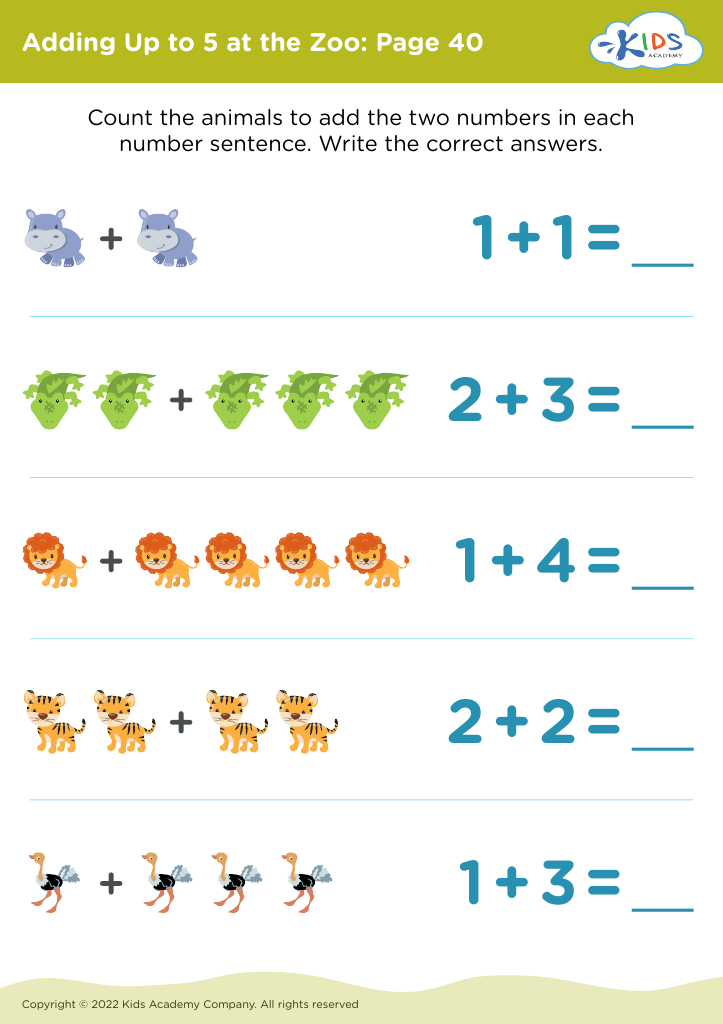
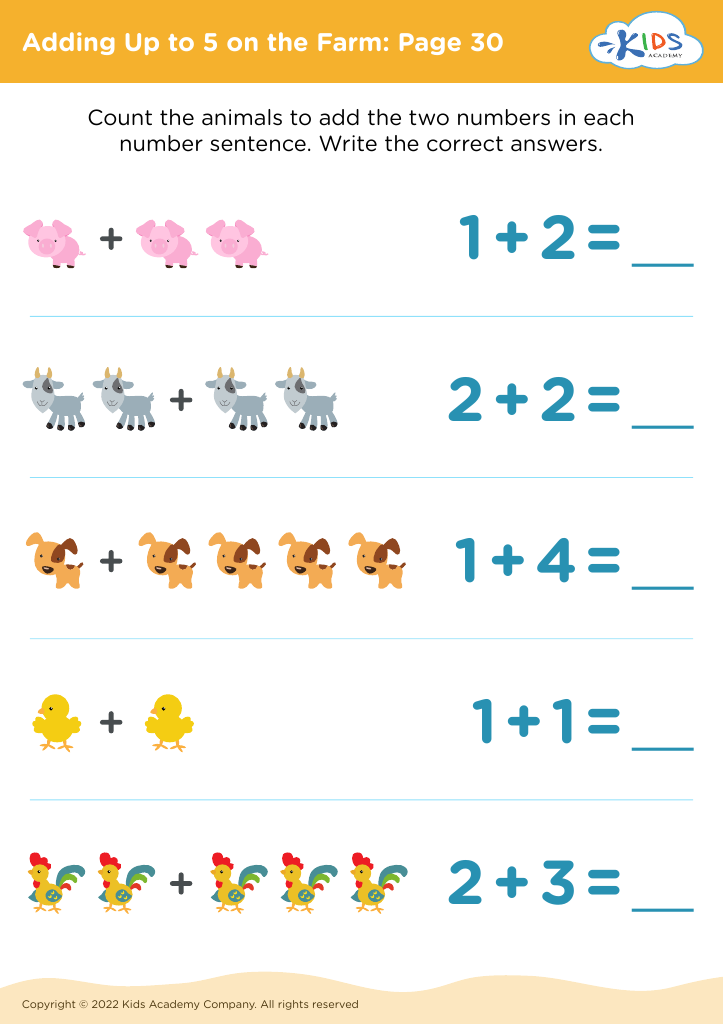
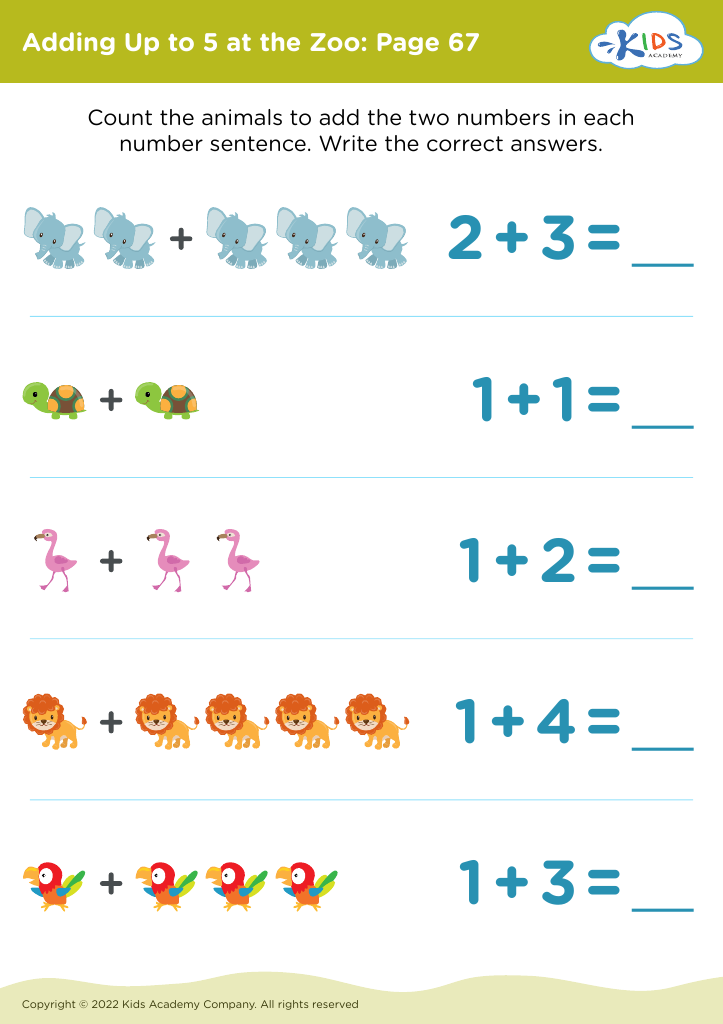
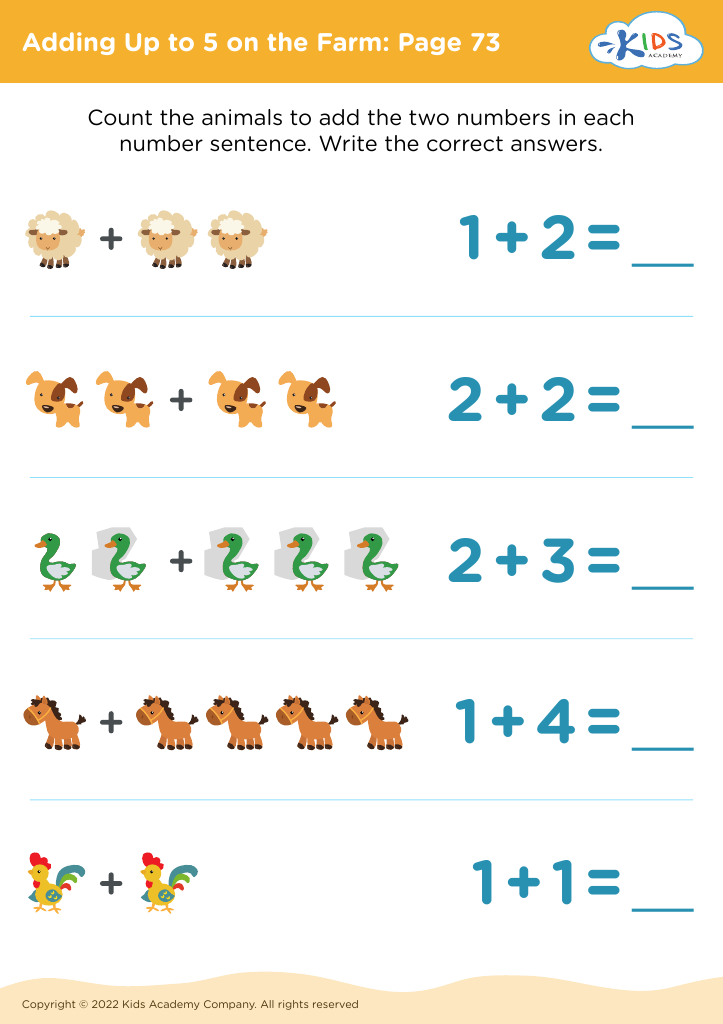
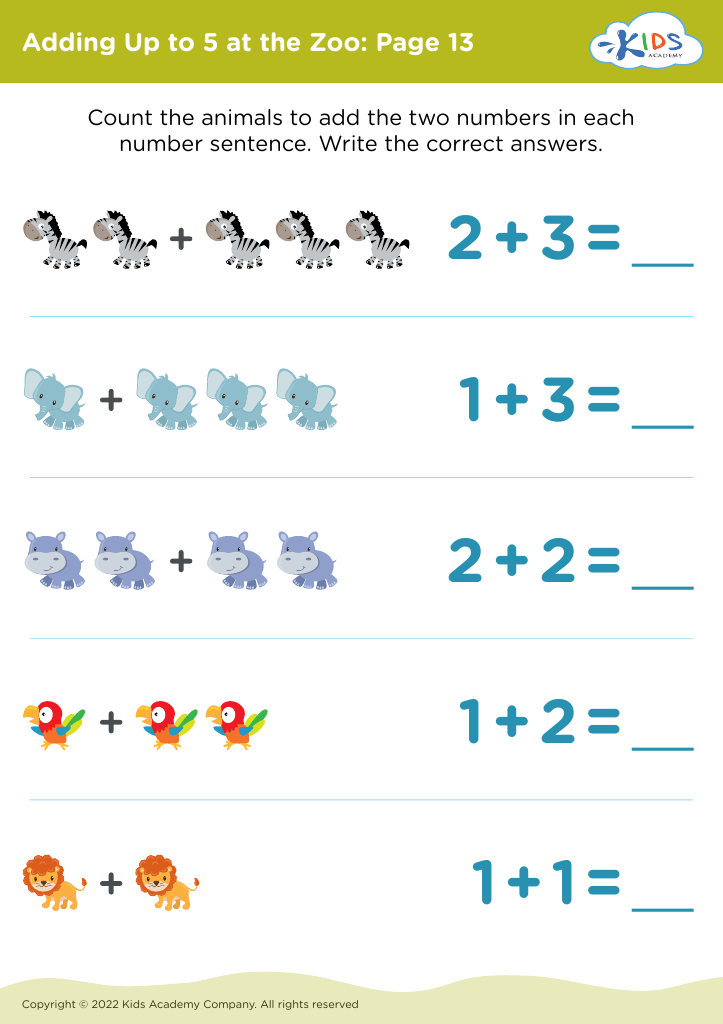








Understanding animal identification at a young age has multiple developmental benefits for 3-year-olds, weaving in essential skills like math, cognitive development, and even social-emotional growth. First and foremost, much like recognizing letters in the alphabet, identifying animals strengthens visualization and discernment skills. It lays a foundation for categorization, a key mathematical competency. Children begin to understand attributes like size, color, and patterning, which are precursors to more complex concepts like counting, sequencing, and sorting.
Parents and teachers often overlook the social-emotional components involved in these exercises: learning about animals fosters empathy and curiosity about the natural world, which can later branch into humane education and environmental stewardship. When kids classify animals by number of legs, types of habitat, or dietary habits, they engage in critical thinking that naturally utilizes basic mathematical principles. Introducing this framework through animals, an inherently engaging topic for young kids, ensures material retention better than more abstract concepts.
Moreover, these activities support language development through vocabulary building. Terms like "mammal", "reptile", and "insect" not only broaden word banks but also set up interdisciplinary learning bridges that connect science and math. By fostering an early interest in these areas through playful yet structured activities, caregivers and educators set children on a path towards engaged, holistic education.








