Counting practice Word Problems Worksheets for 3-Year-Olds
5 filtered results
-
From - To
Introduce your 3-year-old to the world of numbers with our Counting Practice Word Problems Worksheets! Specifically designed for early learners, these engaging worksheets combine fun scenarios with simple math challenges to develop counting skills. Each activity encourages little ones to count objects, recognize numbers, and solve basic word problems, building a strong mathematical foundation. Perfect for home or classroom use, these worksheets make learning interactive and enjoyable. Support your child's early math journey and nurture their confidence with these entertaining and educational resources. Download now and watch your youngster’s counting skills flourish!
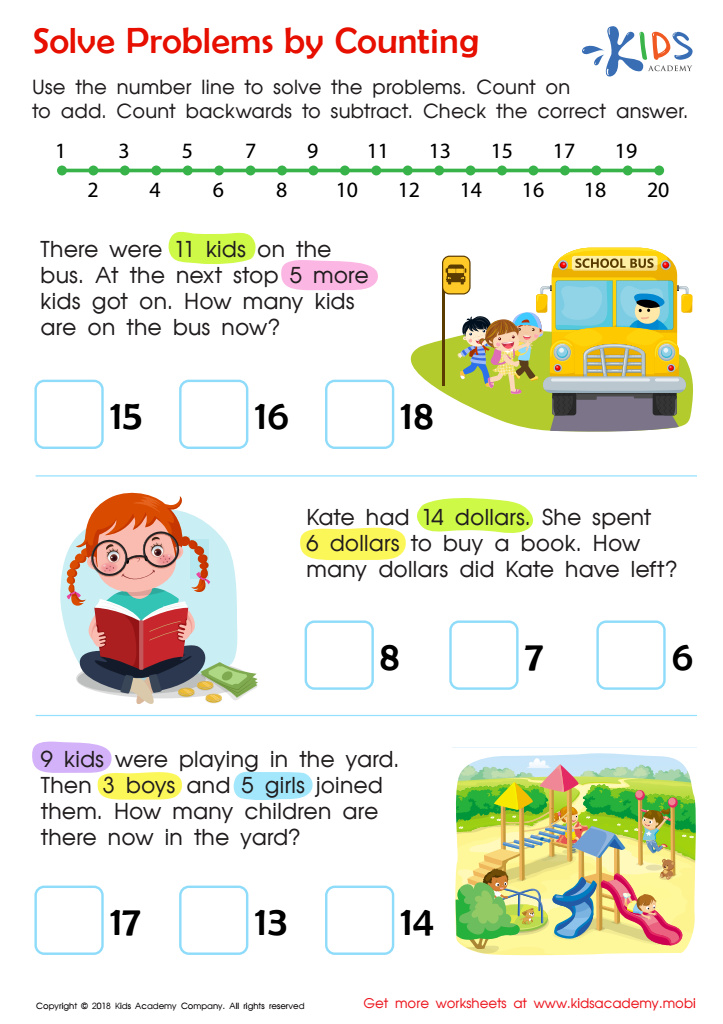
Solve Problems by Counting Worksheet
 Assign to My Students
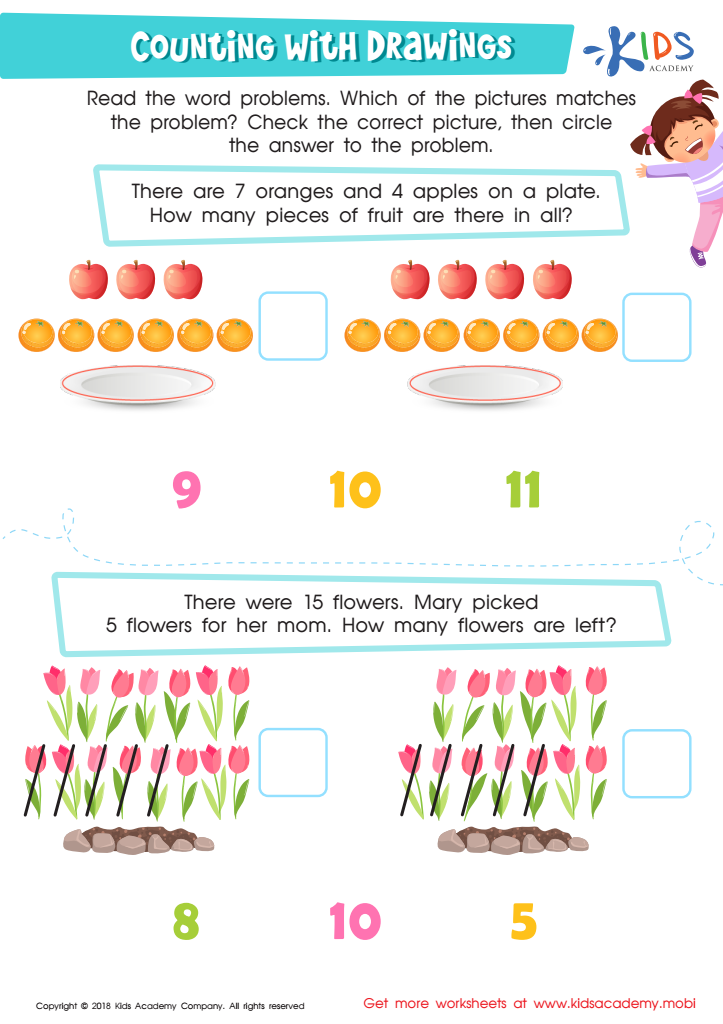
Counting with Drawings: Fruits & Chocolates Worksheet
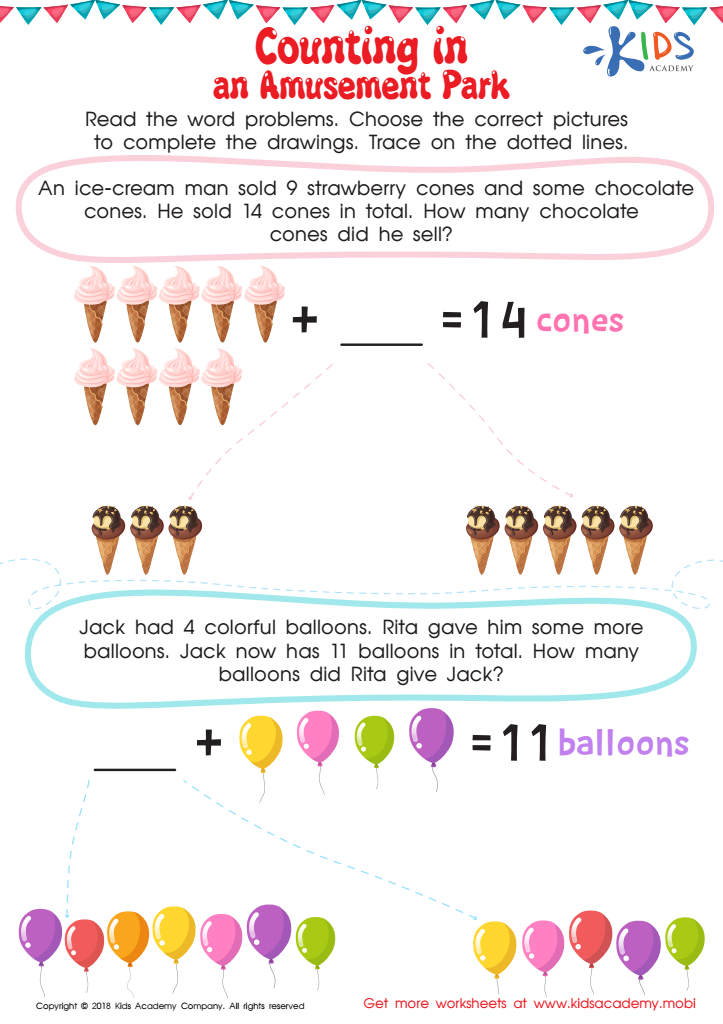
Counting in an Amusement Park Worksheet
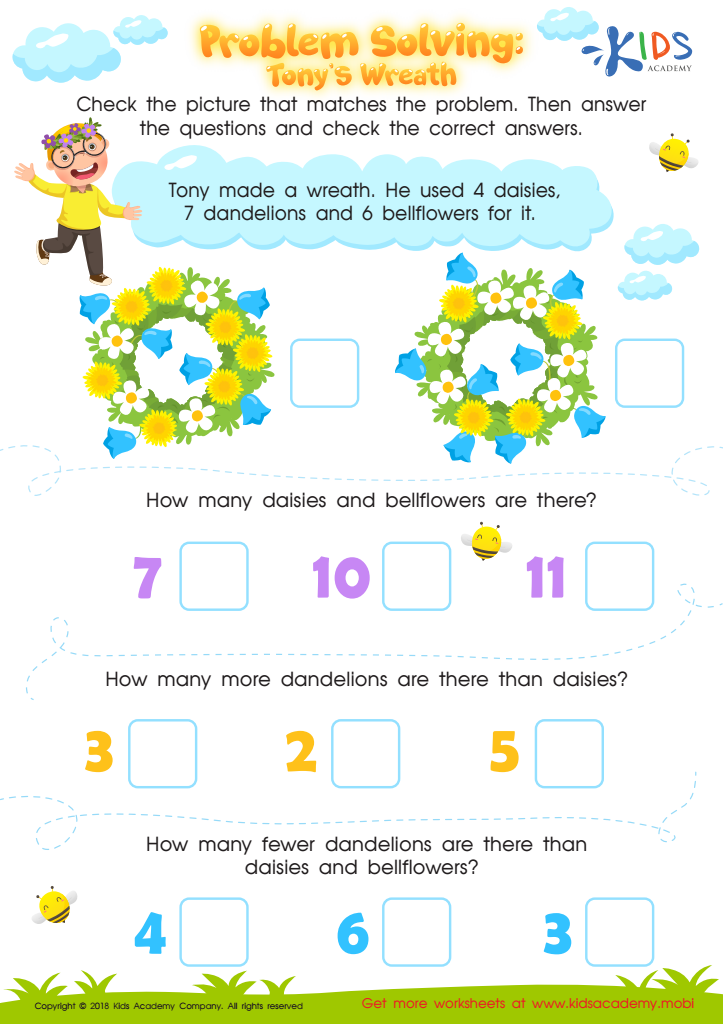
Problem Solving: Tony's Wreath Worksheet
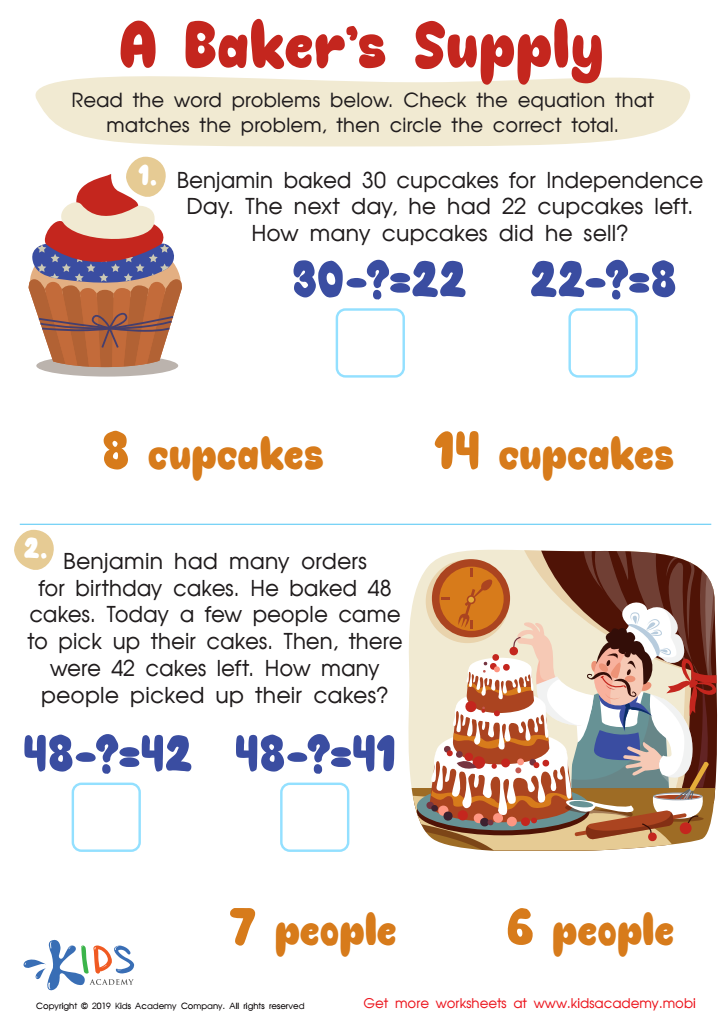
A Baker's Supply Worksheet







Counting practice word problems for 3-year-olds are crucial because they provide a foundation for early mathematical skills and cognitive development. At this age, children are rapidly developing their language and problem-solving abilities. Word problems are an engaging way to combine these skills, making learning both fun and relevant.
Firstly, word problems promote critical thinking. Instead of rote counting, children learn to apply numbers to real-life situations. This helps them understand why numbers matter and how they are used in everyday activities. For instance, asking a child how many apples they would have if they added one more to their two apples can turn a basic counting exercise into a practical problem-solving experience.
Secondly, word problems enhance language skills. By framing math questions in a narrative context, children improve their vocabulary and comprehension. These skills are not math-exclusive and benefit overall academic readiness, making future learning tasks easier.
Lastly, engaging with word problems can foster a positive attitude toward math. Early encounters with enjoyable and relatable math experiences can reduce anxiety and build confidence, encouraging children to view math as a fun and approachable subject.
In summary, incorporating counting practice word problems for young children is a holistic educational strategy that enriches their early development in mathematics, language, and critical thinking, setting a solid foundation for lifelong learning.








