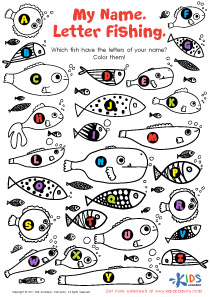
Alphabet understanding ABC Order Worksheets for Ages 4-6
3 filtered results
Difficulty Level
Grade
Age
-
From - To
Subject
Activity
Standards
Introducing our Alphabet Understanding ABC Order Worksheets, designed specifically for ages 4-6. These engaging worksheets help young learners develop essential literacy skills by placing the alphabet in correct order. Each activity is crafted to make learning fun, with colorful illustrations and delightful exercises tailored to early readers. Kids will strengthen their alphabet recognition, sequential thinking, and fine motor skills as they arrange letters from A to Z. Our printable worksheets are a perfect resource for parents and educators looking to enhance foundational reading abilities. Explore our collection and watch your child’s confidence in the alphabet soar!
Favorites
With answer key
Interactive
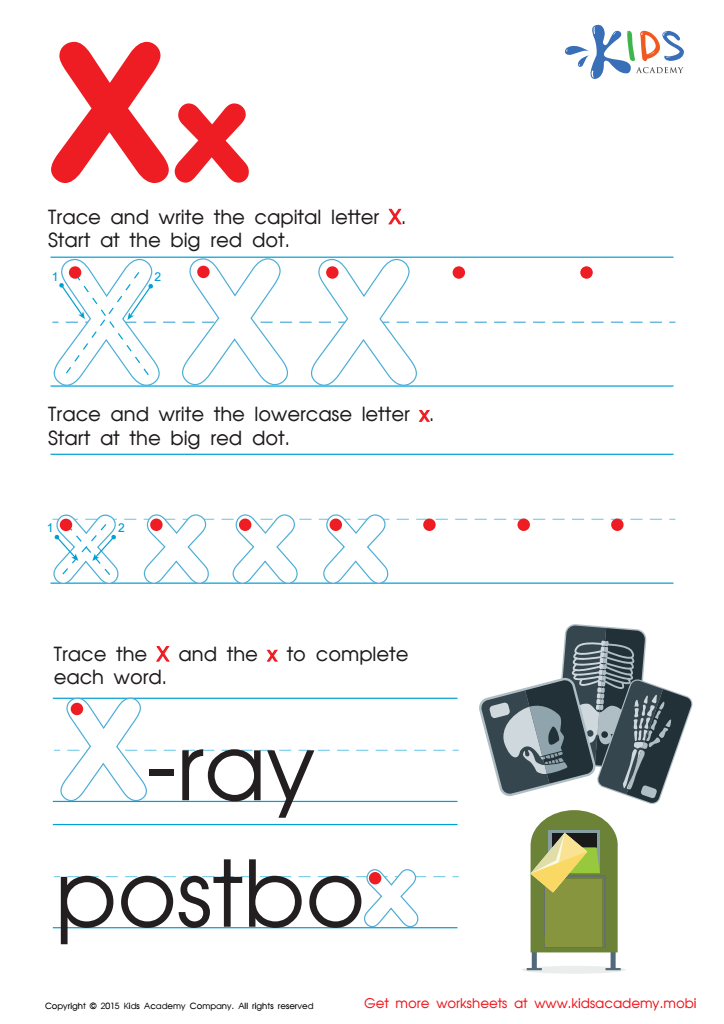
Letter X Tracing Page
Trace the uppercase letter "X" to learn, then write it yourself and practice. Then do the same with the lowercase "x" before completing the words "X-ray" and "postbox". Enjoy our alphabet printables!
 Assign to My Students
Letter X Tracing Page
Worksheet





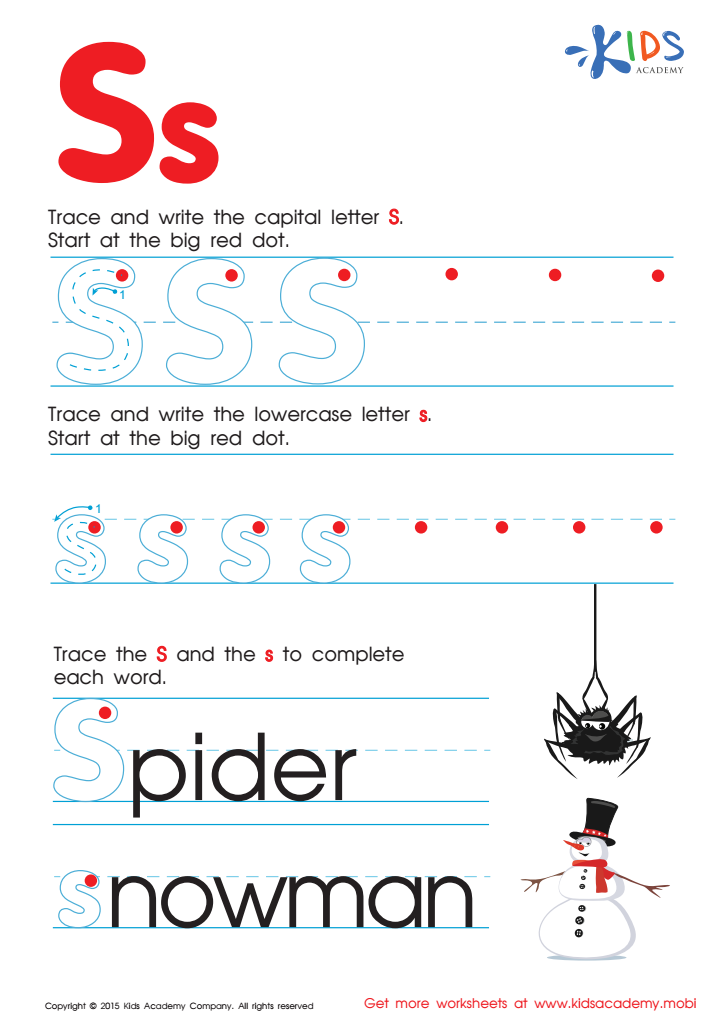
Letter S Tracing Page
Trace and write the capital and lowercase "S" on this ABC worksheet for kindergarten. Start with the big red dot and be careful. When you finish, help the spider and snowman in the pictures restore their words with the capital and lowercase letters. Continue learning the alphabet with Kids Academy.
Letter S Tracing Page
Worksheet
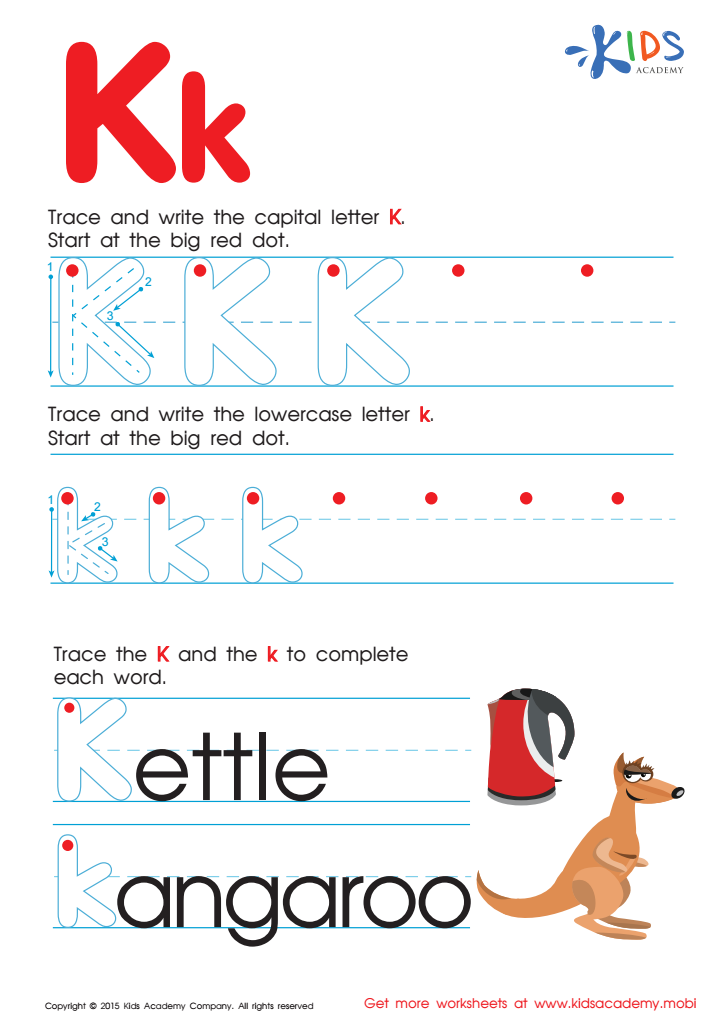
Letter K Tracing Page
Trace and write the letter K; start at the big red dot. Use it to complete words like "Kettle" and "Kangaroo". Visit Kids Academy for more free alphabet worksheets for kindergarten.
Letter K Tracing Page
Worksheet
Join Kids Academy for Free
Who is primarily going to use this learning content?







Understanding the alphabet and ABC order is crucial in early childhood education, especially for ages 4-6. Firstly, a strong grasp of the alphabet provides a solid foundation for reading and writing. Recognizing and sequencing letters in ABC order helps children develop their literacy skills, making it easier to decode words and understand text. This foundational knowledge boosts their language development, enabling them to communicate effectively through written and spoken words.
Moreover, alphabet knowledge enhances cognitive development. Learning to put letters in sequence fosters critical thinking and problem-solving skills. It also aids memory retention by providing a structured system that young minds can easily recall.
Additionally, mastering the ABCs improves academic performance. Early literacy skills are predictive of future success in school. Children who can confidently recognize and recite the alphabet often find it easier to grasp other educational concepts, thus enhancing their overall academic achievement.
Finally, it promotes self-esteem and independence. As children become proficient in their ABCs, they gain confidence in their abilities, fostering a love for learning.
In essence, parents and teachers should prioritize alphabet understanding because it underpins key developmental milestones that significantly impact a child’s educational journey and personal growth.