
Phonics practice ABC Letters Worksheets for Ages 4-6
3 filtered results
Difficulty Level
Grade
Age
-
From - To
Subject
Activity
Standards
Discover our engaging Phonics Practice ABC Letters Worksheets designed specifically for children ages 4-6 at Kids Academy. These interactive worksheets focus on reinforcing letter recognition, sound association, and early reading skills essential for young learners. Through fun activities and colorful illustrations, kids will develop a strong phonics foundation, setting them on the path to literacy success. Ideal for preschool and kindergarten students, our worksheets make learning the alphabet enjoyable and effective. Start building your child's confidence in reading today with our expertly crafted phonics resources!
Favorites
With answer key
Interactive
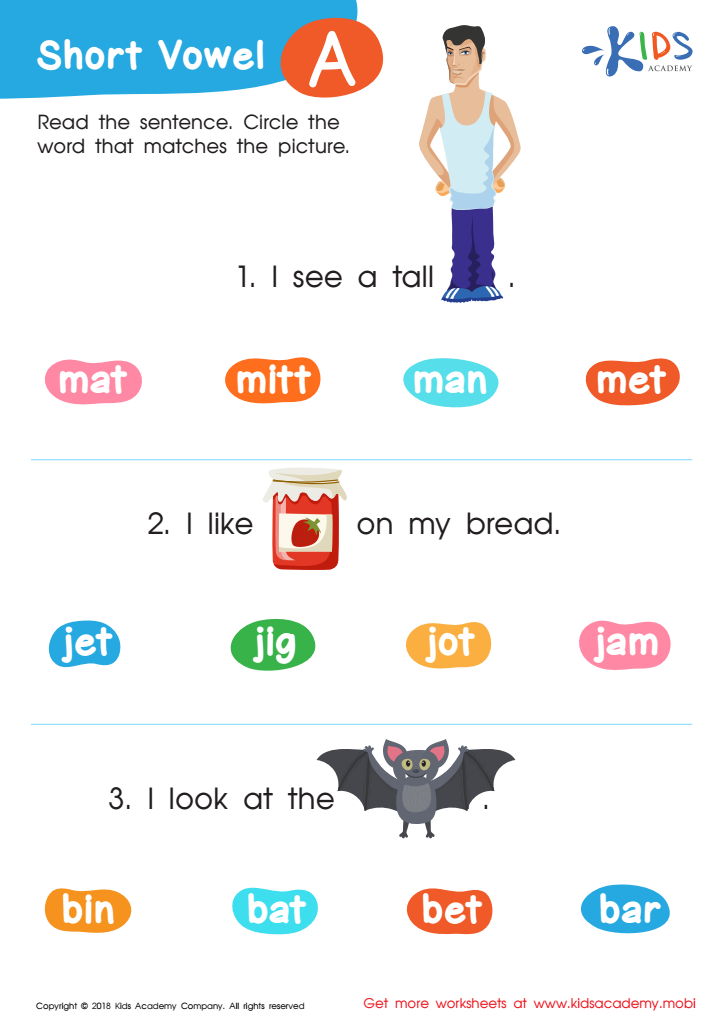
Short Vowel /a/ Worksheet
This free PDF helps new readers use sight words and pictures to read basic sentences. Then, they use accompanying word choices to find the correct word with the short a vowel sound. A key early reading skill, discriminating between short vowel sounds can be tricky in monosyllabic words, so use this PDF to help your reader reinforce it.
Short Vowel /a/ Worksheet
Worksheet

Letter A Coloring Sheet
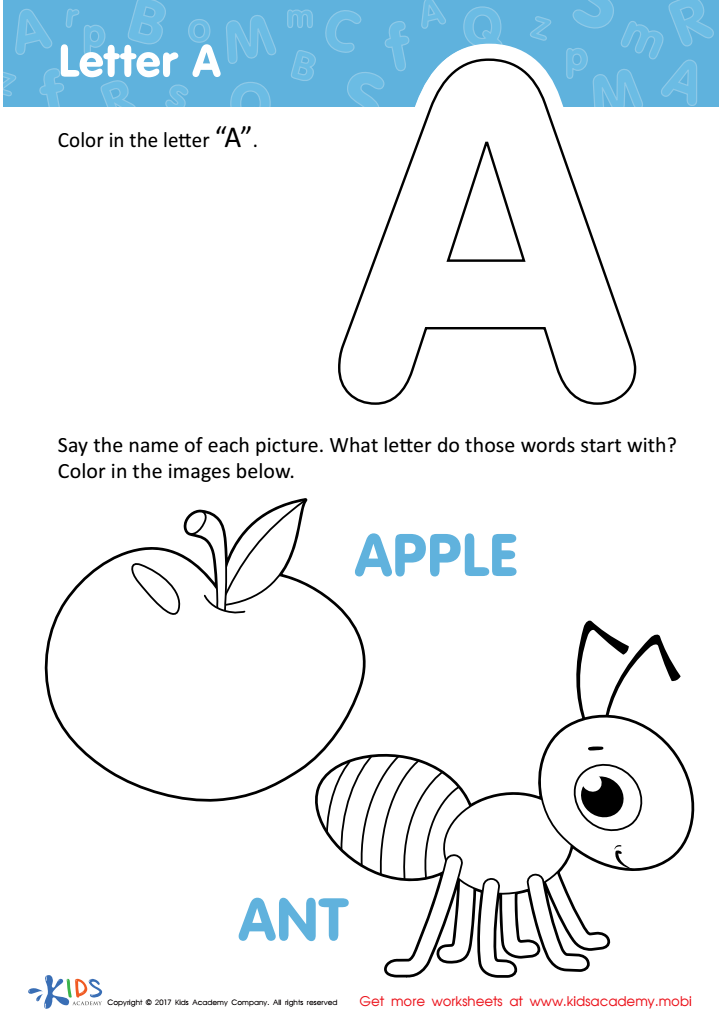
This letter "A" coloring page is great for introducing kids to the alphabet! Let them exercise their creativity while they learn to recognize letters and sounds - it's a fun and easy way to help them get started.
Download (PDF)
 Assign to My Students
Assign to My Students
Letter A Coloring Sheet
Worksheet
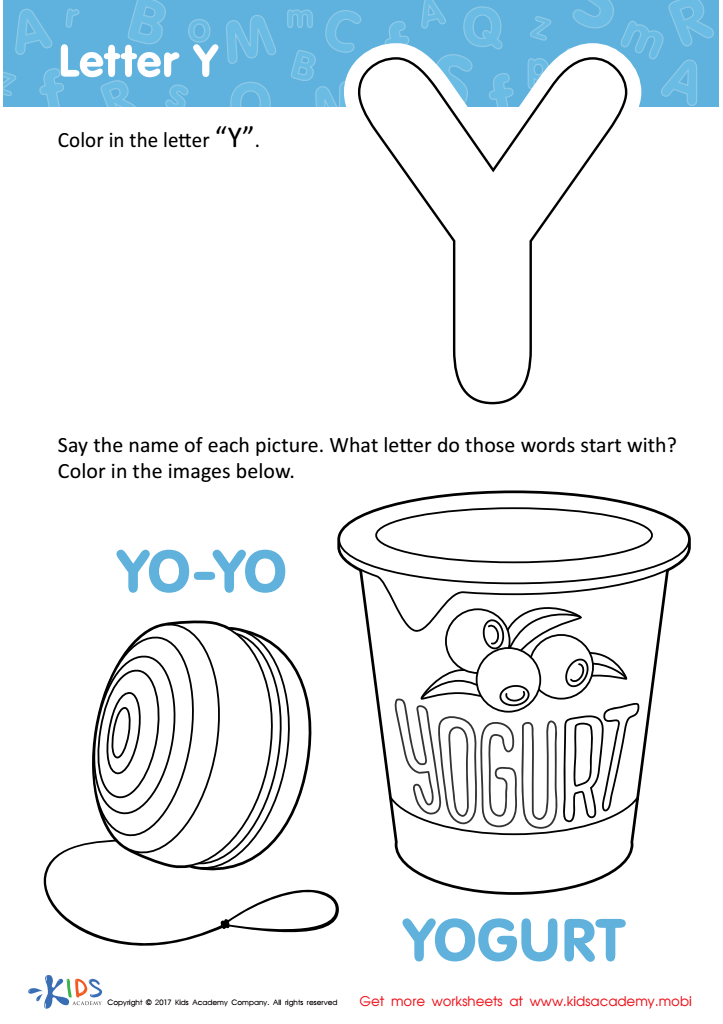
Letter Y Coloring Sheet
Let's celebrate letter "Y"! Here's a fun coloring page that'll help your child learn this end-of-the alphabet letter. It's packed with familiar objects that'll help build their art and literacy skills. So let's say "Yay"!
Download (PDF)
Assign to My Students
Assign to My Students
Letter Y Coloring Sheet
Worksheet
Join Kids Academy for Free
Who is primarily going to use this learning content?








Phonics practice ABC letters for ages 4-6 is crucial for the early development of literacy skills in children. At this formative age, kids are highly receptive to learning, and phonics provides a structured method to understand the relationship between letters and sounds, which is the foundation of reading and writing. By practicing phonics, children begin to recognize and differentiate sounds in words, improving their ability to decode unfamiliar words, which is essential for reading fluency.
Phonics practice also enhances spelling abilities. When children understand the sound-letter correspondence, they can more easily spell words by breaking them down into their constituent sounds. This skill is vital for their writing development.
Moreover, structured phonics play improves cognitive skills such as memory and concentration. Engaging activities like letter games and stories keep young minds active and make learning enjoyable, closer to play rather than work. By catching any difficulties early, teachers and parents can provide additional support, paving the way for later academic success. Neglecting this critical practice could result in reading difficulties, affecting overall school performance and confidence.
Therefore, incorporating phonics practice in early education ensures a solid literacy foundation that fosters lifelong learning and academic achievement. The investment in these early years pays dividends by setting children on a path to becoming proficient and confident readers and writers.







