Phonics recognition Consonants Worksheets for Ages 4-6
4 filtered results
-
From - To
Enhance your child's reading skills with our engaging Phonics Recognition Consonants Worksheets, designed specifically for ages 4-6. These hands-on activities encourage young learners to identify, practice, and master consonant sounds through colorful images and fun exercises. Each worksheet supports phonemic awareness, aiding children in recognizing consonants and developing foundational literacy skills. Whether in the classroom or at home, these worksheets provide an excellent resource for parents and teachers to make learning enjoyable. Join us in supporting your child’s journey to reading success with delightful and interactive phonics recognition practices tailored just for them! Start exploring the world of consonants today!
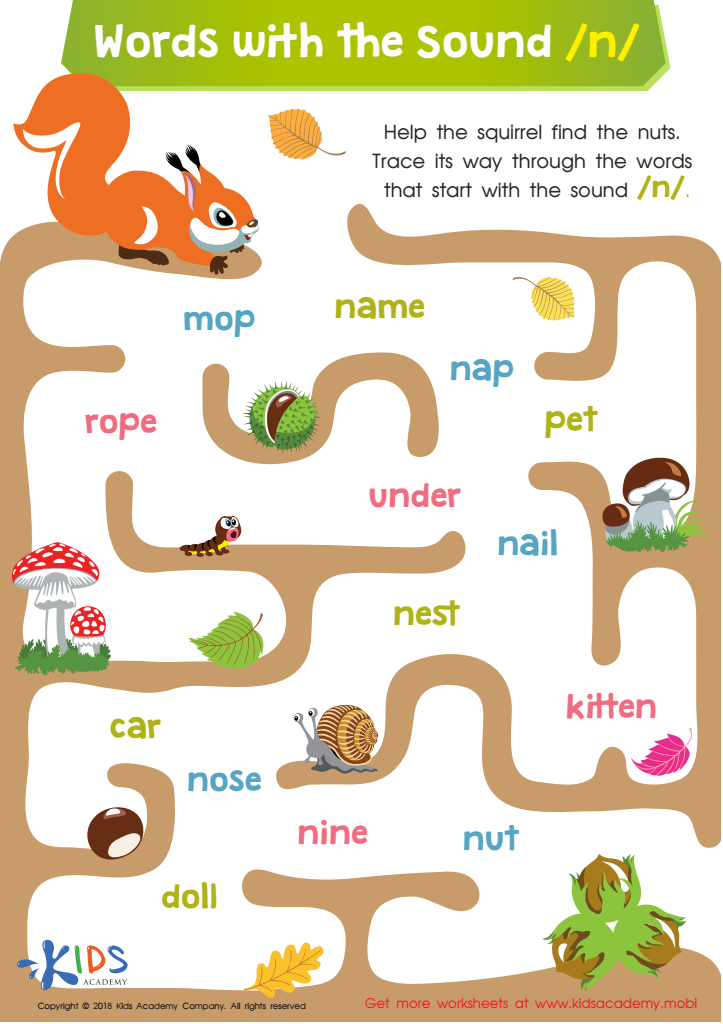
Words with Sound N Reading Worksheet
 Assign to My Students
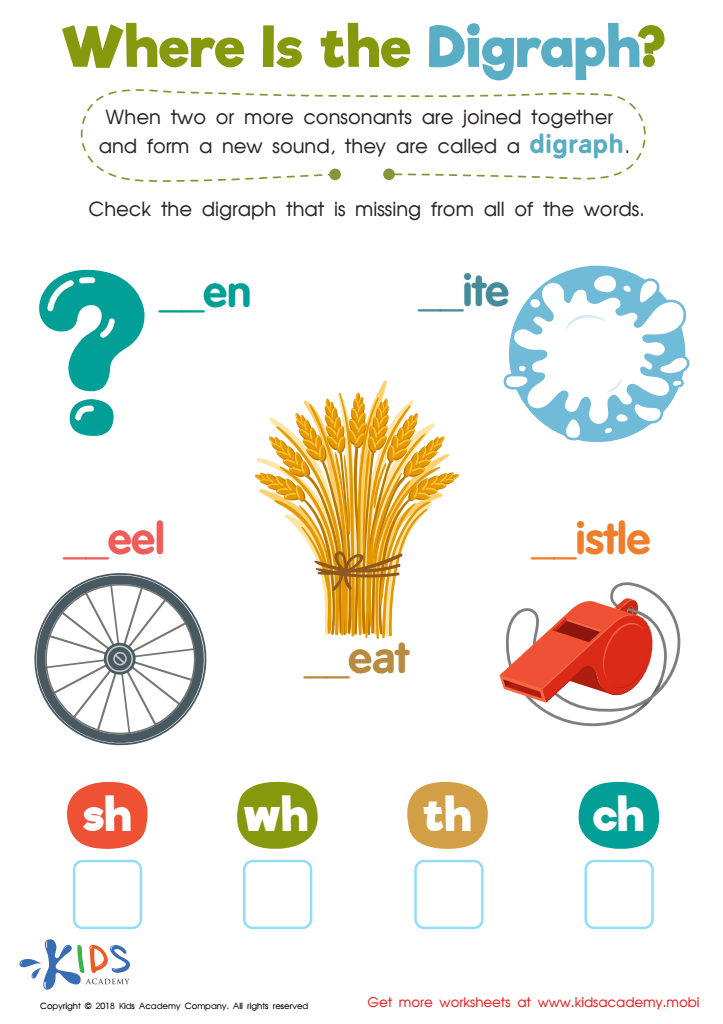
Where Is the Digraph? Worksheet
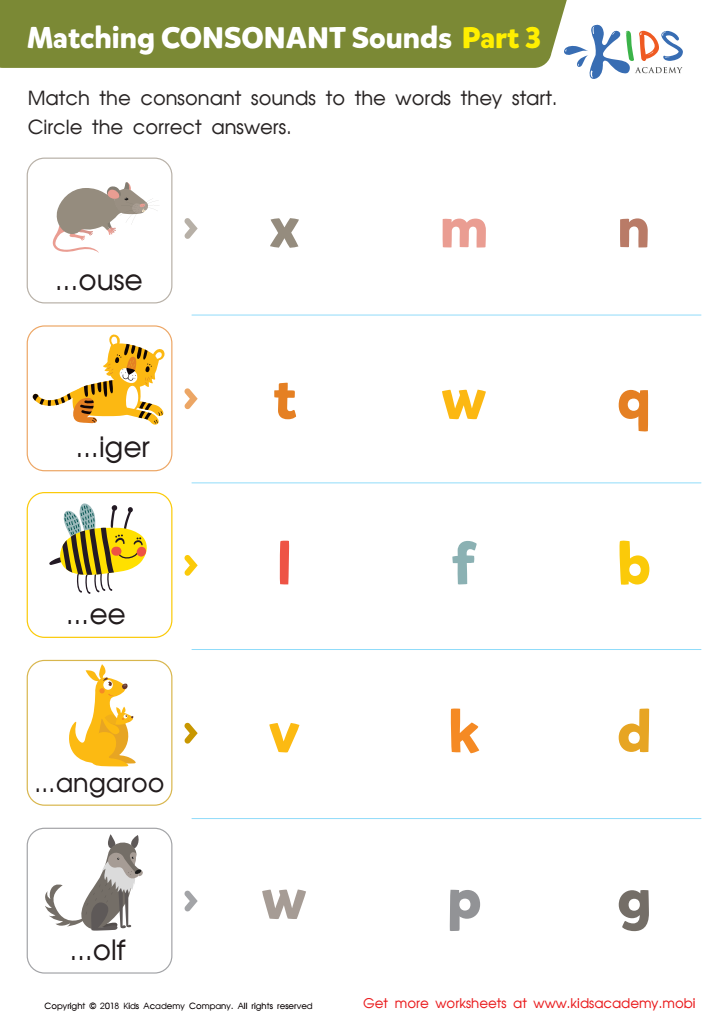
Matching Consonant Sounds: Part 3 Worksheet
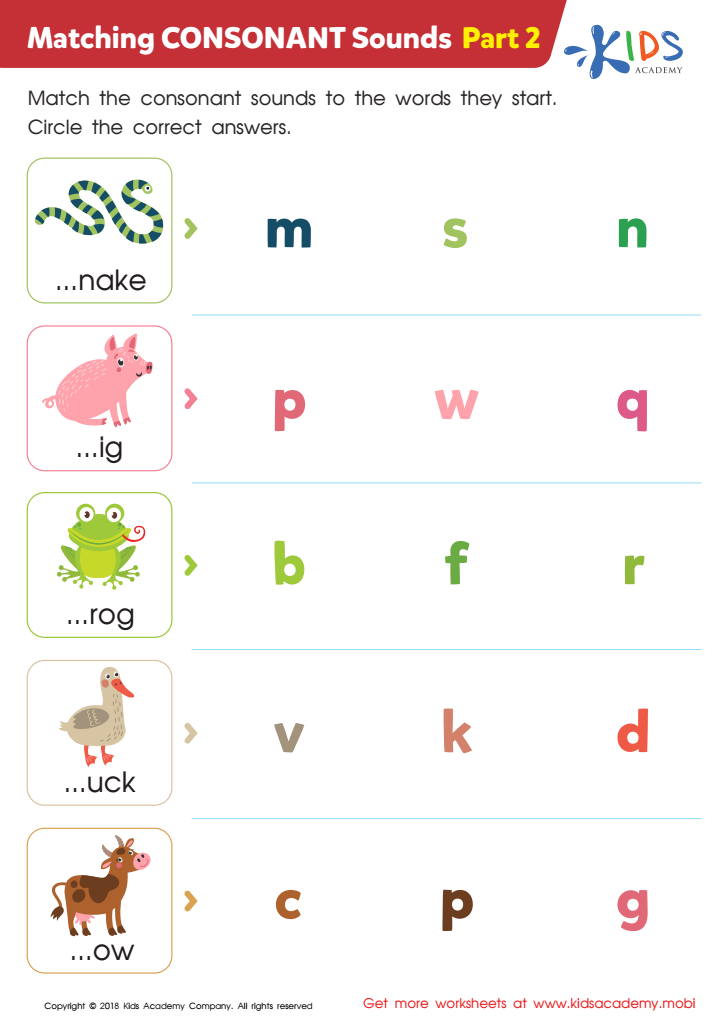
Matching Consonant Sounds: Part 2 Worksheet



Phonics recognition, especially the understanding of consonants, is critical for children aged 4-6 as they lay the foundation for reading and writing skills. During this formative period, children develop their ability to recognize letters, sounds, and the relationships between them, which is essential for decoding words. Familiarity with consonants helps children blend sounds and promotes their phonetic awareness, which is necessary for building vocabulary and improving comprehension.
Parents and teachers should prioritize phonics instruction because it directly impacts a child's literacy development. Proficient phonics skills contribute to a child's reading fluency, efficiency, and overall confidence in communication. Early mastery of consonant sounds allows students to begin crafting words, transitioning from scribbles to structured writing.
Additionally, phonics recognition supports cognitive development and critical thinking. By engaging with phonics, children learn to categorize sounds, enhancing their auditory discrimination skills and boosting their language acquisition. Investing time in phonics activities fosters a love for reading, helping children understand the joy and importance of literature in their lives. Therefore, supporting phonics recognition in early education is fundamental for fostering valuable lifelong skills in children.







