Vocabulary enhancement Ending Sounds Worksheets for Ages 4-6
3 filtered results
-
From - To
Enhance your child's vocabulary with our engaging Ending Sounds Worksheets designed specifically for ages 4-6! These fun, interactive worksheets focus on improving literacy by teaching young learners to identify and understand ending sounds in words. This essential phonemic awareness skill helps children develop strong reading and writing foundations, boosting their language skills through playful activities. Perfect for classroom use or at-home learning, our worksheets make vocabulary building enjoyable and effective. Encourage your child's love for language and watch as they gain confidence in their speaking, reading, and writing abilities! Explore our collection today and start your child on the path to language mastery.
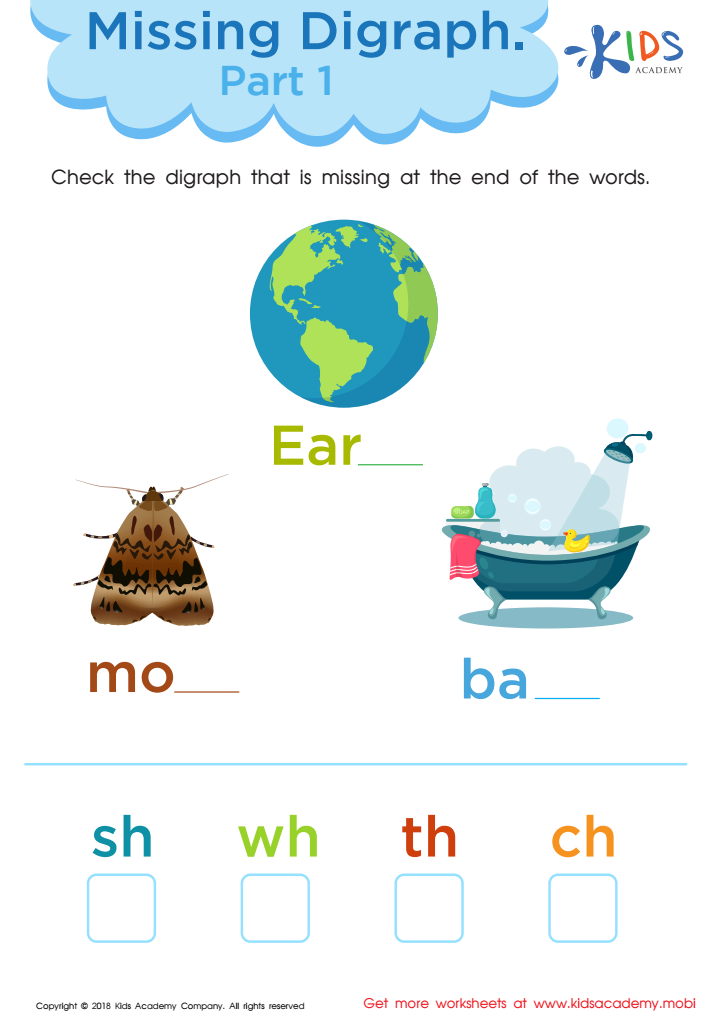
Missing Digraph: Part 1 Worksheet
 Assign to My Students
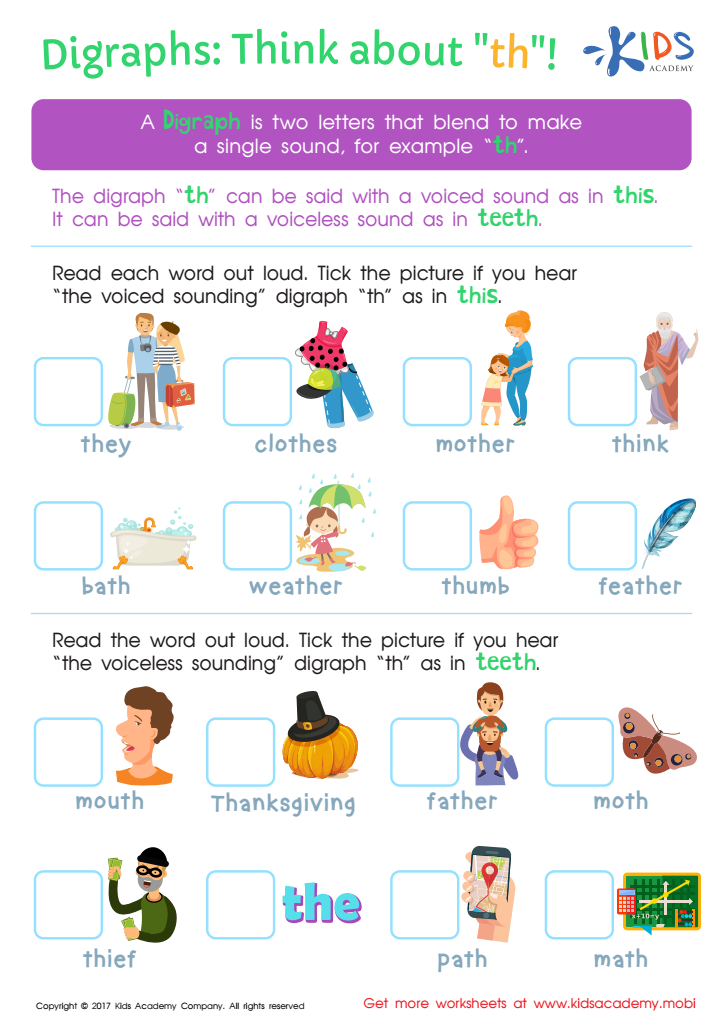
Digraphs: Think About "th" Worksheet
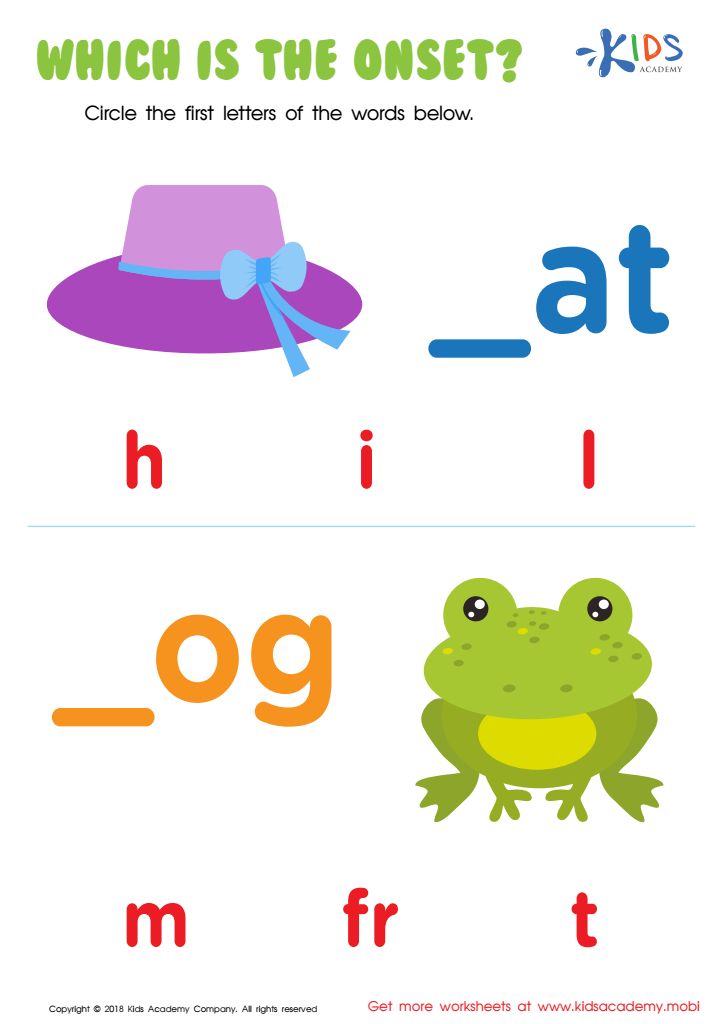
Which Is the Onset? Worksheet






Vocabulary enhancement, particularly in understanding ending sounds, is crucial for children ages 4-6 as it lays the foundation for effective reading and speaking skills. At this age, children are developing their phonemic awareness, which is the ability to recognize and manipulate sounds in spoken language. Focusing on ending sounds helps children to differentiate similar words, increasing their comprehension and oral language development.
Parents and teachers should care about this aspect of vocabulary enhancement because it significantly affects a child's literacy performance. Recognizing and articulating ending sounds contributes to phonetic understanding, which is vital when learning to read. For example, if a child understands that "cat," "hat," and "bat" all share the same ending sound, they can make connections among words, ultimately improving their decoding skills.
Furthermore, enhancing vocabulary boosts children’s confidence in communication. A strong vocabulary aids in expressing thoughts clearly and effectively, which is essential for social interactions and academic discussions. Engaging children's interest through interactive activities like rhymes, songs, or games focused on ending sounds can make learning fun while ensuring they are well-prepared for their educational journey. Therefore, supporting vocabulary enhancement is an investment in a child's future literacy and communication success.








