Capitalization rules Alphabet Worksheets for Ages 4-6
4 filtered results
-
From - To
Enhance your child's literacy journey with our engaging "Capitalization Rules Alphabet Worksheets" tailored for ages 4-6! These worksheets introduce young learners to essential capitalization rules through fun, interactive activities. Designed to foster understanding of uppercase and lowercase letters, children will practice identifying capital letters at the beginning of sentences, proper nouns, and more. With colorful illustrations and creative exercises, kids will stay motivated as they build their reading and writing skills. Perfect for home or classroom use, our worksheets encourage early writing skills while making learning enjoyable. Start your child's adventure in mastering capitalization today!
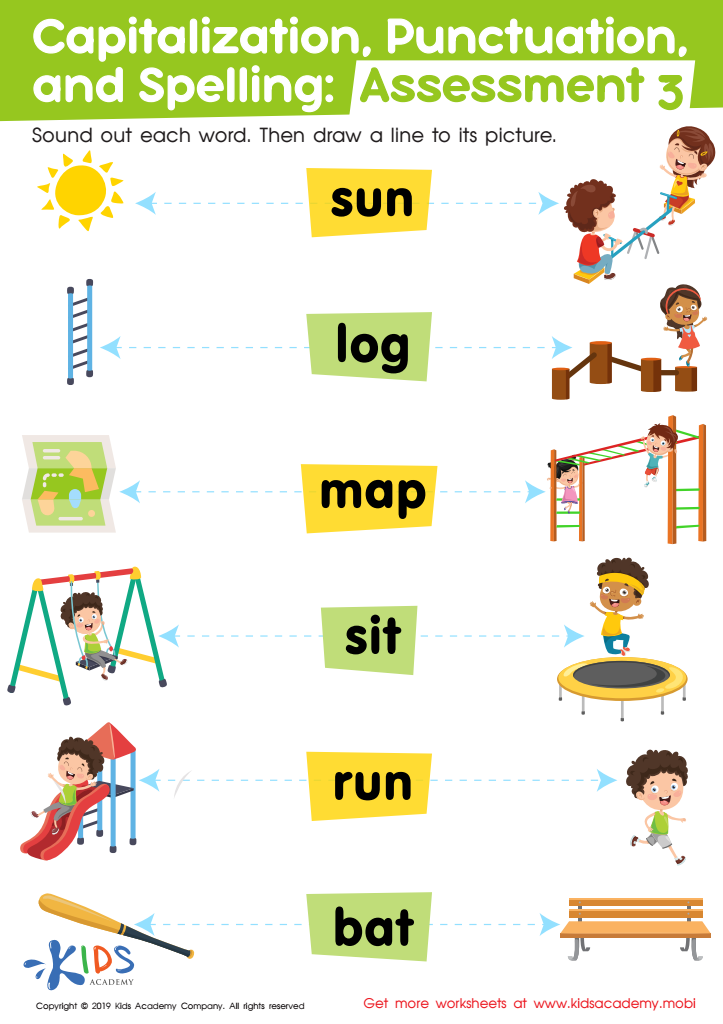
Capitalization. Punctuation. Spelling. Assessment 3 Worksheet
 Assign to My Students
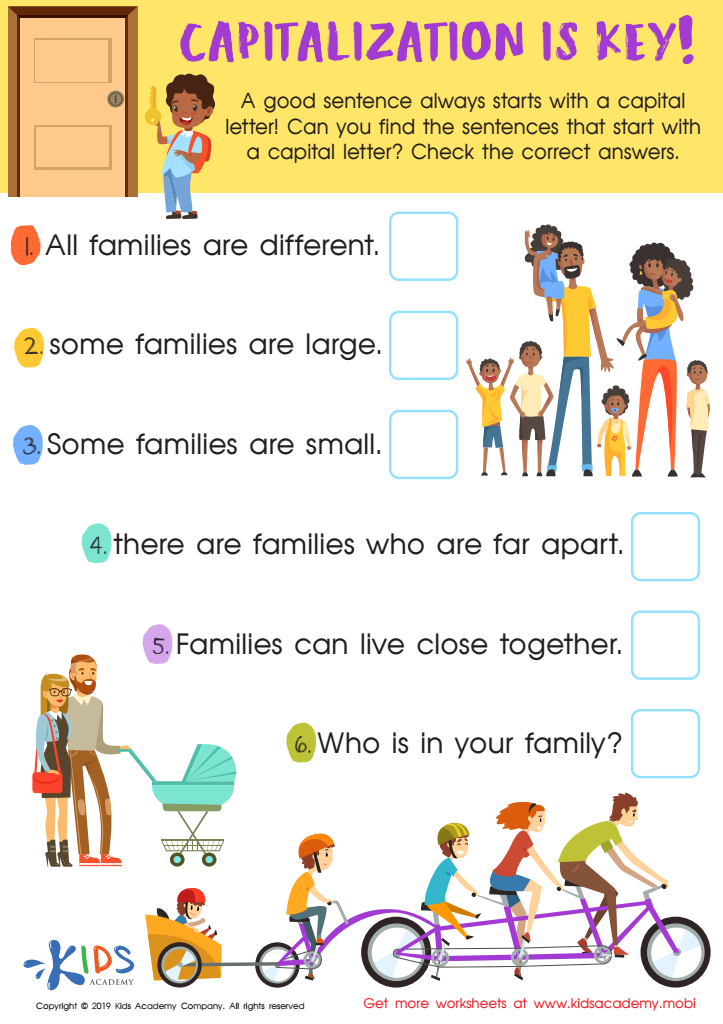
Capitalization Key Worksheet
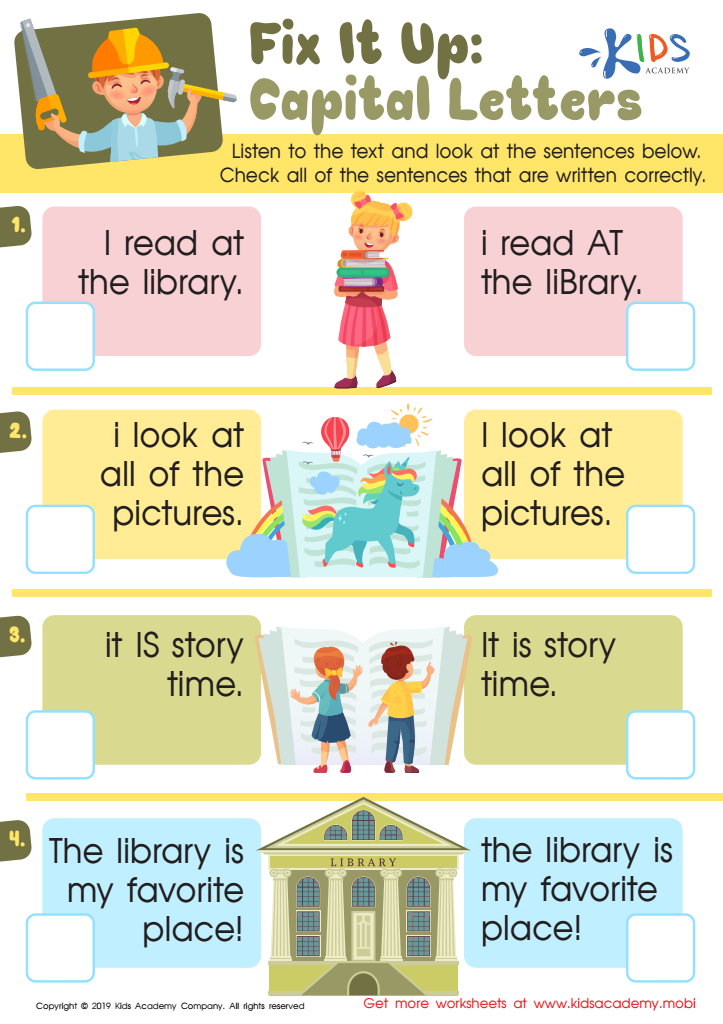
Fix Capital Letters Worksheet

How to Capitalize Worksheet








Parents and teachers should care about capitalization rules for children aged 4-6 because these foundational skills greatly enhance early literacy development. Learning to correctly use capital letters is crucial for children as it helps them understand the structure of written language. Recognizing proper nouns—like names of people, places, and specific titles—encourages children's awareness of their surroundings and helps them engage in meaningful conversations about their world.
Capitalization also aids in reading comprehension. When children notice capital letters, they can identify key information and differentiate between types of words, which can enhance their understanding when reading simple texts. This skill contributes to their writing development, encouraging them to express their thoughts clearly and correctly, paving the way for more advanced writing skills in the future.
Moreover, teaching capitalization at an early age fosters attention to detail, discipline in writing, and an appreciation for the rules of language, which are essential for academic success. When parents and teachers reinforce these rules, they help lay the groundwork for confident readers and writers. Instilling a love for learning during these formative years sets a positive tone for ongoing educational experiences and lifelong literacy skills.







