Fine motor skills improvement Alphabet Worksheets for Ages 4-6
3 filtered results
-
From - To
Enhance your child's fine motor skills while making learning the alphabet fun and engaging with our Alphabet Worksheets for Ages 4-6. Designed by educational experts, these worksheets offer a variety of tracing, writing, and coloring activities that develop hand-eye coordination and dexterity. Perfectly tailored for little hands, each sheet provides a balance of challenges and enjoyment to keep young learners motivated. Watch as your preschooler or kindergartener strengthens their pencil grip, improves their letter recognition, and builds a strong foundation for future writing success. Ideal for home or classroom use, our worksheets make learning memorable and effective.
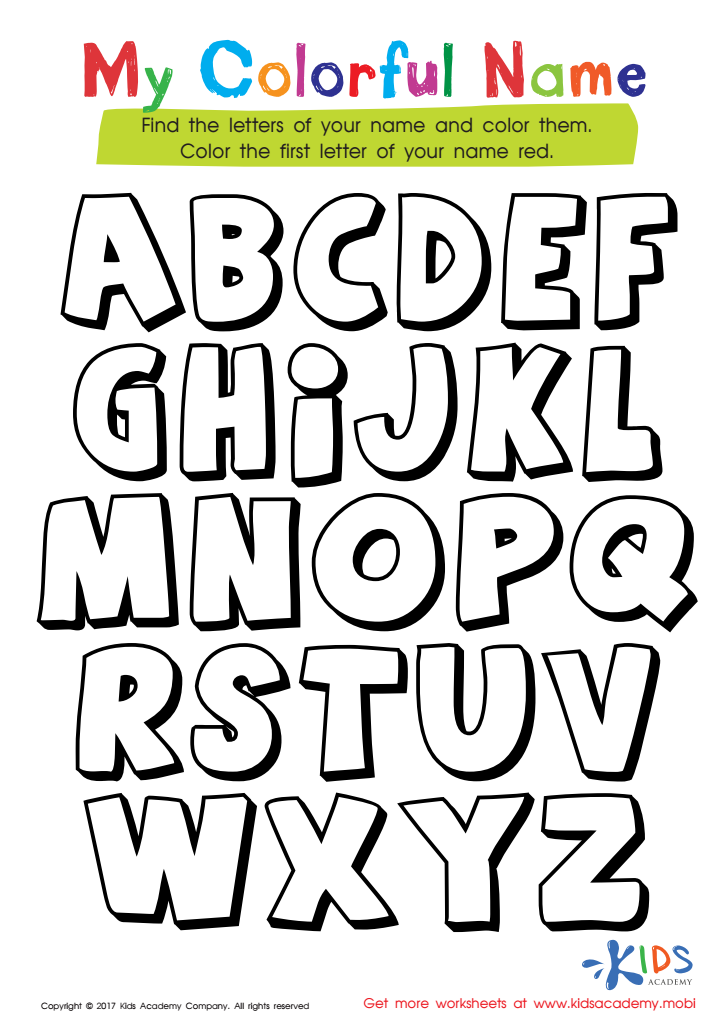
My Colorful Name Worksheet
 Assign to My Students
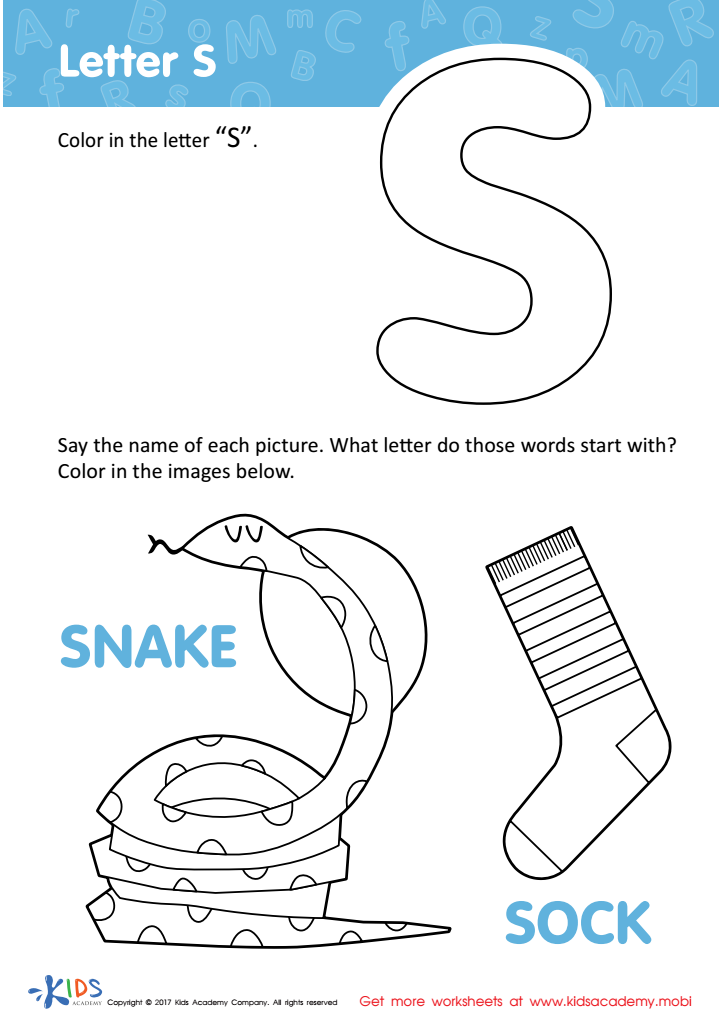
Letter S Coloring Sheet
Assign to My Students
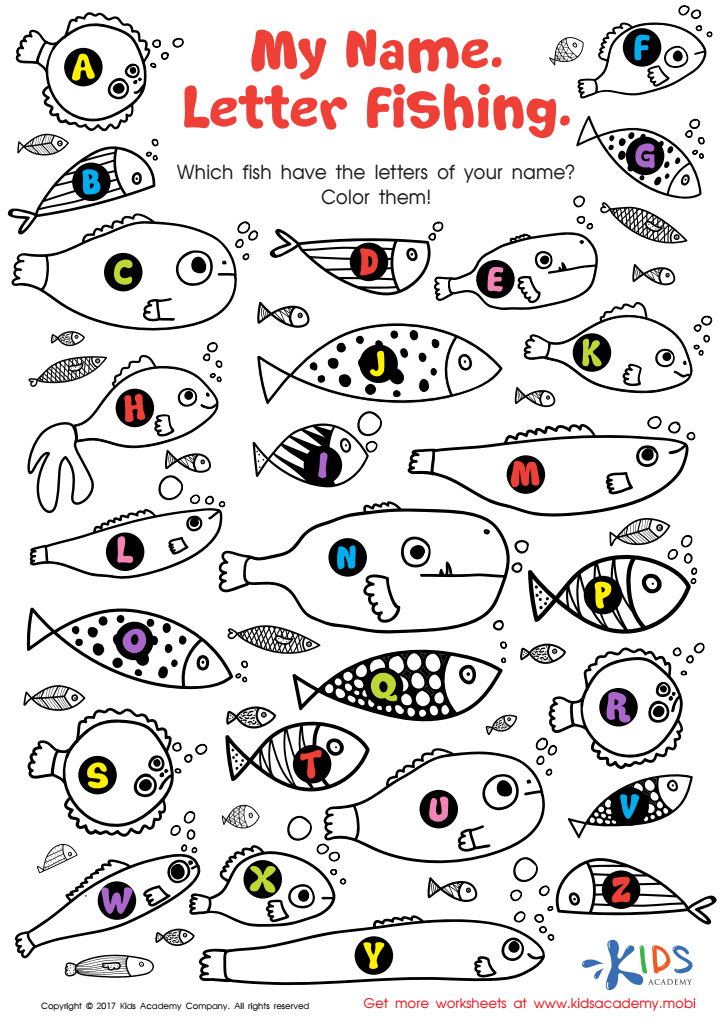
My Name: Letter Fishing Worksheet
Assign to My Students







Fine motor skills are crucial for young children, particularly ages 4-6, as they directly impact key developmental areas such as writing, self-care tasks, and overall hand-eye coordination. These skills involve the controlled movement of small muscles in the hands and fingers. Improved fine motor skills enable children to better manipulate objects, which translates to improved academic performance in tasks like handwriting, drawing, and using scissors.
Focusing on alphabet-related activities specifically targets both cognitive and fine motor development. When children practice writing letters of the alphabet, they not only learn letter recognition and phonics but also refine their dexterity and hand strength. This skill enhancement is important for future tasks in their educational journey, such as writing sentences, solving math problems, and taking notes.
Moreover, fine motor skill activities like tracing letters, playing with alphabet blocks, and assembling alphabet puzzles make learning active and engaging. These methods encourage a love of learning, perseverance, and patience in children. As they develop proficiency, their confidence grows, fostering a positive attitude towards school.
By prioritizing fine motor skills improvement through alphabet activities, parents and teachers lay the groundwork for a child’s academic and personal growth, promoting lifelong skills that extend beyond the classroom. Investing in these essential skills early sets the stage for a child's future success.







