Reading skills development Alphabet Worksheets for Ages 4-6
5 filtered results
-
From - To
Enhance your child's reading skills with our engaging Alphabet Worksheets designed specifically for ages 4-6. These printable resources provide a fun and interactive way for young learners to develop essential reading proficiency through captivating activities focused on letter recognition, phonetics, and vocabulary building. Each worksheet incorporates vibrant illustrations and age-appropriate challenges that motivate little ones to practice their alphabet while cultivating a love for reading. Perfect for parents and teachers alike, these resources support early literacy development in a playful and effective manner. Foster your child's reading journey today with our specially crafted worksheets that make learning exciting and enjoyable!
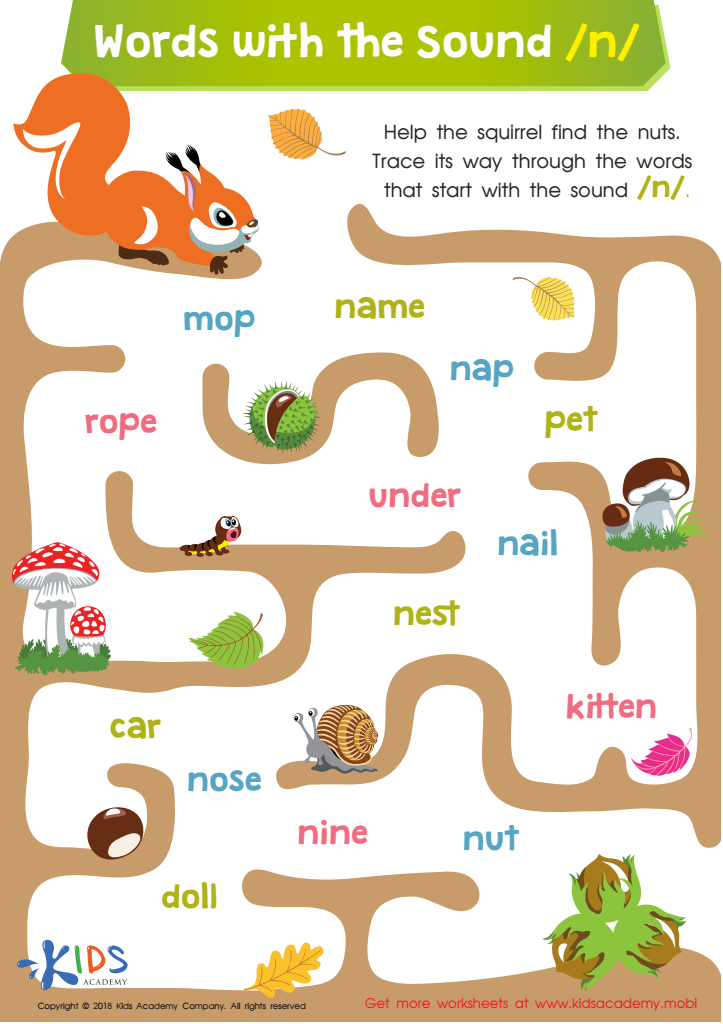
Words with Sound N Reading Worksheet
 Assign to My Students
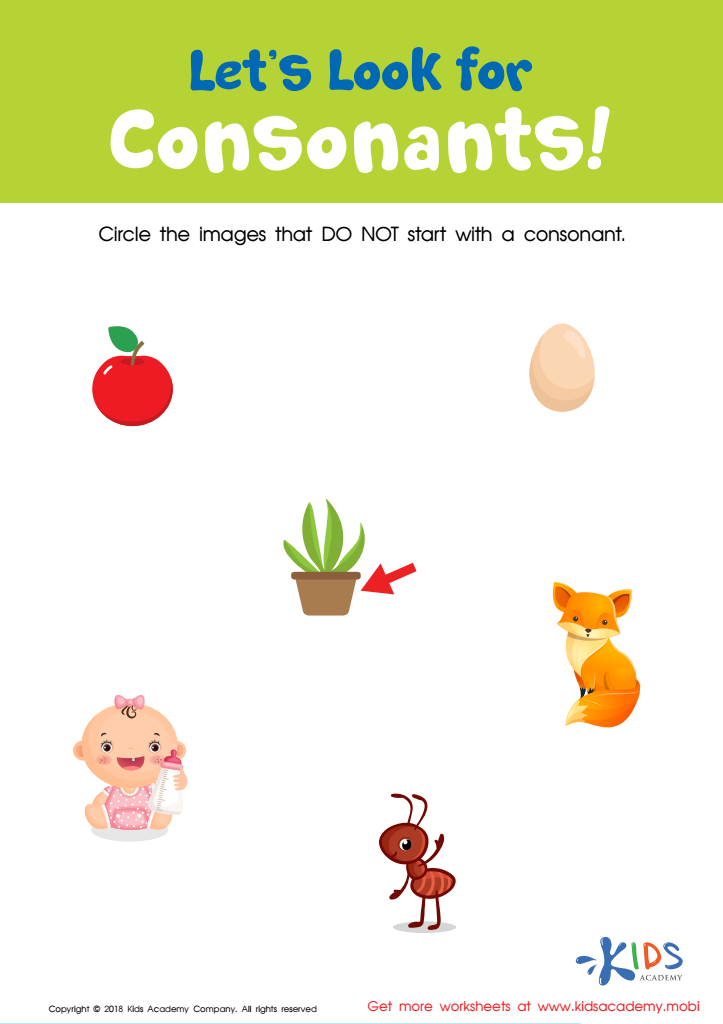
Let's Look for Consonants Worksheet
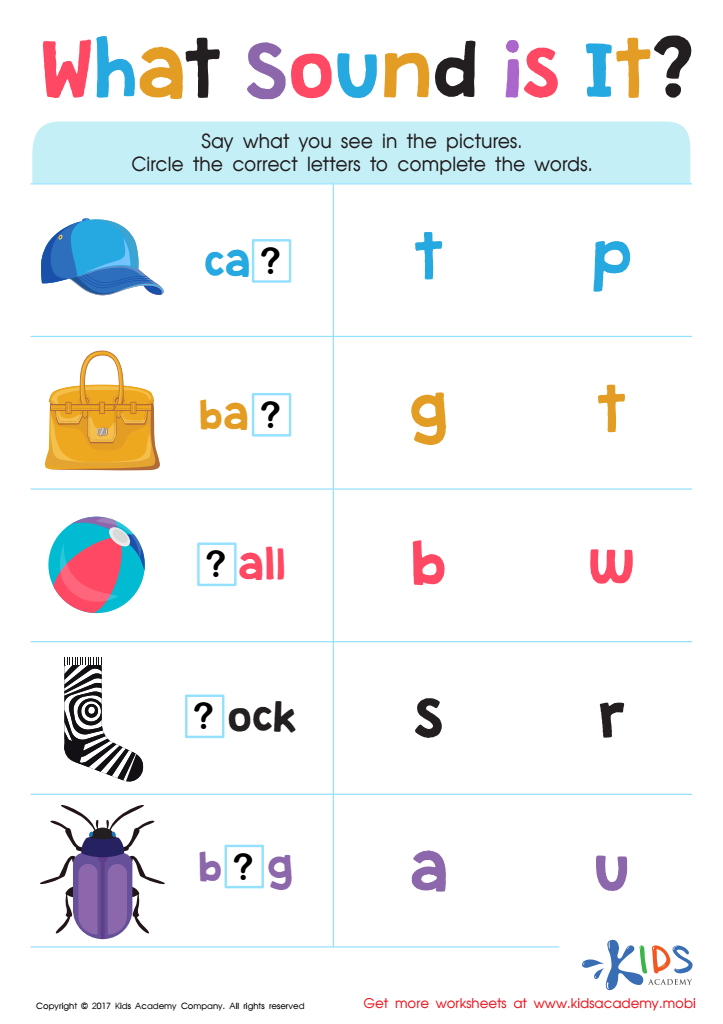
What Sound Is it? Worksheet
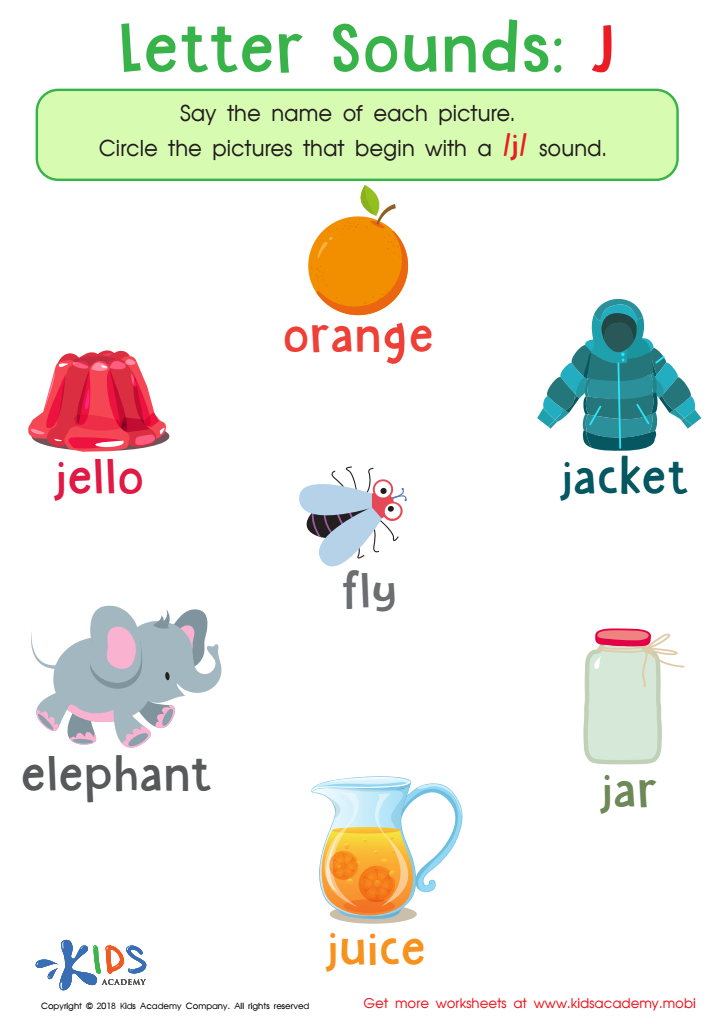
Letter Sounds: J Printable Worksheet
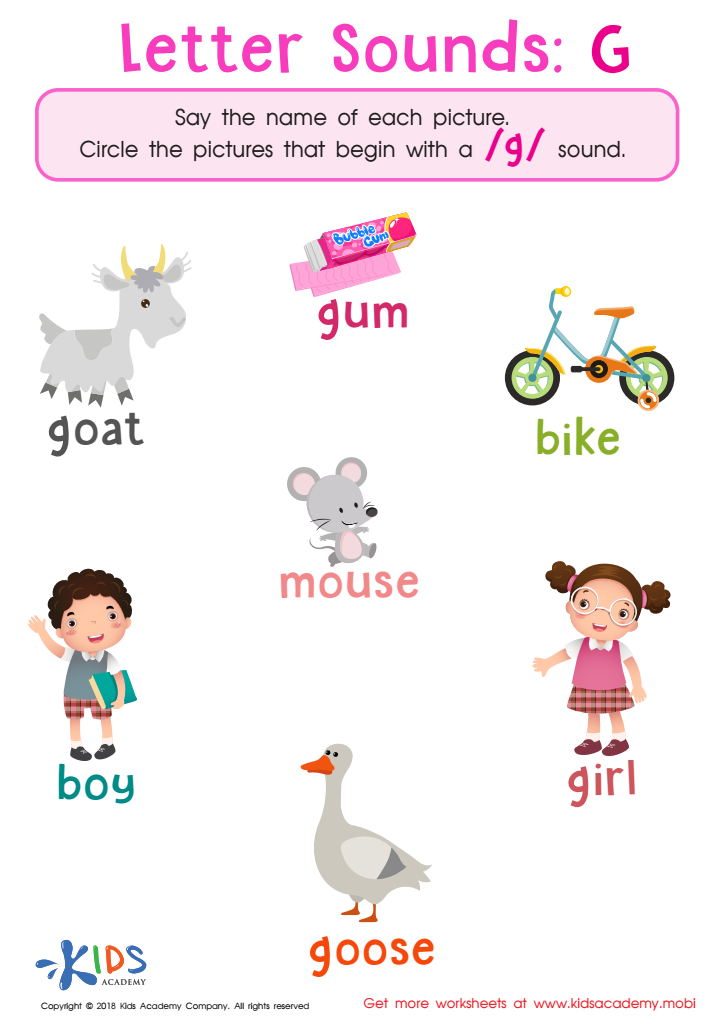
Letter G Sounds Worksheet






Reading skills development, particularly the mastery of the alphabet, is crucial for children aged 4 to 6 for several reasons. Firstly, this age is a foundational period in a child’s cognitive and language development. Children learn to recognize letters and understand their sounds, which forms the basis of reading and writing. Mastery of the alphabet promotes phonemic awareness, aiding children in decoding words, which is essential as they progress in literacy.
Moreover, strong reading skills foster confidence and a love of learning. When children can recognize letters and their corresponding sounds, they feel empowered to explore books independently, paving the way for lifelong reading habits. This also enhances vocabulary acquisition and communication skills, enabling children to express themselves effectively.
For parents and teachers, engaging children in alphabet activities—whether through songs, interactive games, or storybooks—creates an enjoyable learning environment. This not only strengthens parent-child or teacher-student relationships but also builds a community around literacy.
Furthermore, early reading skills are linked to academic success later in life. By investing time and resources into developing reading skills in preschoolers, parents and teachers lay a solid groundwork for a child’s educational journey, ensuring they have the skills necessary to thrive in future academic endeavors.







