Alphabet Recognition Letter L Worksheets for Ages 4-6
3 filtered results
Difficulty Level
Grade
Age
-
From - To
Subject
Activity
Standards
Discover engaging "Alphabet Recognition Letter L Worksheets" ideal for ages 4-6. These educator-designed printables from Kids Academy promote letter identification, phonics skills, and early literacy. With a variety of fun activities, children will learn to recognize, trace, and write the letter L while enhancing their fine motor skills. These worksheets are perfect for classroom or home use, offering a solid foundation for reading readiness. Give your child the confidence to excel in their literacy journey with these exceptional learning resources. Download free worksheets today and make learning the letter L fun and effective!
Favorites
With answer key
Interactive
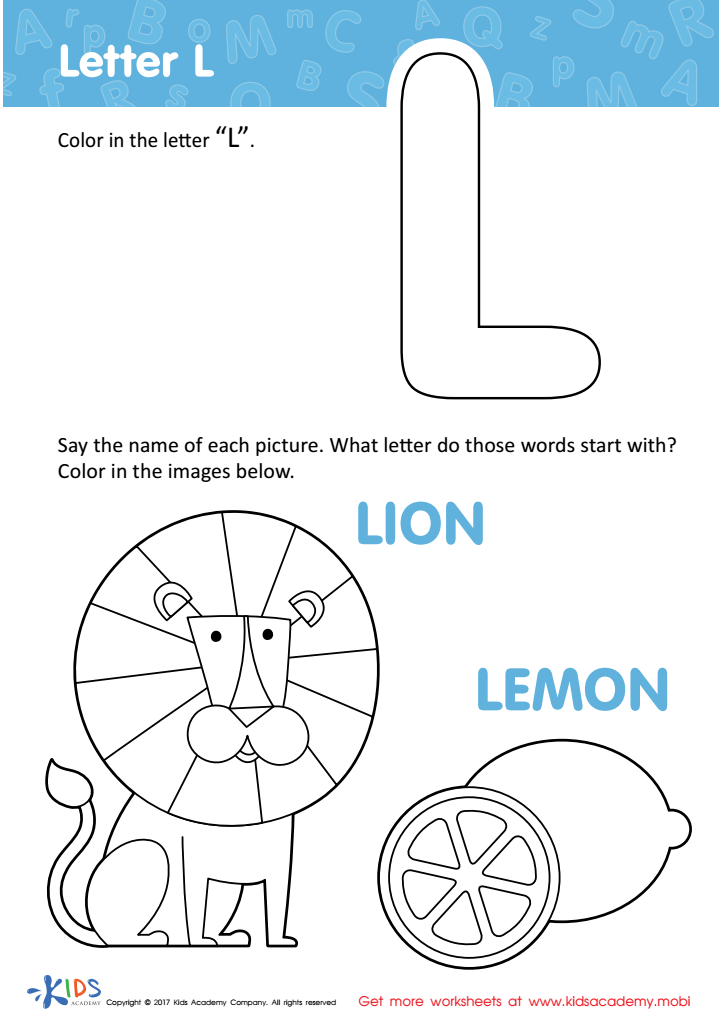
Letter L Coloring Sheet
Kids often struggle to say "L" and love it because so many things they love start with it! This coloring page combines the letter and fun images like a lemon and lion to teach and entertain!
Download (PDF)
 Assign to My Students
Assign to My Students
Letter L Coloring Sheet
Worksheet
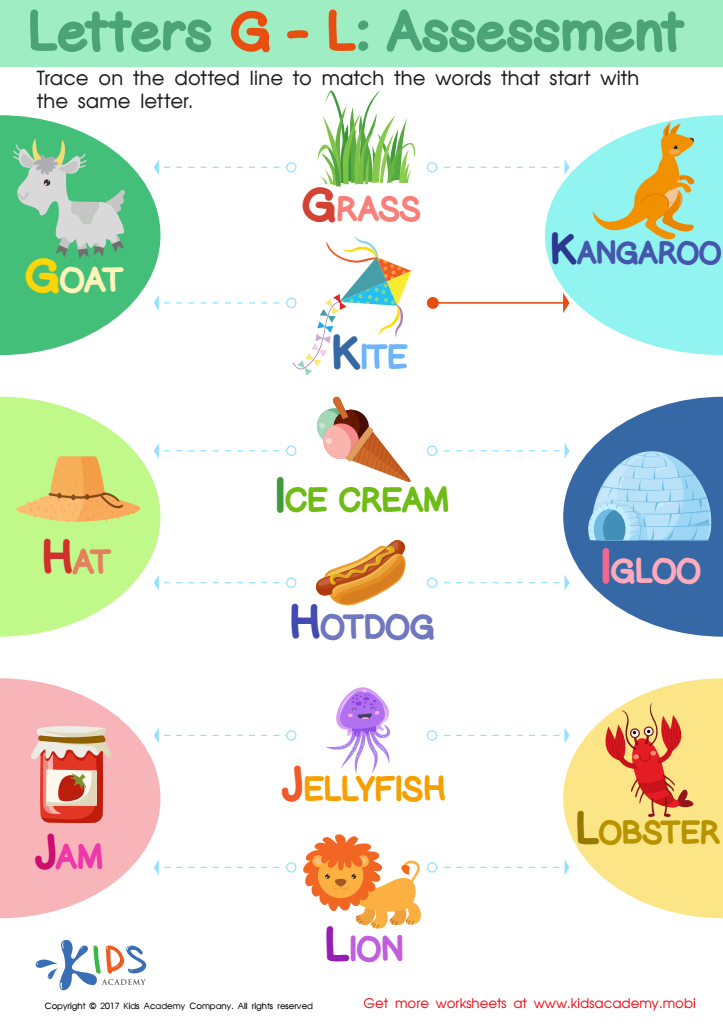
Letters G-L Worksheet
This fun worksheet helps preschoolers develop reading and phonics skills. It gets kids to match G-L words that start with the same letter, making it engaging and educational.
Letters G-L Worksheet
Worksheet
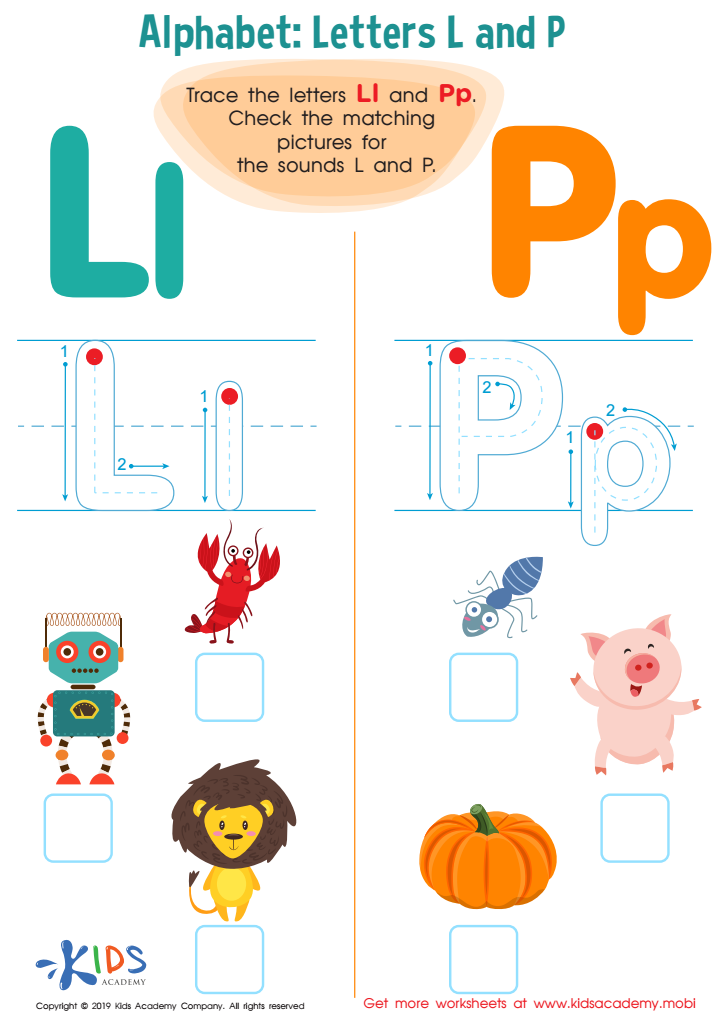
Letter L and P Tracing Worksheet
This traceable worksheet can motivate your students to learn and practice core skills. They'll trace the letters 'L' and 'P' and identify the pictures next to them. With this exercise, they'll unlock their learning abilities and excel in the subject!
Letter L and P Tracing Worksheet
Worksheet
Join Kids Academy for Free
Who is primarily going to use this learning content?





Alphabet recognition is a foundational skill, and the letter "L" plays a significant part in a child's early literacy development for ages 4-6. Recognizing letters is a critical step towards reading and writing proficiency. Introducing the letter "L" not only helps children distinguish between different letters but also builds their phonemic awareness, which is the ability to hear, identify, and manipulate sounds.
For young learners, understanding that "L" has its unique shape and sound improves their overall literacy skills. Recognizing "L" helps them decode words, such as "lion" or "leaf," which feeds into their vocabulary growth and comprehension abilities. Engaging children in activities focused on the letter "L" can stimulate their interest and curiosity, fostering a love for reading and learning.
Furthermore, alphabet recognition provides children with the tools they need for more complex literacy tasks as they progress. For instance, knowing the letter "L" allows them to identify it in words and understand its use, aiding in both reading fluency and spelling accuracy.
Lastly, paying attention to alphabet recognition nurtures cognitive development, including memory and concentration. It's an essential building block in the continuum of language acquisition, setting the stage for future academic successes. Being adept at recognizing letters, such as "L," empowers children and gives them the confidence needed to tackle more advanced educational challenges.