Letter recognition Letter R Worksheets for Ages 4-6
3 filtered results
Difficulty Level
Grade
Age
-
From - To
Subject
Activity
Standards
Discover our engaging "Letter R Recognition Worksheets" designed for children ages 4-6! These versatile worksheets help young learners master the letter R through fun activities that incorporate tracing, coloring, and identifying words starting with R. Ideal for preschool and early elementary classrooms, our resources support letter recognition and reinforce phonetic skills, cultivating a solid foundation for reading. Each worksheet is thoughtfully crafted to enhance fine motor skills while keeping kids entertained. Encourage your child's literacy journey with our interactive and enjoyable worksheets that make learning about the letter "R" exciting and effective. Explore today and watch your child's reading skills flourish!
Favorites
With answer key
Interactive
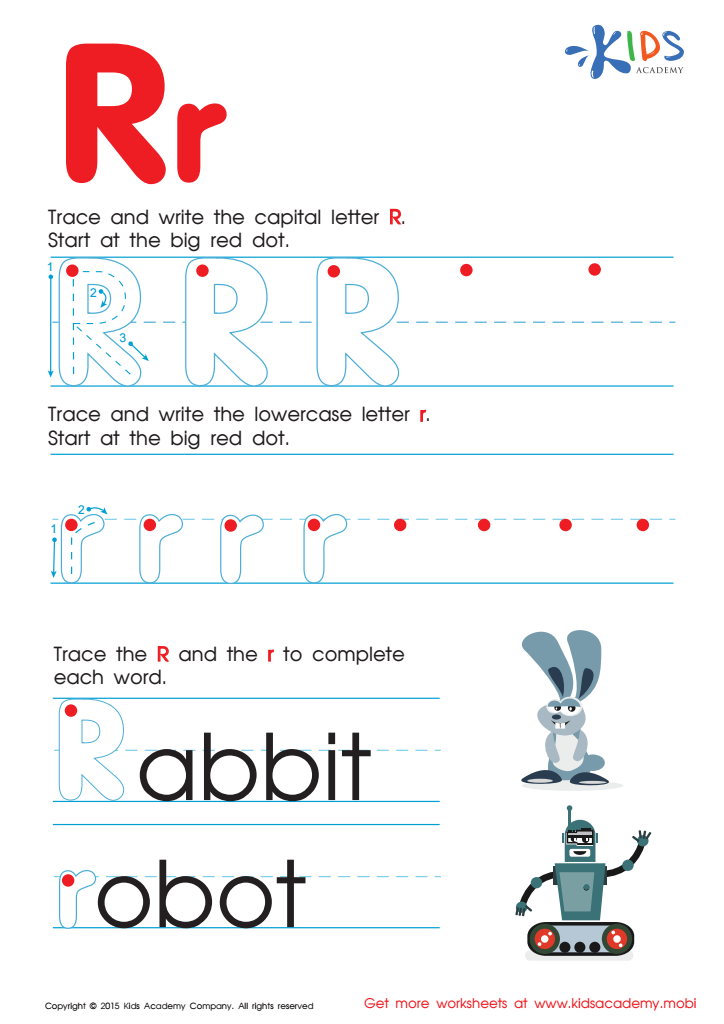
Letter R Tracing Page
Trace and write the letter "R" with this worksheet for kindergarten. Start with the uppercase, then move on to the lowercase. Write the letters several times for practice. Then help complete the words for the rabbit and robot, spelling carefully. More ABC worksheets can be found at Kids Academy.
 Assign to My Students
Letter R Tracing Page
Worksheet
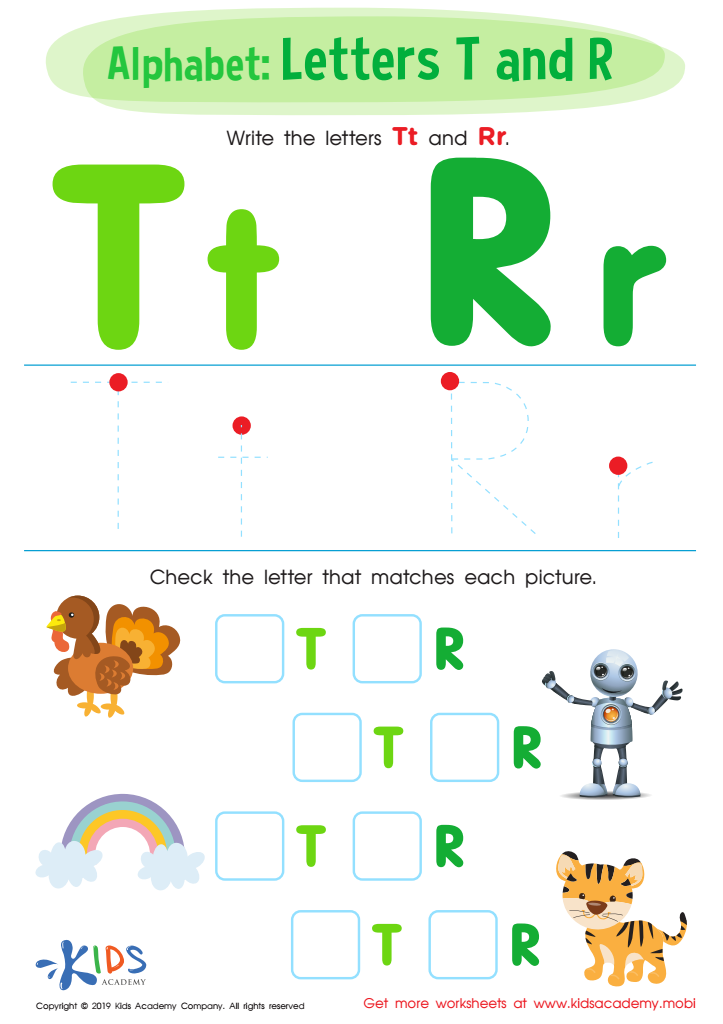
Letters T and R Worksheet
Is your kid bored with basic letter learning? Try this Letters T & R traceable sheet! It combines tracing and picture matching to help solidify fundamental skills. Your child will gain a better understanding and have fun at the same time.
Letters T and R Worksheet
Worksheet
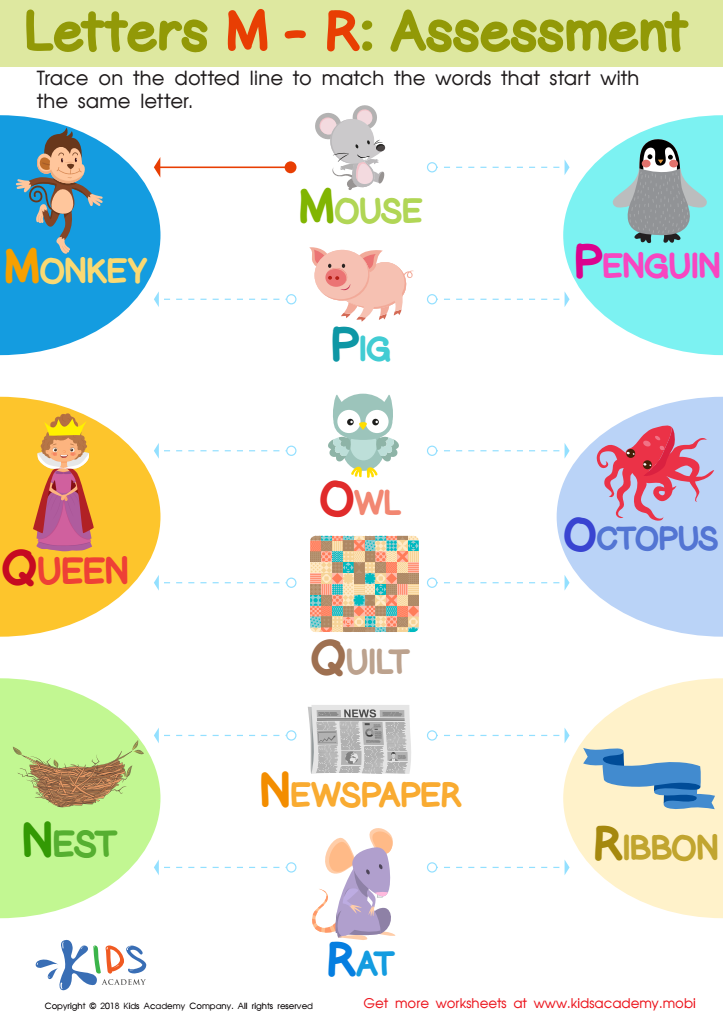
Letters M-R Tracing Worksheet
Does your child like learning to read? This printout is ideal! Kids match words to letters M-R by tracing. You can assist them in sounding out the words to pick the correct letter. Plus, visuals are included to help them recognize words with pictures.
Letters M-R Tracing Worksheet
Worksheet
Join Kids Academy for Free
Who is primarily going to use this learning content?






Letter recognition, specifically the letter "R," is essential for children ages 4-6 as it serves as a foundational skill for literacy development. Recognizing letters, including "R," aids children in understanding the alphabet's structure and boosts their phonological awareness, which is crucial for reading and writing. Mastery of letter recognition fosters vocabulary growth, helping children to identify and become familiar with words that start with "R," such as "rabbit," "road," and "ring."
Early exposure to the letter "R" also enhances sounds and phonemes, encouraging kids to practice the /r/ sound. This phonemic awareness directly impacts their ability to spell and decode words later on. From a practical perspective, incorporating engaging activities centered around "R," such as crafts, storytelling, or games, can deepen learning while making it enjoyable.
Moreover, parents and teachers play a vital role in creating a supportive environment for letter recognition. By incorporating everyday experiences that highlight the letter "R," such as labeling objects around the house with words starting with "R" or singing alphabet songs, adults can reinforce this skill. Ultimately, mastering letter recognition promotes a love for reading, sets the stage for academic success, and equips children with the skills they need for future learning.