
Alphabet sequencing Letter Recognition Worksheets for Ages 4-6
6 filtered results
Difficulty Level
Grade
Age
-
From - To
Subject
Activity
Standards
Discover our engaging Alphabet Sequencing Letter Recognition Worksheets, specifically designed for young learners aged 4-6. These interactive resources promote foundational literacy skills by helping children recognize, order, and connect letters in a fun and educational way. With a variety of activities that encourage hands-on learning, your child will enhance their understanding of the alphabet while developing critical thinking abilities. Perfect for both classroom and home use, our worksheets cater to diverse learning styles, making letter recognition enjoyable and effective. Foster a lifelong love for reading and writing as your little ones navigate through the vibrant world of letters with our expertly crafted resources!
Favorites
With answer key
Interactive
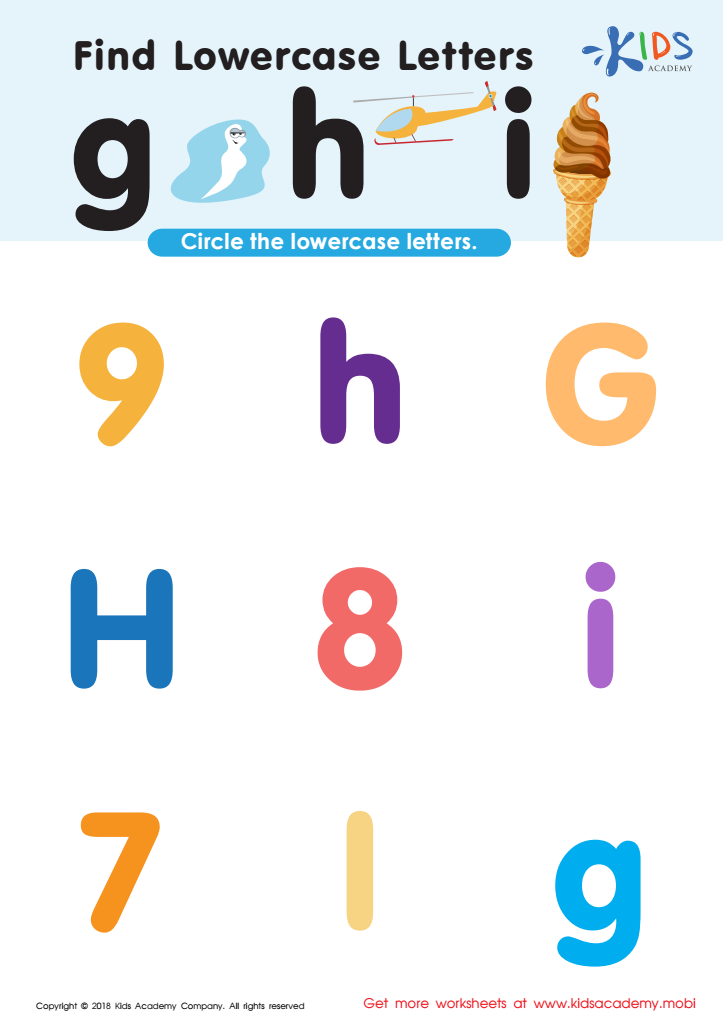
Find Lowercase Letters g h i Worksheet
Turn learning into a fun journey with your child! Use this free worksheet to find and circle the lowercase letters hidden amongst uppercase letters and numbers. Your child will understand what you're teaching them as they enjoy the search.
 Assign to My Students
Find Lowercase Letters g h i Worksheet
Worksheet
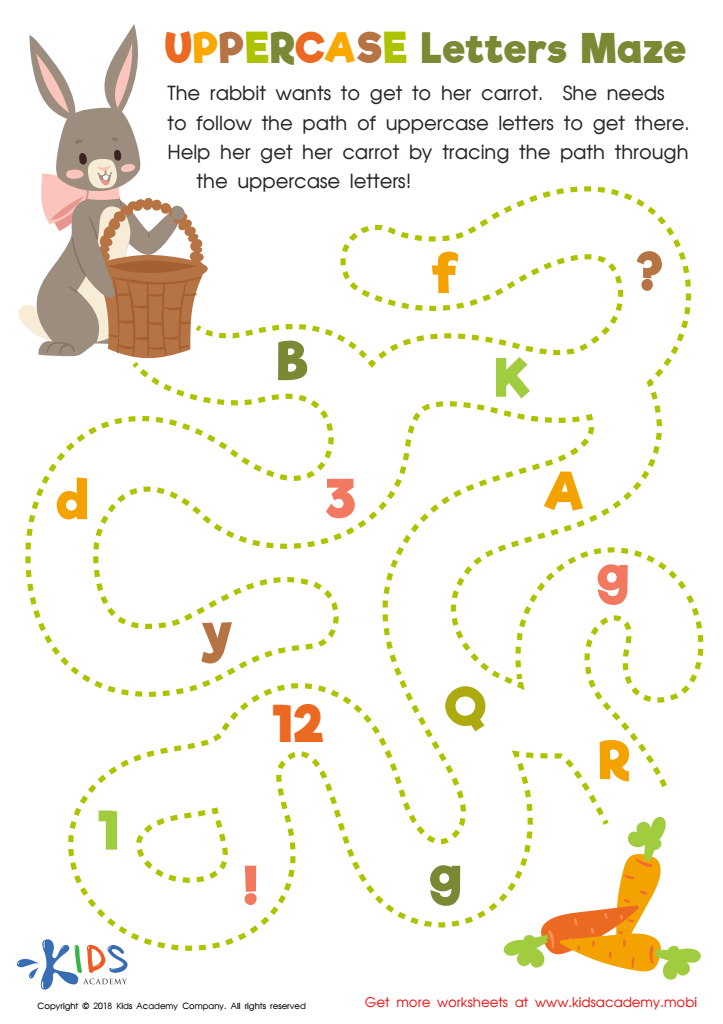
Uppercase Letters Maze Worksheet
Kids can have fun helping a rabbit find her carrot by picking the path with uppercase letters. This worksheet teaches letter differentiation while building confidence. Kids will have a great time while getting an essential skill!
Uppercase Letters Maze Worksheet
Worksheet
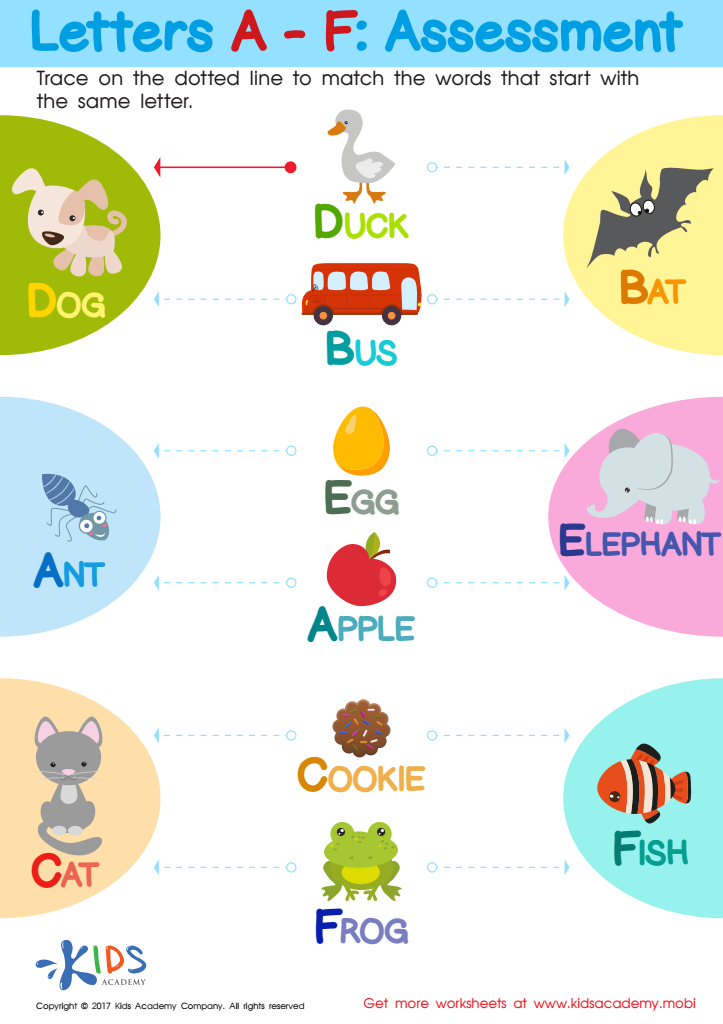
Letters A - F Worksheet
Help your child develop their reading skills with this fun phonics worksheet aimed at preschoolers. They can match letters A-F using colorful words and pictures. Assist your child by sounding out the letters and words - it's a great way to learn!
Letters A - F Worksheet
Worksheet
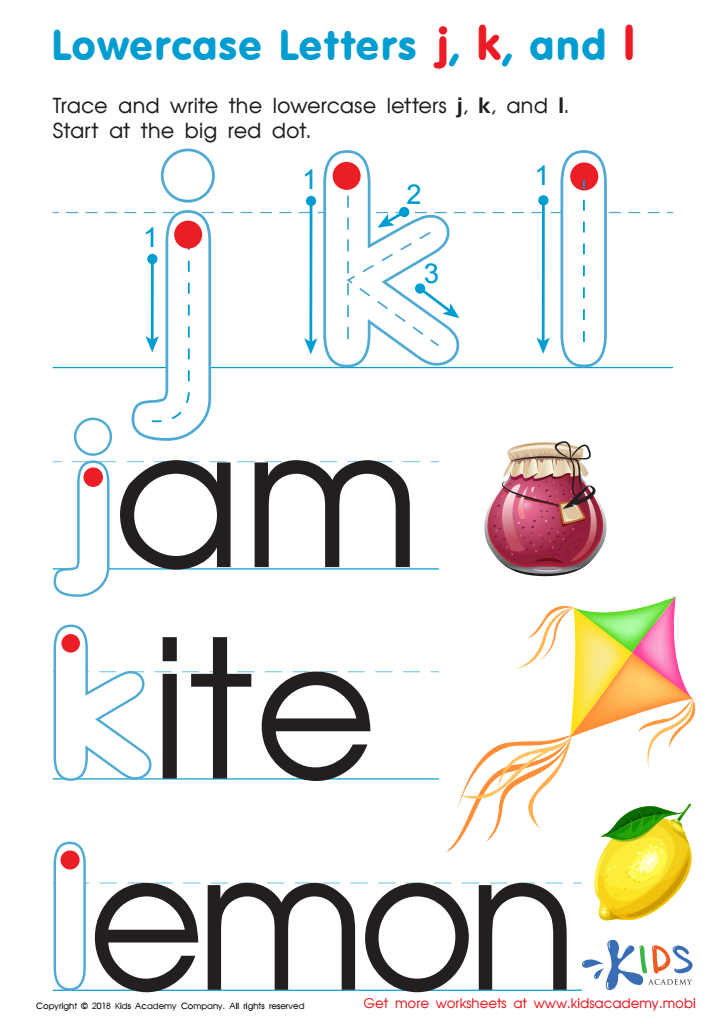
Lowercase Letters j k l Worksheet
Teach your child the difference between uppercase and lowercase letters. Have them trace and write the lowercase letters j, k, and l, starting at the red dot. Guide your child's hand to form the letters correctly.
Lowercase Letters j k l Worksheet
Worksheet
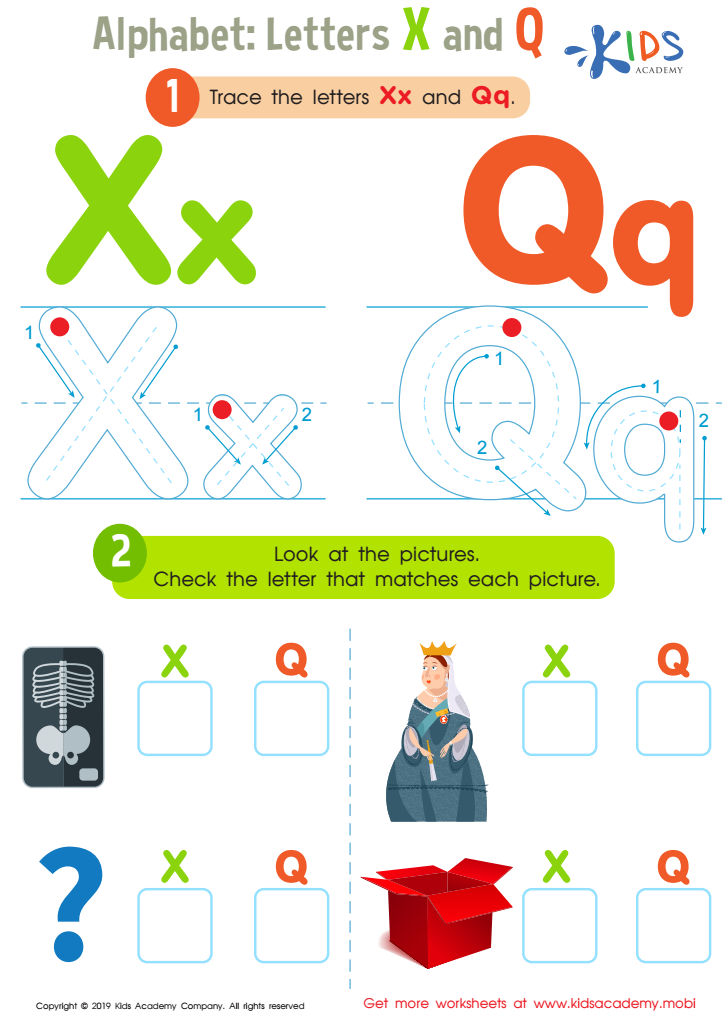
Letters X and Q Tracing Worksheet
Do you want your students to improve writing and letter recognition? This worksheet is a great place to start! Kids can trace the letters «X» and «Q» and identify pictures that match each letter. With a little encouragement, they'll do a great job!
Letters X and Q Tracing Worksheet
Worksheet
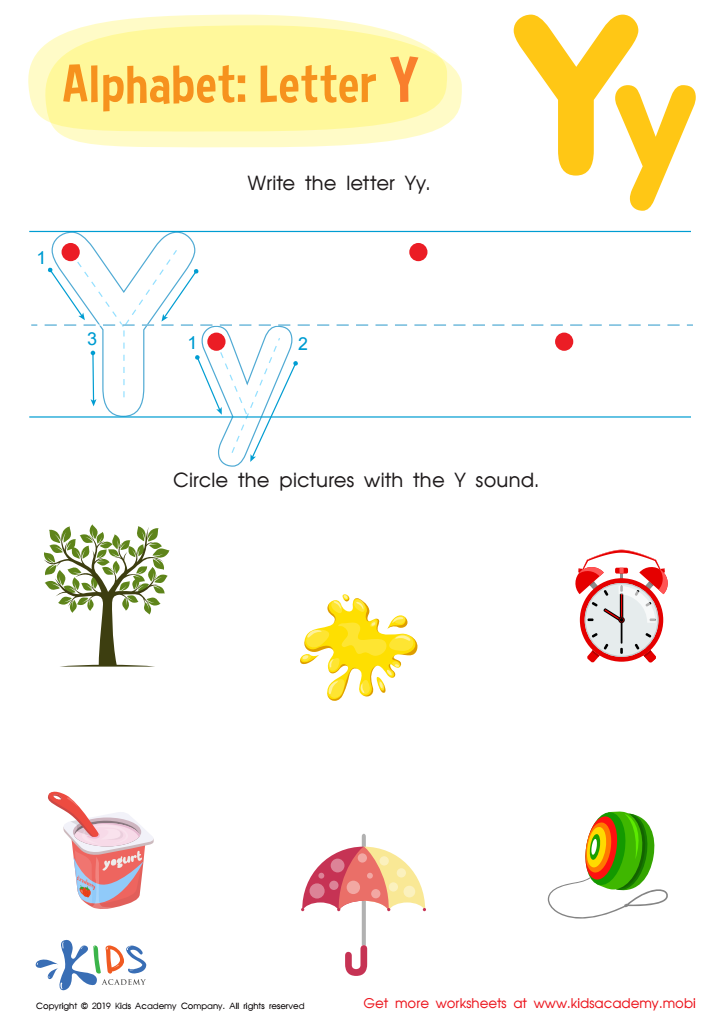
Letter Y Tracing Worksheet
Does your child need help with learning the final letters of the alphabet? This PDF worksheet is perfect then! Kids can practice tracing the letter «Y» and circle pictures that start with the same sound. Options include «yellow» and «yogurt». It's a great way of honing their letter-learning skills.
Letter Y Tracing Worksheet
Worksheet
Join Kids Academy for Free
Who is primarily going to use this learning content?








Alphabet sequencing and letter recognition are pivotal skills for children aged 4 to 6, marking the foundation of literacy and overall learning. At this age, children are beginning to develop their understanding of language, and recognizing letters is essential for reading and writing proficiency. When parents or teachers emphasize alphabet sequencing, they help children learn the correct order of letters, which is crucial for phonics and decoding when they attempt to read words.
Moreover, recognizing letters not only facilitates confidence in literacy-related tasks but also fosters cognitive development. It aids in building vocabulary and comprehension skills, which are necessary for academic success across subjects. Engaging with letters through activities like songs, games, and storytelling allows children to explore language in a playful manner, enhancing their enthusiasm for learning.
Additionally, strong letter recognition and sequencing skills are often linked to better performance in other academic areas, such as mathematics and critical thinking since they help children develop patterns and sequences. By focusing on these foundational skills, parents and teachers equip children with the tools they need to thrive academically and socially, setting them on a path for lifelong learning and success.







