
Spelling practice Letter Recognition Worksheets for Ages 4-6
4 filtered results
Difficulty Level
Grade
Age
-
From - To
Subject
Activity
Standards
Enhance your child's reading and writing journey with our Spelling Practice Letter Recognition Worksheets, designed specifically for ages 4-6. These engaging activities foster essential skills in letter identification and phonetics through fun exercises that keep young learners motivated. Each worksheet is crafted to help children recognize letters and improve their spelling in an enjoyable way, using vibrant designs to capture their attention. Ideal for parents and educators alike, these worksheets encourage hands-on learning and reinforce foundational literacy skills. Get started today and watch your child's confidence soar as they master the letters of the alphabet through creative spelling practice!
Favorites
With answer key
Interactive
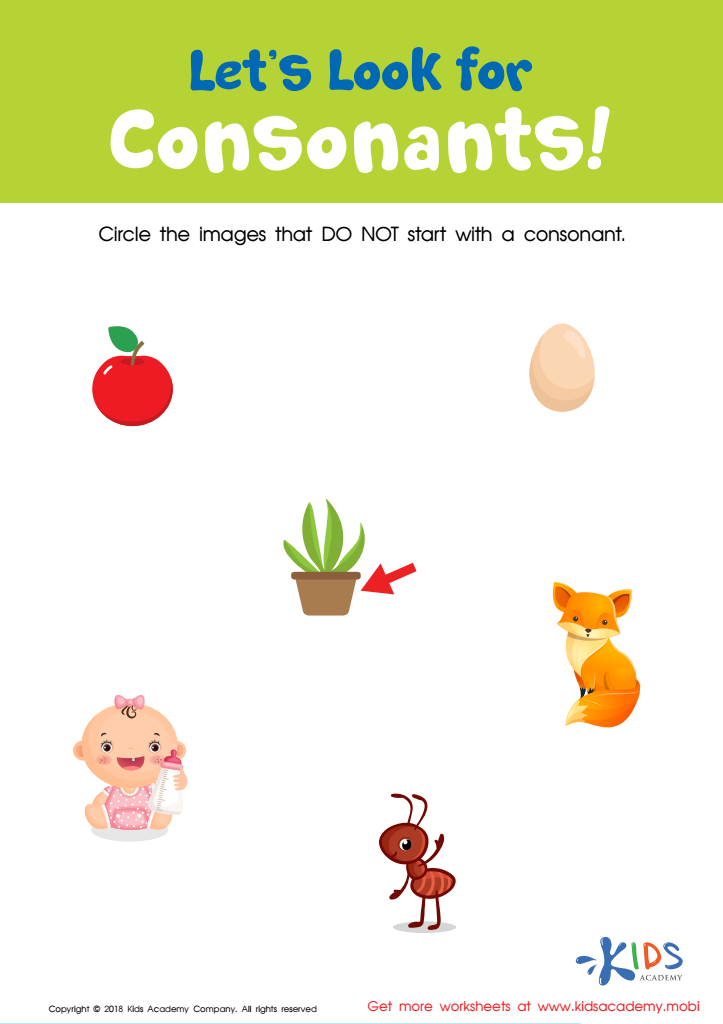
Let's Look for Consonants Worksheet
Help kids learn consonants and words that start with them. Ask them to recite the alphabet, then explain consonants are all letters but the 5 vowels. Use the worksheet to ask them to circle items without a consonant. Emphasize that's 21 consonants.
 Assign to My Students
Let's Look for Consonants Worksheet
Worksheet
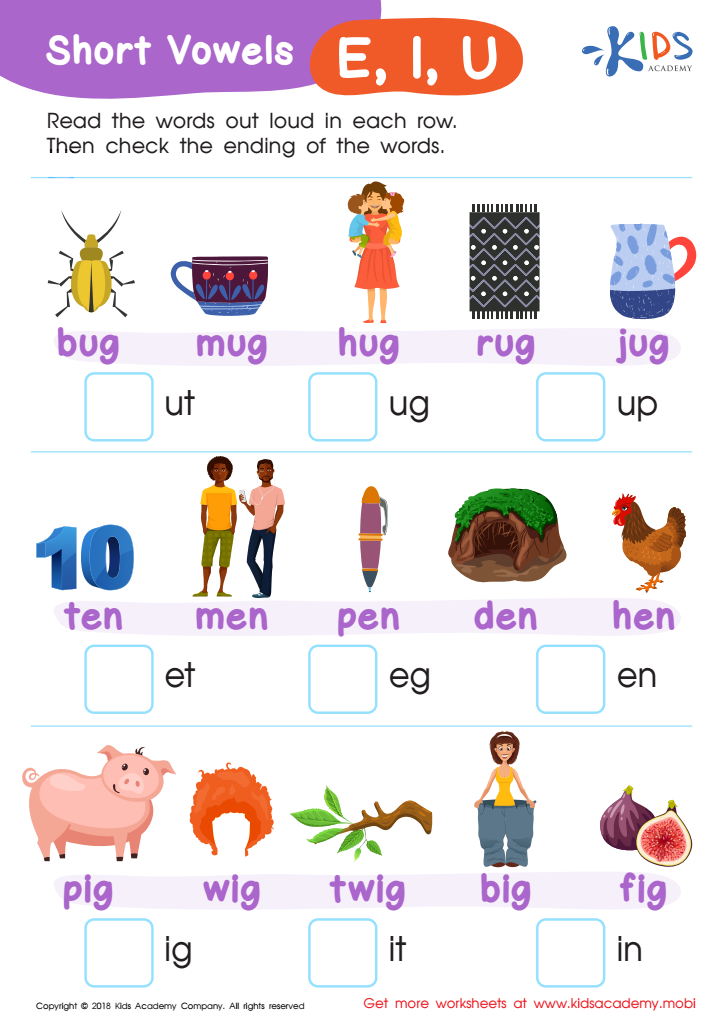
Short Vowels /e/, /i/, and /u/ Worksheet
Your emergent reader can have fun while practicing their short vowel sounds with this free, brightly colored worksheet. They'll identify one-syllable words by their pictures, then match the correct ending for each. They'll gain an understanding of how short vowel sounds vary in closed syllables with different endings, without even realizing it!
Short Vowels /e/, /i/, and /u/ Worksheet
Worksheet
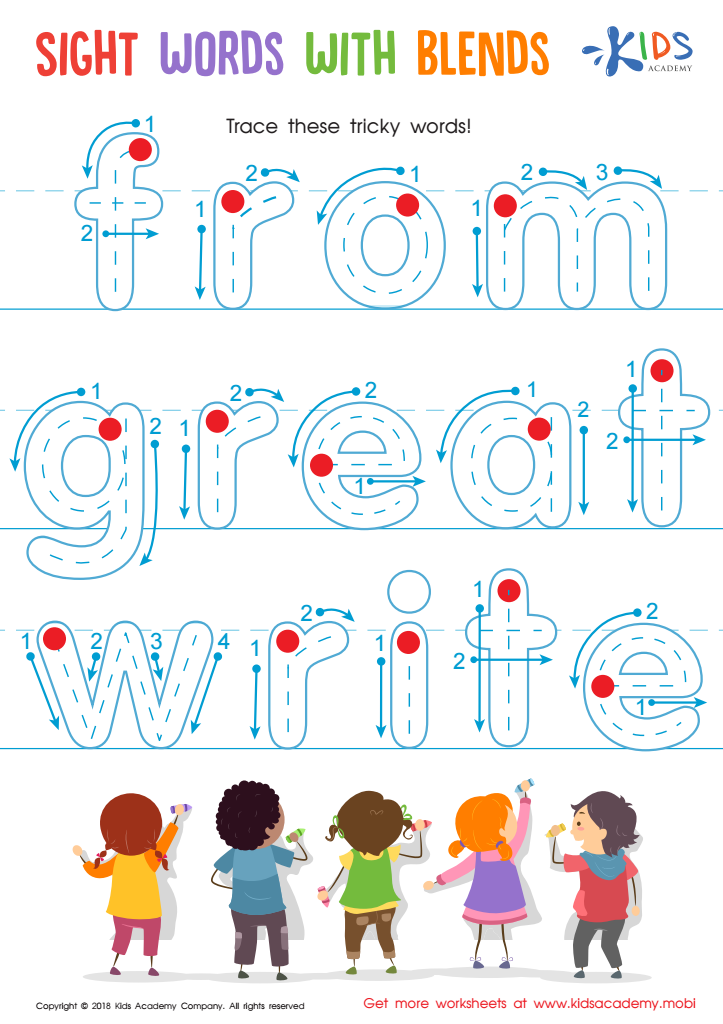
Sight Words with Blends Worksheet
This free PDF lets your children trace and write sight words with tricky blends. The guide numbers help them start from the top, building fine motor skills and enhancing sight word vocab. It's a great way to give your kids a solid foundation for reading!
Sight Words with Blends Worksheet
Worksheet
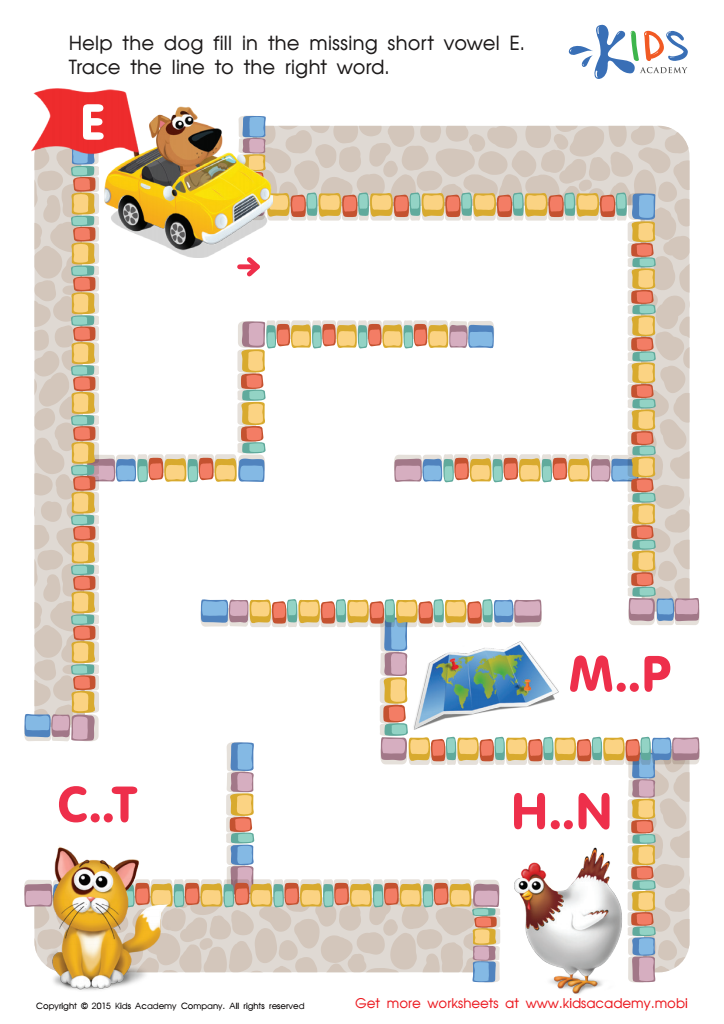
Short Vowel Sound E Worksheet
This free printable phonics worksheet helps kids learn the short vowel sound E. Kids need to help the dog complete the word “hen” by finding their way through a maze. It teaches kids to see the connection between letters and sounds and also strengthens their writing and spelling skills. Fun and educational, this phonics worksheet is great for kids. Want more? Check out here.
Short Vowel Sound E Worksheet
Worksheet
Join Kids Academy for Free
Who is primarily going to use this learning content?








Spelling practice and letter recognition are crucial for children aged 4 to 6 as they form the groundwork for literacy development. At this tender age, children are developing essential pre-reading and reading skills, making it vital for both parents and teachers to actively engage in supporting their spelling and letter recognition.
Mastering letter recognition helps children identify letters in words, promoting phonological awareness. This recognizes the sounds that letters make, which is fundamental for reading and writing. Early exposure to spelling concepts enables children to spell simple words, building confidence as they convey their thoughts through writing. This not only facilitates their reading skills but also enhances vocabulary acquisition.
Additionally, consistent spelling practice reinforces cognitive skills and memory retention. As children learn to associate letters with sounds, they sharpen their analytical thought processes, enhancing overall intellectual development.
Moreover, actively involving parents in spelling and letter recognition activities fosters a love for language and creates an enriching home environment. This collaborative effort extends beyond academic development and strengthens family bonds, setting the foundation for future learning experiences. Such an investment in foundational literacy not only positively impacts a child's academic journey but also equips them with communication skills essential for lifelong success.







