Vowel Recognition Letter Recognition Worksheets for Ages 4-6
4 filtered results
-
From - To
Enhance your child's literacy skills with our Vowel Recognition and Letter Recognition Worksheets designed for ages 4-6. These engaging, printable worksheets from Kids Academy help young learners identify vowels and letters through fun and interactive activities. Perfect for preschool and early elementary students, our worksheets feature vibrant illustrations and simple exercises to keep children motivated. By practicing with these worksheets, kids develop foundational reading skills, improve letter recognition, and gain confidence in their abilities. Support your child's educational journey today with our expertly crafted resources that make learning enjoyable and effective.
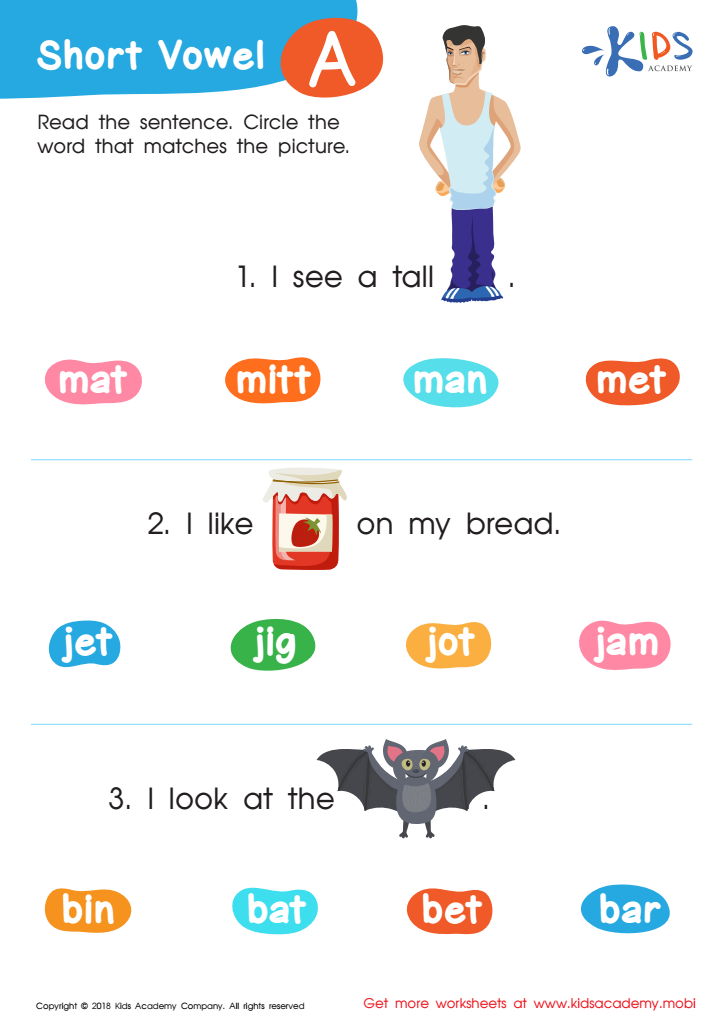
Short Vowel /a/ Worksheet
 Assign to My Students
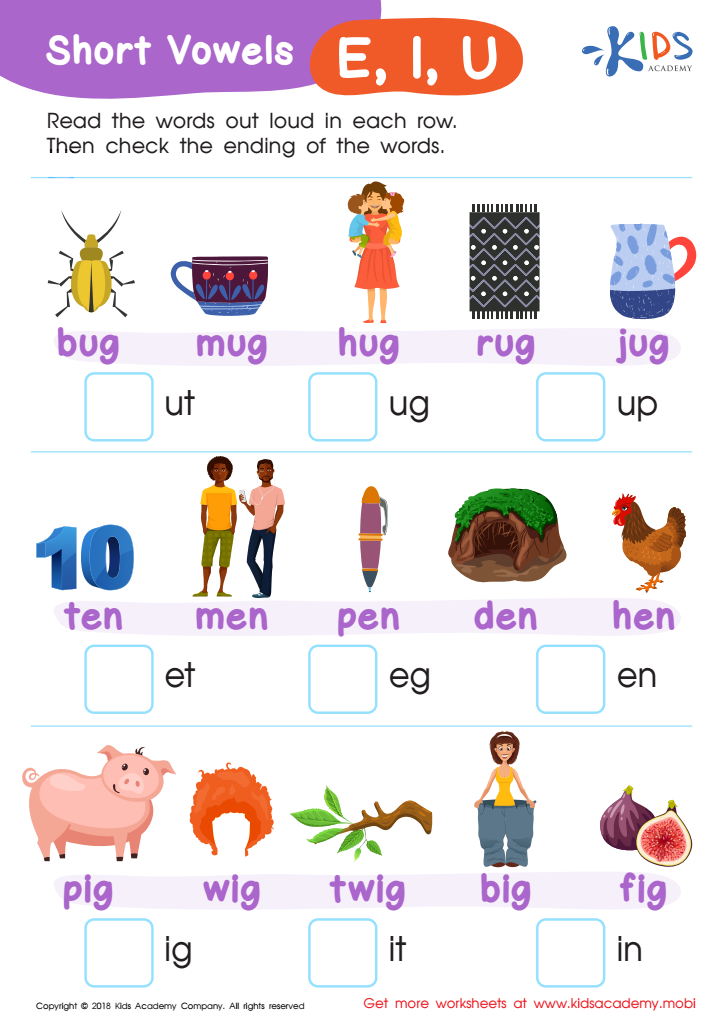
Short Vowels /e/, /i/, and /u/ Worksheet
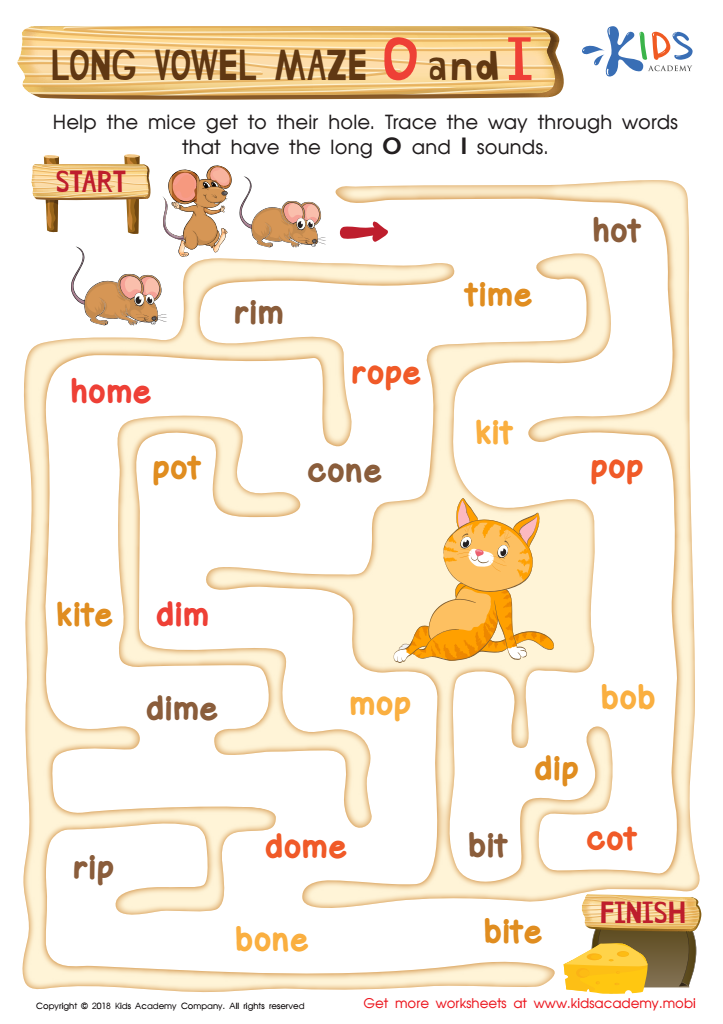
Long Vowel Maze /o/ and /i/ Worksheet
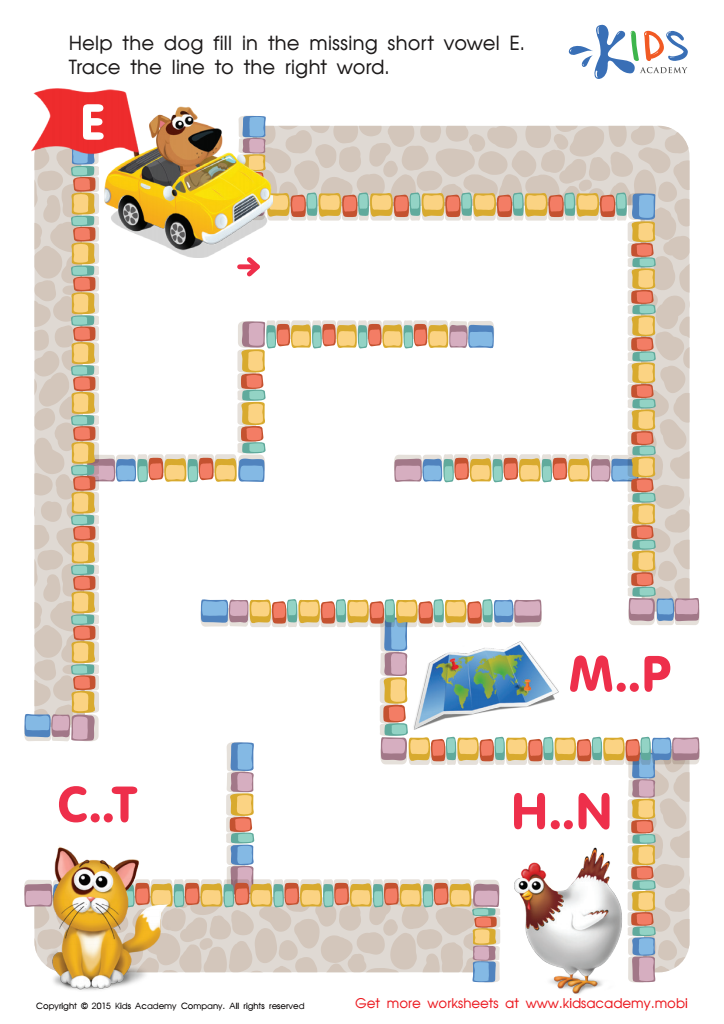
Short Vowel Sound E Worksheet








Vowel recognition and letter recognition are foundational skills in early childhood literacy, crucial for children ages 4-6. For parents and teachers, emphasizing these skills can significantly impact a child's overall reading and language development. First, vowel recognition is essential because vowels are the glue that holds together words. Without a strong understanding of vowels, children may struggle with decoding words and recognizing patterns in language, leading to difficulties in reading fluency and pronunciation.
Letter recognition, on the other hand, is the ability to name and identify both uppercase and lowercase letters. It’s the first step toward literacy, supporting not only reading but also writing. By mastering letter recognition, children can begin to understand the relationship between letters and sounds, a process known as phonics.
Together, these skills enable young learners to acquire new vocabulary, comprehend reading material, and eventually transition from “learning to read” to “reading to learn.” Early intervention in these areas can lead to long-term academic success, improving literacy rates and fostering a love for reading. Parents and teachers who focus on vowel and letter recognition help set children on a path toward greater academic achievement and vital life skills, such as critical thinking and effective communication. Ignoring these components can lead to gaps in academic foundations that may be challenging to overcome later.







