Rhyming skills development Rhyming Worksheets for Ages 4-6
4 filtered results
-
From - To
Enhance your child's language skills with our engaging Rhyming Worksheets crafted specifically for ages 4-6. These fun and interactive activities focus on developing essential rhyming abilities, allowing young learners to recognize and produce rhyming words effectively. Our worksheets feature colorful illustrations and relatable themes that capture children's interest, making learning enjoyable and effective. By combining play with education, your child will improve their vocabulary, phonemic awareness, and overall reading readiness. Download our expertly designed worksheets today and watch your child's confidence in language grow as they master the art of rhyming through playful engagement!

Rhyming Words Rhyming Worksheet
 Assign to My Students
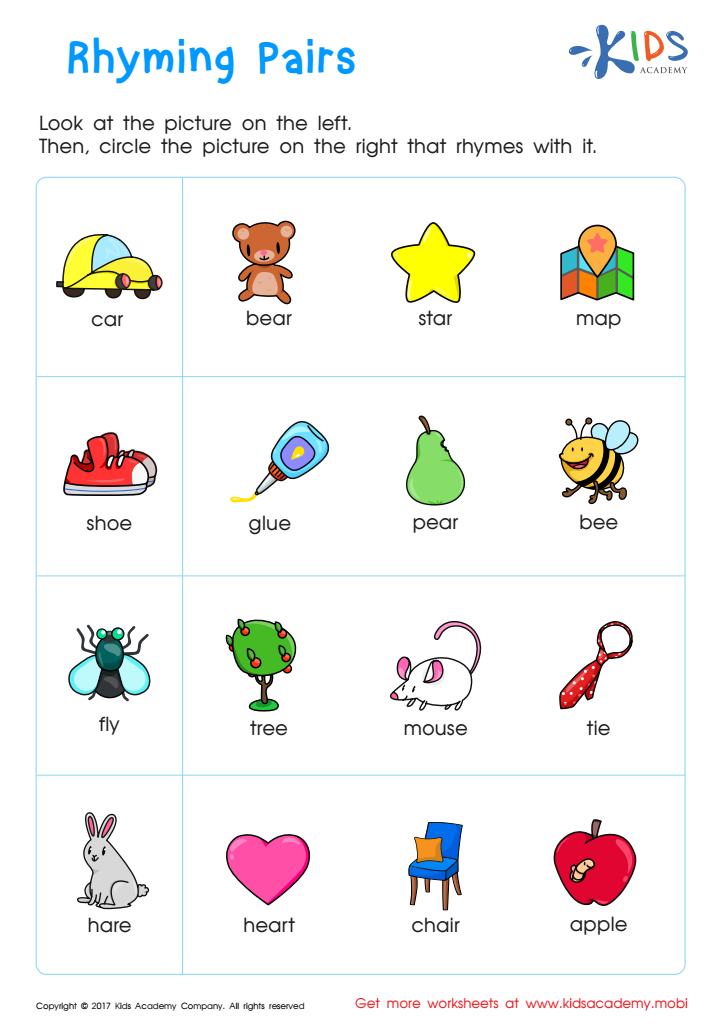
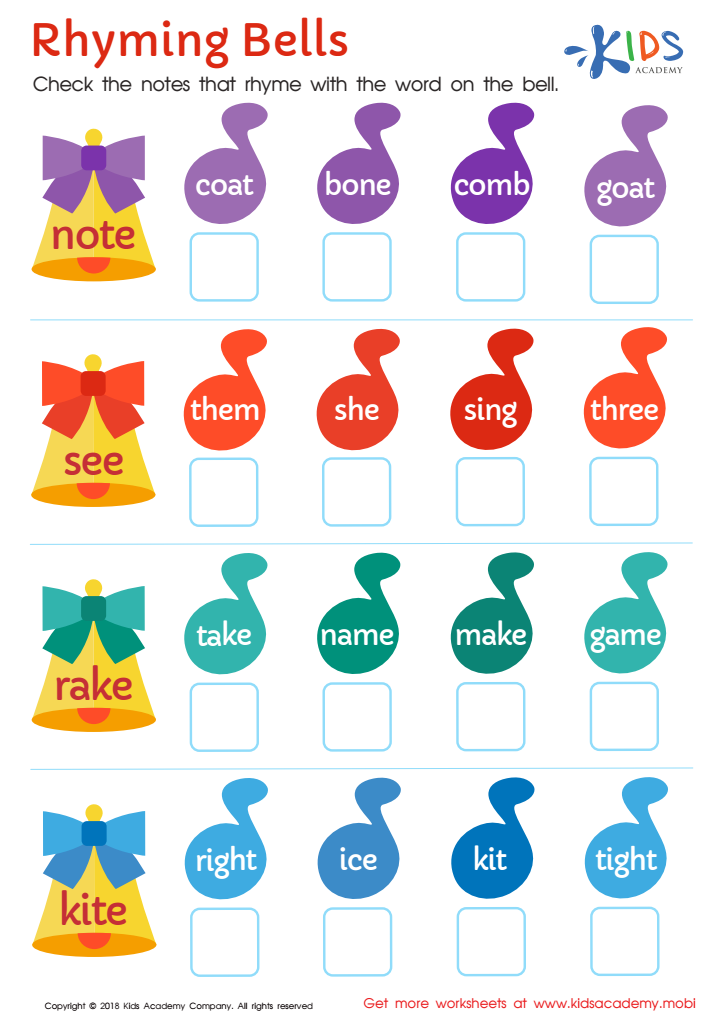
Rhyming Bells Worksheet

First Words: Picture Rhymes Worksheet







Rhyming skills development is crucial for young children aged 4-6 as it significantly contributes to their overall literacy and language development. Firstly, rhyming enhances phonemic awareness, which is the ability to hear and manipulate sounds in spoken words. This skill is vital for reading, as it helps children decode words and better understand the correspondence between letters and sounds.
Secondly, engaging with rhyming improves vocabulary and language expression. As children experiment with words and sounds, they acquire new vocabulary and develop the ability to construct sentences. This playful interaction with language fosters creativity and imagination.
Additionally, rhyming activities—like nursery rhymes, songs, and games—create enjoyable and engaging learning experiences, promoting a positive attitude towards reading and language arts. These activities often involve repetition and rhythm, making them memorable and easier for children to grasp.
Moreover, rhyming aids in social interaction. When children share rhyming games and songs, it builds camaraderie, promoting communication skills and teamwork.
Ultimately, parents and teachers should prioritize rhyming skill development to support literacy growth, cognitive skills, and positive social interactions, providing a strong foundation for future academic success.







